
Like many other towns in Florida, Orlando too grew around a fort called Fort Gatlin. These forts were built to protect the settlers from the Seminole tribes. Many towns still go by the name of the fort, such as Fort Lauderdale, Fort Myers.

Orlando was originally called Jernigan but changed its name to Orlando in 1857. Many theories abound as to the origins of the name. One theory states that Orlando was named after a soldier, Orlando Reeves, who was killed by the Seminole tribes in 1835 while he was defending Fort Gatlin. Another theory states the soldier’s name was Orlando Jennings, not Orlando Reeves, while another disputes these theories stating no soldier by the name of Orlando was killed during the Seminole Indian wars.
Another theory states that a J.G. Speer relocated to Jernigan from South Carolina and started reorganizing Orange County. During the process he came up with the name Orlando after the character in Shakespeare’s “As You Like It.” Interestingly one of the main streets in downtown Orlando is called Rosalind who was Orlando’s lover in the play.
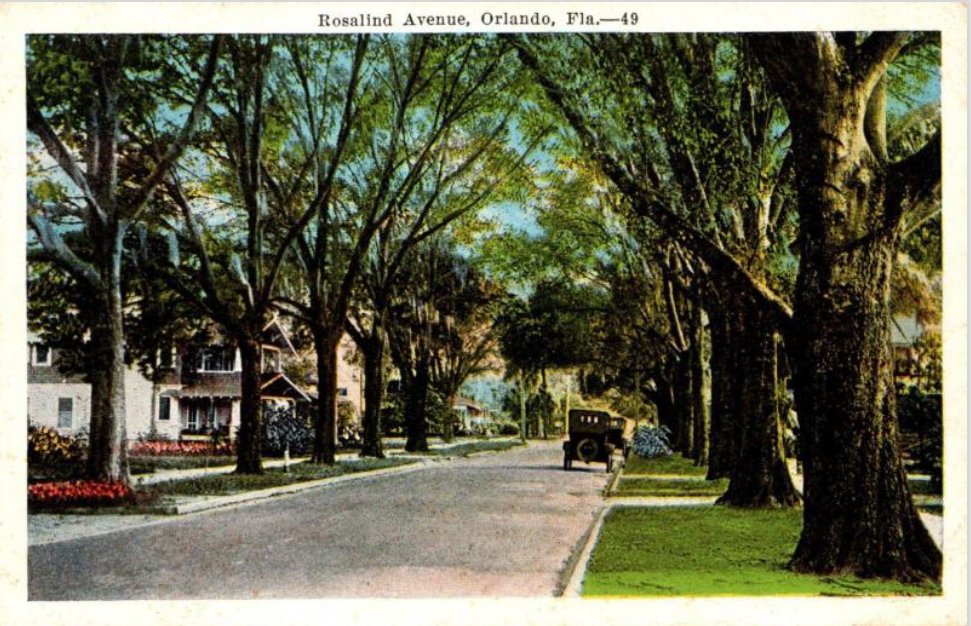
I like to believe that perhaps Mr. Speer did name Orlando because another area in downtown Orlando is called Ivanhoe Village – maybe he liked English literature and named this street after Sir Walter Scott’s 1819 book. Another neighborhood is called Lorna Doone – could this be named after R.D. Blackmore’s 1869 book? There’s also a Lake Sherwood – perhaps named after the Robin Hood’s Sherwood Forest.


I love the idea of all these names and characters from British Literature naming Orlando and its neighborhoods!!
(Images Courtesy Orlando Travel Sites & Birmingham Museum).



 mimisawhney.com