After the partition of Pakistan and India in 1947, the capital of Punjab went to Pakistan, leaving India’s state of Punjab without a capital city. Prime Minister Nehru wanted a city that that looked to the future and showed a modern and progressive India. He selected le Corbusier to design Chandigarh.
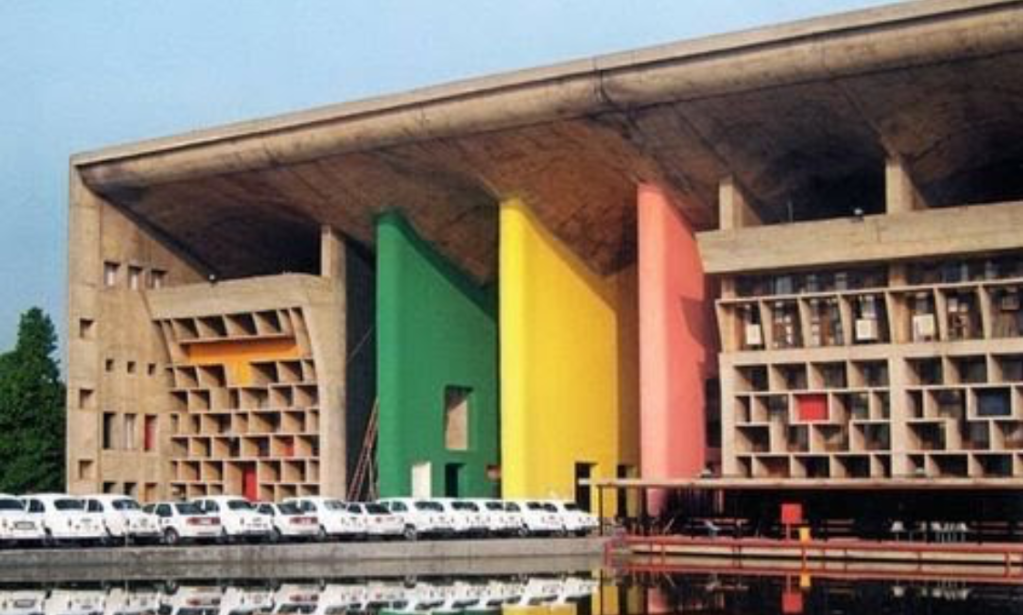
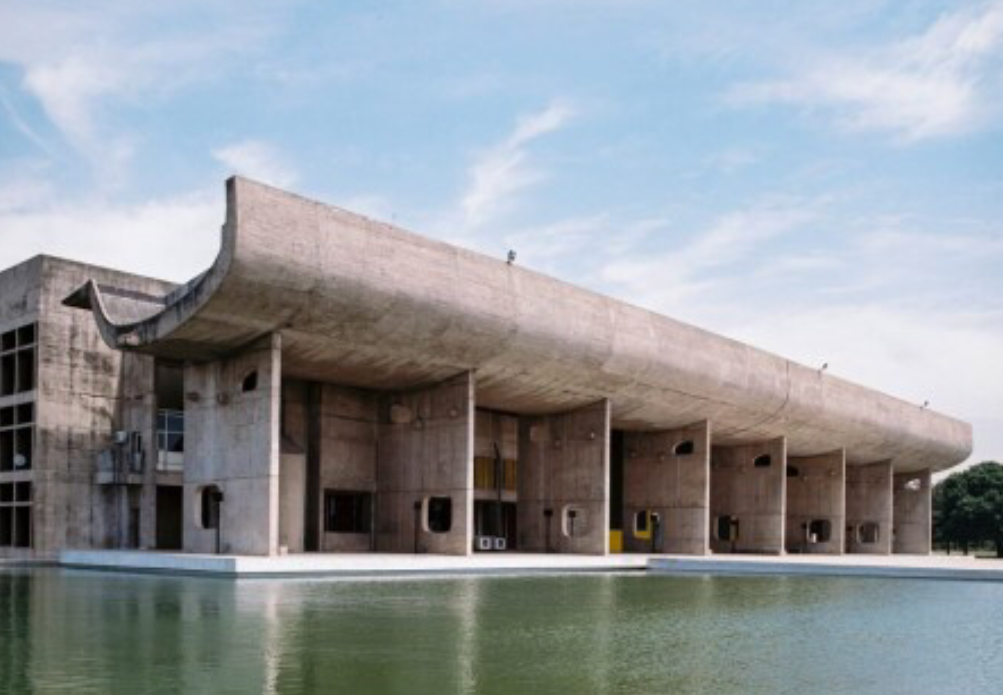
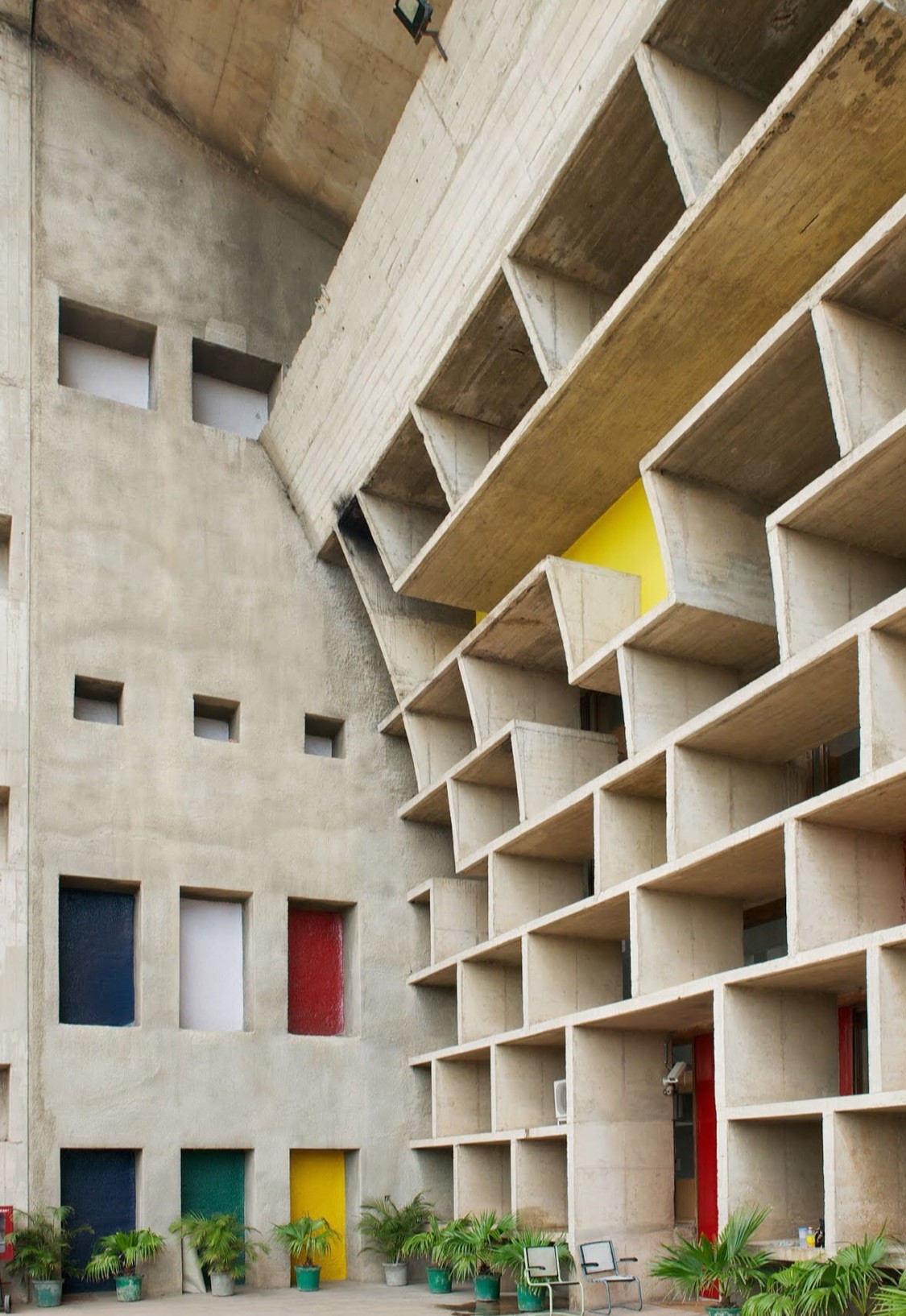
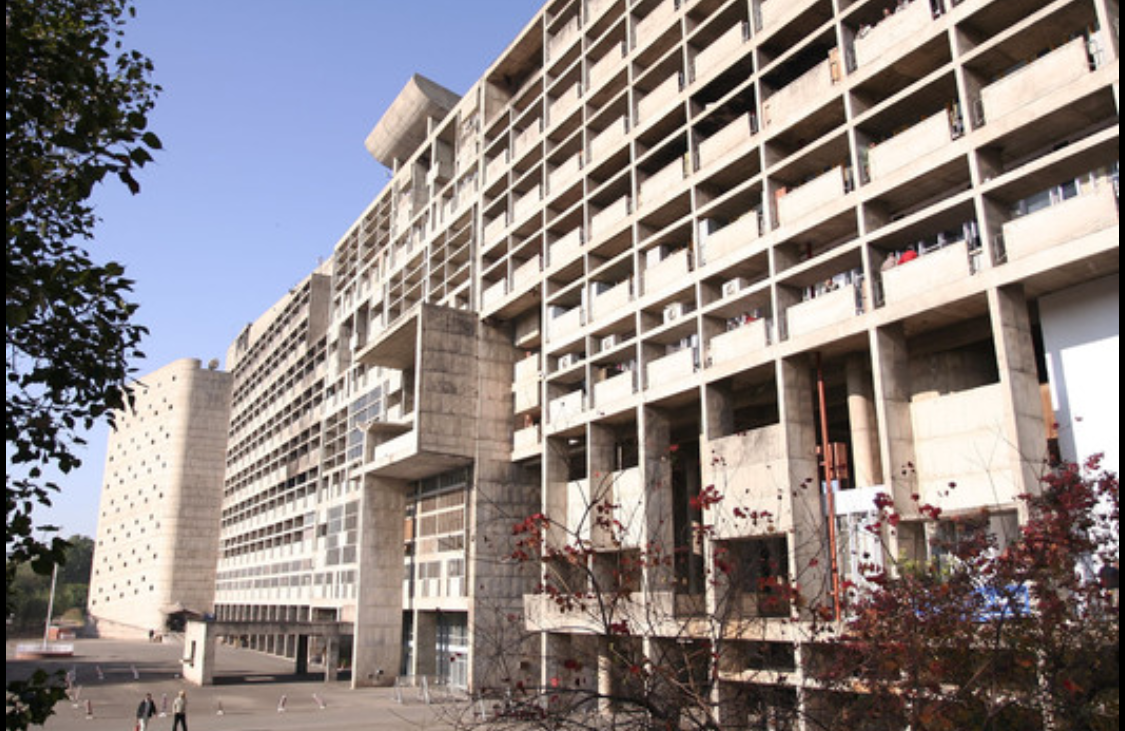
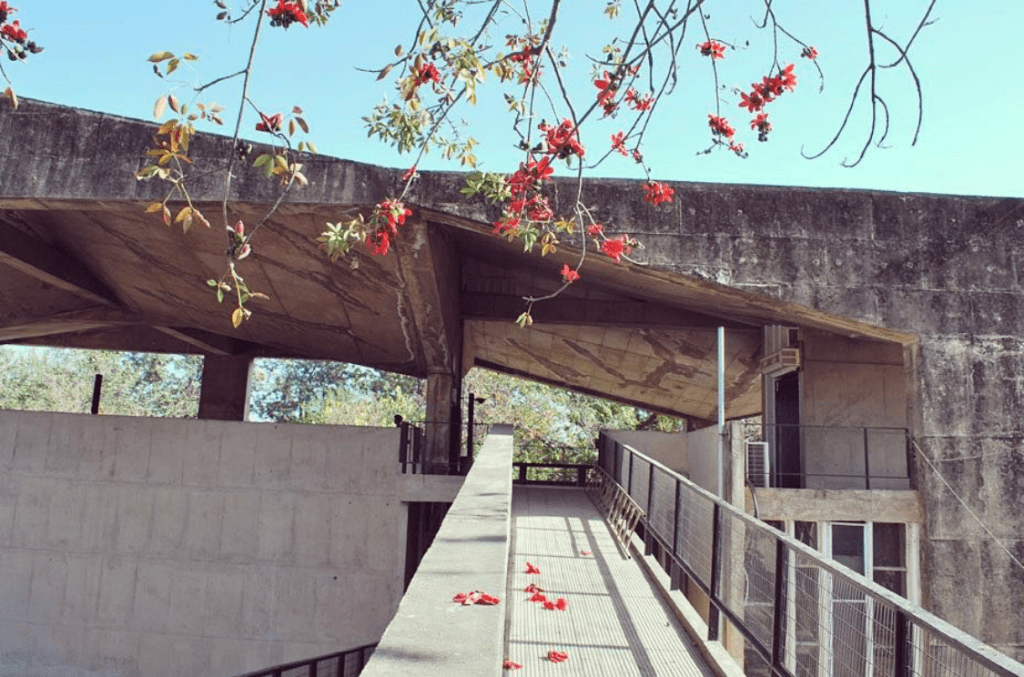
Corbusier’s buildings in the tropical climate of Chandigarh show his pact with nature. He has used the brise soleil technique to keep buildings cooler in the harsh sun by adding shade creating areas in the façade of the building while using concrete construction throughout. His signature elements of beton brut construction and brise soliel techniques are evident in the buildings he designed for the capitol complex.
Buildings of the Capitol Complex, the Open Hand Monument, and the College of Architecture
The stark grey concrete simplicity and the organized calm of Chandigarh stands in complete contrast to the chaotic and colorful mess that is India – these 15,000 acres stand as a testament to Nehru and Corbusier’s vision for a modern India.
Frank Lloyd Wright (1867 – 1959) is a uniquely American artist who created America’s distinct architectural style based on its vast open lands and prairies. The combination of a Midwestern upbringing, the launch of his architectural career in Chicago, and the building boom in Chicago after the Great Chicago Fire of 1871 all propelled him towards architectural greatness – something his mother had predicted for him when she decorated his nursey with engravings of English cathedrals.
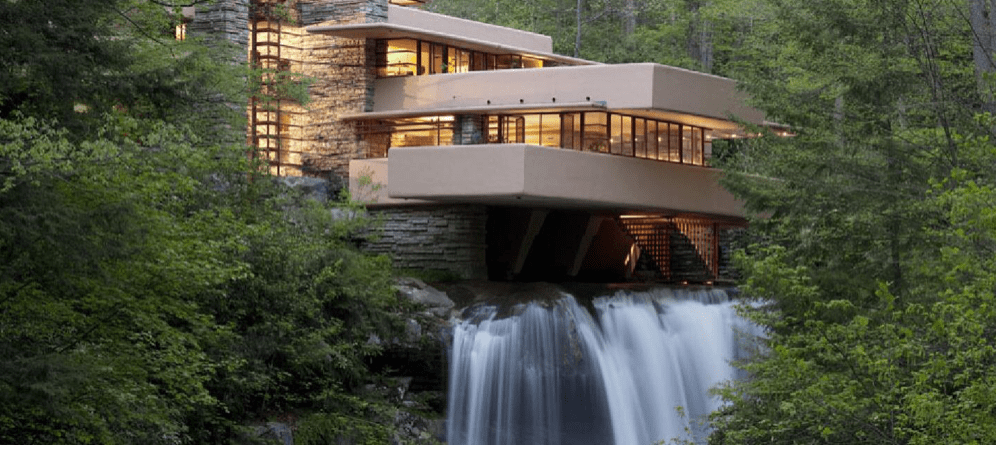
Fallingwater
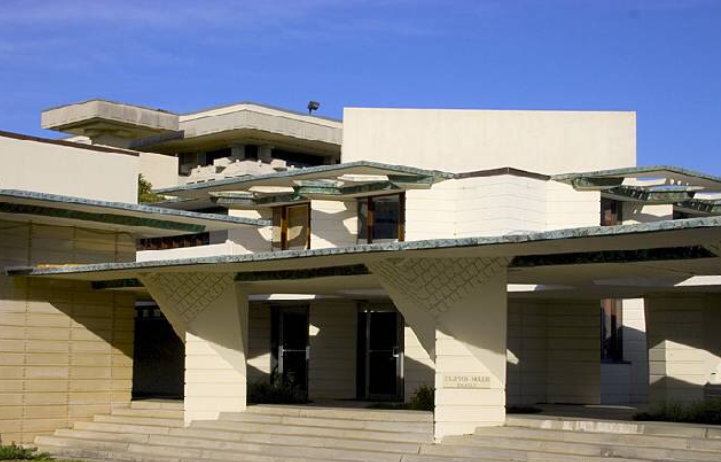
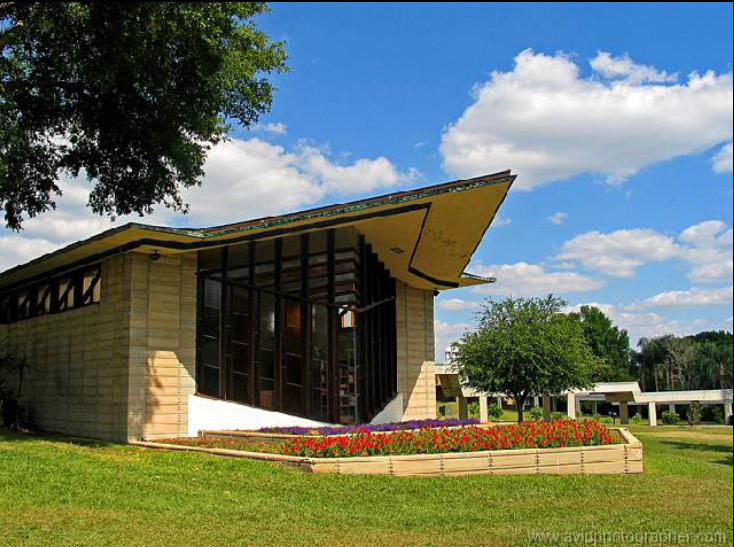
Wright’s genius in blending nature and architecture is most fully realized in Fallingwater in Fayette County, Pennsylvania. This incredible home was set directly on the water fall that the owners wanted to enjoy. On a larger scale he built the Guggenheim museum in the shape of a spiraling nautical shell. Those of us living in Central Florida, do not have to venture far to see the works of Frank Lloyd Wright – the largest collection of his buildings on one site is right here in Florida Southern College.
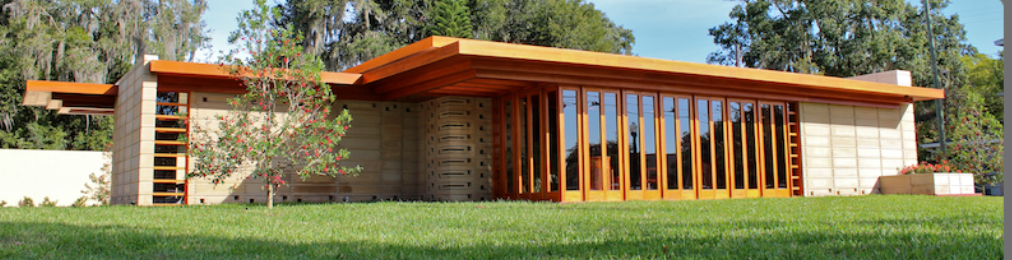
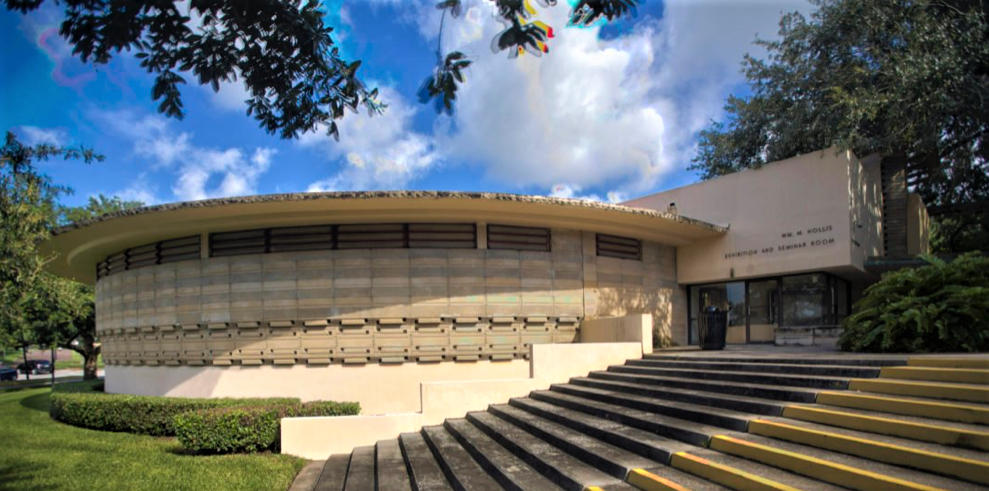
In 1938, Ludd Spivey, president of the College reached out to Wright to help with the expansion of the college. Wright who had been wanting to build an entire community jumped at the chance. He designed 12 structures for this campus including a chapel, a water dome, and miles of covered walkways, collectively called “Child of the Sun”.
The Great Depression would have halted the construction of these buildings but for the ingenious solution that the college arrived at – students were used for construction labor in exchange for free tuition – a win-win situation during the country’s great economic crisis. When WWII started and male students left – the female students took over the task of construction.
Female Students carried on the task of construction on campus when the male students left for WWII
In 1975, this stunning campus with its concentration of Wright architecture was listed in the National Register of Historic Places. (Images courtesy of FSC site and fallingwater.org).










 mimisawhney.com