How Good is this Gouda

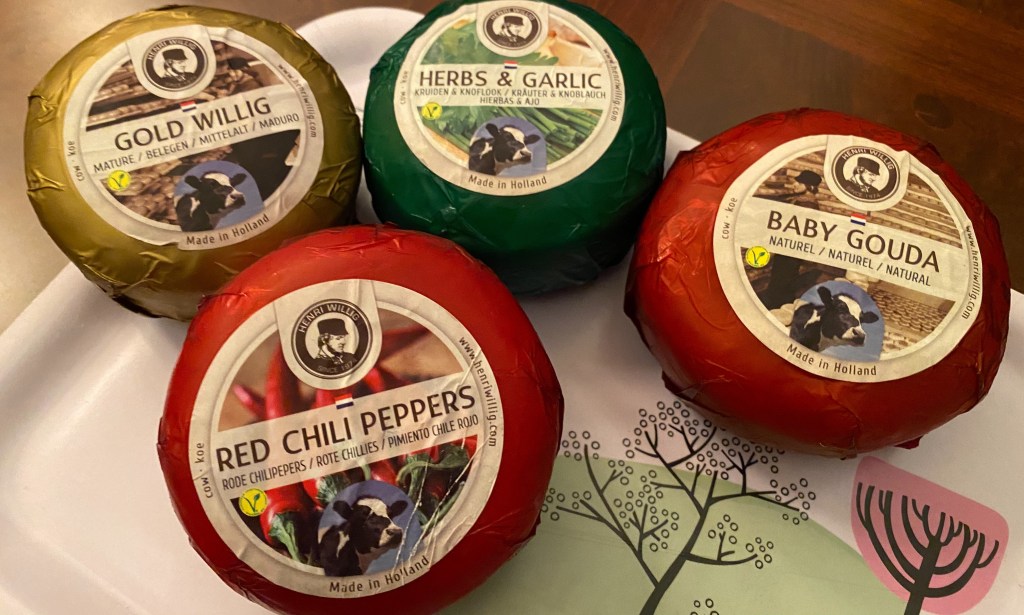
Different varieties of Gouda- all equally yummy!!

I’ve been eating a lot of the Gouda cheese we bought from our trip to Amsterdam over Christmas, and I have to admit it is fast becoming one of my favorite cheeses.  Gouda is made from cow’s milk and is instantly recognizable because of its shape, which it gets from the mold in which the cheese is set.

Gouda gets its name from the town of Gouda in Amsterdam.  The name, unlike some other cheese names, is not patented, so we can get a Wisconsin Gouda.  To get the authentic Dutch Gouda, look for the name Noord-Hollandse Gouda.

One interesting thing to note is that one assumes that if it is named after the town of Gouda, it must be made there.  In reality, it is called Gouda not because it is made there, rather because since 1540, Gouda had the sole market rights or a monopoly to sell this cheese in their market square.

Even now, every spring and summer, the cheese market is in full swing every Thursday, where the cheese is weighed and traded in exactly the same way today as it has been for hundreds of years. The cheese wheels are delivered on house cart by farmers to the trading market in front of the town hall.  The farmers and traders settle on a price by the clapping of hands known as handjeklap – smacking each other’s hands as they negotiate the price.
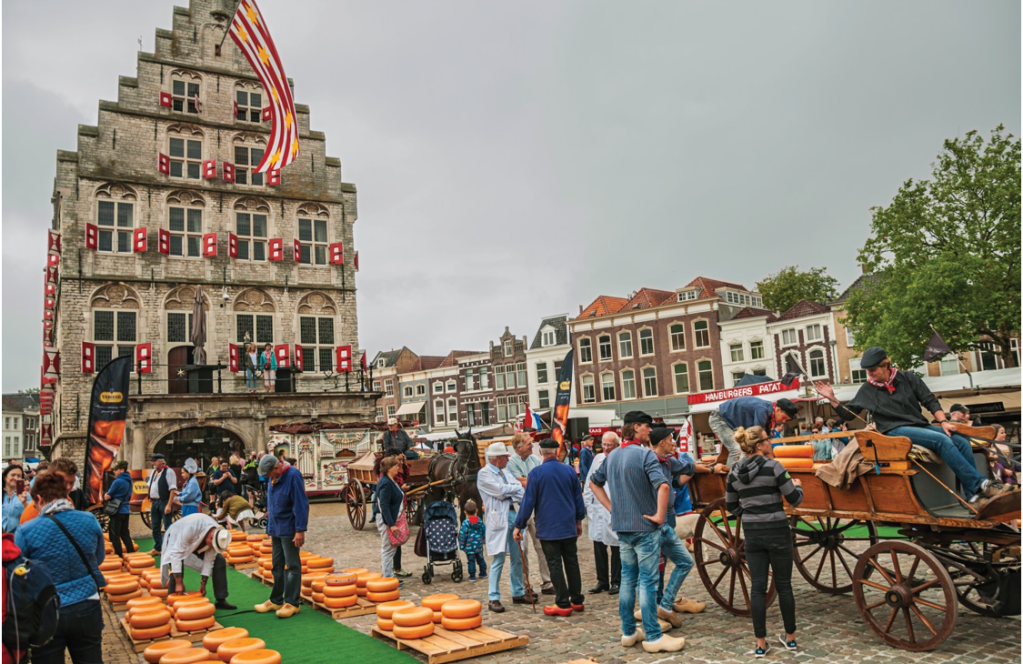
Trading market at Gouda (image courtesy: visitholland.com)

Hope you enjoyed this little background on the world’s most popular cheese and where it gets its name.

Percontation Point

Earlier this week I learned about another wonderful punctuation mark that seems to have fallen out of use – or I should say never really caught on – Percontation point or the Rhetorical Question mark. It might be used most appropriately in – are you crazy – where clearly the speaker is not expecting a response.

The backward question mark.

In the late 16th century, English printer Henry Denham was concerned that the unsavvy readers of English may not catch on to the fact that the question did not require a response and proposed the use of a backward question mark to indicate a rhetorical question. It didn’t really catch on and it fell out of use completely by the 17th century.

I can see it being quite useful on Twitter where one often doesn’t know whether a response is required or not. It also has found use in art work and tshirts.

Paraskevidekatriaphobia

As I started thinking about the superstition and fears connected with today,  Friday the 13th, I came across the brilliant name for this fear –paraskevidekatriaphobia – now that’s a final round American Bee Spelling word right there!!

Paraskevi – which in Greek means Friday

Dekatria – Greek for thirteen, and

Phobia – fear in English.

The word led me to thinking about other phobias. If you are fearful of number 13 you have Triskaidekaphobia – so  Paraskevidekatriaphobia without the Paraskevi.

Sesqui Chocolate Chip Cookies and milk

Ironically, Hippopotomonstrosesquippedaliophobia is the fear of long words, it’s also called sesquipedalophobia for short!!

Sesqui – Greek for 1.5 – as in I had sesqui chocolate chip cookies and milk for lunch today .

Pedalis – Greek for anything related to feet.

So a fear of words that are a foot and a half long, with hippo and monstrose thrown in for good measure.

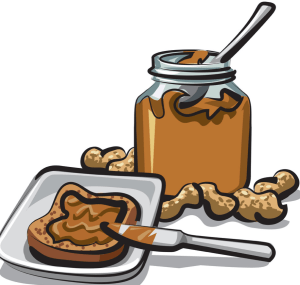
Another really useful one is Arachibutyrophobia, which is the fear of peanut butter sticking to the roof of your mouth – hmmm…should have saved some of my milk for the arachibutyro instead of finishing it with my sesqui cookie treat.

Arachibutyrophobia – Need Milk?

Arachi – Greek for peanut

Butyro – from the Greek word for Butter

So did the Greeks have peanut butter? And not sure what part of the word means sticking to the roof of your mouth. But an important word nonetheless for when one finds themselves in this sticky situation. 

One that I definitely do not have is Turophobia – a fear of cheese – on the contrary I have an absolute love for Parmesan, Gouda, Cheddar, Swiss – but I digress.  The Greek word Turi which means cheese, gives this phobia its name.

Ah .. for the love of Gouda, Parmesan, Swiss, & Cheddar

My parents sometimes behave like they have Ephebiphobia – a fear of teenagers though I can’t imagine why. 

No Ephebiphobia causing teenagers here

Ephebi – from the Greek word ephebos meaning youth. The word was coined in 1994 – wonder what the teenagers were up to in 1994 to trigger their own phobia.

Here’s one I have for sure – Nomophobia – the fear of being without my phone.  The word is a portmanteau of no – mobile phone – and phobia. Maybe this is what Munch was warning us about in The Scream.

Nomophobia – I’m not making it up – actually it was made up during a 2010 UK Post Office Study about the world’s obsession with their cell phones.

What are your favorite phobia words ? Please share them in the comments section.

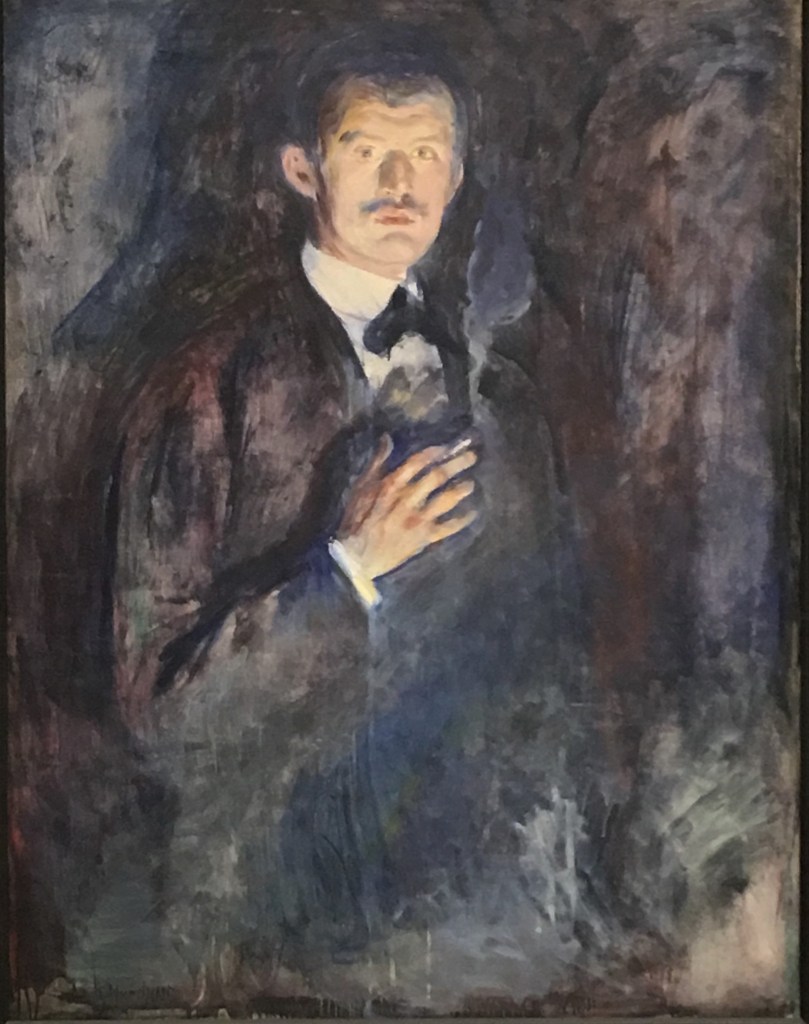
Edvard Munch

Happy Birthday to the artist who gave us The Scream

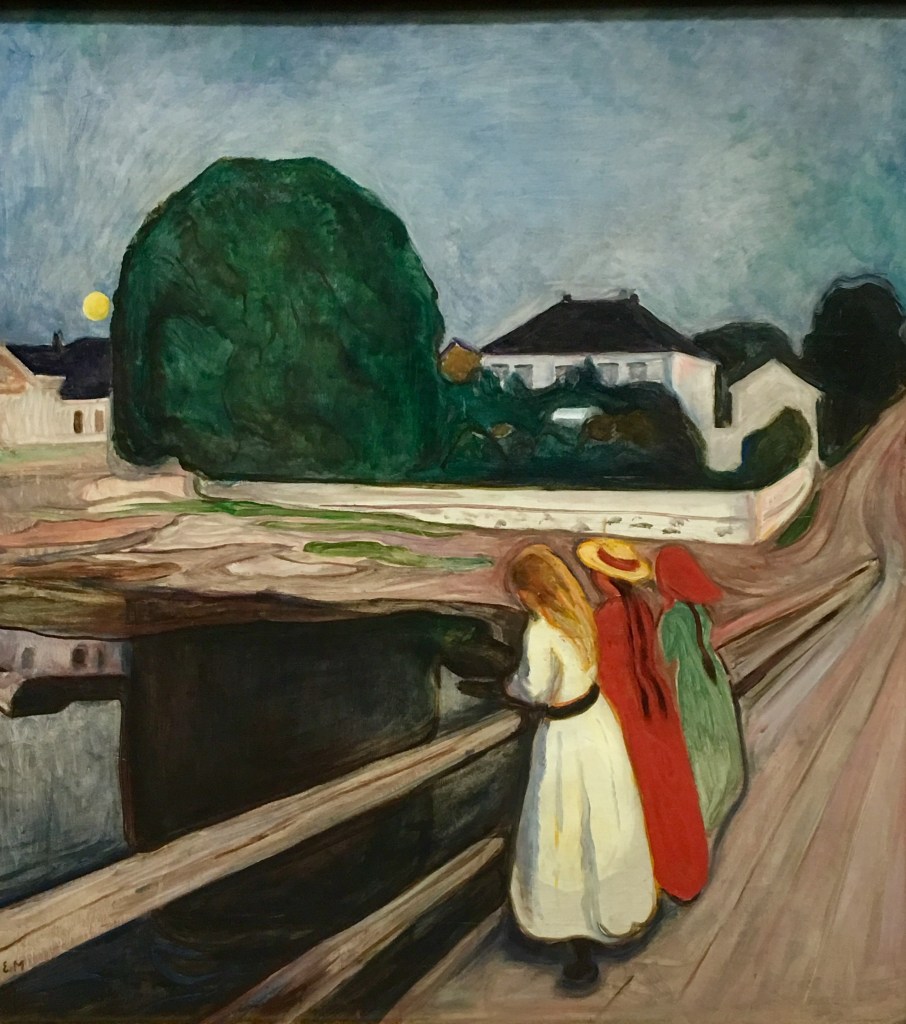
In the late 19th Century there was a flourishing of the arts in Norway – the country’s three shining stars of the era were composer Edvard Grieg, the playwright Henrik Ibsen, and Edvard Munch, the expressionist whose “The Scream” is the second most iconic and well-known painting in the world – second only to the Mona Lisa.  Munch’s existential angst expressed in The Scream is of course a complete contrast to the calmness and serenity of the Mona Lisa.

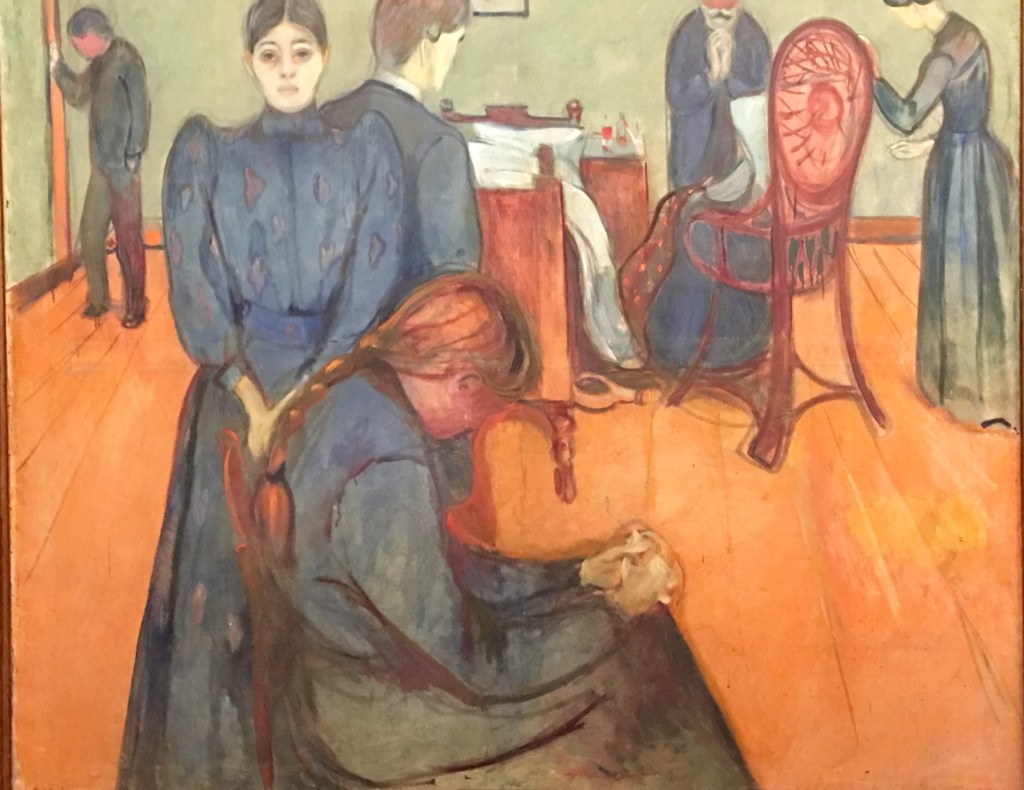
Munch was born on this day, December 12, 1863 into a family that battled illnesses and mental issues, and much of this was expressed in his painting.  His mother and beloved sister both died of tuberculosis, and he was raised by his father who suffered from mental illness.  The scars of his childhood carried into his adult life and expressed themselves in his art.  The Scream was part of a series known as The Frieze of Life – the other were called Melancholy, Jealousy, Despair, Anxiety, and Death in the Sickroom – all of which gives us an insight into Munch’s state of mind.

 The Scream is so well-known that the rest on Munch’s incredible body of work mostly seems to get neglected. Munch lived alone and for him his paintings were like his children. He lived in isloation in his estate outside Oslo surrounding himself with his huge body of work. When he died in 1944, authorities found a collection of over 15,000 prints, almost 4500 drawings, and over a 1000 paintings in his estate. One of the largest collections of his works can be found in the National Museum in his hometown Oslo.

The Scientist Artist

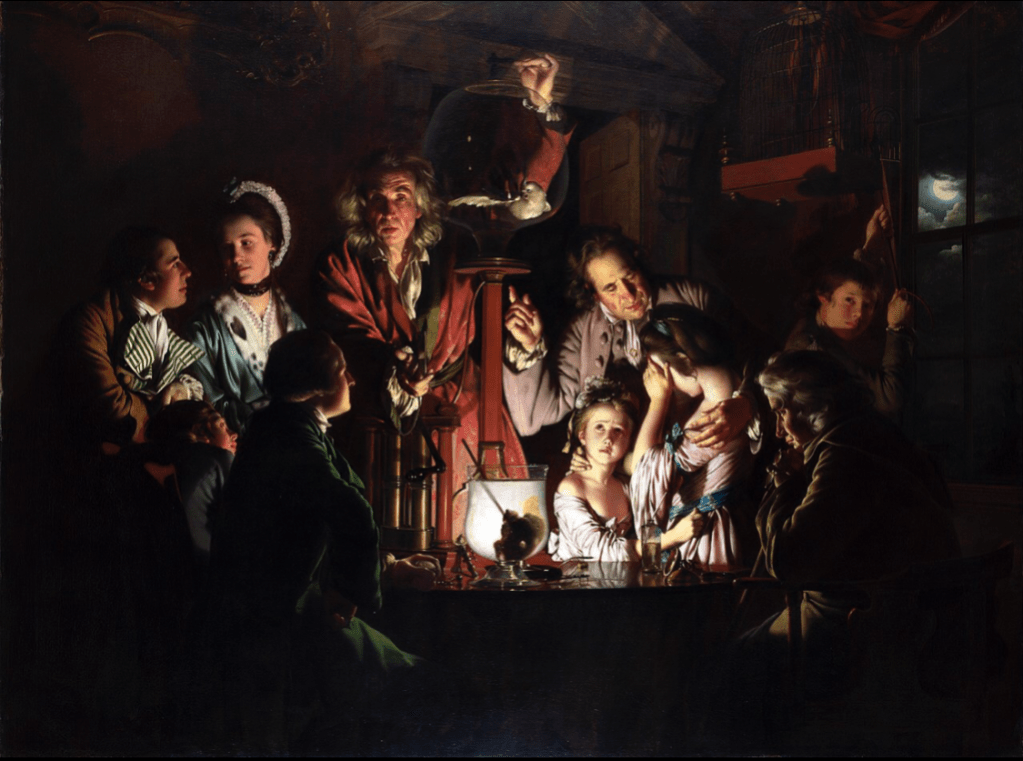
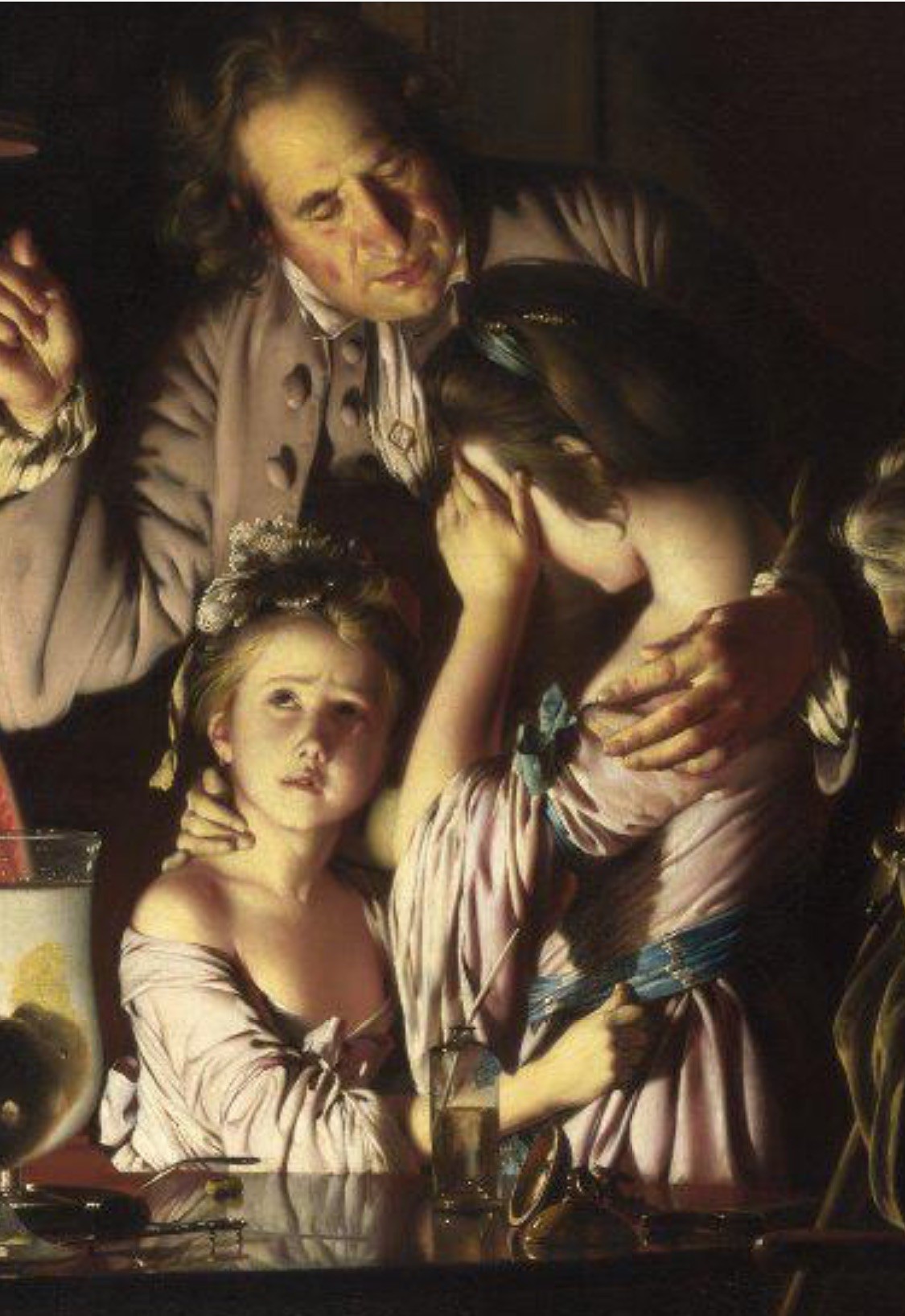
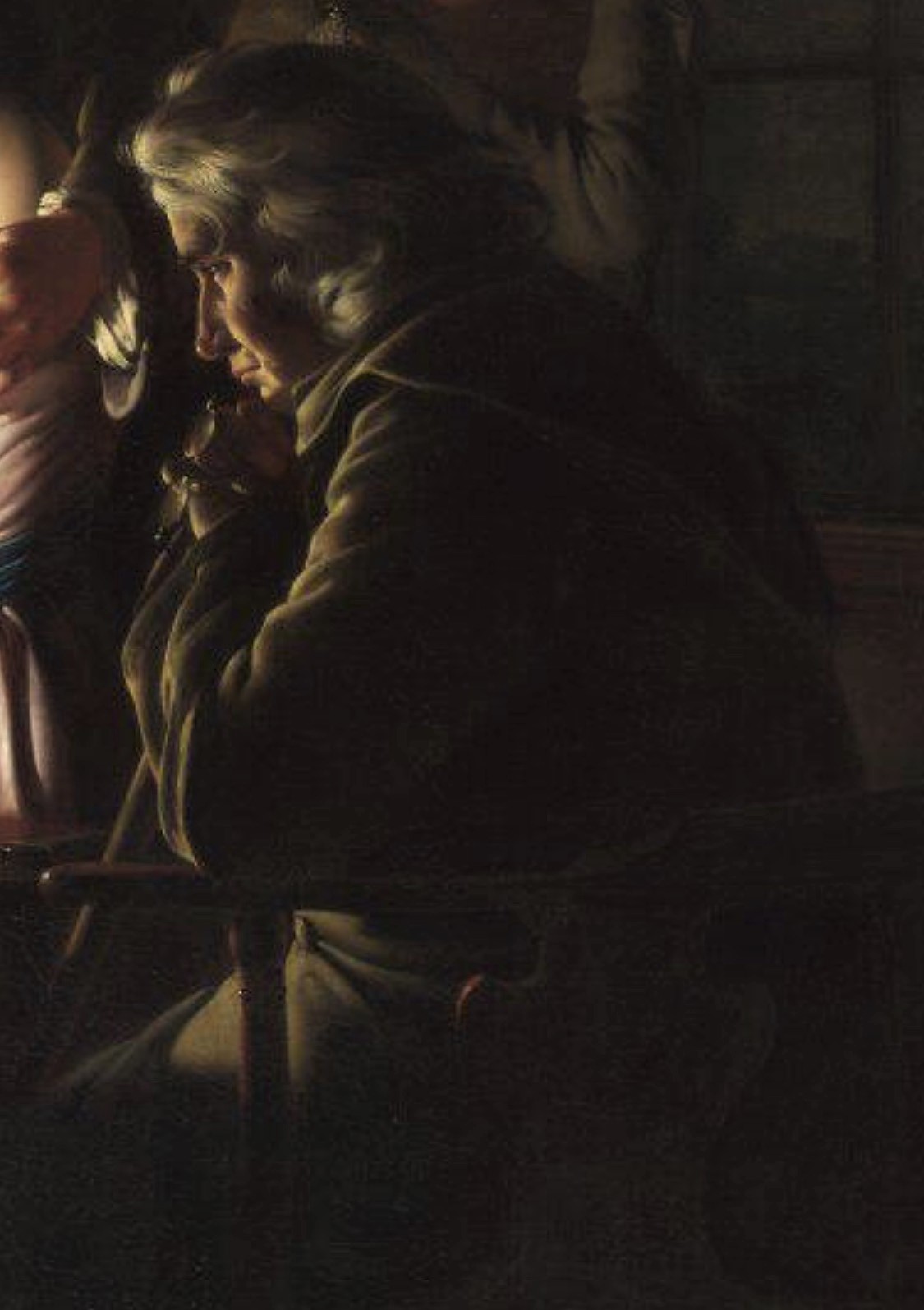
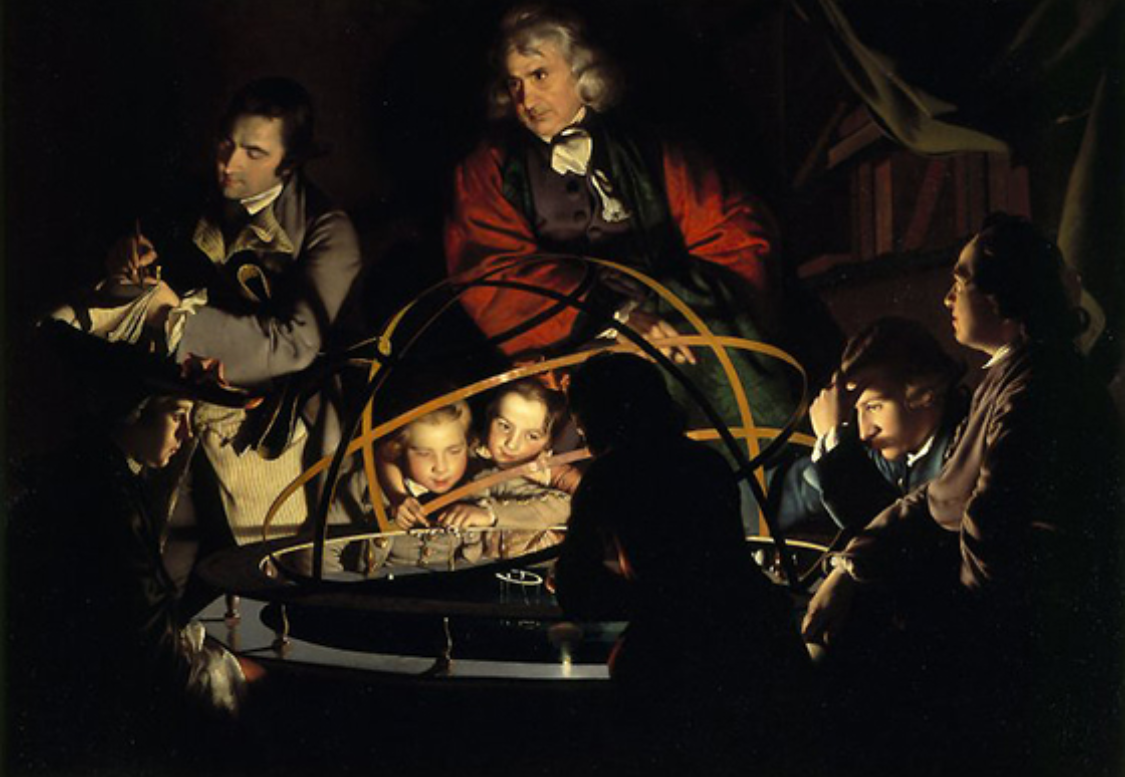
English artist Joseph Wright of Derby (1734 – 1797) was the scientist artist, a master of chiaroscoru – of capturing candlelit nocturnal scenes of fascinating science experiments, a master at capturing the varied human reactions to these experiments. At the same time, his paintings tell us he is an enlightened thinker, a philosopher who is questioning the morality of these experiments, the wisdom in tampering with nature, and in interfering with God’s will.

In An Experiment on a Bird in the Air Pump (1768), he captures the essence of childhood wonder, the passions of youth, and the wisdom of age in the motley group of people that that are viewing the experiment. But for the rudimentary scientific experiment, this could be happening today – and the human element of the painting would remain unchanged – which I think is what makes Joseph Wright of Derby’s work so timeless.

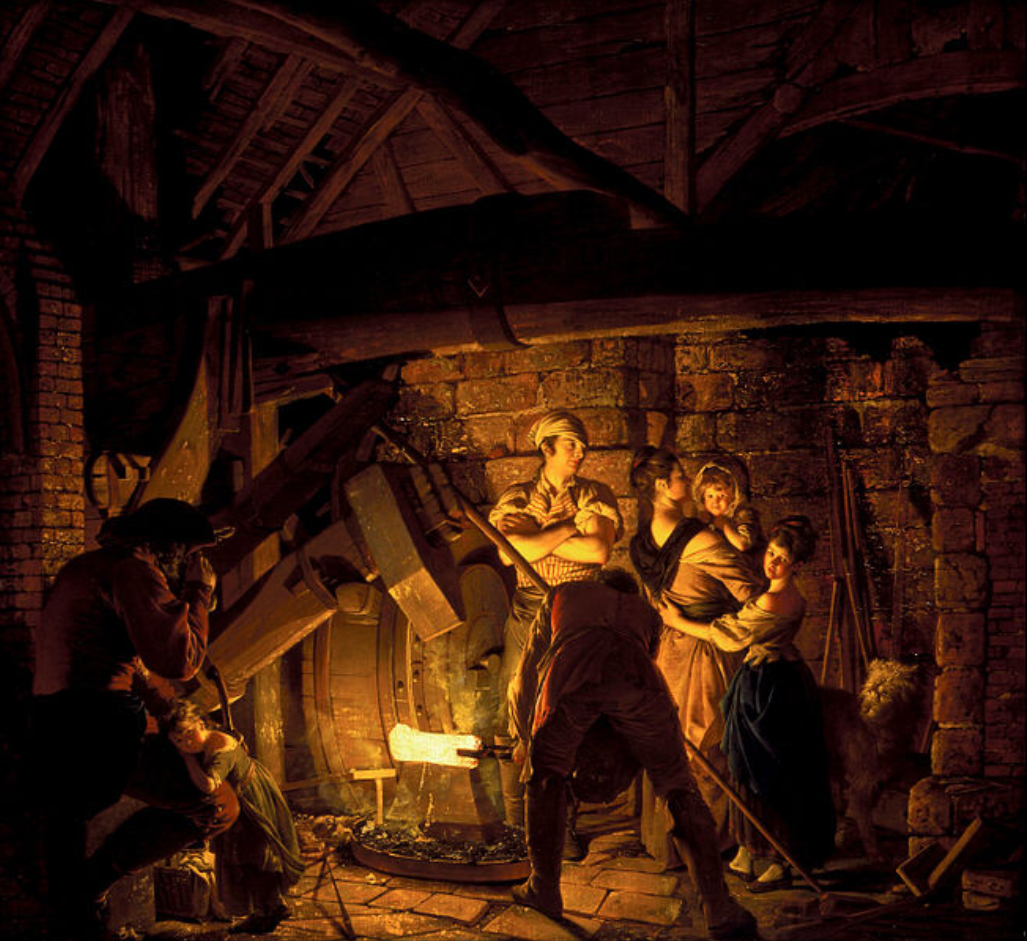
A Philosopher Lecturing on the Orrery (1763 -65), The Alchemist Discovering Phosphorus (1771), and The Iron Forge (1772) (clockwise). In addition to showing the artist’s mastery with the use of chiaroscuro or candlelit effect, they stand as a record of the scientific progress being made in the Age of Enlightenment.