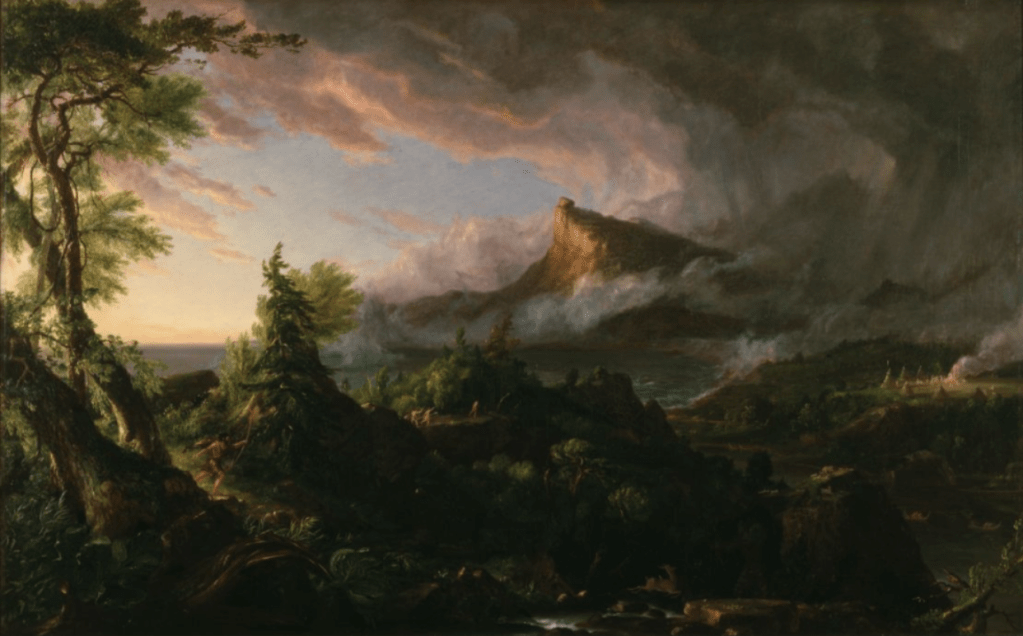
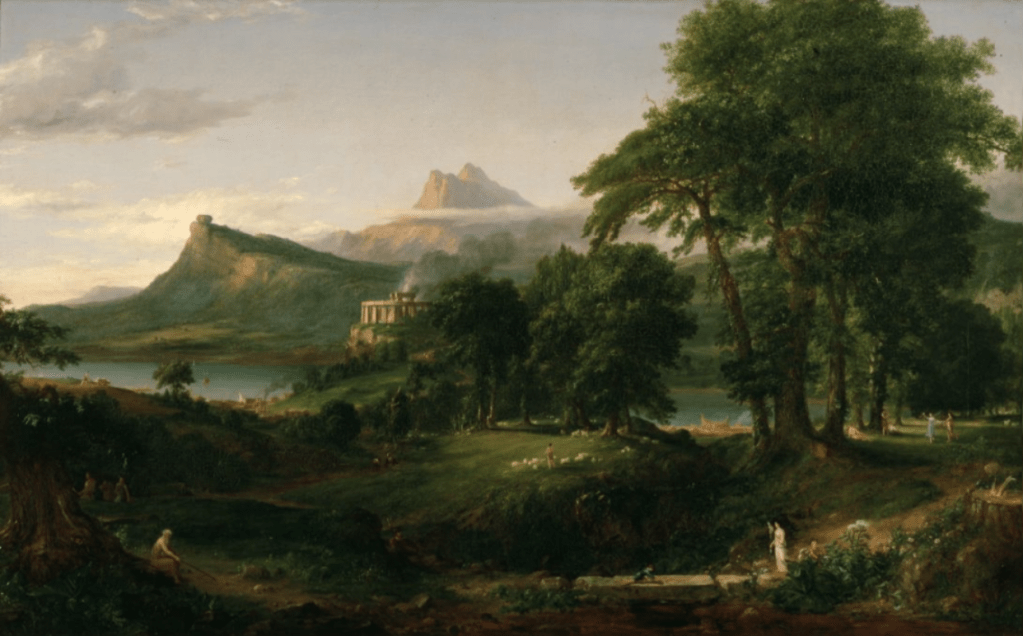
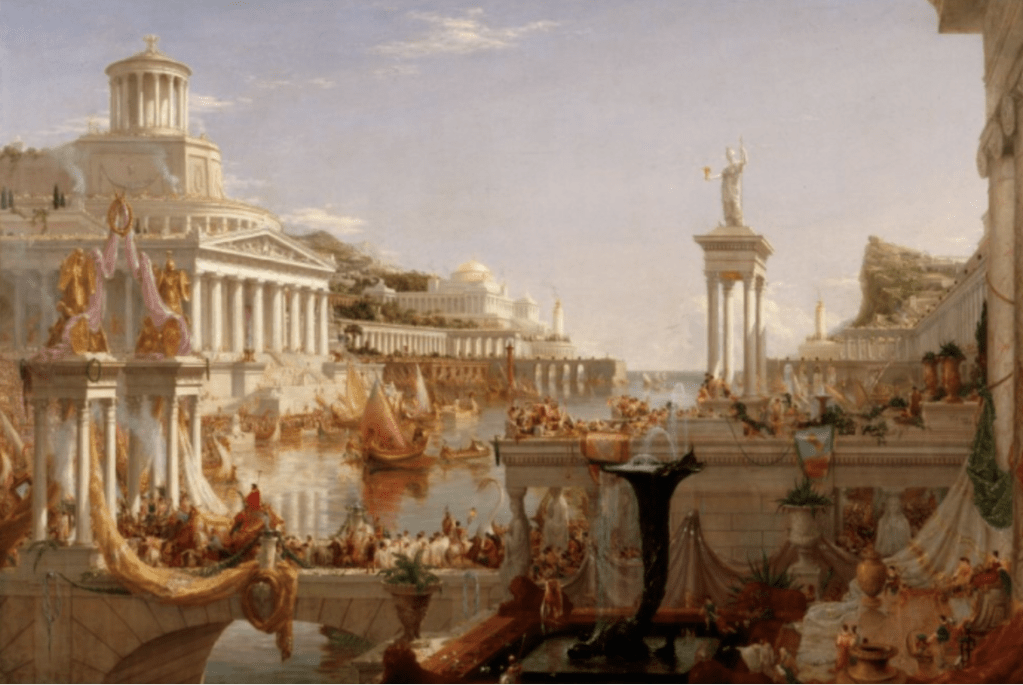
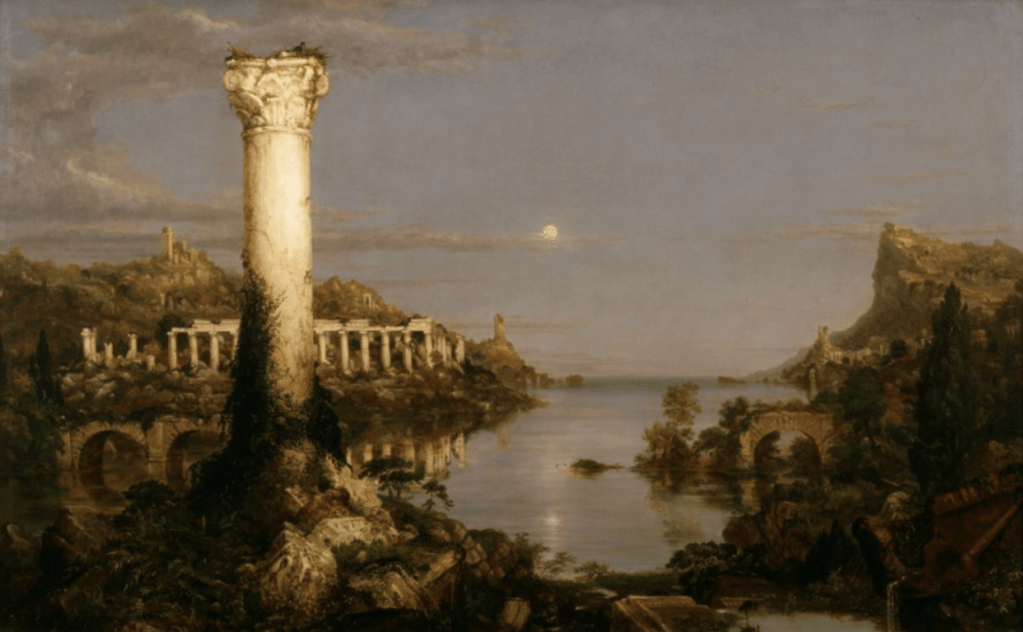
In 1835, Thomas Cole (1801 – 1848) started working on his five series work titled, “The Course of Empire,” in which he outlined the history of man – from nomadic times to a civilized state which ultimately led to the complete desolation of both man and nature. He was commissioned to make a series of paintings by New York businessman Luman Reed – and he used the opportunity to elevate landscape art to the level of history paintings by telling the allegorical tale of the dawn of civilization to its downfall through the deeds of man.
Thomas Cole, The Course of Empire: The Savage State (1833-36)
Thomas Cole, The Course of Empire: The Arcadian or Pastoral State (1833-36)
Thomas Cole, The Course of Empire: The Consummation of Empire (1833-36)
Thomas Cole, The Course of Empire: Destruction (1833-36)
Thomas Cole, The Course of Empire: Desolation (1833-36)
On this Earth Day – as we struggle with climate change and a weakened environment – this series by Cole reminds us of the havoc that man has inflicted upon this planet – and the devastating consequence that awaits us if enough is not done to change paths and take care of the planet that sustains us.
Thomas Cole, The Oxbow (1836)
It is clear from most of Thomas Cole’s work that the pristine beauty and grandeur of the American landscape was close to his heart – he saw in it the sublime hand of God. He and his family had felt firsthand the impact on nature of the industrial revolution in England before they immigrated for America – and perhaps that’s why the untouched mountains and valleys of the great American outdoors were so dear to him. He recorded much of this beauty on his works and left us a record of the way these serene hills, valleys, and flowing rivers looked before man left his imprint upon them.
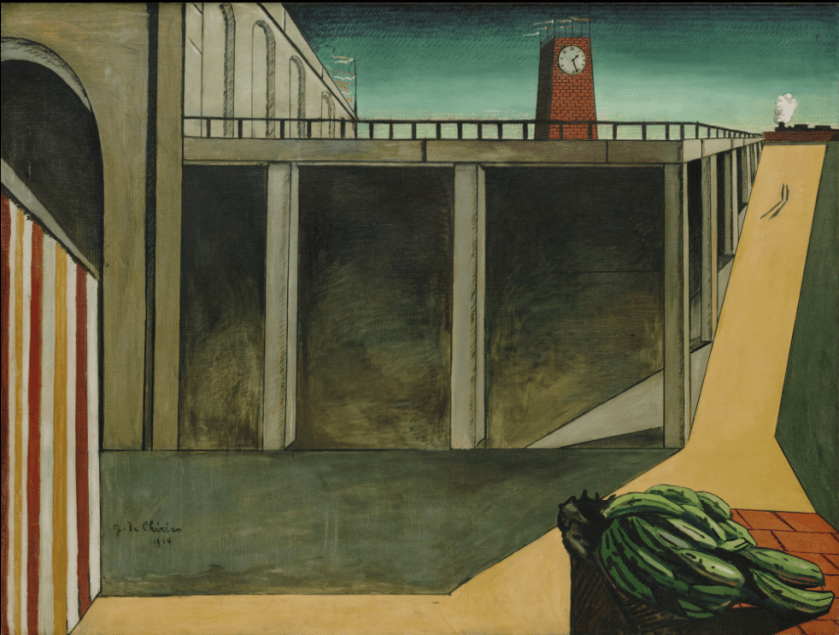
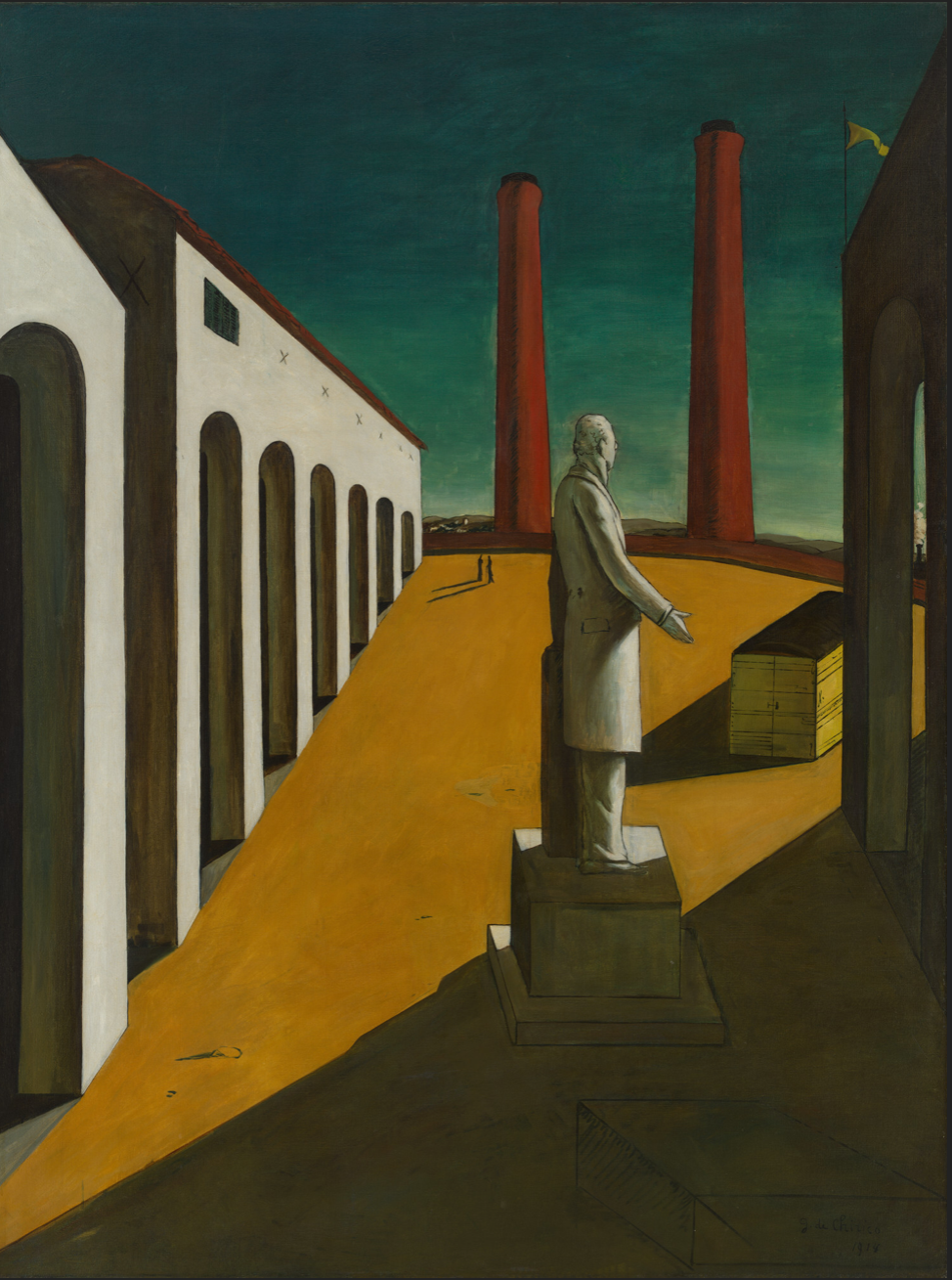
Italian artist Giorgio de Chirico’s (1888 – 1978) works from his highly influential metaphysical period lasted for a few brief years before the start of World War I.
The Enigma of a Day
The works show empty, yet architecturally rich, city landscapes with mesmerizing late afternoon wintertime shadows. That hour of the day when the last remnants of the wintertime sun elongates shadows and invites contemplation about the passage of time. It happens during the last few minutes of daylight during the last few months of the year – perhaps it is that proximity to the end of a recurring cycle which invites contemplation – in this we see the influence of Friedrich Nietzsche’s philosophy in Chirico’s works.
The Anxious Journey, 1913 and Melancholy of Departure 1914
His works are what paintings of dreams would look like- there are symmetrical arches and architectural details with a cubist bent, bright surfaces and dark spaces, empty landscapes with shadows of solitary people or statues of dead people, there is no sense of perspective, wind seems to appear only in certain sections of the painting – smoke from a steam engine billows upwards, while flags fly sideways – looking at his paintings seems to slow down time as one contemplates its passing. They are an enigma – perhaps why he himself named so many of them that way.
The Enigma of a Day
The Enigma of An Autumn Afternoon, and The Enigma of an Oracle.
The metaphysical period of Chirico’s artistic career was brief – from 1911 to 1915 – after the war he drifted towards classical work. Yet, this brief period was highly influential in paving the way for surrealism and the works of Magritte and Dali – and Hopper’s empty landscapes – among others.
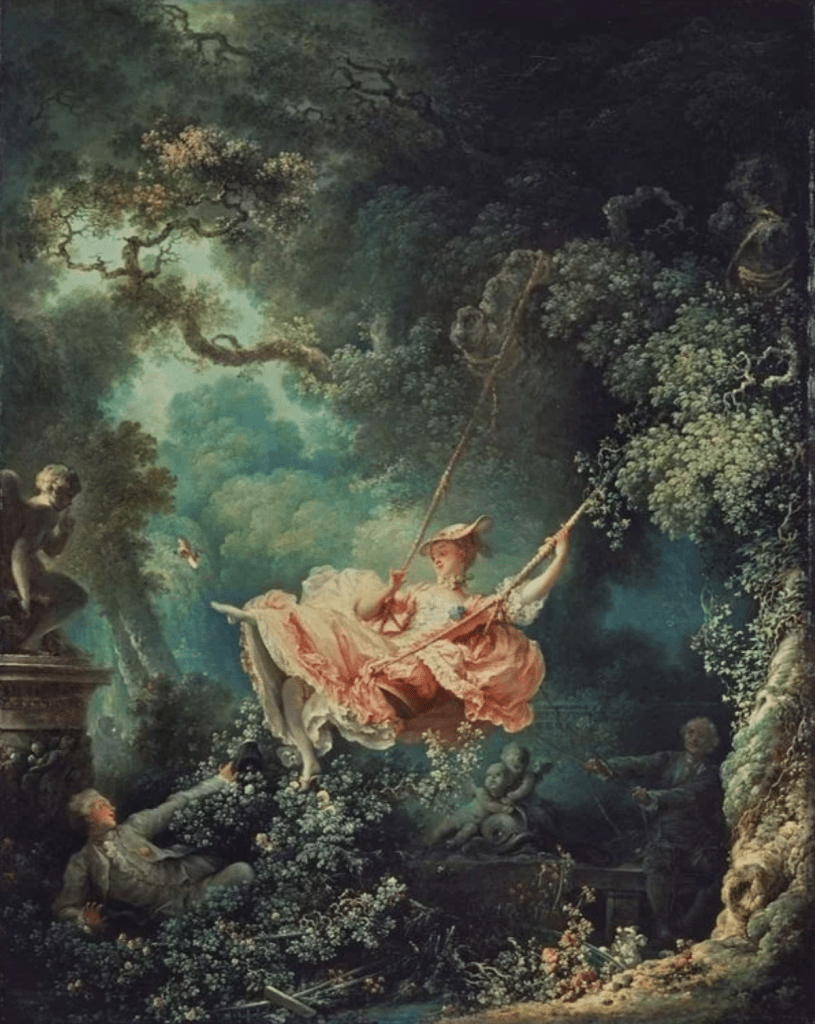
Born on this day – April 5, 1732 -Jean-Honore Fragonard made joyful and exuberant paintings and was one of the most prolific artists in Rococo France. He recorded the excesses of the hedonistic pre-revolutionary French court of Louis XV with bright colors, lavish scenes, lush foliage, playful putti, and over the top pastoral scenery.
Jean-Honore Fragonard, The Swing 1767
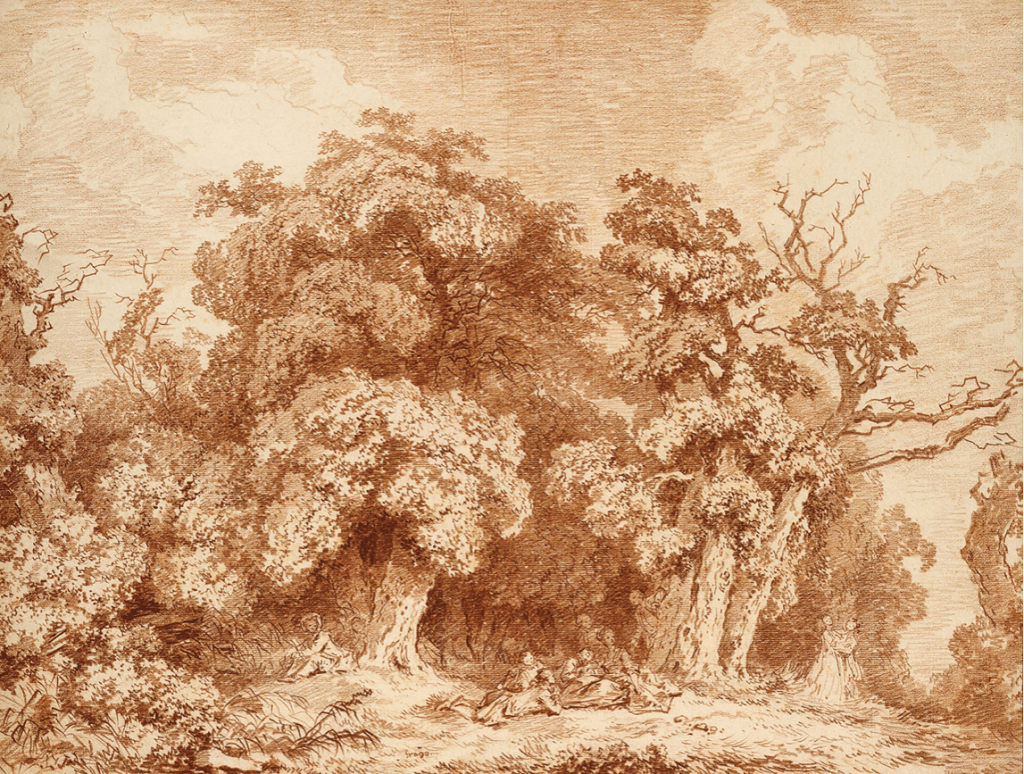
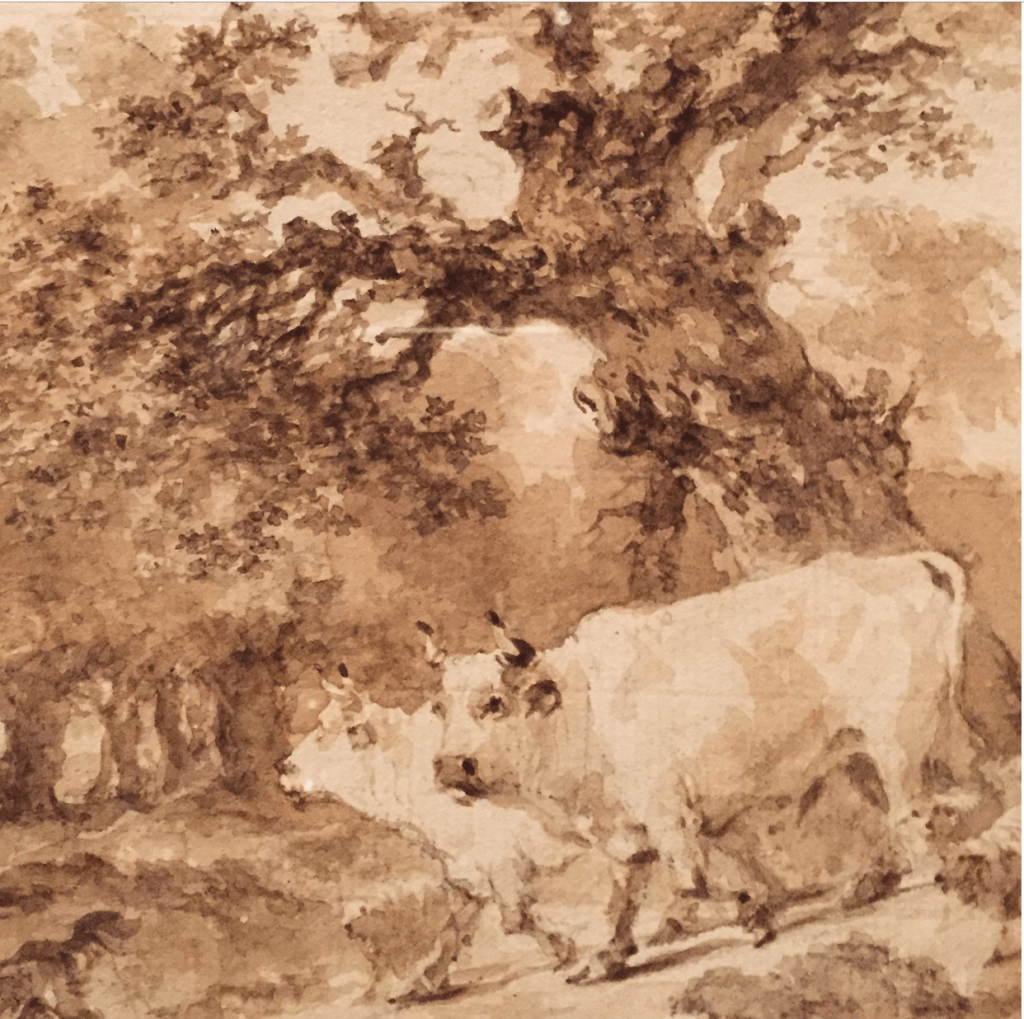
Apart from the paintings in which he records stolen kisses and liaisons between lovers, he also made stunning red ink and crayon drawings of pastoral scenes.
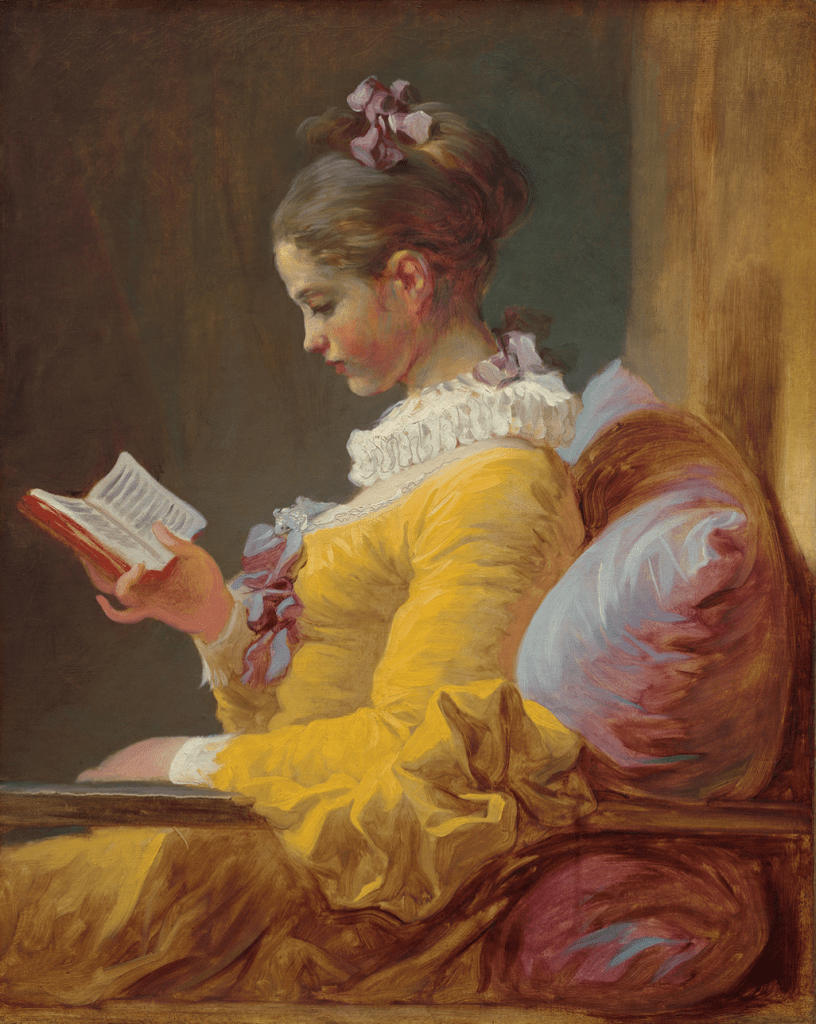
Fragonard also did 14 portraits, known as the fantasy figure series which show people engaged in various activities such as singing, reading, writing etc. According to the write-up for an exhibition of the fantasy figures held at the National Gallery of Art in Washington DC, “these figures are dressed in what was known in 18th-century France as a l’espagnole (Spanish style) – plumed hats, slashed sleeves, ribbons, rosettes, ruffs, capes, and accents of red and black. Shaped by artistic imagination, these paintings pushed the boundaries of accepted figure painting at the time.”
Happy Birthday to this fun-loving and uber talented artist who makes the roaring twenties seem tame in front of Rococo France!!
I am endlessly fascinated by art, paintings, and the stories that make these works come alive. As I was learning about Russian realist artist Ivan Konstantinovich Aivazovsky (1817 – 1900) and his paintings for my previous blog, I was reminded of British artist Joseph Mallard William Turner (1775 – 1851). Both artists captured the power of nature – particularly the sea – with the same passion. Interestingly, the two met in Rome, and Turner, the senior of the two was so impressed with Aivazovsky that he wrote a poem for one of his paintings.
Ivan Aivazovsky, The Ninth Wave (1850)
One of Aivazovsky’s most famous works is The Ninth Wave (1850), which captured the majesty and power of nature and the helplessness of man in the face of this power. The ninth wave, according to legend, is the most powerful wave – and that’s what Aivazovsky has captured in this painting. The group of people have survived the ninth wave and the fiery sunrise in the background brings hope for a new day.
JMW Turner, The Slave Ship (1840)
Turner’s The Slave Ship (1840) too shows the power of the sea and the helplessness of the ship in the face of this power. The sunrise in the back offers hope to the ship, but the tragedy here lies in the fact that the slaves being transported in the ship have been thrown overboard so the Captain can collect insurance for them. The similarities in the two pictures is striking – both capture the wrath of nature and the offer of hope for the survivors as a fiery new day dawns.
JMW Turner, Moonlight, a Study at Millbank (1797)
Both artists have also captured the beauty of a moonlit night. Turner’s A Study at Millbank (1797) captures the glory of the river Thames as a full moon lights up the night.
Ivan Aivazovsky, The Bay of Naples at Moonlight Night (1842)
Aivazovsky’s stunning The Bay of Naples at Moonlight Night (1842) captures the glory of a moonlit night. Among others who were in awe of Aivazovsky’s talent was Turner himself. Turner was so impressed with the young artist’s talents that he wrote a poem after seeing the Bay of Naples at Moonlight Night.
Like a curtain slowly drawn
It stops suddenly half open,
Or, like grief itself, filled with gentle hope,
It becomes lighter in the shore-less dark,
Thus the moon barely wanes
Winding her way above the storm-tossed sea.
Stand upon this hill and behold endlessly
This scene of a formidable sea,
And it will seem to thee a waking dream.
That secret mind flowing in thee
Which even the day cannot scatter,
The serenity of thinking and the beating of the heart
Will enchain thee in this vision;
This golden-silver moon
Standing lonely over the sea,
All curtain the grief of even the hopeless.
And it appears that through the tempest
Moves a light caressing wind,
While the sea swells up with a roar,
Sometimes, like a battlefield it looks to me
The tempestuous sea,
Where the moon itself is a brilliant golden crown
Of a great king.
But even that moon is always beneath thee
Oh Master most high,
Oh forgive thou me
If even this master was frightened for a moment
Oh, noble moment, by art betrayed…
And how may one not delight in thee,
Oh thou young boy, but forgive thou me,
If I shall bend my white head
Before thy art divine
Thy bliss-wrought genius...









 mimisawhney.com