Paraskevidekatriaphobia

As I started thinking about the superstition and fears connected with today,  Friday the 13th, I came across the brilliant name for this fear –paraskevidekatriaphobia – now that’s a final round American Bee Spelling word right there!!

Paraskevi – which in Greek means Friday

Dekatria – Greek for thirteen, and

Phobia – fear in English.

The word led me to thinking about other phobias. If you are fearful of number 13 you have Triskaidekaphobia – so  Paraskevidekatriaphobia without the Paraskevi.

Sesqui Chocolate Chip Cookies and milk

Ironically, Hippopotomonstrosesquippedaliophobia is the fear of long words, it’s also called sesquipedalophobia for short!!

Sesqui – Greek for 1.5 – as in I had sesqui chocolate chip cookies and milk for lunch today .

Pedalis – Greek for anything related to feet.

So a fear of words that are a foot and a half long, with hippo and monstrose thrown in for good measure.

Another really useful one is Arachibutyrophobia, which is the fear of peanut butter sticking to the roof of your mouth – hmmm…should have saved some of my milk for the arachibutyro instead of finishing it with my sesqui cookie treat.
Arachibutyrophobia – Need Milk?

Arachi – Greek for peanut

Butyro – from the Greek word for Butter

So did the Greeks have peanut butter? And not sure what part of the word means sticking to the roof of your mouth. But an important word nonetheless for when one finds themselves in this sticky situation. 

One that I definitely do not have is Turophobia – a fear of cheese – on the contrary I have an absolute love for Parmesan, Gouda, Cheddar, Swiss – but I digress.  The Greek word Turi which means cheese, gives this phobia its name.

Ah .. for the love of Gouda, Parmesan, Swiss, & Cheddar

My parents sometimes behave like they have Ephebiphobia – a fear of teenagers though I can’t imagine why. 

No Ephebiphobia causing teenagers here

Ephebi – from the Greek word ephebos meaning youth. The word was coined in 1994 – wonder what the teenagers were up to in 1994 to trigger their own phobia.

Here’s one I have for sure – Nomophobia – the fear of being without my phone.  The word is a portmanteau of no – mobile phone – and phobia. Maybe this is what Munch was warning us about in The Scream.

Nomophobia – I’m not making it up – actually it was made up during a 2010 UK Post Office Study about the world’s obsession with their cell phones.

What are your favorite phobia words ? Please share them in the comments section.
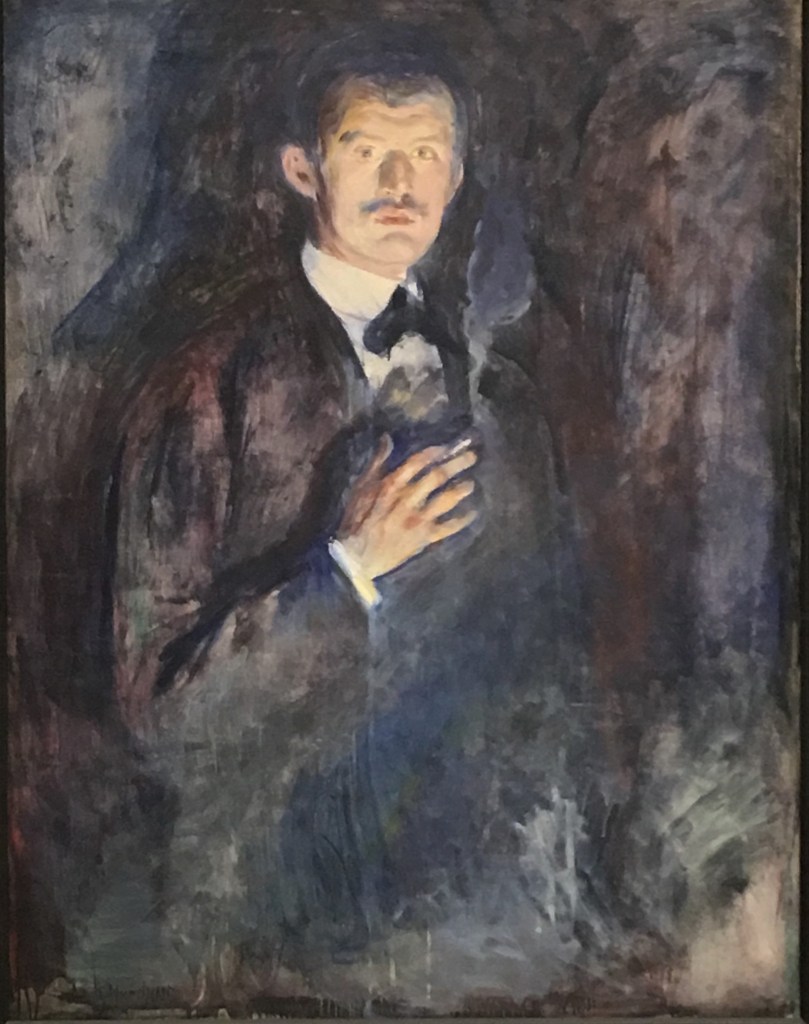
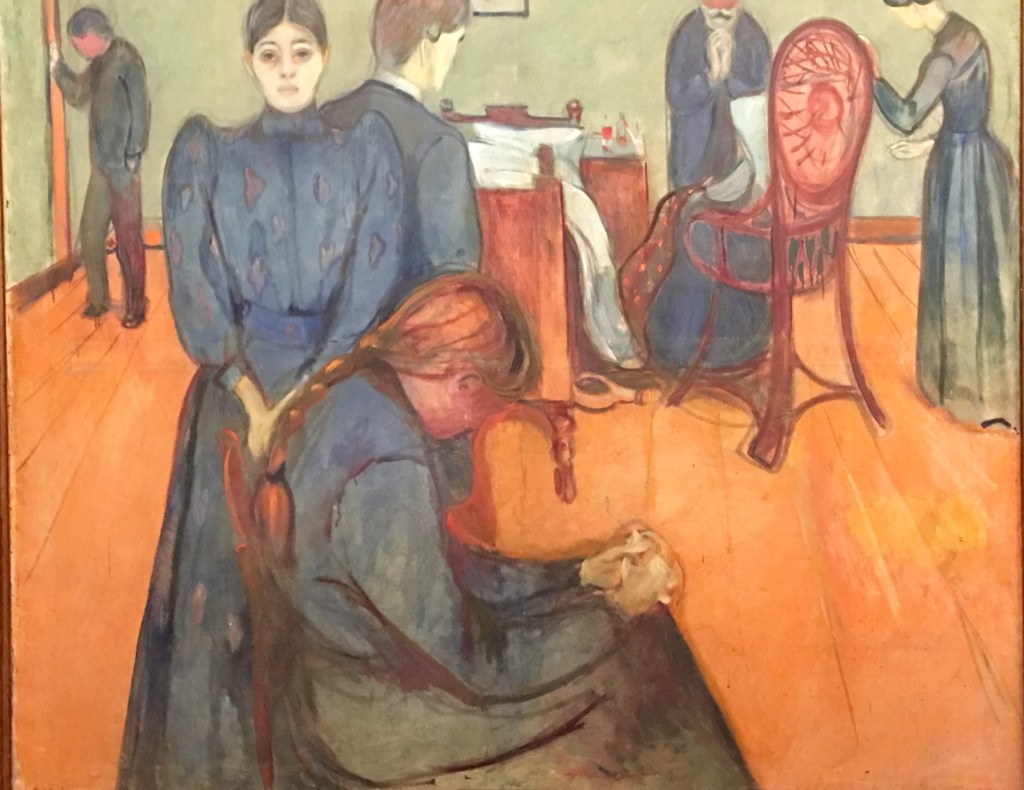
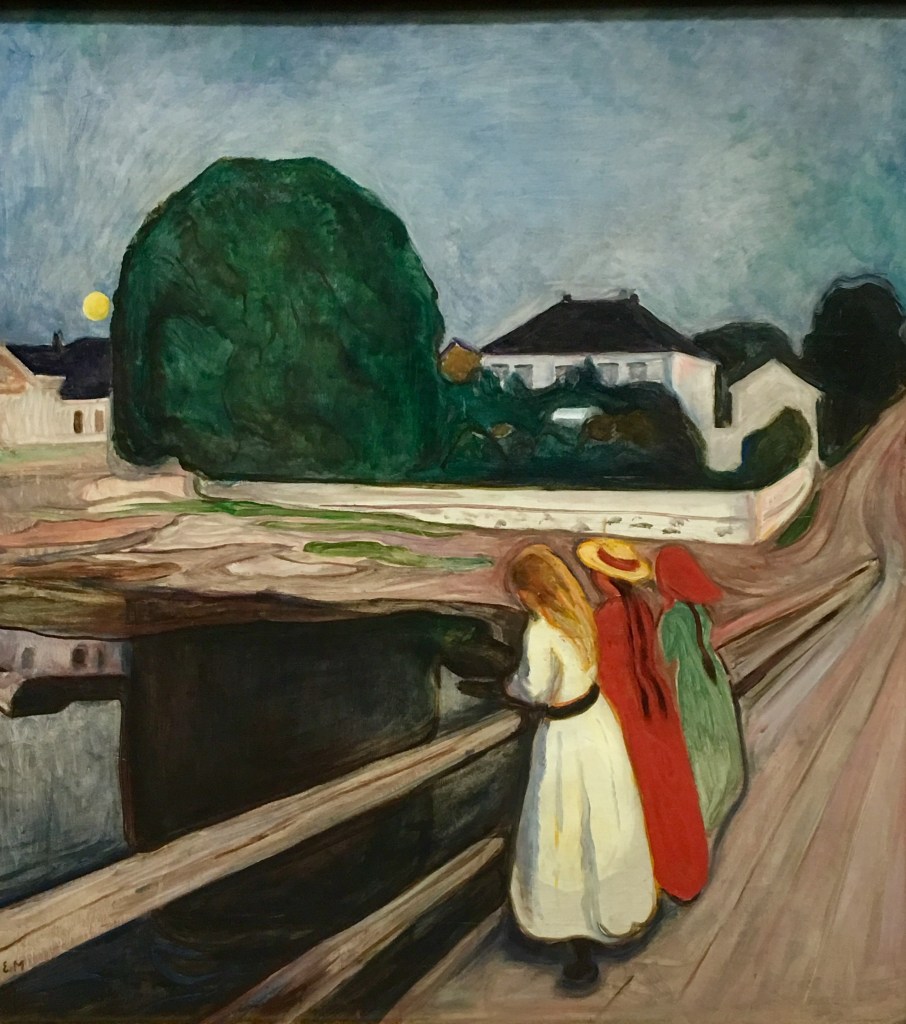
Edvard Munch

Happy Birthday to the artist who gave us The Scream

In the late 19th Century there was a flourishing of the arts in Norway – the country’s three shining stars of the era were composer Edvard Grieg, the playwright Henrik Ibsen, and Edvard Munch, the expressionist whose “The Scream” is the second most iconic and well-known painting in the world – second only to the Mona Lisa.  Munch’s existential angst expressed in The Scream is of course a complete contrast to the calmness and serenity of the Mona Lisa.

Munch was born on this day, December 12, 1863 into a family that battled illnesses and mental issues, and much of this was expressed in his painting.  His mother and beloved sister both died of tuberculosis, and he was raised by his father who suffered from mental illness.  The scars of his childhood carried into his adult life and expressed themselves in his art.  The Scream was part of a series known as The Frieze of Life – the other were called Melancholy, Jealousy, Despair, Anxiety, and Death in the Sickroom – all of which gives us an insight into Munch’s state of mind.

 The Scream is so well-known that the rest on Munch’s incredible body of work mostly seems to get neglected. Munch lived alone and for him his paintings were like his children. He lived in isloation in his estate outside Oslo surrounding himself with his huge body of work. When he died in 1944, authorities found a collection of over 15,000 prints, almost 4500 drawings, and over a 1000 paintings in his estate. One of the largest collections of his works can be found in the National Museum in his hometown Oslo.
The Scientist Artist

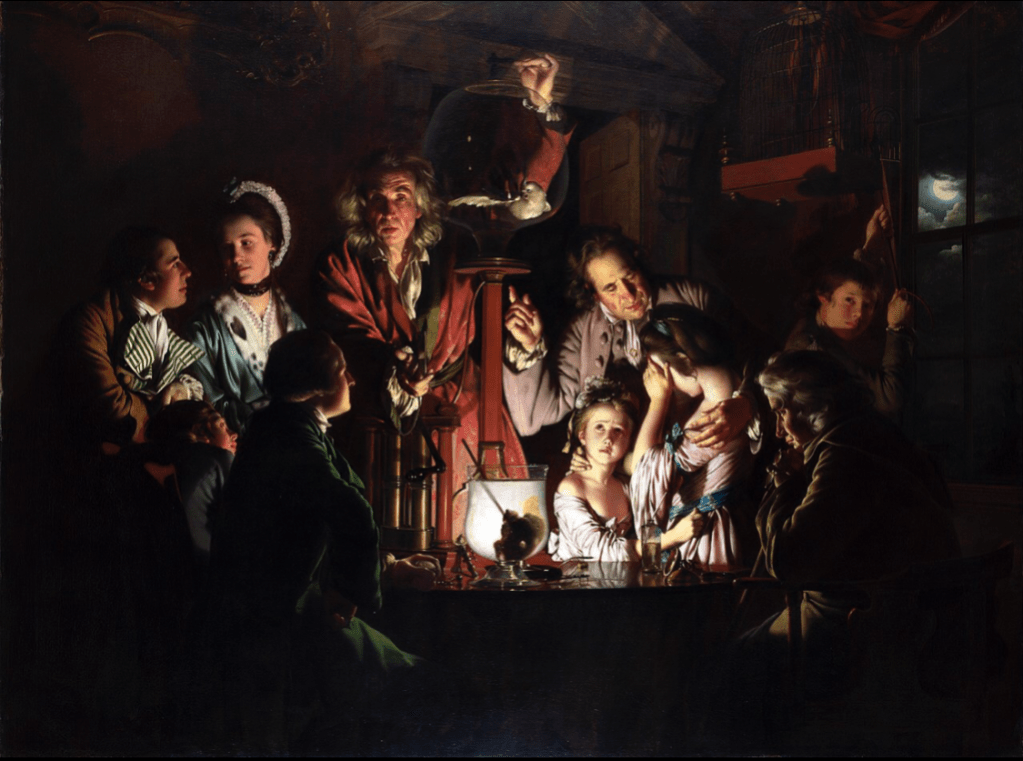
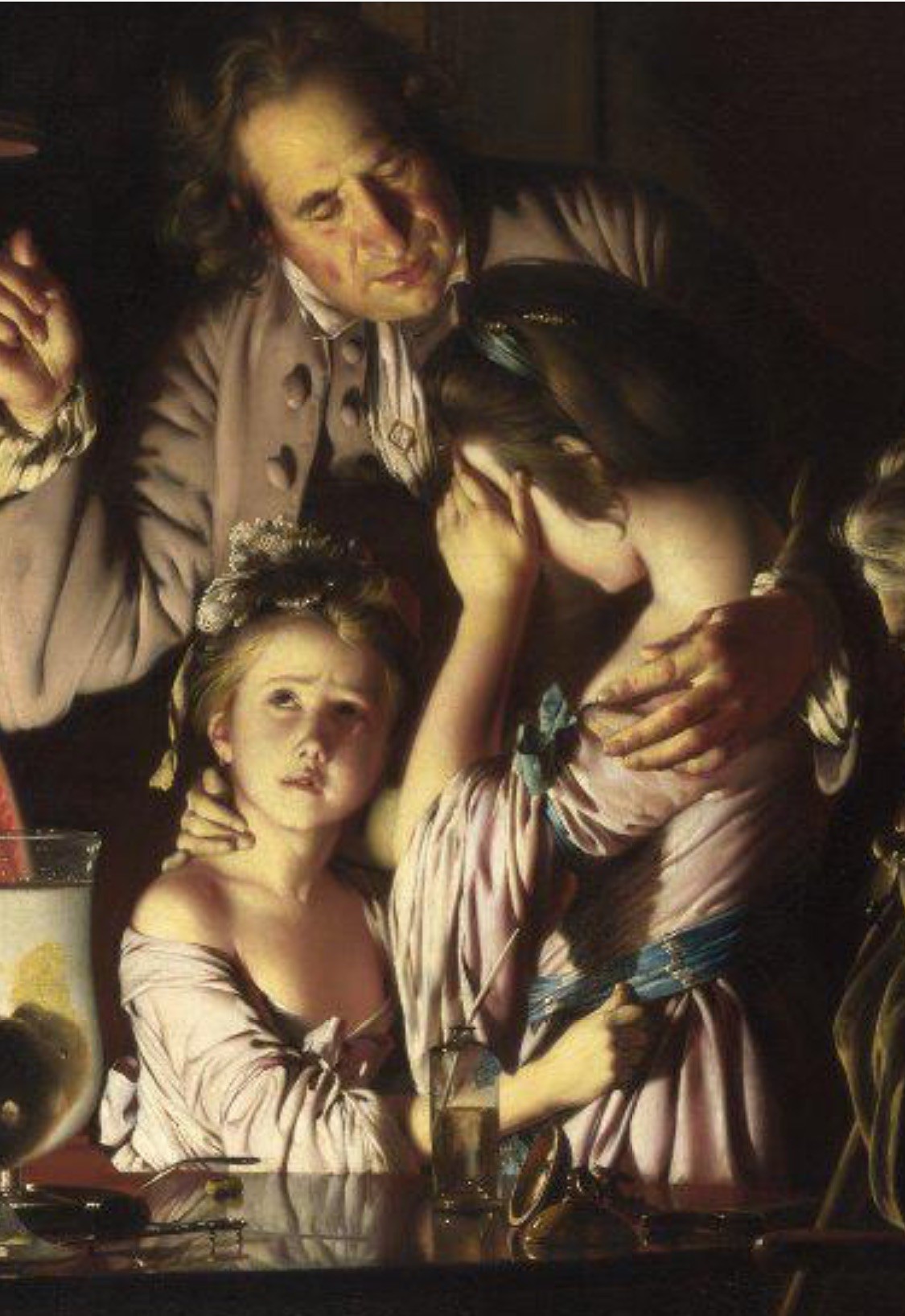
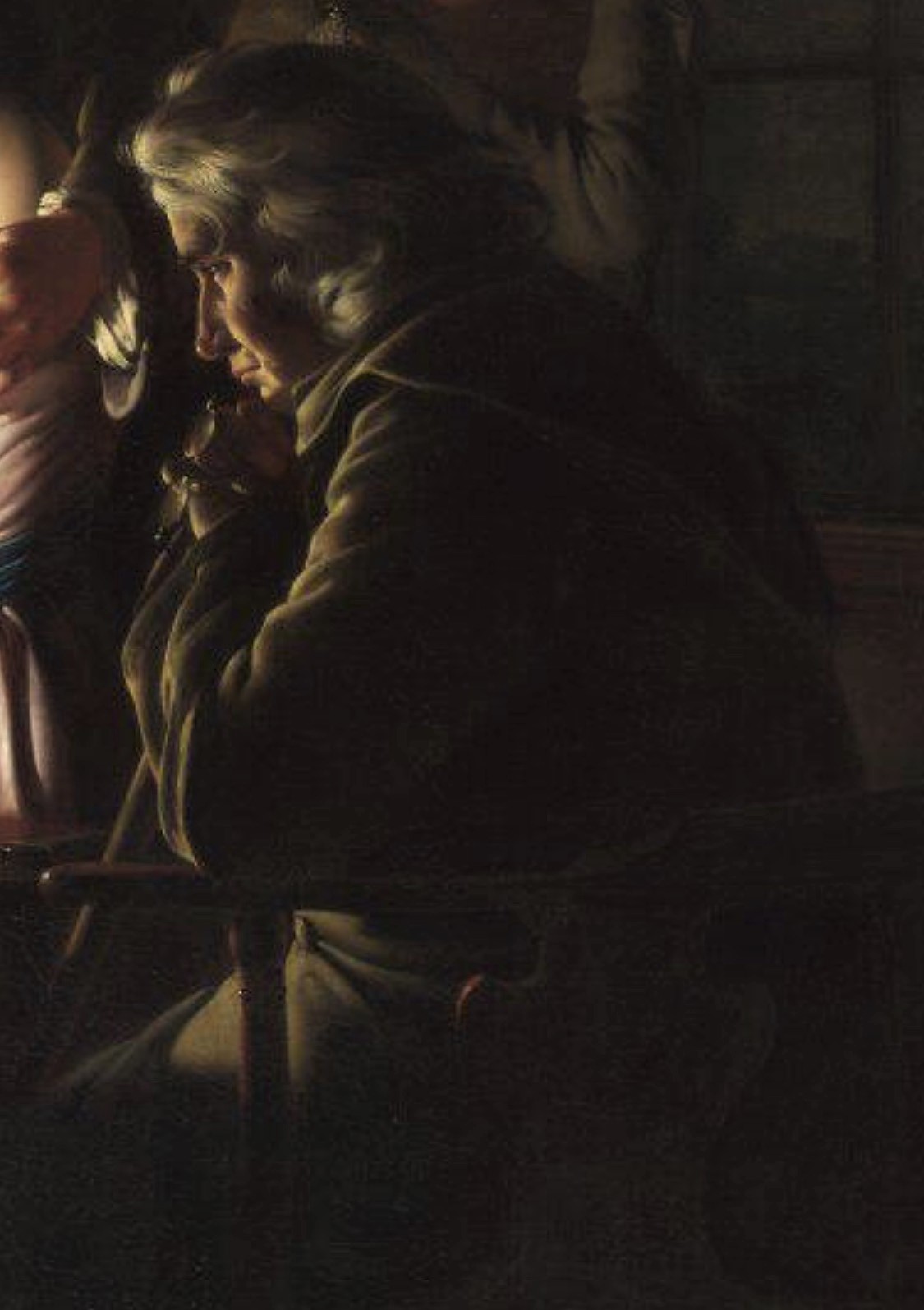
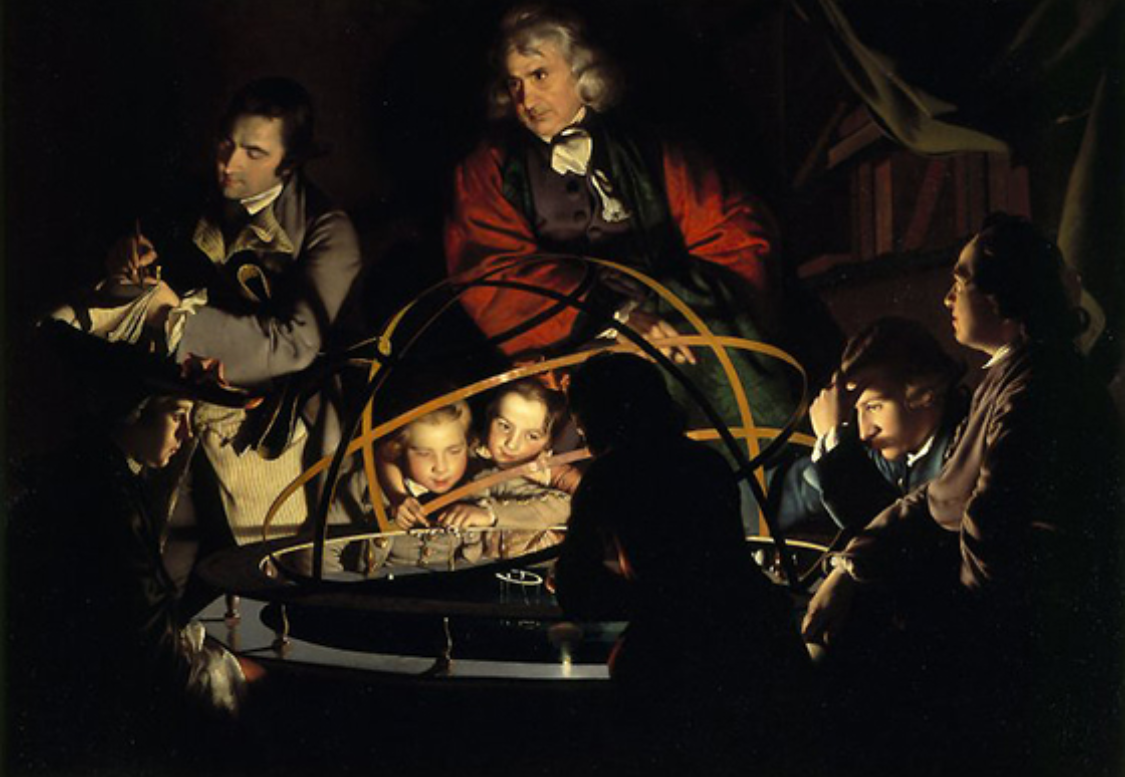
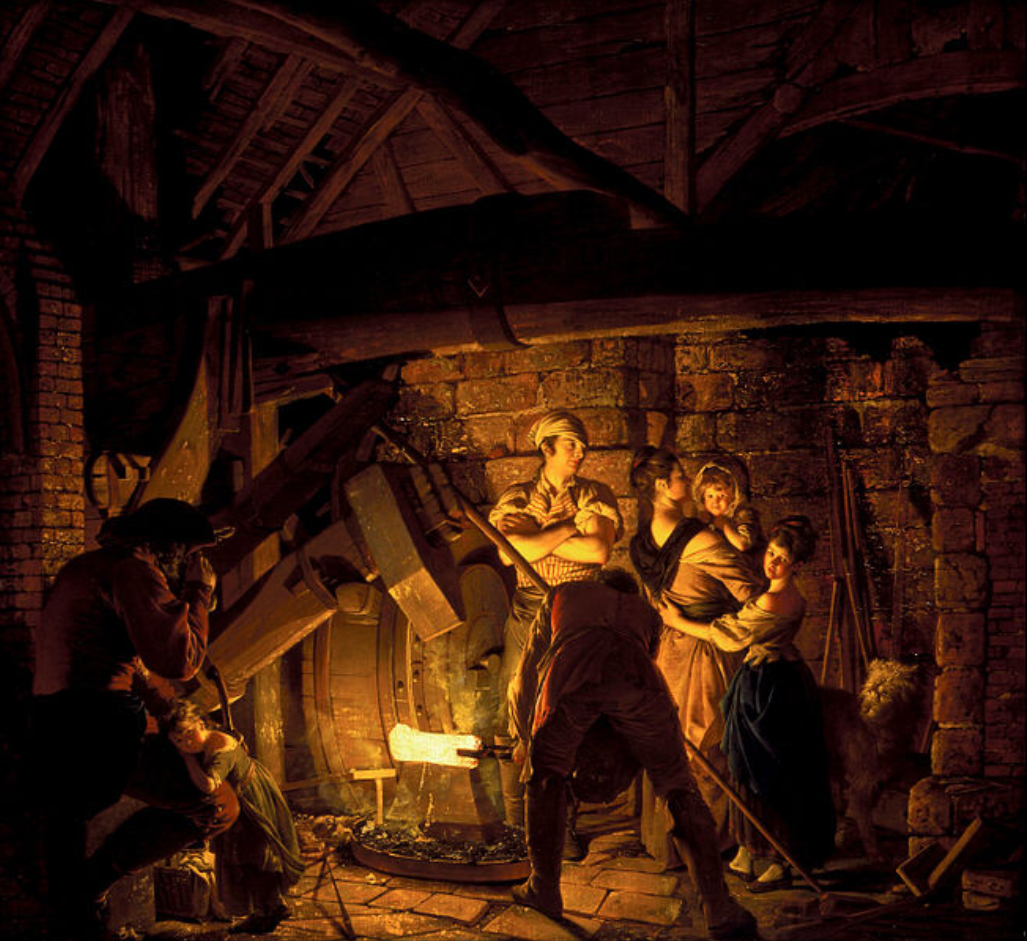
English artist Joseph Wright of Derby (1734 – 1797) was the scientist artist, a master of chiaroscoru – of capturing candlelit nocturnal scenes of fascinating science experiments, a master at capturing the varied human reactions to these experiments. At the same time, his paintings tell us he is an enlightened thinker, a philosopher who is questioning the morality of these experiments, the wisdom in tampering with nature, and in interfering with God’s will.

In An Experiment on a Bird in the Air Pump (1768), he captures the essence of childhood wonder, the passions of youth, and the wisdom of age in the motley group of people that that are viewing the experiment. But for the rudimentary scientific experiment, this could be happening today – and the human element of the painting would remain unchanged – which I think is what makes Joseph Wright of Derby’s work so timeless.

A Philosopher Lecturing on the Orrery (1763 -65), The Alchemist Discovering Phosphorus (1771), and The Iron Forge (1772) (clockwise). In addition to showing the artist’s mastery with the use of chiaroscuro or candlelit effect, they stand as a record of the scientific progress being made in the Age of Enlightenment.

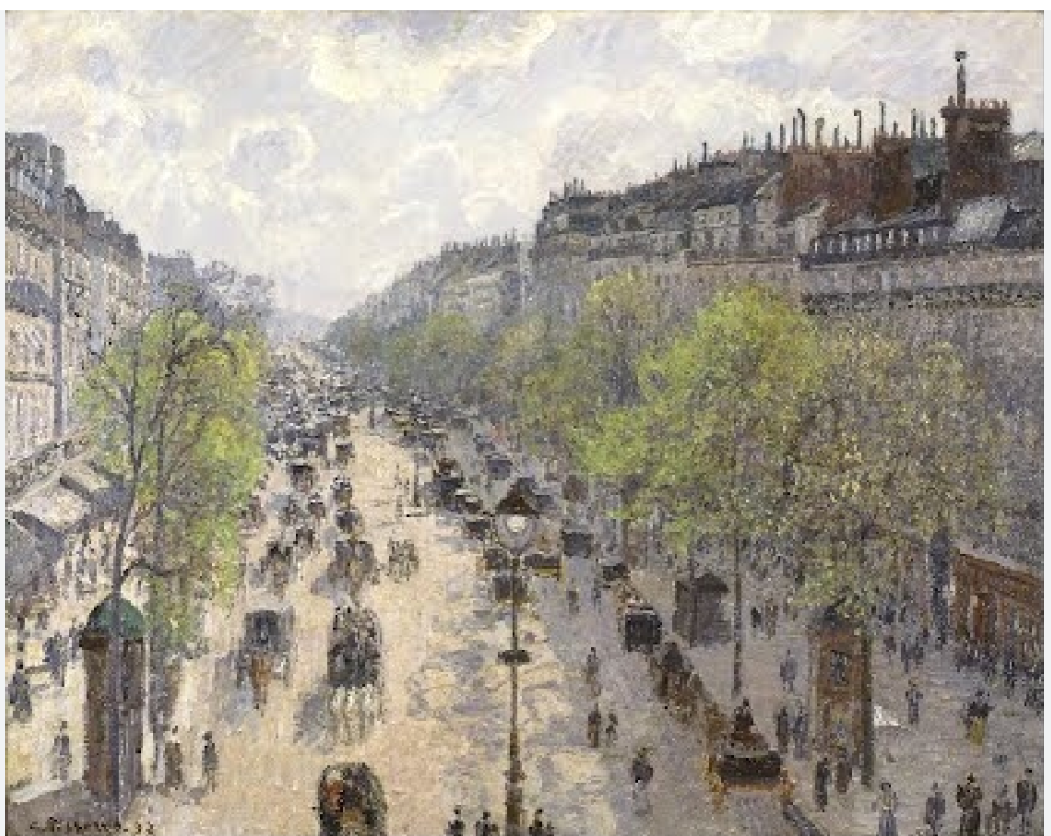
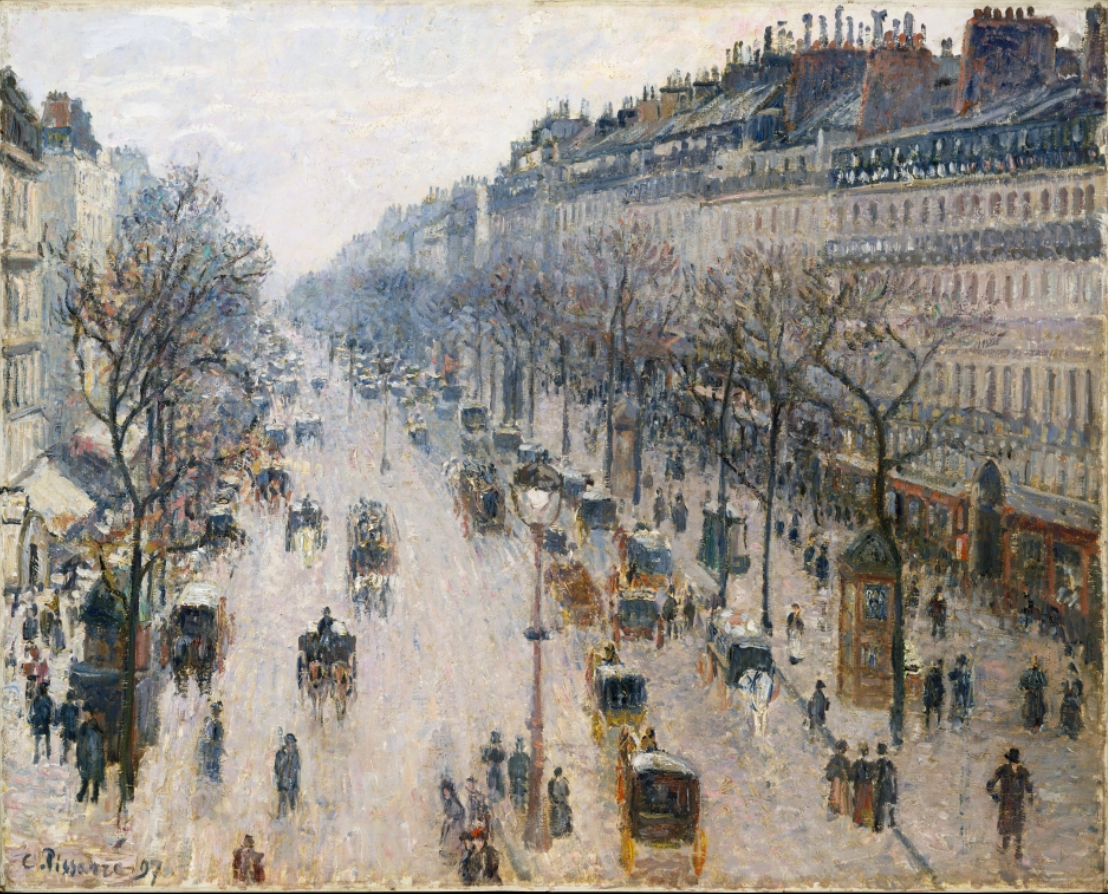
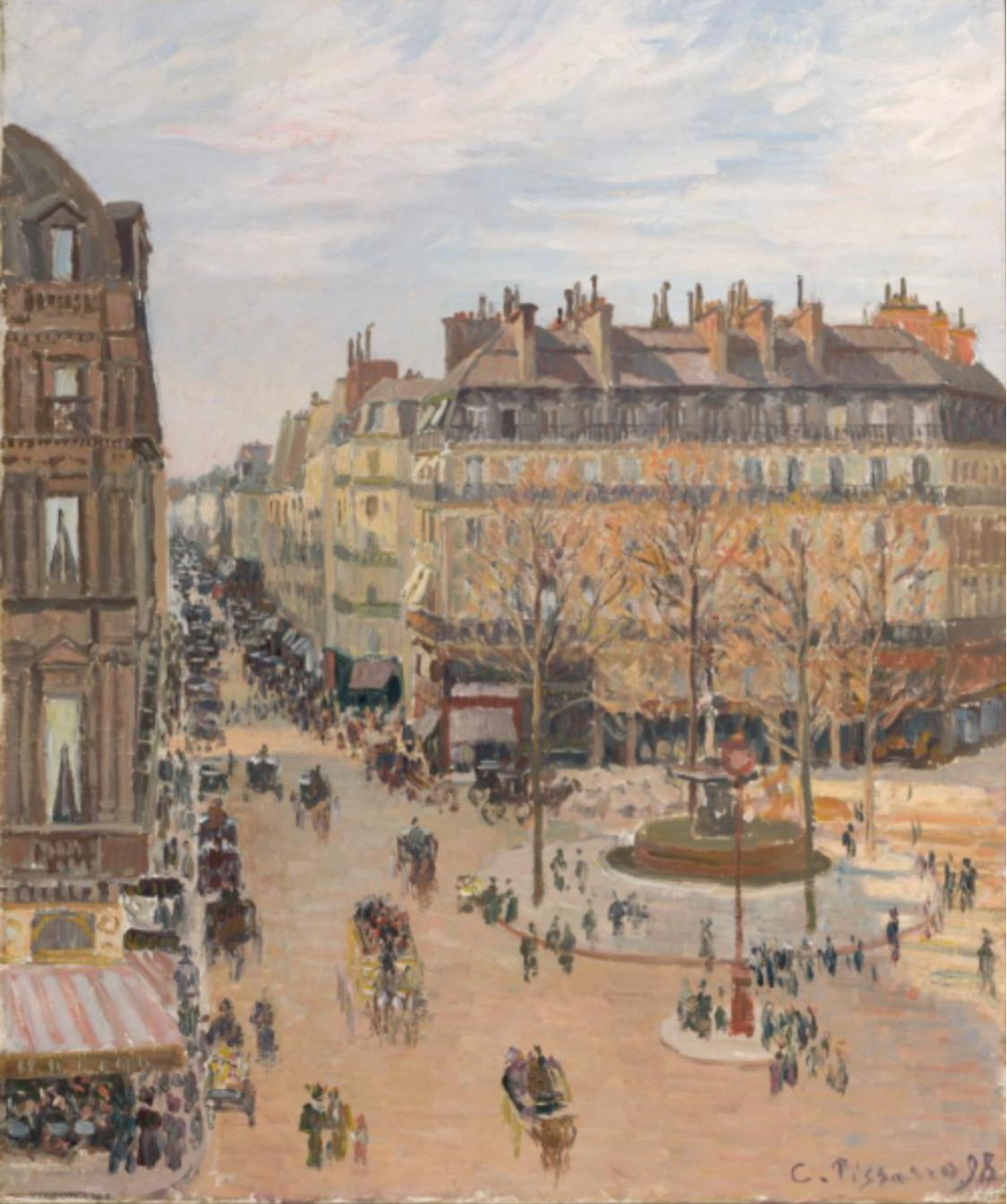
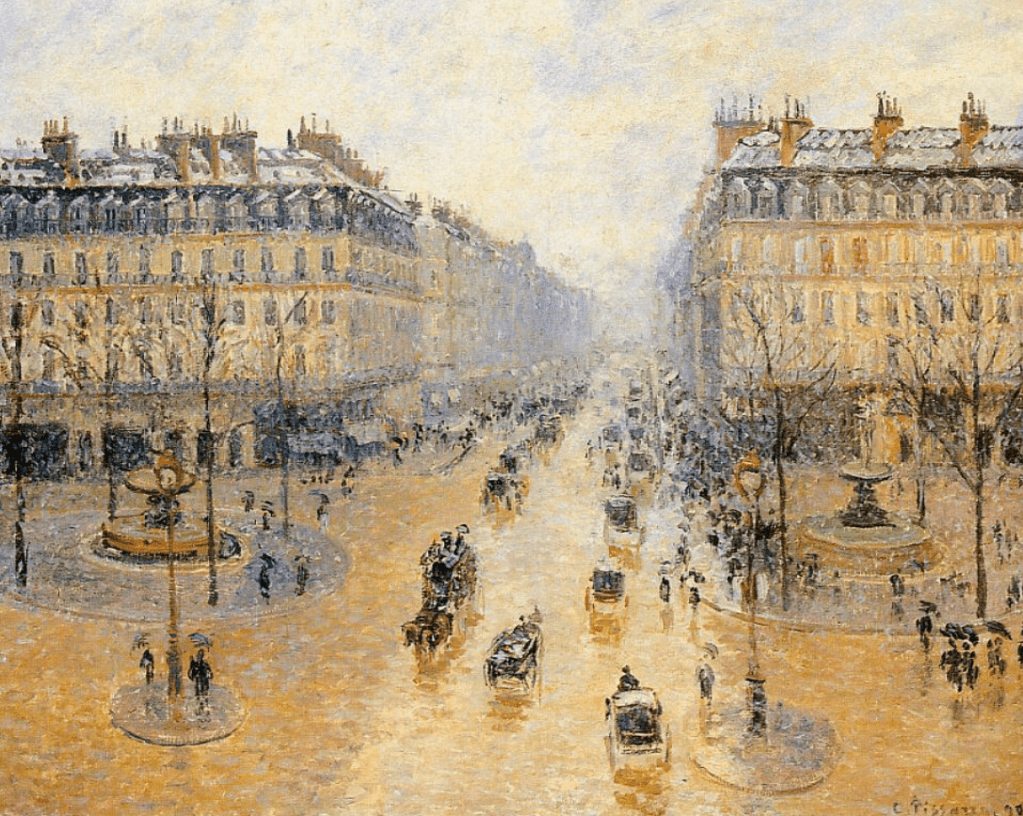
Camille Pissarro – Haussmann’s Gift to Paris

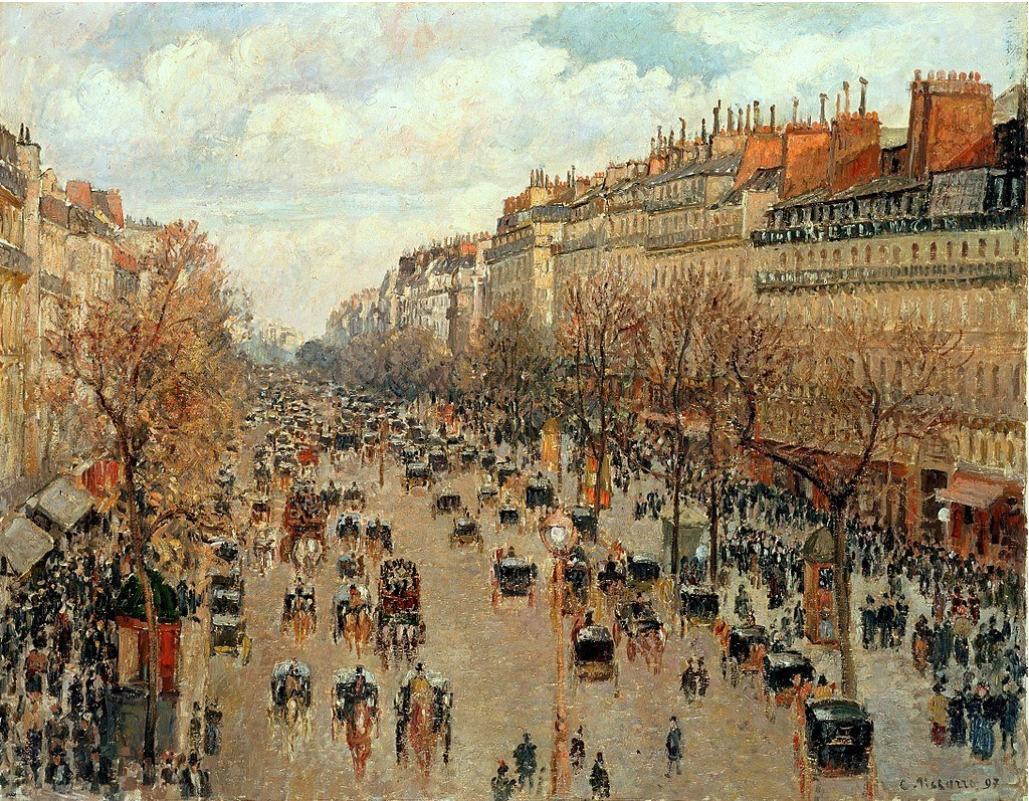
While Haussmann created the City of Lights, Pissarro painted it as it glowed in this light from morning until night, from spring until snow.

Haussmannization of Paris

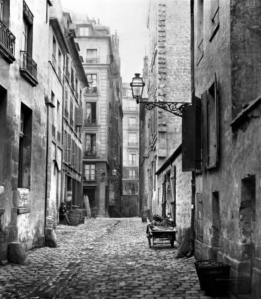
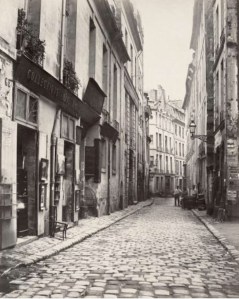
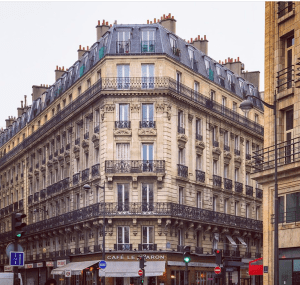
Paris at the dawn of the 19th Century was a very different city from the one that closed out the century – a medieval, overcrowded, dark city with narrow streets was transformed into an light and airy city that radiated out of the Arc de Triomphe with wide boulevards flanked by Chestnut trees and beautiful buildings made of white Lutetian limestone and adorned with carvings and wrought iron balconies. The two people responsible for this transformation were Emperor Napoleon III (nephew of the Napoleon) and Georges-Eugene Haussmann.

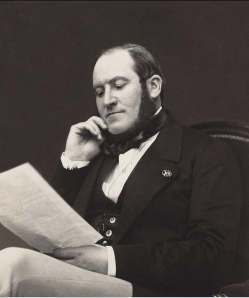
It was a match made in heaven for these two – they gutted the city with little regard for its present or past residents and displaced 350,000 residents and over 6 million graves. And while people complained endlessly about the endless construction and the endless cost – out of all this finally arose the beautiful City of Lights we know today.

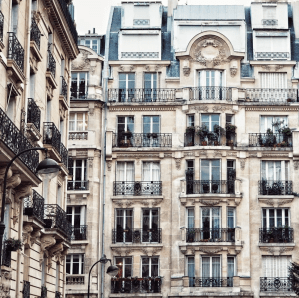
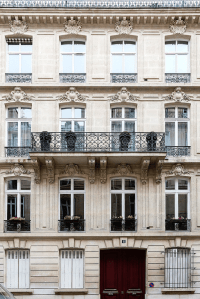
It is to the brilliant Prefect of the Seine, Baron Haussmann, that Paris owes much of its beauty. The buildings that line the wide boulevards are called Haussmanns and are one of Paris’s most defining features. Each apartment building was five stories high, with a nonnegotiable uniform exterior façade – its height in proportion to the width of the boulevard. The interiors could vary according to the owner’s preference.

The ground floor had high ceilings and was for retail stores and offices, the first or mezzanine floor had low ceilings and was for storage for the first floor. The most desirable floor was the second floor or the noble floor, which had beautiful windows and wrought iron balconies. The third and fourth floor had smaller balconies and windows. Each building has a uniform 45-degree mansard roof.

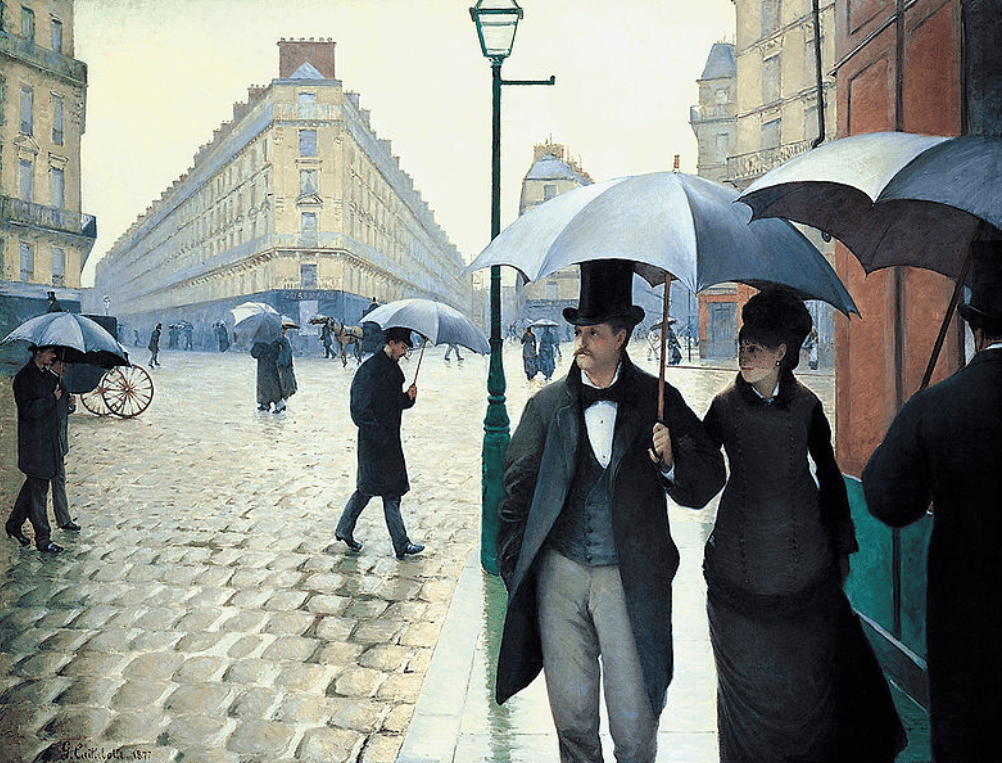
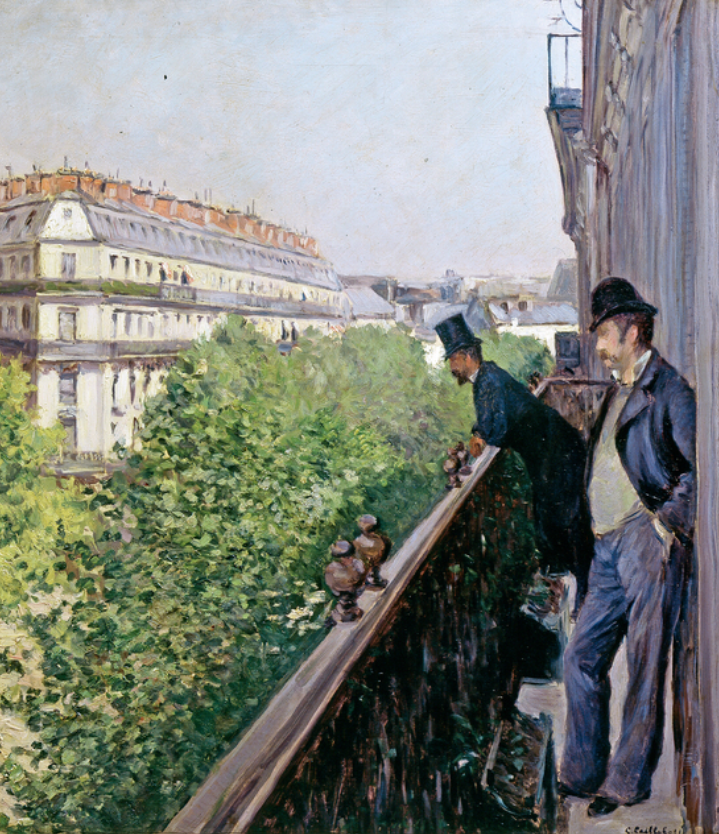
Artist Gustave Caillebotte seemed to love the newly transformed Paris as well!!

11th hour of the 11th day of the 11th month

They shall grow not old, as we that are left grow old:
Age shall not weary the, nor the years condemn.
At the going down of the sun and in the morning
We will remember them.

(Robert Laurence Binyon, 1869 – 1943).
In Flanders Field

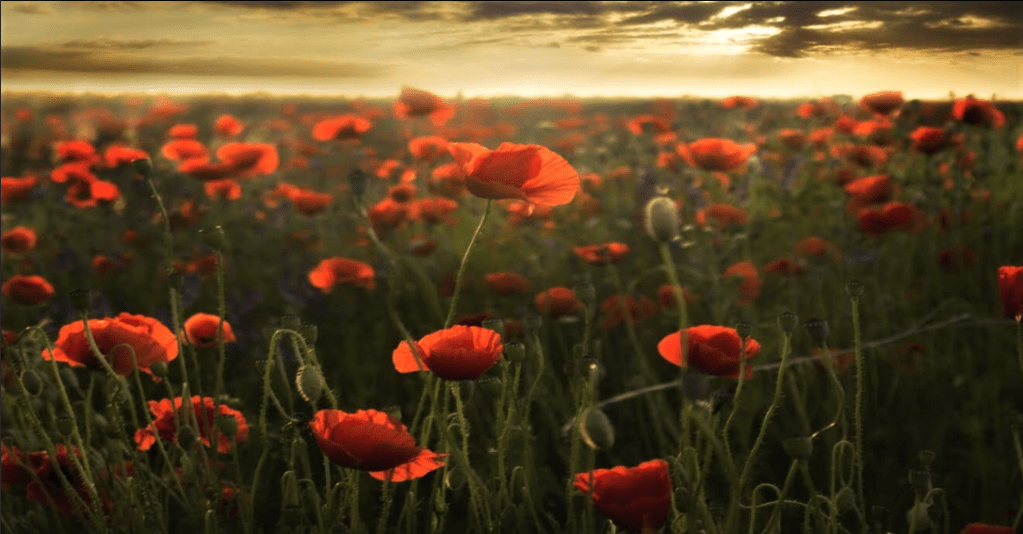
In Flanders fields the poppies blow
Between the crosses, row on row,
    That mark our place; and in the sky
    The larks, still bravely singing, fly
Scarce heard amid the guns below.
 
We are the Dead. Short days ago
We lived, felt dawn, saw sunset glow,
    Loved and were loved, and now we lie,
        In Flanders fields.
 
Take up our quarrel with the foe:
To you from failing hands we throw
    The torch; be yours to hold it high.
    If ye break faith with us who die
We shall not sleep, though poppies grow
        In Flanders fields.
 
(John McCrae, 1872 – 1918) 
MCMXIV

Never such innocence,
Never before or since,
As changed itself to past
Without a word – the men
Leaving the gardens tidy,
The thousands of marriages,
Lasting a little while longer:
Never such innocence again

(Philip Larkin 1922 – 1945)

#mauerfall30: Homage to Germany

 Night Thoughts
 
At night I think of Germany,
And then all slumber flies from me;
I can no longer close mine eyes,
The hot and bitter tears will rise.
 
The years pass close upon each other;
And since I last beheld my mother,
Full twelve years long have come and gone,
And ever has my yearning grown.
 
My wistful yearning e’er has grown,
Or o’er my soul a spell she’s thrown;
From her my thoughts I cannot sever,
The dear old dame – God bless her ever!
 
She loves me well, the dear old dame,
And in the lines that from her came,
Tis proven by the words all blurred
How deep her mother’s heart was stirred.
 
My mother’s in my mind always;
Full twelve years have passed away,
Full twelve long years have joined the past
Since to my heart I clasped her last.
 
Oh! Germany will ever stand!
It is a strong and healthy land,
And with its oak and linden trees
I’m sure to find it, when I please.
 
I should not thirst for Germany so,
Did I not there my mother know;
The fatherland will ever stay,
The mother may be called away.
 
Since I have left my native land,
On many Death has laid its hand;
I loved them once – I call the roll
And count them now with bleeding soul.
 
Count them I must; yet, as I count,
Still higher does my torture mount,
As if the corpses, one by one,
Climbed on my breast! Thank God they’re gone!
 
Thank God! Now through my window, glance
The cheerful morning rays of France,
My wife comes with Aurora’s bloom
To smile away the German gloom.

Heinrich Heine (1797 – 1856).  Translated by Frances Helman, 1892.

On the eve of the 30th anniversary of the fall of Berlin Wall – a poem for Germany by exiled German poet Heinrich Heine, as he longs for his home, his mother, and his country. 

#mauerfall30: Thierry Noir

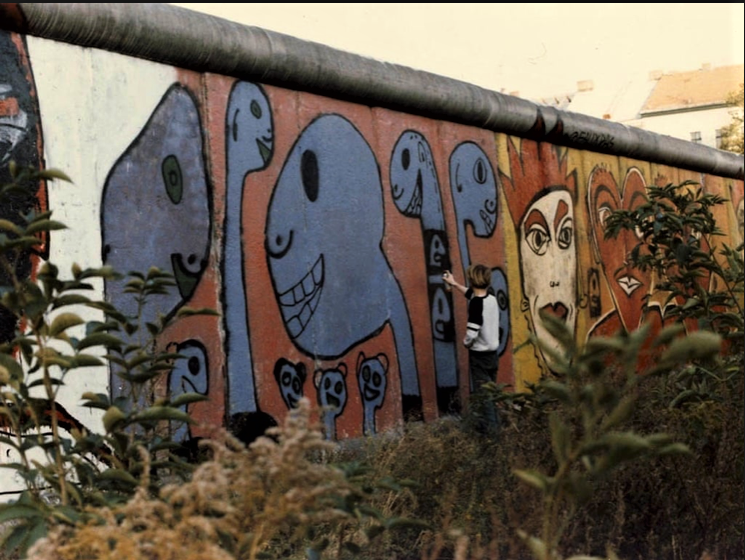
In January 1982, an unemployed and broke French artist moved from Lyon, France to Mariannenplatz in West Berlin.  His inspiration for the move was the music and cultural scene in Berlin – David Bowie and Iggy Pop both called West Berlin home at this time.  His tiny one bedroom rental faced the Berlin Wall, and every day for two years he looked at the Wall and the East German guards patrolling on the other side. The area around the wall was always empty and abandoned. An idea began to grow in his mind, and in 1984, in a revolutionary act of defiance he started to paint the wall. With that defiant act, Thierry Noir became the world’s first graffiti artist. 

Fast Form Upside Down – a Fast-Form Manifest

Painting on the wall was illegal, because the wall itself was set a few feet within the dividing line, and was actually in East Berlin. Noir would paint, and quickly run away from the wall as soon as the East German guards saw him. Over time he developed a style that allowed him to paint quickly; simple figures with three colors that he could finish fast and run at a moment’s notice. He calls it the Fast Form Manifest and we have large simple cartoon like figures in yellows and pinks. From 1984, until the wall fell, Noir painted many miles of the wall. The Elephant Key, which looks to Picasso, Miro, and Basquiat for inspiration was one of his first paintings on the wall. Some figures, like the dinosaurs, represent an unnatural mutation – like the wall was an unnatural mutation in the city.

Another section of the wall was painted in 1985, “Red Dope on Rabbits,” – an homage to the hundreds of rabbits that lived along the wall. 

Thierry Noir opened the floodgates and inspired thousands of graffiti artists to paint the wall, and between 1984 and 1989, the wall was covered with layers upon layers of artwork and graffiti. 

From 1984 to 1989 the Wall had layers upon layers of art work and graffiti .. here a protest takes place on top of Noir’s artwork.

Noir said painting the wall made him feel stronger than it.  By painting the wall he changed something oppressive into something that became a symbol of the 80s, of the young – their passion, energy, creativity, and unfailing hope for a better future. The East Side Gallery, and the many pieces of the wall all over the world are, in my mind, some of the greatest works of art in the world. And for this we have to be grateful to the young unemployed artist who looked at the wall from his apartment window, and dared to dream, and dared to hope

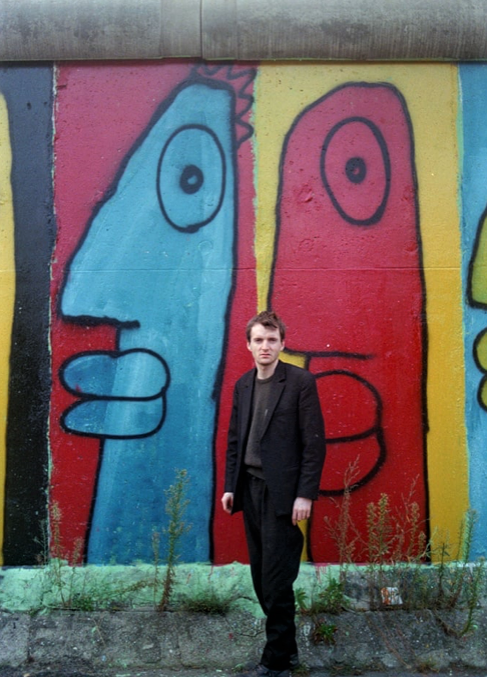
Noir with his most iconic and well known figures (1986).
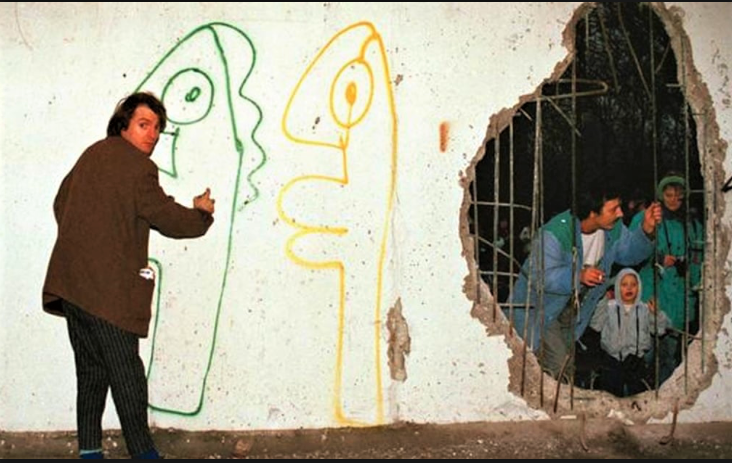
Noir finally gets to paint on the East German side of the wall in 1989.

(All images coutesy thierrynoir.com)

#mauerfall30: 1980s Graffiti

The 1980s seems like a special time – it was the decade of Queen, Band-Aid, the rise of graffiti art, and of course the decade capped itself off with the fall of the Berlin Wall.  Berlin was like a small island in the middle of an ocean – except the ocean was the German Democratic Republic (DDR), and every road on this isolated island led to the wall. The wall which encircled them, also provided the rebellious youth with a massive, blank canvas.  And on this canvas, they recorded their thoughts, likes, dislikes, ideas, in the form of written word and art. It was as though a dam suddenly burst in the 80s and an entire generation filled the wall with their musings; all the while defiantly defiling the property of the DDR whose brutal police marched inches away. 

These youth were not unaware of the police marching inches away on the other side of the wall, nor were they unaware that the DDR police would not hesitate for one second to shoot at them. It was this fear, this thrill, this defiant attitude of using the wall as a canvas, or a community notepad, that gives rise to the raw energy that emanates from the graffiti on the walls.  I found this raw energy lacking in the section of the wall that can be seen in the East Side Galley in Berlin.  While it has amazing and meaningful art and murals done by artists from all over the world, for me, it lacks the heart and the passion seen in the graffiti from the 80s.  It lacks the urgency of the graffiti from the 80s, and graffiti without urgency and youthful defiance is just art that grew up and became something your parents can buy at a gallery to frame and hang on newly painted walls.  

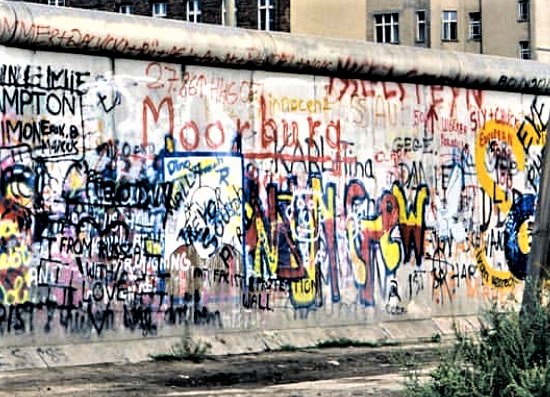
I spend hours with the images of Berlin Wall graffiti that I find online.  I zoom into the images, read the messages, and find connections. One prominent writing in red says “27.86 HHS of Moorburg,” which is a neighborhood in Hamburg, West Germany.  Below that in black, “FACIST PROTECTION WALL,” and to the left, a black heart with the words, “From Russia With Love.” The black and white image has the words, “Realitat,” which is the German word for facing facts.  A German fan pays homage to a favorite band – Raga Rockers 83 – a Norwegian band that recorded their first album in 1983.  In Italian a “Viva Librealismus,” while a German “Mu̇ll” – which suggests to throw something in the trash – quite apt for what most Berliners wanted to do with the wall.  There’s a rocket with the word USSR on it, and what seems to be Reagan 60 written next to it.  To the right, what I’m sure was a powerful antiwar sentiment – unfortunately the tree is covering some of the letters.

……This is the story of the falling wall. What is important is not the fall, it is the landing……

Another section of the wall says, “C’est l’historie d’un mur tombant. Mais l’important, c’est pas la chute. C’est l’atterrissage,” meaning, “this is the story of the falling wall. What is important is not the fall. It is the landing.” The quote is from French filmmaker Mathieu Kassovitz’s 1995 film La haine, which of course means this is an image from after the wall fell – regardless, I think it’s a great quote about the unification of Germany.

…There is only one reason for art …to ??…

An artist boldly writes, “Take a walk, On the Wall,” and below that another  writes, “Graffiti is like a drug.” At the bottom of the wall one sentence reads, “There is only one reason for art….to keep that” and sadly I can’t make out what the rest of it says.

Each one of these remained for probably less than a day; the next day someone else would come along and paint over it to or write directly over it. Some were captured in images for posterity, while most were erased even before, as they say, the proverbial ink dried.  Yet, these images show us what made Berliners tick in the 1980, what they thought about, how they related to and lived with the wall. These images have captured real, honest, unrehearsed snippets of moments in time before the wall fell, and that’s why they fascinate me to no end. (All images courtesy Massimiliano T.P. Instagram).