#mauerfall30: Leipzig’s montagdemonstrationen

Another town I went to during my trip to Germany this summer was the beautiful, and for me the mysterious, town of Leipzig.  Like Dresden, this town too was part of the German Democratic Republic.  The town has amazing architecture, and the long corridors and arcades with shops and cafés inside the old buildings were beautiful.  Some of the newer buildings around the train station are covered in fantastic murals that light up the town with their glorious colors.  Every corner of Leipzig seems to be brimming with history – either from the Soviet era days or prior.  Composers Johann Sebastian Bach, Richard Wagner, and Felix Mendelssohn all called Leipzig home, and the town center opera house stands in testament to the city’s musical past.  German writer Goethe wrote his famous Faust in Leipzig.

Leipzig played a prominent, though often overlooked, role in bringing down the Berlin Wall and dismantling the German Democratic Republic.  The church stands in the center of a cobblestone square and was built in 1165 with the gothic tower being added in the 1600s.  Every Monday, in the autumn of 1989, the Nikolaikirche, or the St. Nicholas Church hosted a prayer meeting that was followed by peaceful, candlelit protests for democracy and justice.  
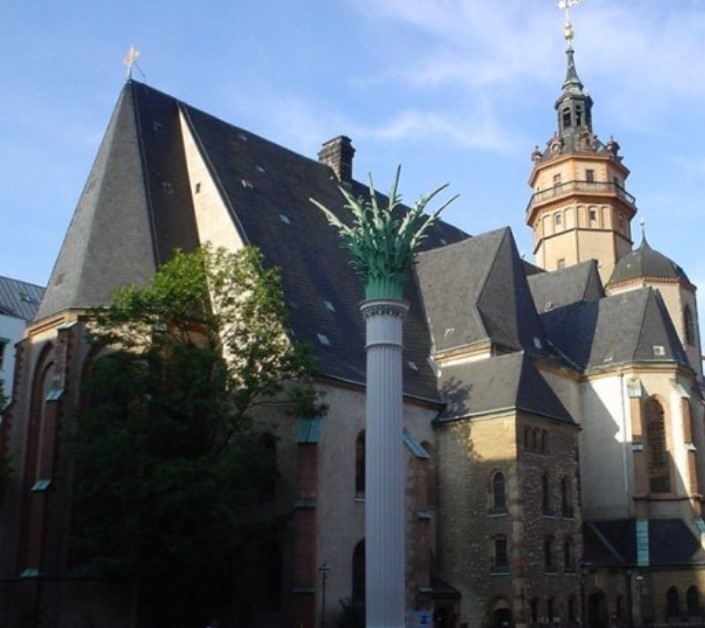
For three months in the autumn of 1989, on every Monday, ordinary East Germans, religious and the not so religious, young and old, gathered in front of the church and demonstrated peacefully. On Monday, October 9, 1989 over 70,000 protesters gathered peacefully, and, and the number swelled to an even greater 120,000 the following Monday.  Not one gun was fired, and these peaceful demonstrations became the DDR’s swan song.  One month after the first major demonstration in Leipzig, the Berlin Wall came down.  A simple white palm topped column in the middle of the square commemorates the peaceful demonstrations.

#mauerfall30 countdown

As the 30th anniversary of the fall of Berlin wall approaches, I wish I was in Berlin to join in the celebrations.  I can just imagine how lively the city must be right now – well maybe I can’t because to me it was so lively even without the celebrations – the atmosphere must be electric as the city approaches this anniversary.  Since I can’t be there I decided to do my own countdown with a blog every day between now and November 9th on Berlin Wall, or some aspect of it.

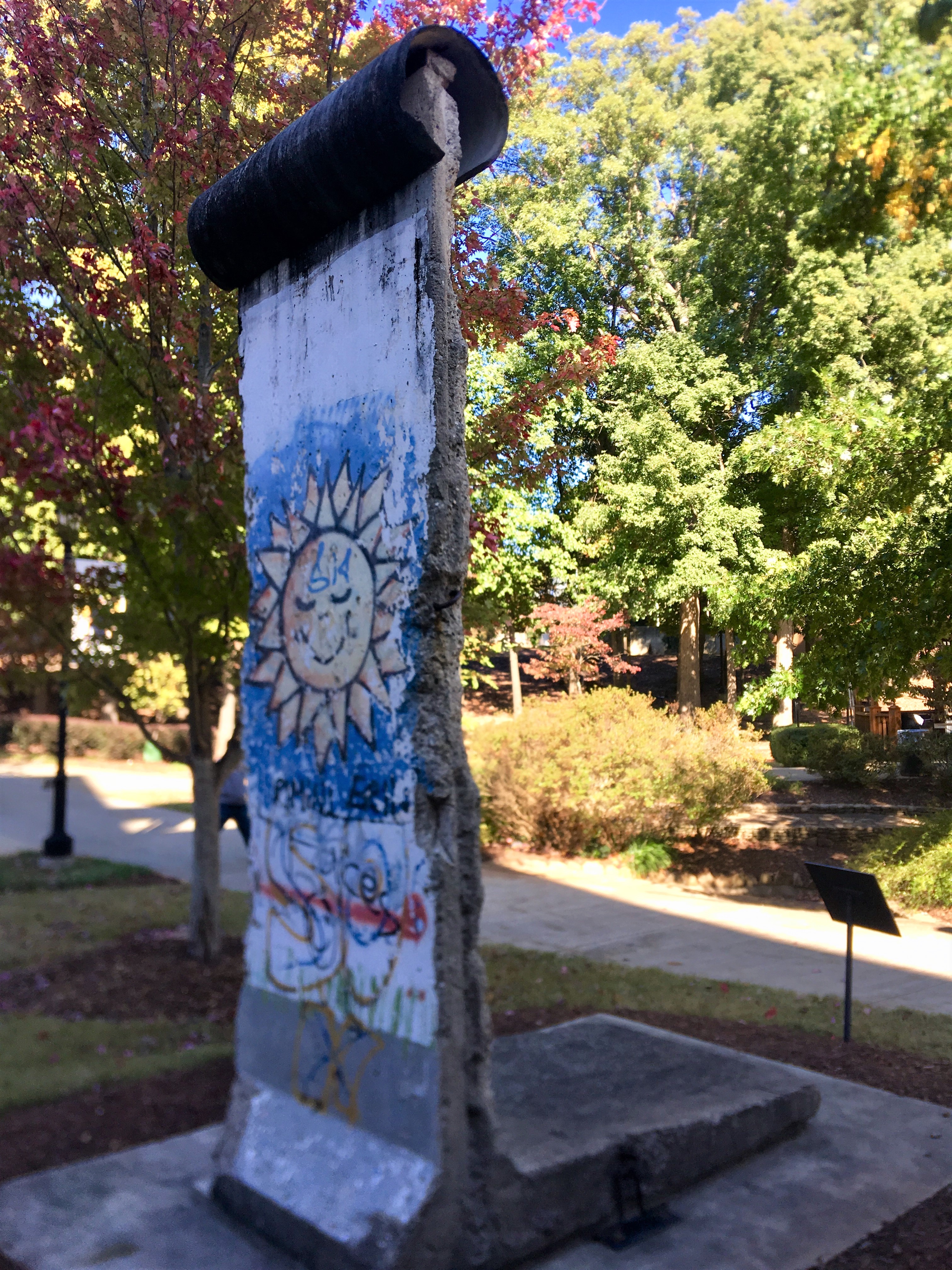
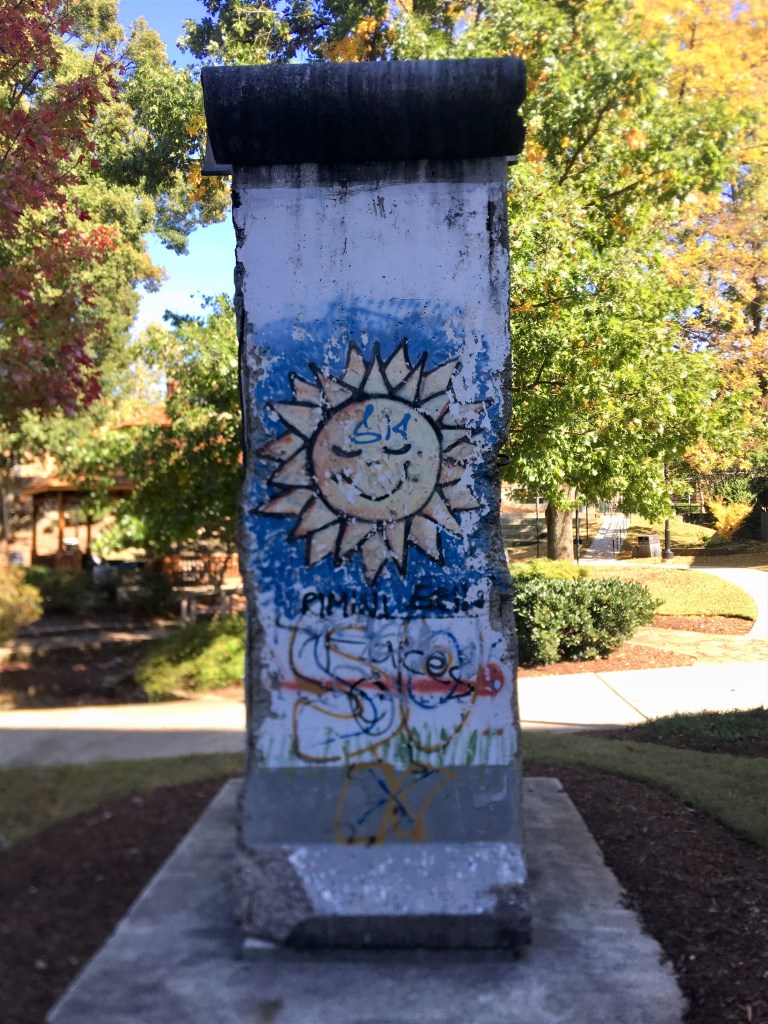
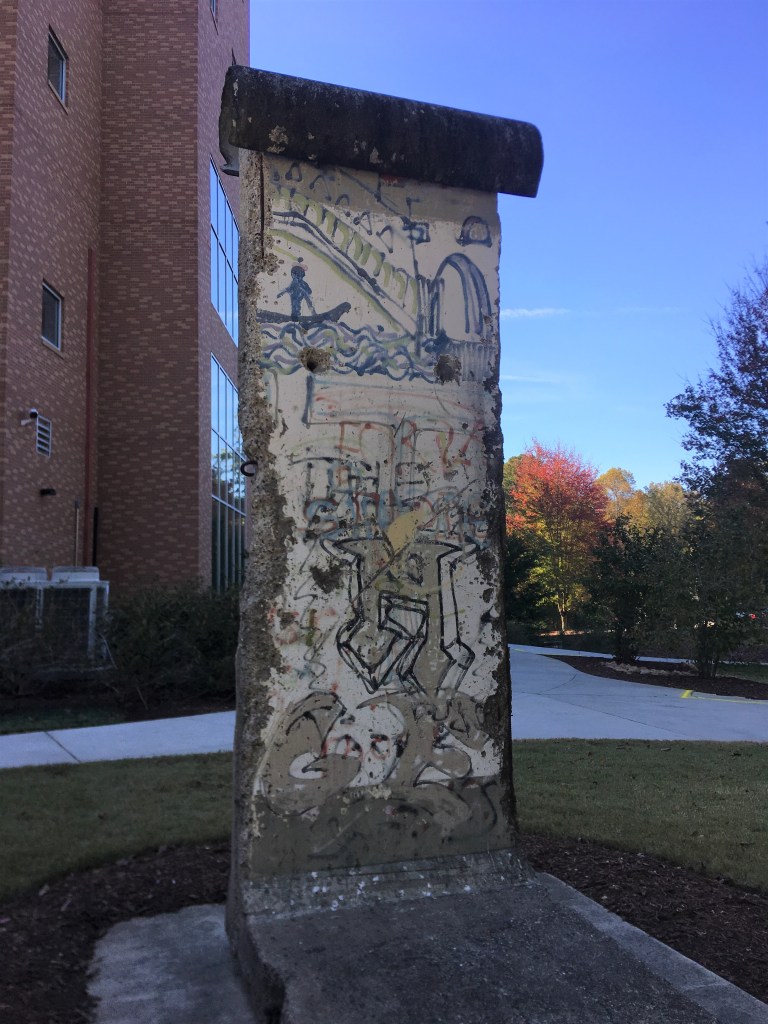
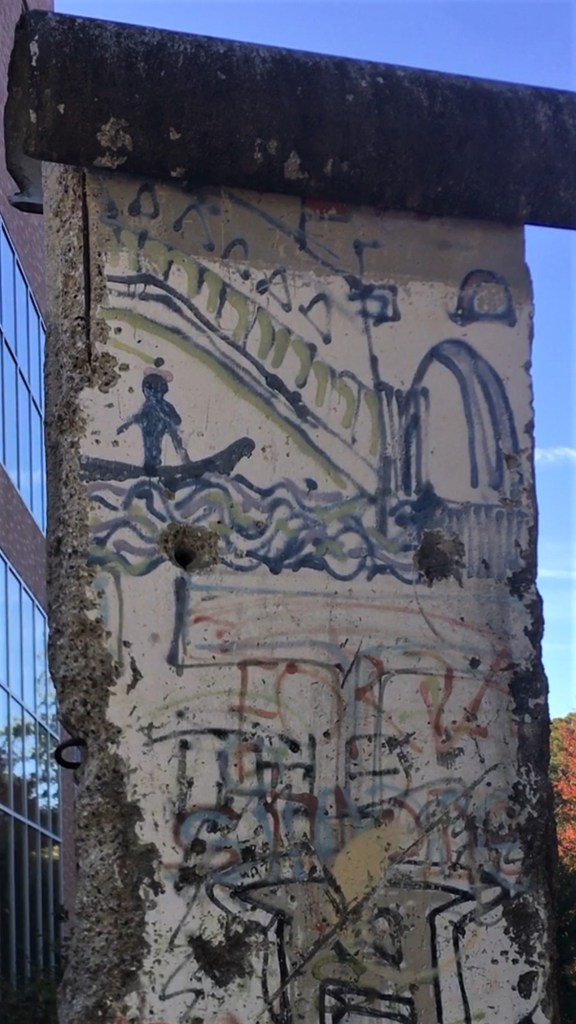
Thousands of miles away from Berlin, in the most unexpected place – in the peaceful and leafy campus of Kennesaw State University campus there is a piece of Berlin history. A section of the wall, with a particularly cheerful graffiti lies on this campus.  Well, perhaps not completely unexpected because I’ve realized that Georgia has quite a few sections of the wall. Apart from the one on the KSU campus, there is one in Suwanee (which I wrote about previously), there’s one at the Atlanta International School  (I am so envious!!), the National Infantry Museum in Fort Benning has three sections of the wall on display in their Cold War gallery, and Freedom Park in Fort Gordon has two sections of the wall on display.
Berlin Wall Fort Gordon GA (image courtesy Fort Gordon Freedom park)

The wall in KSU was donated to the college by Chuck Clay who is a former senator of Georgia.  Mr. Clay’s grandfather, General Lucius D. Clay commanded the American forces in Europe after World War II and organized the Berlin airlift.  The wall was given to his grandson, Chuck Clay by a grateful city in 2000.  He donated the section of the wall to KSU in 2010. 

The bottom plank of the wall was in the East Berlin side.  It was included with the second generation wall after a soldier with a tank broke through the first generation wall and escaped into the West.  With this plank at the bottom, the wall would have fallen on the tank rather than on the other side. This stopped people trying to escape by breaking through the wall with cars, tanks etc.

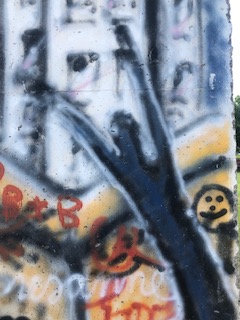
The West Berlin side of the wall is where the original graffiti would have been found, and the graffiti on this wall is a particularly cheerful one.  The bright yellow, smiling sun or sunflower with almost perfect petals against the deep blue background is simply stunning and would have brought a smile to many West Berliners in the 1980s.  There seems to be some green grass at the bottom, and words that I couldn’t really make sense of.  The grey of the wall is visible on top where the white backgrounds paint ends, and I imagine there are many layers of graffiti underneath.

In this section of the wall, the East Berlin side also has graffiti, something that was obviously done after the wall fell.  The top scene looks like a gondola in Venice, with a covered bridge on top.  Below that there’s some interesting graffiti going on but unfortunately, I can’t make out what’s going on.  There are layers of writings though none seem fully visible.   

The students of KSU are fortunate to have this piece of history in their midst. For some it might just be a concrete sculpture that they walk past everyday on their way to class, while others may pause and reflect upon the history that surrounds this section of the wall.  For me the Berlin Wall with its graffiti holds endless fascination; for me each piece of the wall is art, history, end of World War II, rise of Communism, cold war, fall of Communism, freedoms denied, freedoms regained, families torn apart, families united, unbelievably brave East Berliners, even more unbelievable miraculous escapes, and above all the resilience of the human spirit that has yet to meet a wall it can’t bring down. 

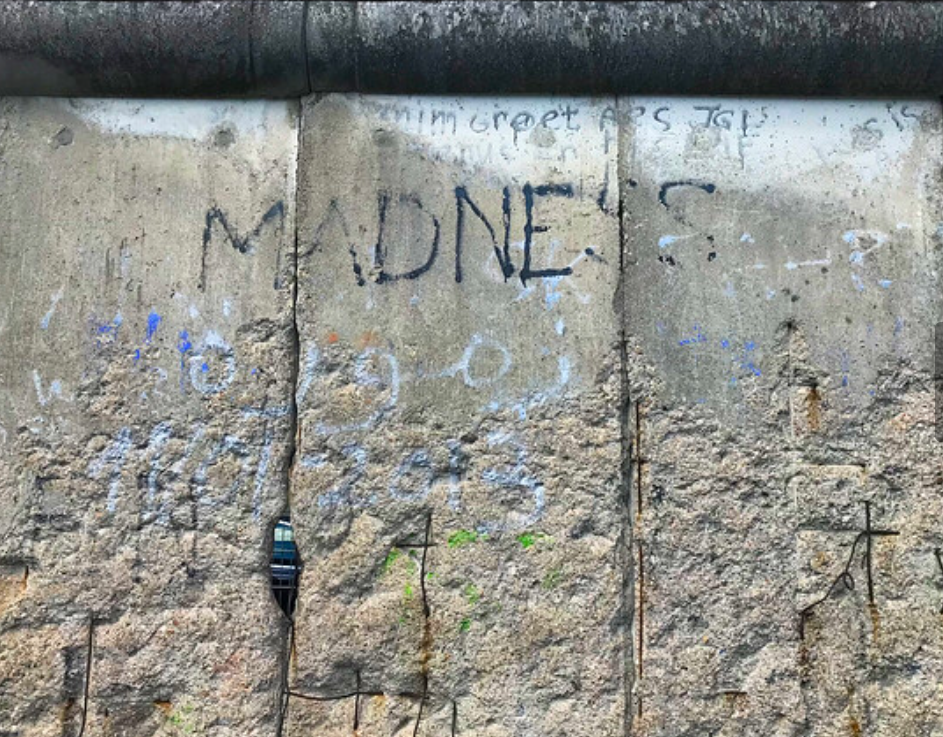
Berlin Wall – MADNESS

Since my trip to Berlin earlier this year, I have been my fascinated by the Berlin Wall (it might not have gone unnoticed considering the number of blogs I have done about it).  I am happy that I visited this year because since it is the 30th anniversary of the fall of the wall, there is a no dearth of information on the Wall, and lots of people are posting new and old images of the Wall on Instagram and other social media.

I am endlessly fascinated by the graffiti on the wall.  It captures the essence of the 1980s and while a majority of the wall and graffiti are gone for good, the images from the 1980s have captured and preserved the essence of that raw, youthful energy forever. This was art on the streets being used as protest. It was the voice of a generation that used the wall as a canvas to reduce some of its horror and make it less threatening. In the words of Thierry Noir, who is the first artist to illegally paint large sections of the Berlin Wall, painting the wall, “subverted this iconic symbol of war into a symbol of hope, granting it real human significance.”

Berlin Wall Graffiti by Thierry Noir (courtesy thierrynoir.com)

One of the remaining sections of the wall has the word MADNESS written in large black letters.  It remains to this day in Berlin in the Topographie des Terrors Center, and is visited by the millions of people that go to Berlin annually.  It would appear to have been done by someone protesting against the madness that was the Berlin Wall. 

However, it turns out the graffiti was done by a member of the British Rock Band called Madness when they visited the wall in the early 80s.  In his twitter feed, Dan Woody Woodgate (one of the band members) writes that in 1980 another band member, Graham Suggs McPherson, climbed on top of a van and wrote MADNESS on the Berlin Wall, which is the same one that exists today.  I was thrilled to see the origin of this fascinating and meaningful word that remains to this day. While most people that see the remaining graffiti naturally conclude that it was a teenager’s commentary on what was going on with the wall and the East German regime, it was actually a band member of a popular 1980s band writing his group’s name on the wall. 

Woody Woodgate’s tweet sheds light on the mysterious MADNESS

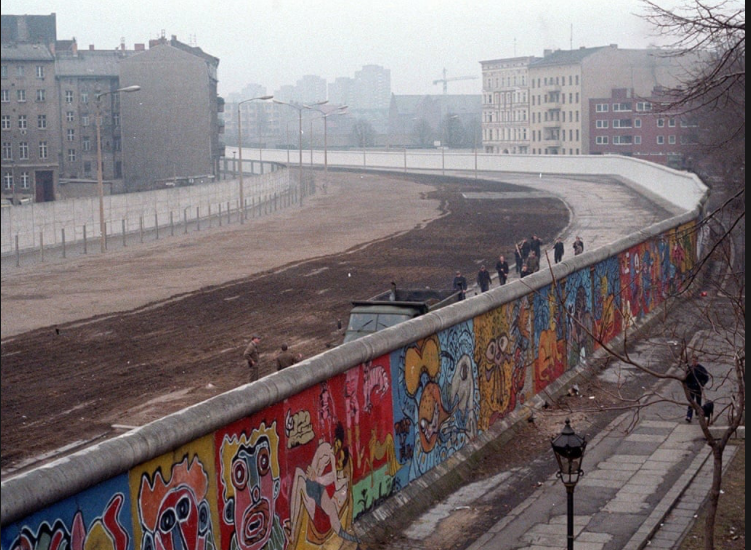
In another fascinating find, as I was scouring Instagram for images of the wall, I actually found this word written on the wall from a 1980s image.  What an interesting coincidence – first I found the origin of the word, and then I found an image of what appears to be the same writing from the 1980s.  What do you think? Is it the same writing or another one?

Berlin Wall Graffiti Image from the 1980s (courtesy Instagram Massimiliano T.P.)

I want it to be the same, but I see the differences in placement and letter sizes.  So maybe not the exact same writing but still an interesting find. 

Berlin Wall – Suwanee, GA

On November 9, of this year, it will be 30 years since the Berlin Wall came down.  The wall stood for political beliefs and ideologies, it divided an old city, tore apart families, but apart from all that the wall fascinates me as a piece of art.  On the West Berlin side of the wall, artists used the wall as a canvas, which was painted over and over by artists who defied DDR soldiers patrolling on the other side of the wall and made their own political statements using spray paint.  Some artists became famous for their Berlin wall art, among them French artist Thierry Mugler (who I will write about later), and sometimes internationally famous artists like Keith Haring, drew attention to the wall by using it as their canvas.

Graffiti painted over Keith Haring’s graffiti (Tate Modern)

But for the most part, it was the thousands of ordinary West Berlin citizens, most likely teenagers, that defiantly painted the wall over and over again, spray painting messages of defiance, freedom, and even messages of the everlasting promise of young love on it.  Much of this was lost, crushed by huge machines so the concrete could be used to rebuild East Berlin at a fast pace – the same concrete that the DDR government s got from the ruins of bombed out buildings was once again being used to rebuild East Berlin. 

Section of the Berlin Wall from the 1980s (The Guardian)

Many pieces did survive intact and now can be found in various parts of the world – New York, Los Angeles, Boston, London, Miami and many more small town have sections of the wall in their museums, public art displays, and private ownership. Orlando has one too near the Hard Rock Café on Universal City Walk.  Georgia has quite a few in the army base, perhaps the army bases in Georgia had personnel stationed in Germany and so were given sections of the wall by a grateful West Berlin government. 

Suwanee, which is part of metro Atlanta, has a beautiful downtown area with restaurants, ice cream parlors, boutique shops, and central park with a baseball field in the middle.  The edge of the park is lined with statues and other works of art, one of which is a section of the Berlin Wall. Suwanee acquired the wall as a donation from a grateful local businessman who was born in a communist country.

During the summer, I went to see this section of the wall.  The West Berlin side of the wall is painted in bright colors, and shows an East Berliner trying to jump over the wall to escape toward the West, which is depicted with a high rise building and an American flag.  It’s a beautiful piece of art that captures a moment in time; the dark blue sky in the background with the majestic stars and stripes, the booming, capitalist West with its luxurious high-rise building, the wall itself with graffiti, and the East Berliner trying to escape toward the West.  It’s fascinating that the artist painted the East Berlin side of the wall with graffiti – perhaps unaware that the wall on the East side was blank.  I think it’s a brilliant piece of art, which captures everything the wall stood for perfectly on a single canvas. 

Matryoshka Dolls

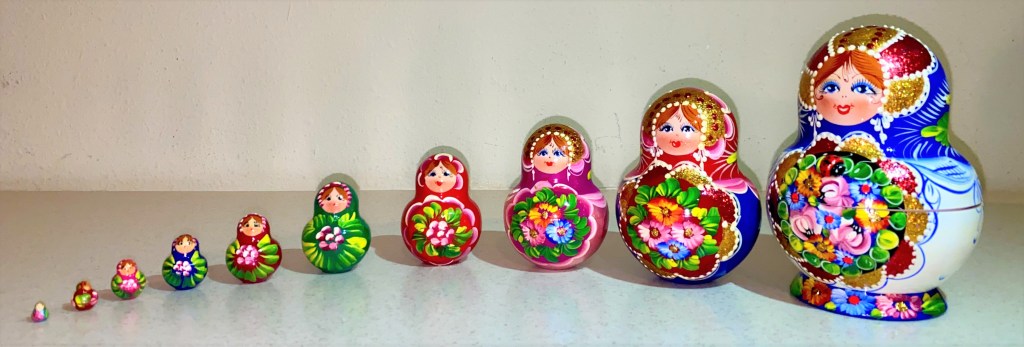
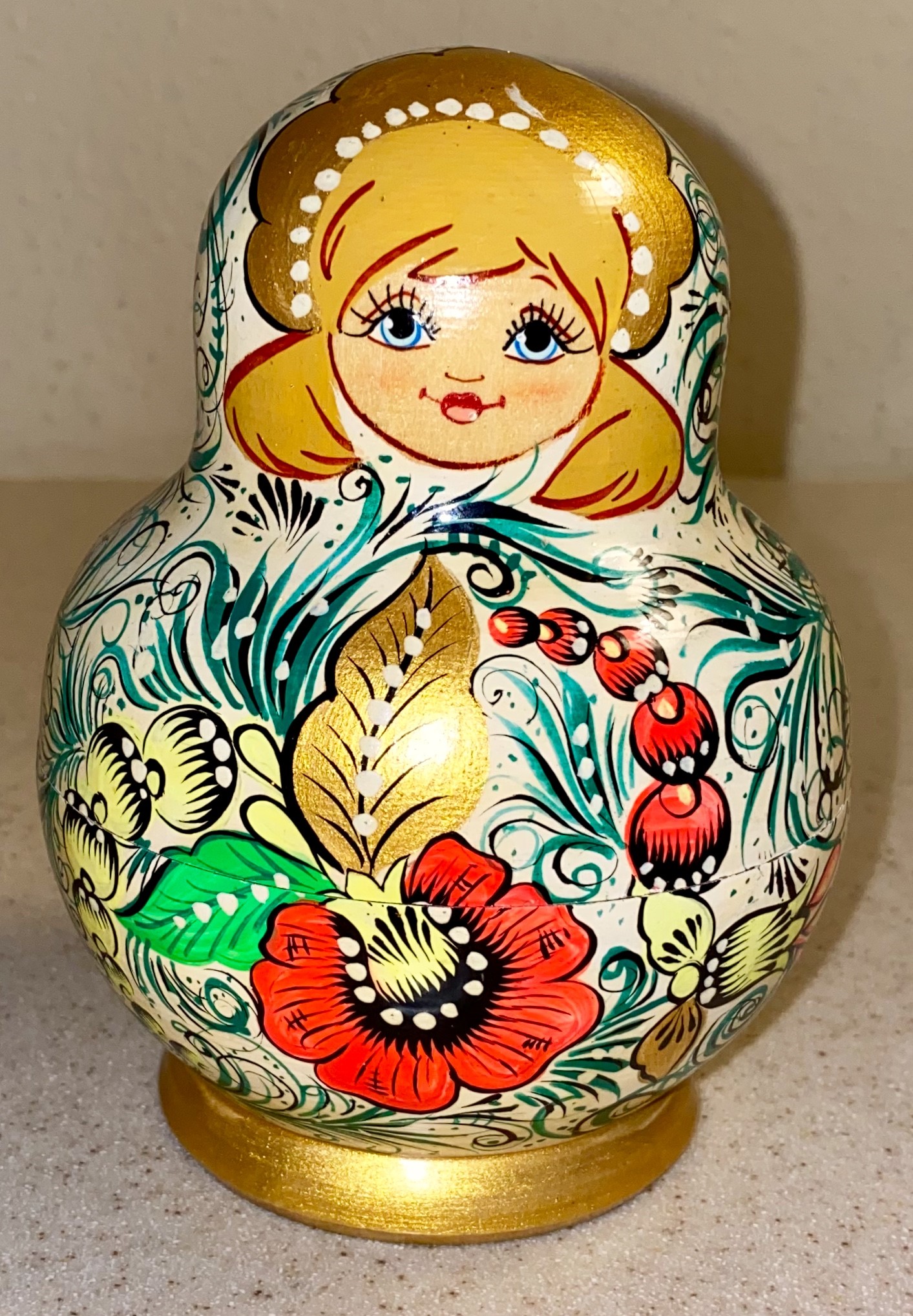
For my birthday, one of my friends gave me a set of Russian Matryoshka dolls.  They are absolutely beautiful, and I love opening them one by one to take out the smaller doll from inside the bigger doll – there is something so satisfying about the smoothness with which the dolls come apart and reveal their secret – I’m not surprised they are so loved by Russians and everyone else. 

My beautiful birthday present has a set of 10

The Matryoshka dolls, also called babushka dolls or nesting dolls, are made of lime, birch, alder or linden wood. Once the logs are cut, they are left to aerate for two years before the wood is ready to be carved.  Highly skilled artisans carve the doll, starting with the smallest doll that cannot be taken apart and working their way to the biggest doll in the set.  Once the carving is complete, the doll is covered in glue to smooth out the surface and get it ready for painting

The dolls are mostly painted in Russian folk art form and depict a delightful village life. In one popular version, the dolls look like Russian peasant girls with colorful scarves (or babushkas hence the name), and are wearing sarafans (pinafore dresses) and carrying baskets, flowers, or a scythe. Sometimes the set is a complete family with children, sometimes they depict Russian nobility, sometimes they are painted to represent the time period or some newsworthy event – for example in 1909 to celebrate the anniversary of Russian dramatist Nikolai Gogol, the dolls were painted like characters from his books.

Traditional Russian Nesting Dolls

The first Russian dolls were carved in 1890 by craftsman Vasily Zvyozdochkin and painted by Sergey Malyutin.  They were both folk artists who worked under the patronage of Savva Mamontov, a wealthy industrialist. The dolls gained global exposure when Mamontov’s wife presented the dolls at the 1900 World’s Fair in Paris where they won the bronze medal.

The dolls were named after the Russian name “Matryona,” which was a very popular name in Russia in the late 1800s.  The name is derived from the Latin word “mater” for mother, and since the motherly name fit the dolls perfectly and the name stuck.  The most number of dolls in one set is 48, and it was made in 1913 in the city of Semyonov. My set has 10, as does my sister’s set which is actually Czech not Russian.

Though considered quintessentially Russian, the first nesting dolls are from Song Dynasty in China (1000 CE) where the smallest doll would be holding a grain of rice.  From here they went to Japan where the seven luck Gods were made as seven nesting dolls, with Fukurokuju the Japanese god of happiness as the biggest and the other six nesting inside.  It is speculated that it was these Japanese dolls which served as the inspiration for the first Russian dolls.

Berlin’s Ghost Stations

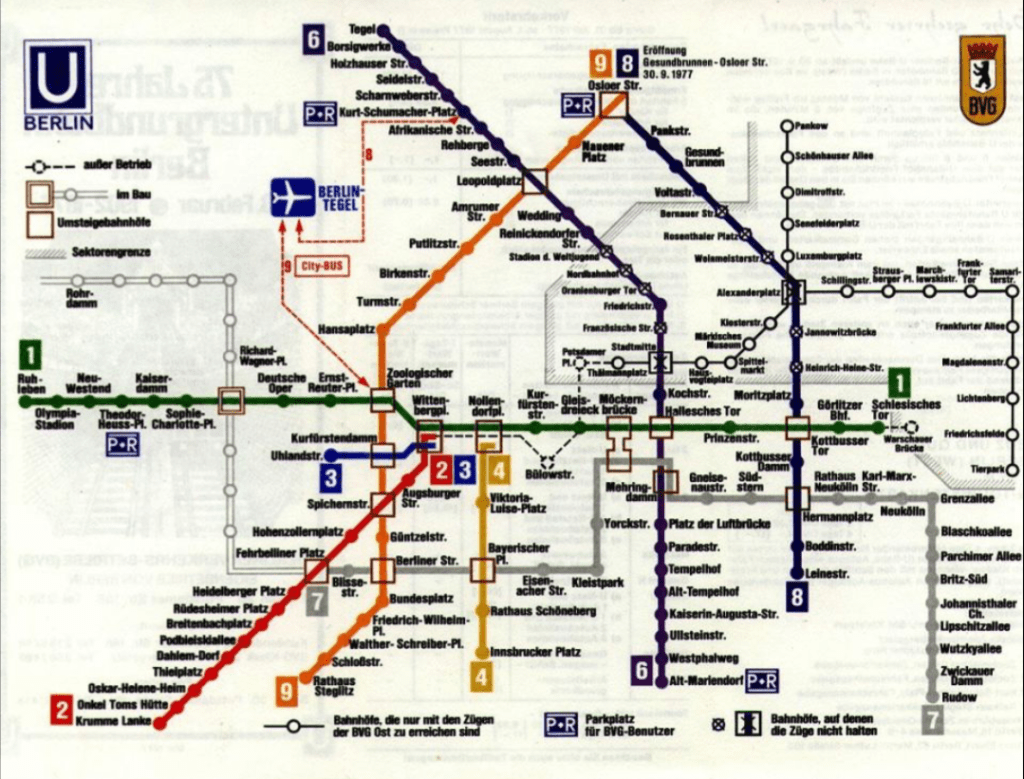
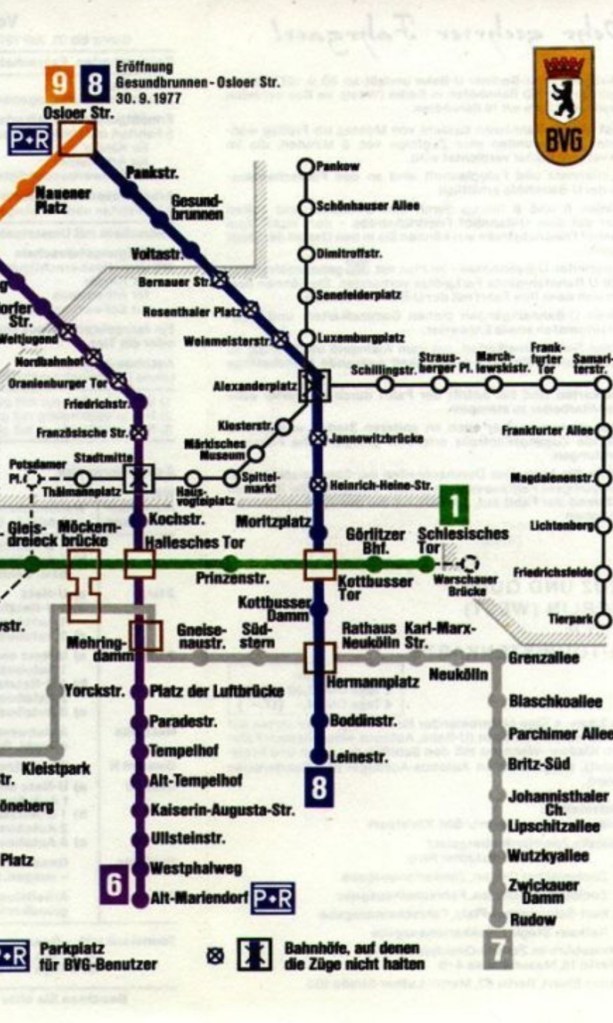
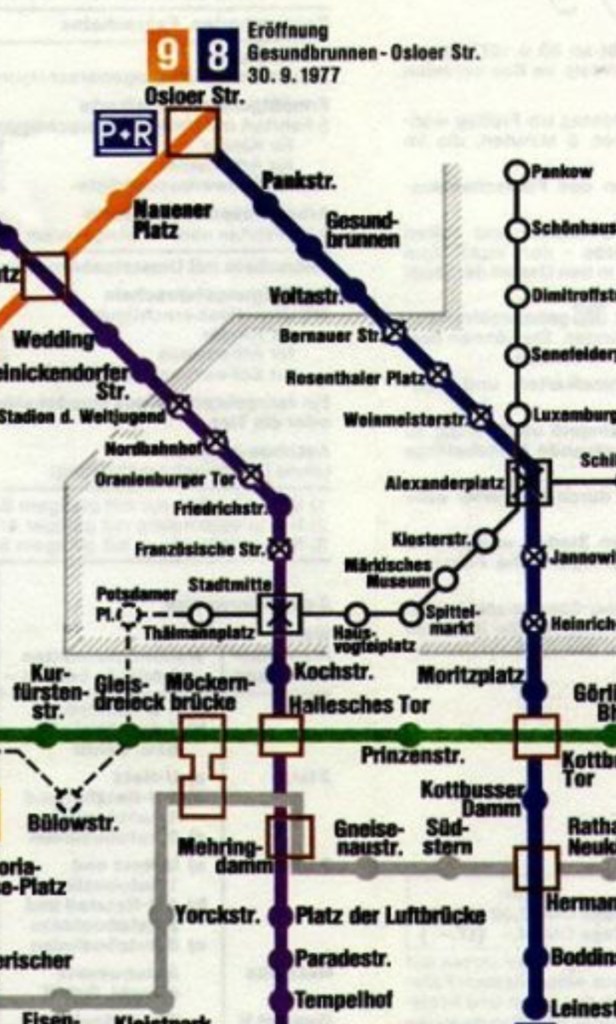
Before it was divided into East and West, Berlin had a large underground train system that covered the entire city. Like everything else, this too was divided by the wall and some train lines ended up exclusively in the East or the West, while some ended up in both – so a train could start in West Berlin, cut through a section below East Belin, and then be under West Berlin again.

West Berlin subway map from 1979
East Berlin Subway Map with all West Berlin stations removed.

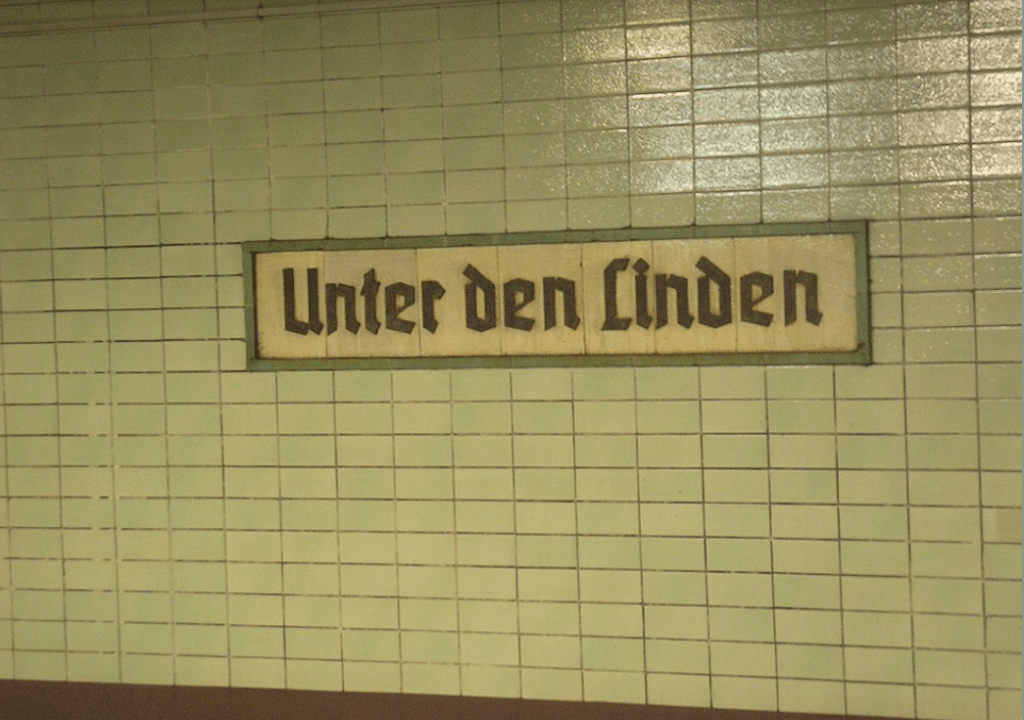
The trains thst started in West Berlin were not allowed to stop at the stations in the East, they would slow down and roll through the eerily empty station and then speed up again. Often these stations were patrolled by East German Guards. Interestingly, the trains were allowed to operate in this manner, and not completely stopped, because the trains were owned by and were a good source of revenue for the East German regime. These stations were marked on West Berlin’s subway maps simply as “Banhofe, auf denen die Zuge nicht halten” – the train does not stop at this station.

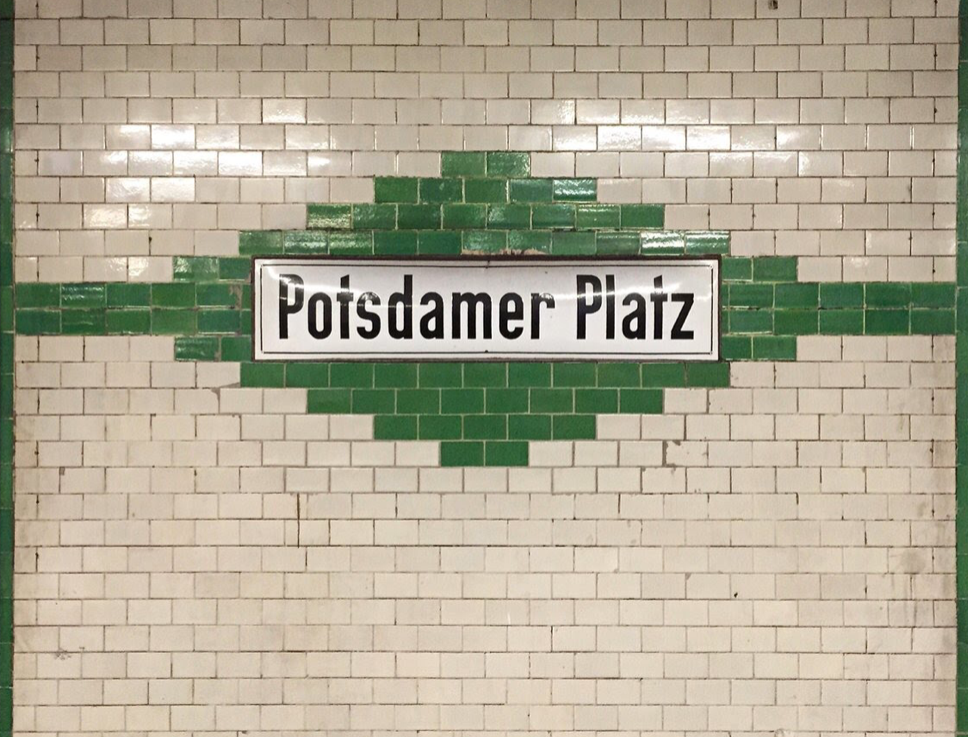
The stations came to be known as Ghost Stations – they were dimly lit and completely empty, and saw no human activity for decades. After the wall fell, these stations appeared to be frozen in time with 30 year old posters still hanging on the walls.

One of the stations Friedrichstrasse was completely in East Berlin but was used by West Berliners to change trains and go from one patform to the next. It was used as a border crossing and this was also where the West Berliners who came to meet relatives in the East came in and left from – as a result the station withnessed many tears and heartbreaks.

All evidence of the past has been removed after reunification, and it is difficult to imagine that the bustling stations of today are the same ghost stations of yesterday.

(Source: YouTube Video, Atlas Obscura, and berlin.de).

The Bruts of Boston

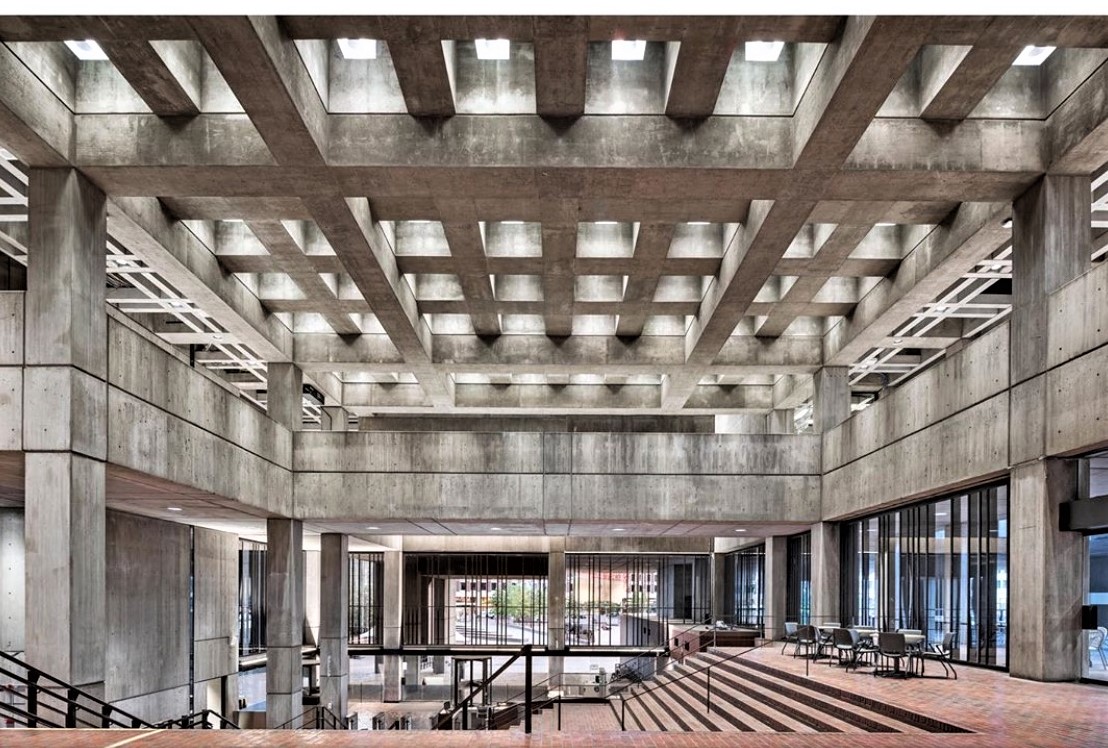
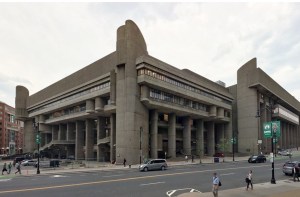
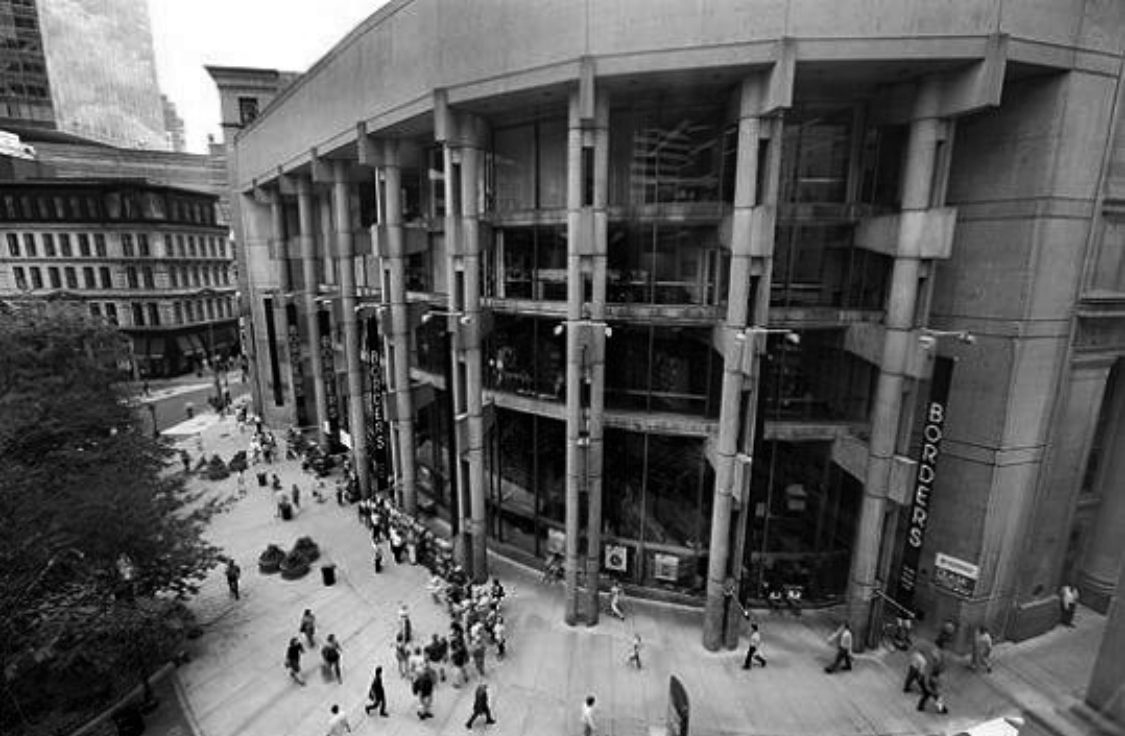
If one can tear themselves away from the cobblestoned beauty of Quincy market, from the culinary delights of Faneuil Hall, and from the narrow streets of the Italian North End that is practically bursting at its seams with history, and head towards Government center and City Hall in what was known as Scollay Square, one will come face to face with these gargantuan, yet lyrical, concrete giants of brutalism.

The post-World War II era put Boston on a path to reinvigorate itself and tear off the shackles of narrow cobblestones streets and old brownstone buildings. Brutalism architecture with its honest, concrete, progressive look seemed to fit the bill.

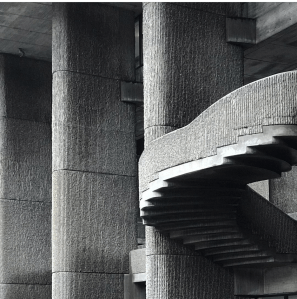
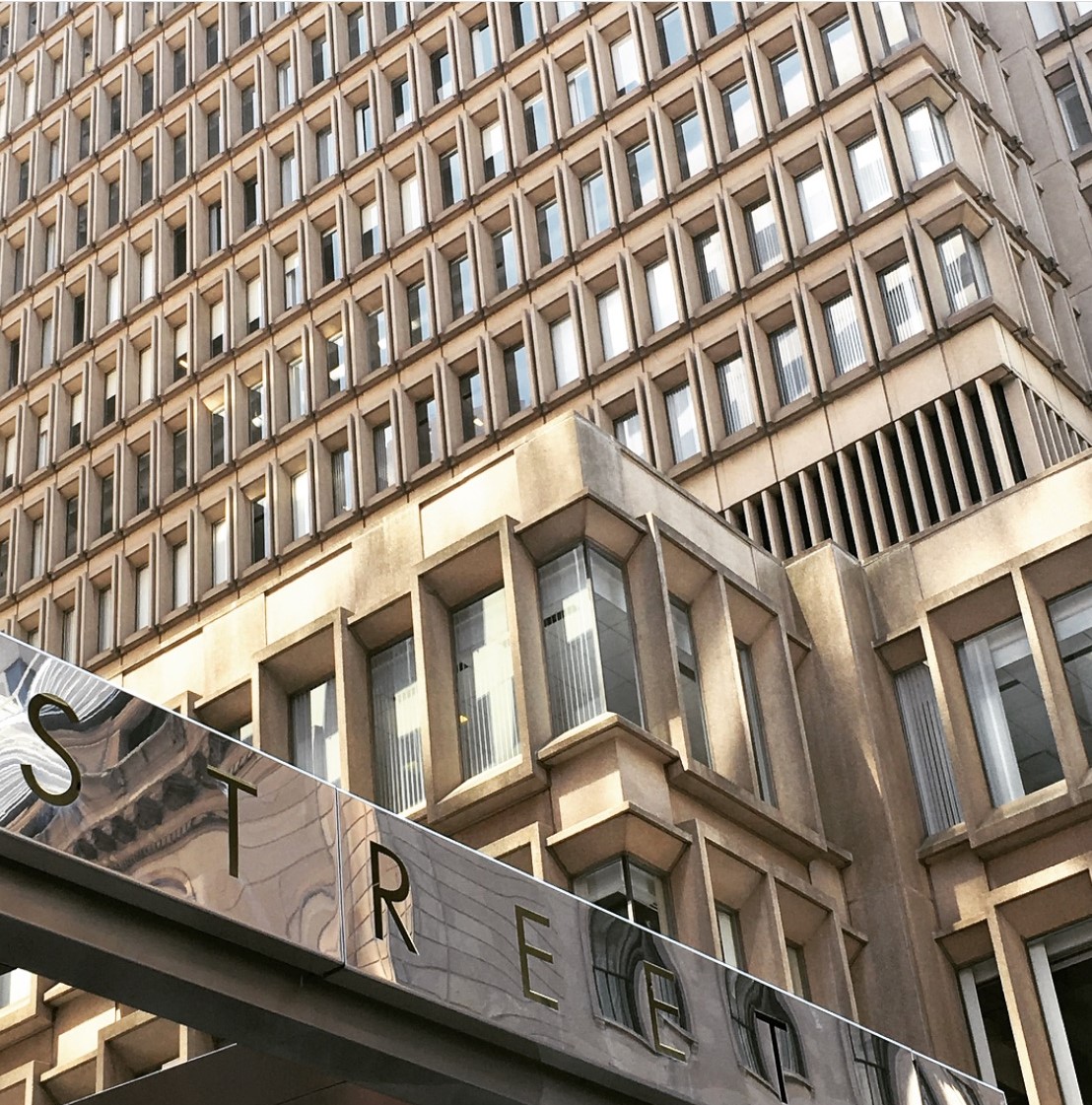
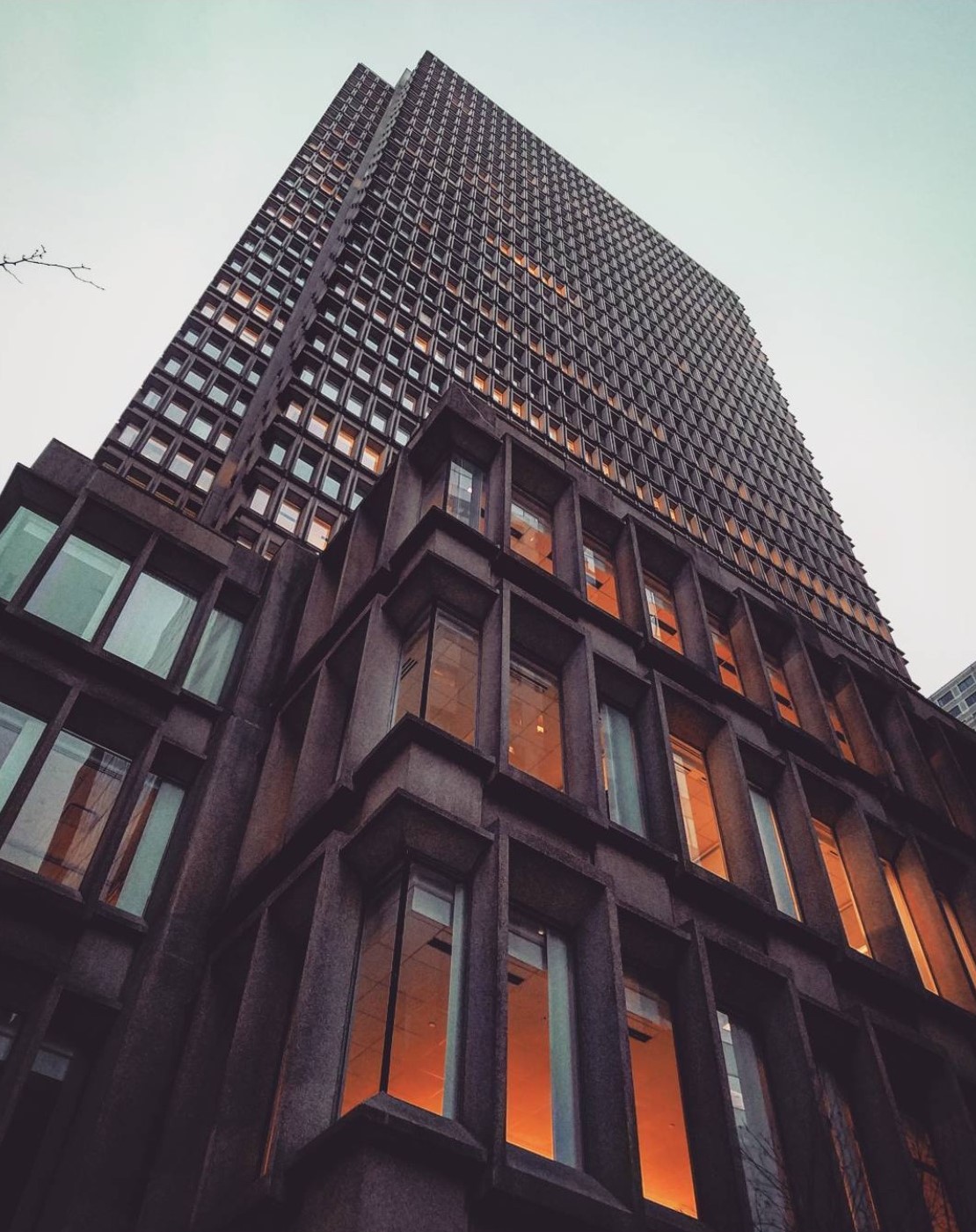
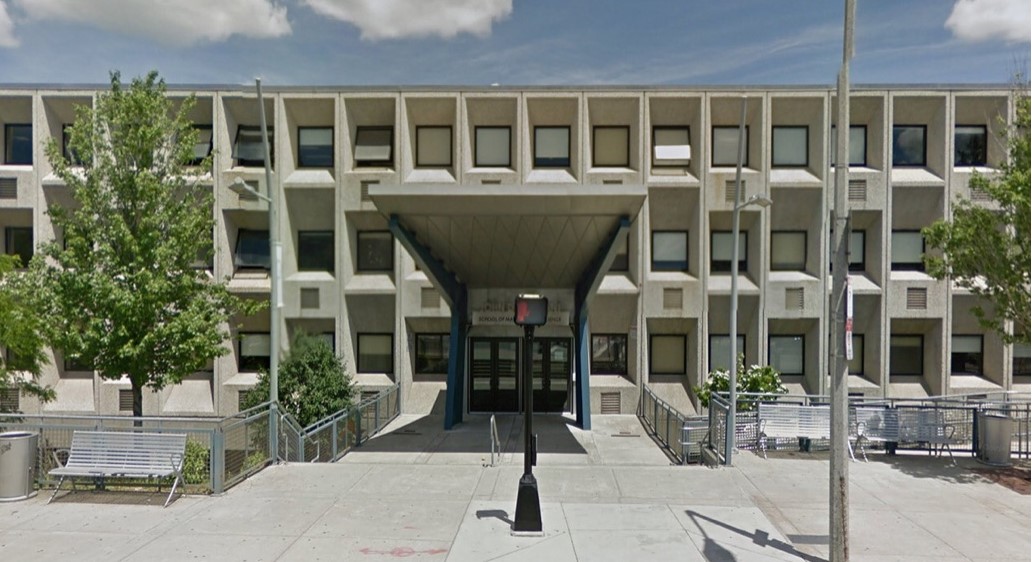
Brutalism is a sub-genre of modernist architecture that lasted from 1950s to mid-70s. It is so called not because of the “brutish” appearance of the building but is taken from the French term for raw concrete, “beton brut.” It was mostly used for government buildings, schools, and public housing built after World War II.  Brutalism is characterized by the blocky appearance of buildings that most often have a recurring geometric design and are built with massive amounts of poured concrete.

Boston City Hall and the Government Center buildings stand a stone’s throw from the Quincy market – but centuries separate these two sites architecturally. Other buildings followed -including the State Street Bank, Boston Five Cents Savings Bank, the Harbor Towers and the MIT Hermann Building. Today Boston boasts the largest concentration of brutalist architecture in the US.

Government Center Building

(All imges courtesy of Boston Magazine and Architectural Digest websites).

“Our Life” in Tiles

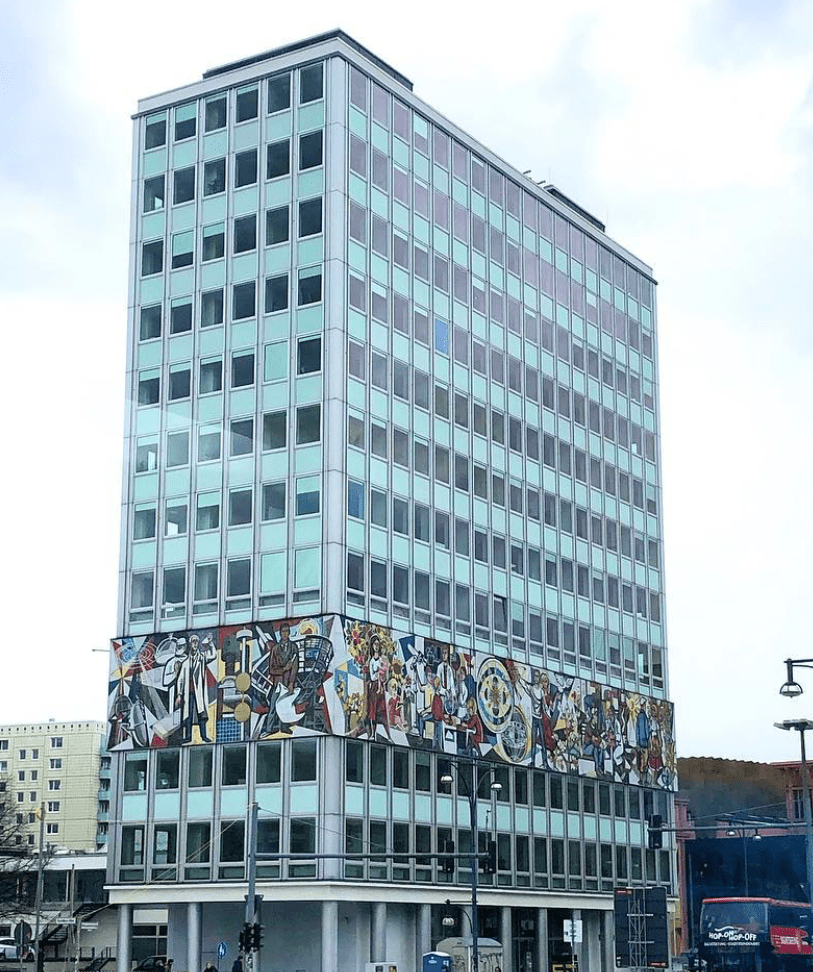
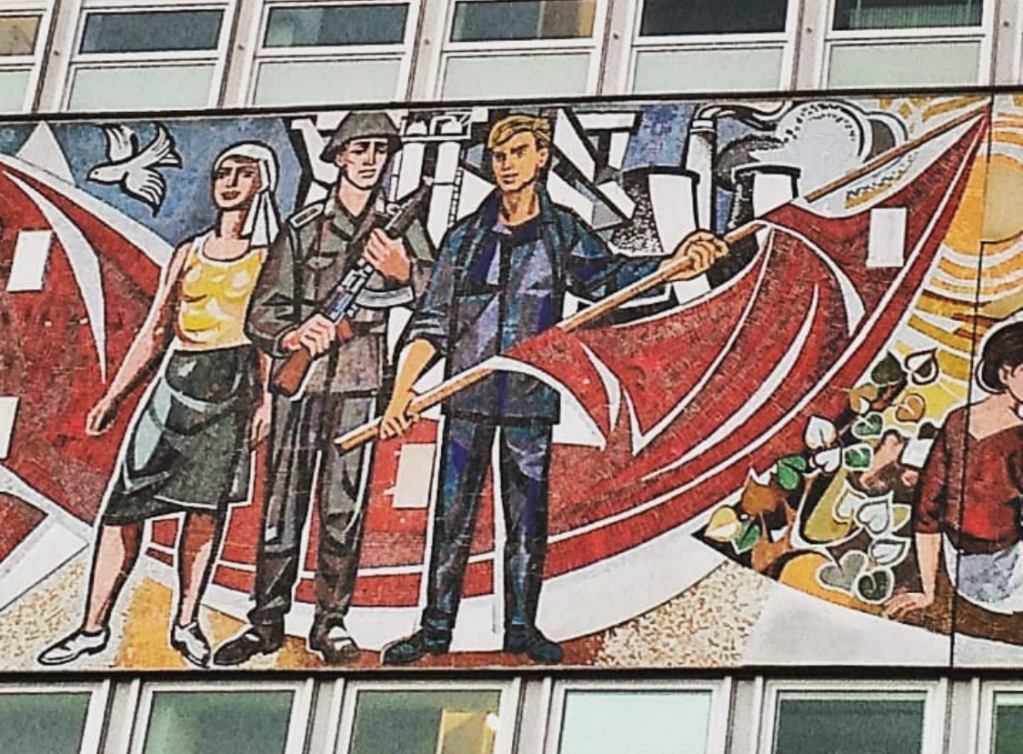
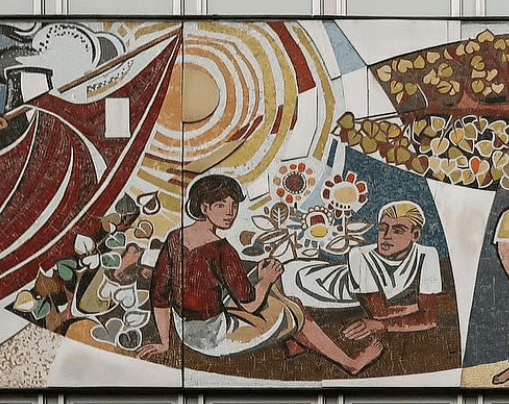
Art on buildings, among other public places, was a big thing for socialist countries – and in Berlin’s Alexanderplatz is one of the most iconic and largest of these artworks. It wraps around two floors of the East German Ministry of Education’s “House of the Teachers” building like a bandage.

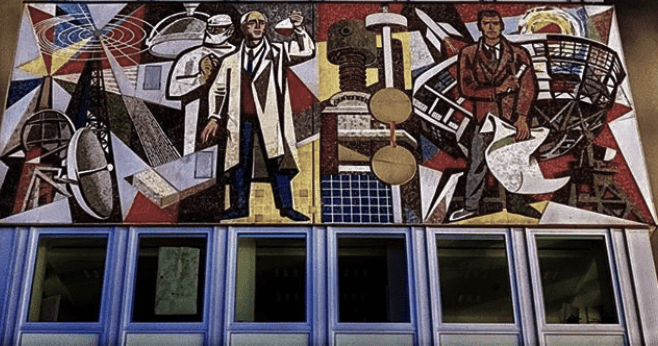
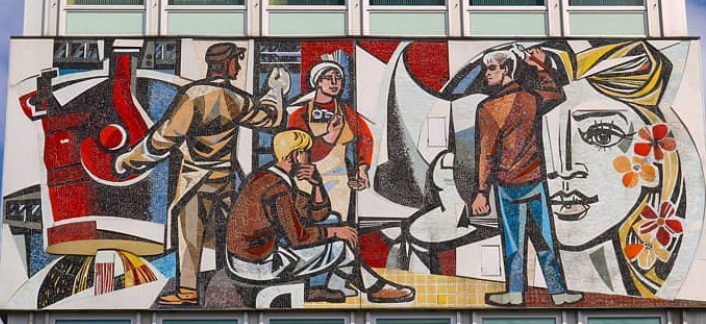
Artist Walter Womacka (1925 – 2010) was chosen by the East German government to make this mural – and the large-scale socialist realism mosaic built in 1964 is now a protected landmark. Its popularity probably stems from the colorful folk-art vibe which is so much softer and fun than hardline socialist propaganda art.Womacka called his mural with 800,000 tiles “Our Life,” and that’s precisely what it depicted – various aspects of life in East Germany that the government wanted to showcase.

This section of the mural depicts worldwide friendship and harmony

(All images courtesy Instagram and Haus des Lehrers website).

Pepys and the Great Fire

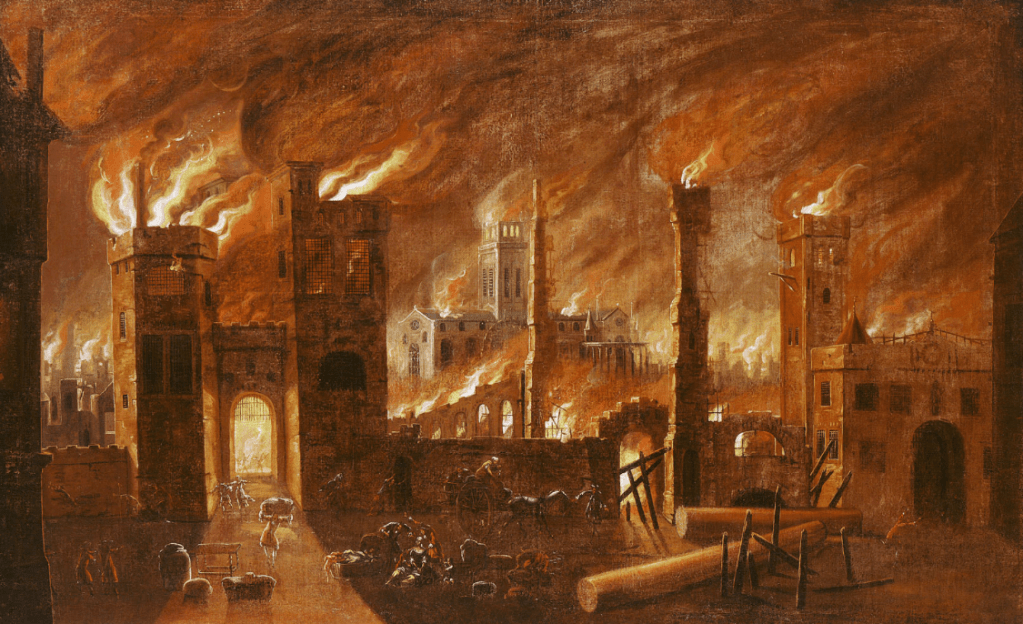
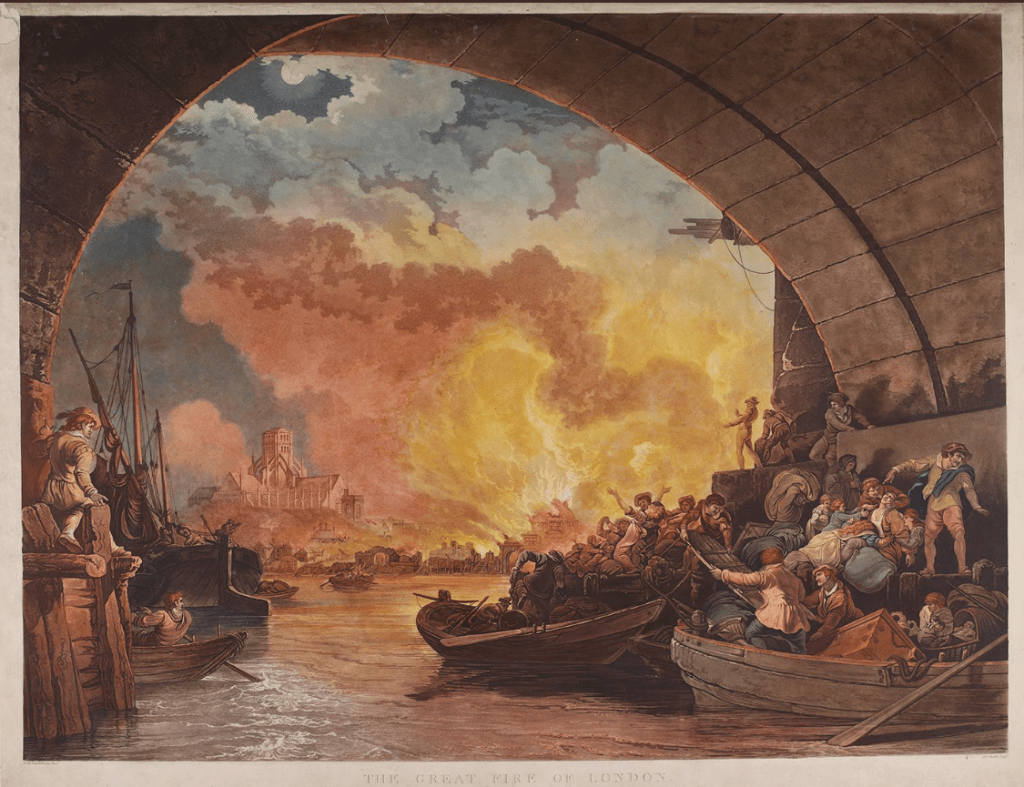
 …  By and by Jane comes and tells me that she hears that above 300 houses have been burned down to-night by the fire we saw, and that it is now burning down all Fish-street, by London Bridge. So I made myself ready presently, and walked to the Tower, and there got up upon one of the high places, Sir J. Robinson’s little son going up with me; and there I did see the houses at that end of the bridge all on fire, and an infinite great fire on this and the other side the end of the bridge; which, among other people, did trouble me for poor little Michell and our Sarah on the bridge.

Sunday 2 September 1666, Samuel Pepys
Great Fire of London, 1666 (Unknown Artist)

So down, with my heart full of trouble, to the Lieutenant of the Tower, who tells me that it begun this morning in the King’s baker’s house in Pudding-lane, and that it hath burned St. Magnus’s Church and most part of Fish-street already.

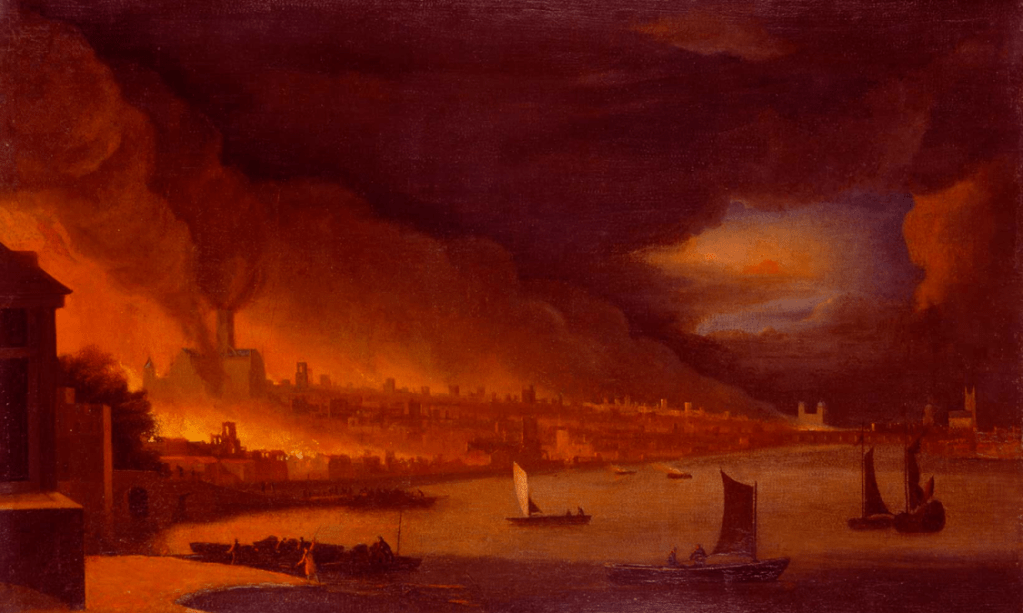
So I down to the water-side, and there got a boat and through bridge, and there saw a lamentable fire. Poor Michell’s house, as far as the Old Swan, already burned that way, and the fire running further, that in a very little time it got as far as the Steeleyard, while I was there.

Sunday September 2 1666, Samuel Pepys

Everybody endeavouring to remove their goods, and flinging into the river or bringing them into lighters that layoff; poor people staying in their houses as long as till the very fire touched them, and then running into boats, or clambering from one pair of stairs by the water-side to another. And among other things, the poor pigeons, I perceive, were loth to leave their houses, but hovered about the windows and balconys till they were, some of them burned, their wings, and fell down.Having staid, and in an hour’s time seen the fire: rage every way, and nobody, to my sight, endeavouring to quench it, but to remove their goods, and leave all to the fire, and having seen it get as far as the Steele-yard, and the wind mighty high and driving it into the City; and every thing, after so long a drought, proving combustible, even the very stones of churches, and among other things the poor steeple by which pretty Mrs. ———— lives,…..

Lord! what sad sight it was by moone-light to see, the whole City almost on fire, that you might see it plain at Woolwich, as if you were by it….I up to the top of Barking steeple, and there saw the saddest sight of desolation that I ever saw; every where great fires, oyle-cellars, and brimstone, and other things burning. I became afeard to stay there long, and therefore down again as fast as I could, the fire being spread as far as I could see it; 

Thursday September 5, 1666 Samuel Pepys

Up by five o’clock; and, blessed be God! find all well, and by water to Paul’s Wharfe. Walked thence, and saw, all the towne burned, and a miserable sight of Paul’s church; with all the roofs fallen, and the body of the quire fallen into St. Fayhth’s; Paul’s school also, Ludgate, and Fleet-street, my father’s house, and the church, and a good part of the Temple the like.

Friday 7 September 1666 Samuel Pepys
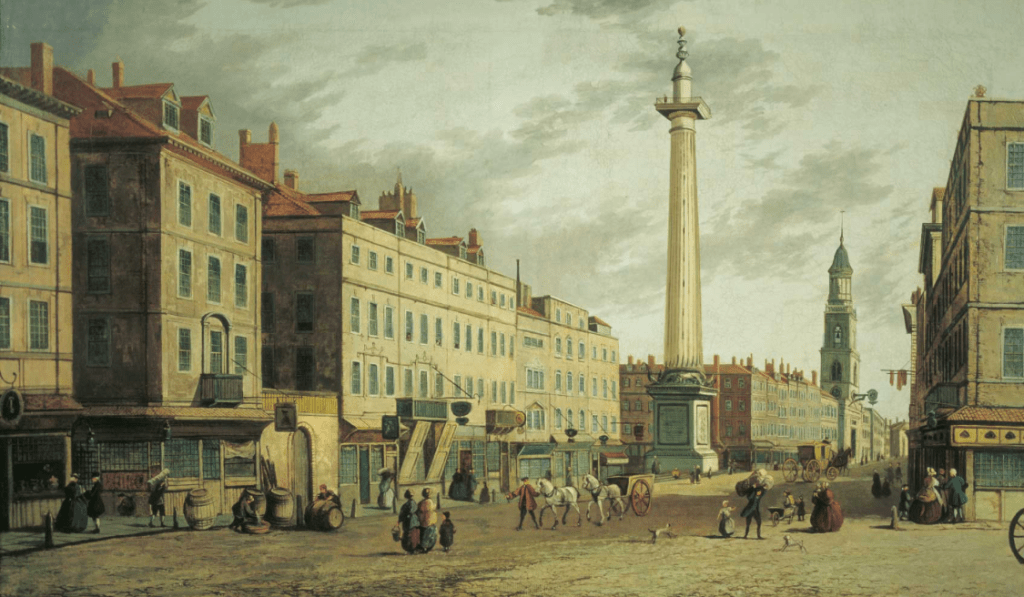
Canaletto, The Monument from Gracechurch Street (1750): monument to the Great Fire of 1666

(All images courtesy Museum of London, Guildhall Art (London), and pepysdiary.com)

What did you do during your lunch break today?

This summer, I participated in a New York Times Reading contest which involved reading an article and writing a personal reflection to the article. The article I wrote about is by Alex Vadukul, “How Big Mike, a Barbershop painter, Broke into the Art World.” Mike Saviello works at a barber shop and during his lunch break he paints. Here is my reflection on this article:

If you scroll past all the stories of immigrants, dreamers, migrant crisis, political debates, you will come to this truly heartwarming story of Mike Saveillo, a barber from New York who has become a sought after artist. This too is a story about America: about the opportunities that still exist, about simple working class people, about cities like New York with long lasting barbershops, about wives who get cancer and husbands who get shattered, about barbers who dare to dream and use bold colors and have art showings at big name galleries – all of this is possible because Mike Saveillo lives in America.

There is a Mike in most people. People often give up on something they are passionate about because it is the practical, sensible thing to do. We stop playing the cello because it interferes with math tutoring, we give up singing for science fairs. Mike gave up art for football, and then a well-paying job so he could support his family. But his passion for art never left him, and in the end he found a way to paint. That’s why I liked this story so much. Because in the end, Mike found a way to do something he had always wanted to do since he was a child, and because he lives in a country where he could dare to dream, and to be, in the words of his wife, “a disrupter.”

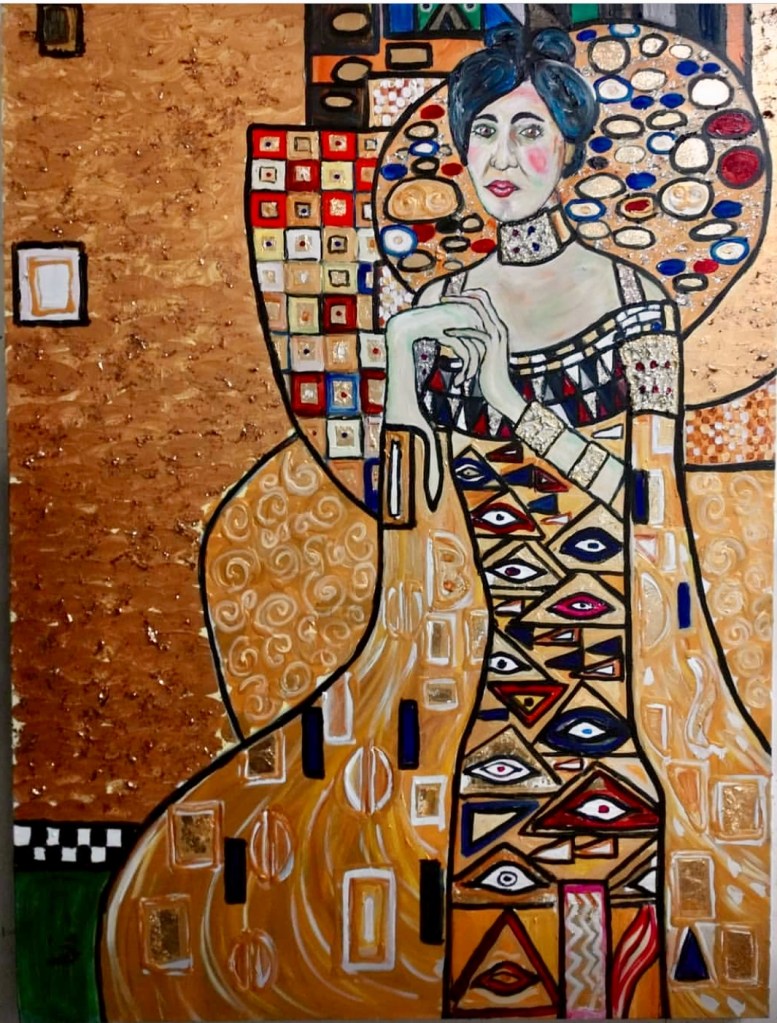
All paintings from Michael Saviello’s Instagram