Enigmatic England: Bletchley Park

Eighty years ago on August 31, the German army invaded Poland and started World War II.  I was watching some movies about World War II and came across “The Imitation Game,” which was about scientists and mathematicians that worked at top-secret Bletchley Park. As a student in London, my sister was lucky enough to visit Bletchley Park, and wrote the following vignette:  

The really striking thing about England, particularly to an outsider, is how much of its national character is shaped by the two world wars, particularly World War II. It seems that no family was left untouched by the war, and every sacrifice, great and small, that can be made for a nation, was made. The number of young lives lost is incomprehensible, and the number would have been much larger but for the brilliant people who worked at Bletchley Park. 

It is often said that truth is stranger than fiction – it is at least true in the case of Bletchley Park.  If you put all the spy movies, thrillers, and novels together, they would still not match the intrigue of Bletchley Park, its intense secrecy, its brilliant people, and the unbelievably intelligent decoding and deciphering work that was done here during World War II.  The fact that toward the end of the war over 8000 people worked here and yet its existence was not disclosed until decades later, gives an inkling of the level of secrecy maintained, and the characters of the people that worked here.  The mathematicians at Bletchley Park were deciphering Germany’s war time communication codes, and to do this they built the world’s first computers.  These brilliant people were able to decipher Germany’s supposedly indestructible codes and in the process saved many lives including at Dunkirk, D-Day, and were instrumental in finding Germany’s most powerful warship Bismarck so the British Navy could drown it. 
Women at Bletchley Park (image courtesy of http://www.bletchleypark.org)

After the war, Bletchley Park and its brilliant people all went home, and never spoke a word because of the oath of secrecy they had all taken. Many had parents that died without knowing their son or daughter’s immense contribution to the war effort.   Clearly this was a generation of greatness. How did we get from there to our current generation of selfies, Facebook, Instagram – we can barely drink a cup of tea without informing the whole world about it. Over 8000 people. Over three decades.  Not one word.  Let that sink in, and perhaps one begins to understand England.

(Both images from http://www.bletchleypark.org)

The Things They Longed For

In the Blue Ridge Mountains, near Tallulah Gorge in Georgia, there is a piece of America that transported me into one of my favorite books, Tim O’Brien’s “The Things They Carried”.

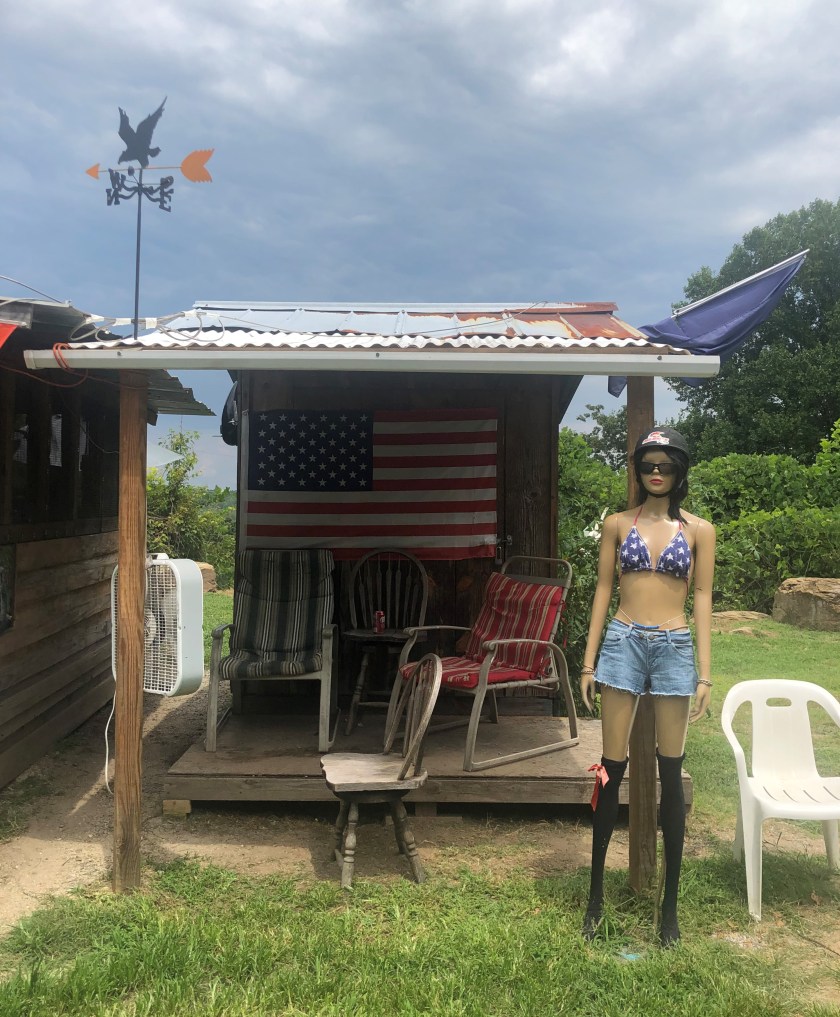
Sometimes on a regular day out – well this one was a daytrip to see waterfalls in the mountains of Georgia – one comes across the most unexpected people and places. While driving to see the Tallulah Gorge, I took a last minute side detour to a scenic overlook. For me, there was so much more than the overlook here – by the side of the road there was the kind of place that I think Tim O’Brien and his platoon would have made for themselves in Vietnam, a place that would transport them, if only momentarily, to the America, the home, and the things they longed for so desperately. It was almost a mise-en-scene for a play or a movie about the longing for Americana that the boys in Vietnam must have felt – except this was real, and the boys were – well – middle aged bikers by now.

The roadside shack, with a flag and a bald eagle on its roof, proudly calls itself “Hillbilly’s Hot Nuts & BBQ.” The shack was adorned with every possible American thing a boy would long for in Vietnam –all kinds of Harley Davidson models, banners, and paraphernalia, music records, Coca Cola bottle cut outs, a smiling Marilyn Monroe, a sexy Marilyn Monroe with James Dean, Elvis Presley, and Humphrey Bogart in a café, a sultry Rita Hayworth selling Coke, Coke selling Coke and hot dogs for 15 cents, Big foot crossing sign, a Native American chief with a glorious feathered headgear, a faded Uncle Sam, a black and white electric guitar – it was all there. And to the right was a place to sit, relax, chitchat, and as the picture shows – enjoy a Coke. Here a large flag covered the entire back wall, and a welcome committee, in the form of a faintly Asian looking mannequin, stood in front of the shack.

A third shack with a tin roof provides a welcome respite for the riders.

The entire space seems more like a setting for a Vietnam war movie than a roadside shack next to a scenic overlook. But there it was, and bikers rode up to it, bought their roasted Georgia peanuts and Coke and hung out for a while chatting with each other. One of them even happily posed for a picture when I asked if I could get a picture of his bike.

Happy to pose

And I was reminded of Tim O’Brien and his platoon; young American boys longing for the comforts of home in Vietnam, and I imagined that this is what they longed for. Suddenly, this place took on so much meaning for me – it was not just a roadside food shack, but a place for the boys who returned home, and for those who did not. None of us will ever understand what they went through in Vietnam. They have only each other to turn to; the shared experience is theirs only, the rest of us are outsiders looking in, trying unsuccessfully to understand. And places like the Hillbilly Nut & BBQ Shop, make it possible for these brave men to stop for a few minutes, talk to each other, perhaps reminisce about someone who didn’t make it back – before they ride off into the mountains.

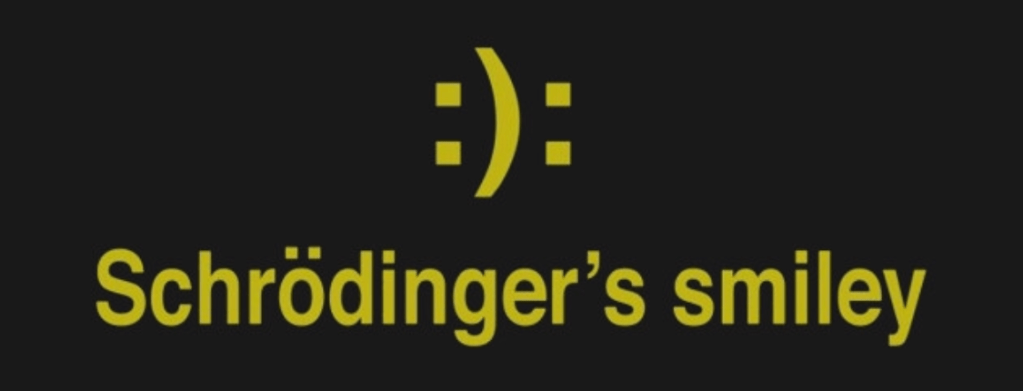
Schrödinger’s Smiley :):

To be in two states at the same time – to smile on the outside and be sad on the inside – that’s what this emoticon known as Schrödinger’s smiley means. Its origins can be traced to the thought experiment conducted by Schrödinger to refute the Quantum Mechanics claim about the superposition of two states proposed by researchers in Copenhagen.

Erwin Schrödinger was born in Vienna on August 12,1887 and was awarded the Nobel Prize in Physics in 1933 for his work in Quantum theory. His most well-known work is the Schrödinger equation which describes the behavior of quantum particles which act like both wave and particles.

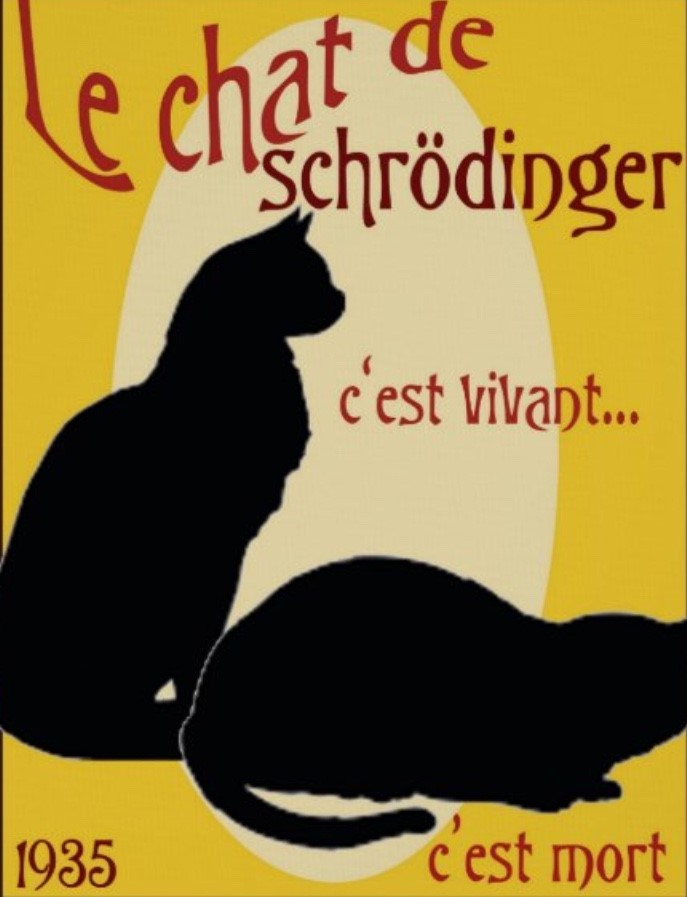
Schrödinger’s Cat

Schrödinger is most well-known for his thought experiment now known as Schrödinger’s Cat – which he did to refute an idea known as the Copenhagen Interpretation of Quantum Mechanics. It stated that particles could exist simultaneously in two states and that is was only once the particle had been observed that it existed in one state or another.

Schrödinger came up with his thought experiment to argue that the Copenhagen theory did not make sense – the experiment involved a cat in a steel box, some radioactive material, a hammer, and poisonous gas in a jar– when the radioactive material decayed the hammer would get deployed and break the jar which would release the poisonous gas which would kill the cat.

While the box is closed there is an equal probability of the cat being dead or alive – no one knows the outcome until the box is opened. Relating this to quantum mechanics – as long as the box is closed – the cat exists in a superposition of states and is both alive and dead. The sole outcome is observed only once the box is opened. Schrödinger argued that this outcome – the superposition of states is not possible because a cat cannot be both alive and dead.

Ironically his name is associated with the smiley which shows a superposition of both happy and sad states in human emotions. :): The Schrödinger smiley gets its name because of the two contradictory states or the superposition of states it shows – of a person smiling on the outside but feeling sad on the inside.

Ligthing up the divide

European Space Agency’s astronaut Andre Kuipers took this photograph of Berlin from space. This image as well as Canadian astronaut Chris Hadfield’s image and tweet brought attention to the marked difference in Berlin lights at night when he saw it from space in 2013.

Chris Hadfield took this picture from space, “Berlin at night. Amazingly, I think the light bulbs still show the East/West division from orbit.” April 17, 2013. (Twitter).

On April 13 2013, it was 23 years 5 months and 4 days since the Berlin Wall fell – so why this difference?

East Berlin’s street lights were a sodium vapor lamp which emit a soft yellow light, whereas West Berlin has fluorescent lights which emit white light. Apparently, the reunified city government had not gotten around to changing the East German lights yet!!

The brightly lit up blob in the center which looks like it’s in the East is Alexanderplatz which was heavily renovated after reunification and hence shows white light. The oval shaped darkness at the 9 0’clock spot is the Tiergarten, and the lit up line running through it is a major road, Unter den Linden, which leads to the well-lit Brandenburg gate.

The legendary Tempelhof Airport is now a park.

At around the 3 o’clock spot there’s another dark circle – that is the legendary Tempelhof Airport – the site of the Berlin airlift where American cargo planes brought in food and other supplies to the city when it was blockaded from all sides by the Soviet Union. The airport is now a park.

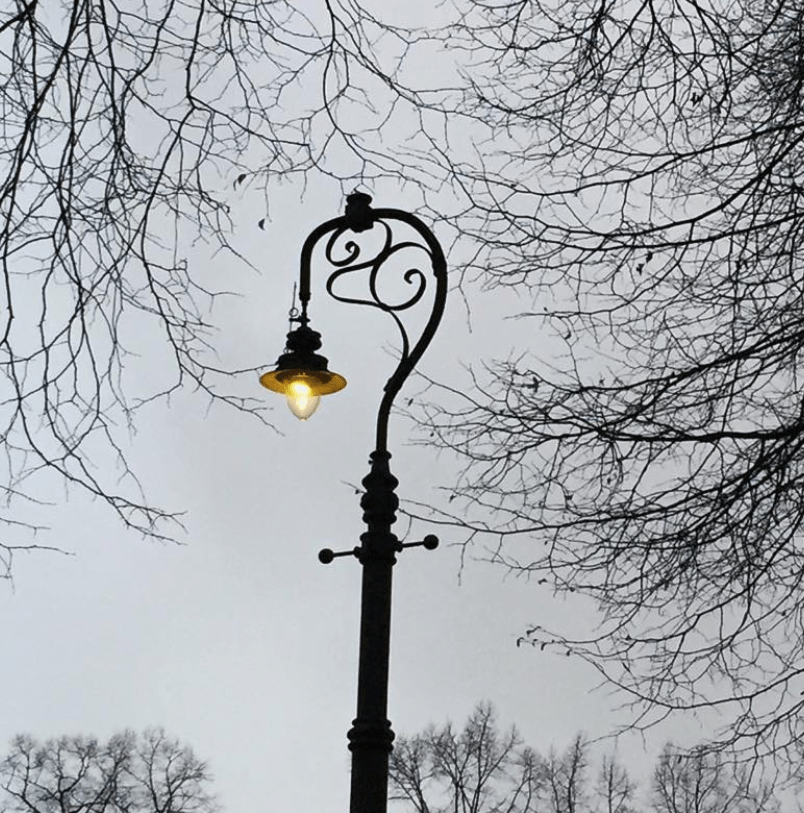
Belin is home to some of the most beautiful streetlights, some of which have been around the mid 1800s. It seems that the remaining 30,000 streetlights are set to be replaced with more energy and environmentally friendly street lights. Many Berlin residents are trying to get a UNESCO World heritage classification for the old streetlamps in an effort to save these beautiful lamps.

“The Way of The Red Flag”

Dresden is almost too beautiful to be real. When the late afternoon sun shines on its churches and palaces, it almost takes your breath away. The Frauenkirche (Lutheran Church) sits in the middle of the old town center like a beautifully iced cake on a platter; just one of the many baroque architectural gems in this town which, until 1989, was part of communist German Democratic Republic (GDR). The city was completely devastated by Allied bombings in 1945, practically every building was demolished. For 45 years after that, Dresden and its old town lay in ruins. Mountains of rubbles lay everywhere, untouched by the communist government, as a propaganda about the devastation of capitalist warfare.
 The Frauenkirche in Dresden Old Town was rebuilt after the fall of Communism

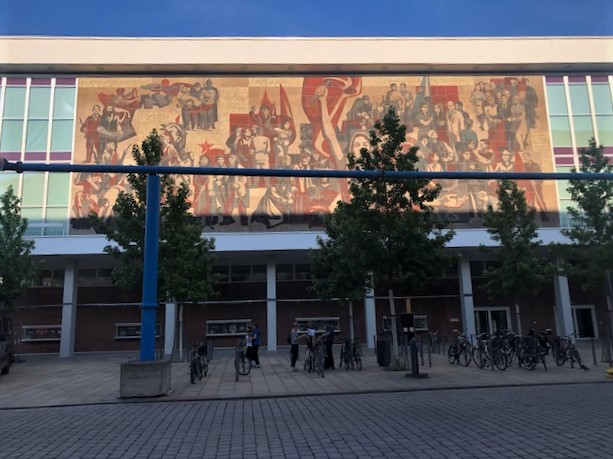
The GDR constructed numerous buildings around the old town, punctuating the once baroque town with low and wide glass and concrete buildings that are quintessential socialist and communist architecture. The Kulturpalast (Palace of culture, 1962) at the edge of the reborn old town is a classic example of communist architectural expression of social order. One side of the building is decorated with a striking mural called “The  Way of the Red Flag,” adding color, albeit a symbolic red, to an otherwise grey concrete exterior.

The Kulturpalast (Palace of Culture) was built by the GDR government in 1962 and is a classic example of communist architectural expression of social order.        

The long narrow mural, is approximately 95 feet high and 325 feet wide, and tells the history of socialism. Almost to the center stands its most striking feature, a woman with a scarf typical of the socialist working class, her left hand stretched out in a welcoming gesture, while her right hand holds a red flag. The raised flag leads the eye toward the hammer and sickle symbol of the GDR. The story starts on the left half of the mural where Karl Marx (with a document in his hands) can be seen standing with Freidrich Engels. Below them a group of three men arm themselves in protest, and to the right we see the Red Star a sign of the Russian revolution of 1914. World War II, and its suffering, is depicted to the right of the flag bearer. The victory of socialism is seen in the depiction of groups of men of various professions, some holding guns while others raise their right fists. All seem to be looking towards the central figure of Walter Ulbricht the communist leader of GDR.

  The Way of the Red Flag : The mural on the Kulturpalast tells the history of Socialism  

I discovered the mural almost by accident and stood in front of it for a long time, marveling at it, and shocked both by its existence and its contrast with the baroque architecture of Dresden’s old town. The fact that the Kulturpalast and the mural exist to this day, 30 years after the fall of communism, is a testament to the people of Dresden. The people of this Dresden have rebuilt their town back to its former Baroque glory from the debris that remained after World War II. Their love for art and architecture is evident from the fact that despite the passage of time, almost 40 years passed before communism fell, they started rebuilding brick by broken brick as soon as they could after reunification . It is only a city that has suffered and lost so much that will not be quick to tear down art, even if it is communist art. And we, the visitors, leave  Dresden enriched, by both the people and the art and architecture of this beautiful city.

Berlin Wall


It fell with almost the same speed and surprise as it had risen 28 years earlier. From the evening of August 13, 1961 to the evening of November 9, 1989, the Berlin Wall encircled West Berlin, effectively cutting it off from East Germany which surrounded it on all sides. The wall was a physical barrier that cut through a city dividing friends, neighbors, and family, but more importantly it was an ideological barrier between capitalism and communism, and a powerful symbol of the Cold War.

This summer, I traveled to Germany, a country I have wanted to visit since I first read about the Berlin Wall in world history. The wall was constructed almost overnight on the night of August 13, 1961 by the German Democratic Republic’s (GDR) communist government. The wall was called “Antifascistischer Schutzwall” by the GDR government who claimed that the primary purpose of the wall was to keep the West German fascists, who wanted to undermine the socialist regime of the east, out of East Berlin. In reality though, the wall was built to stop the mass defections that were occurring daily with people leaving East Berlin for the west. The GDR government was concerned about their dwindling population and the impact it would have on the East German economy.

With the slow demise of communism in parts of Eastern Europe, the GDR government too, in a most unexpected and unplanned way relaxed the barrier and on November 9, 1989 announced that “effective immediately” East Berliners would be allowed to travel to the West. The euphoria that followed this unexpected announcement was such that people started to climb the wall and started chipping away at it the same night. Within a couple of days, Helmut Kohl, then Chancellor of Germany, started to address the issue of “German Reunification,” thus putting events into motion that have eventually led to the Berlin of today – a city that seems to be bursting with life; still celebrating reunification.

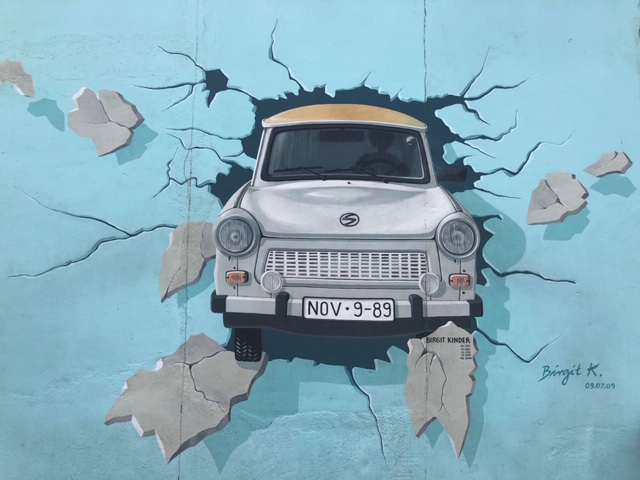
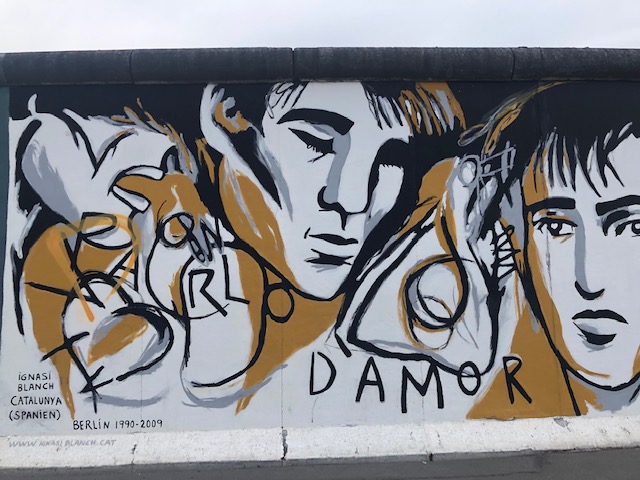
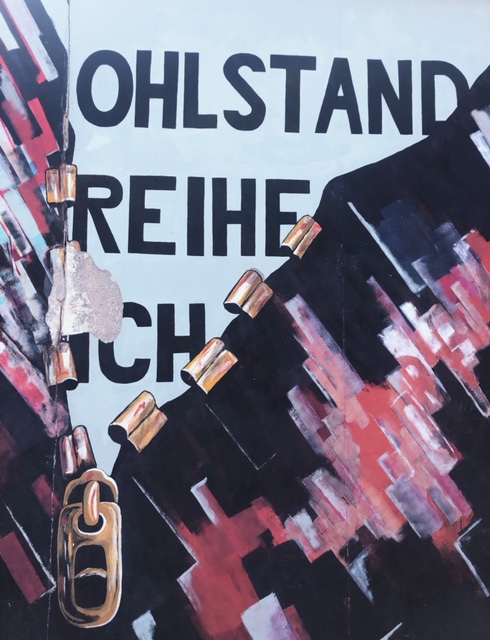
While most of the wall is gone for good, an almost 1.5-mile-long section of the wall remains standing along the river Spree in the Friedrichshain section of Berlin. This longest intact section of the original 90-mile-long wall has become the world’s largest outdoor museum of sorts. The 105 sections of the wall have been painted by artists from all over the world, each one a unique showcase providing its own commentary on the wall, its fall and freedom.   

Unlike the graffiti artist of the 1980s, these artists painted by invitation and had no fear of getting shot by the East German guards patrolling the wall. So while the East Berlin Gallery is an incredible piece of art that celebrates freedom and humanity, it does not have the intensity and  rawness of the street art that covered the wall prior to 1989. The first artist to paint the wall was French artist Thierry Noir, who lived along the wall and painted sections of it with incredible street art almost on a daily basis. The amazing gallery that stands today is because of pioneer street artists like Thierry Noir who by painting the wall attempted to psychologically destroy it.   

Soup Tins & Comic Strips(II)

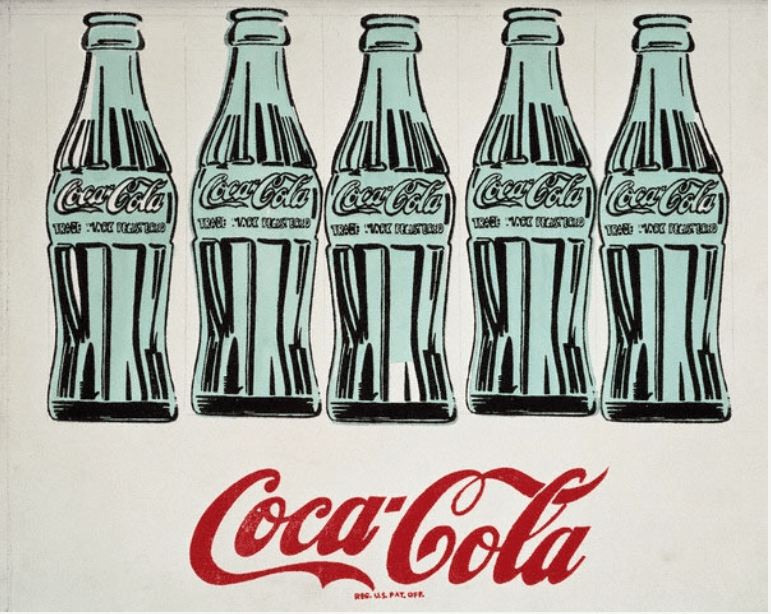
Andy Warhol, Coca Cola 5 bottles, 1962

Pop Art gave America some of its most well-known and beloved artists and iconic paintings, and proved to be a form of self-affirmation for a young nation still looking to old European masters for inspiration and approval. Andy Warhol (1929-1987), whose name has become synonymous with Pop Art is the leading figure of this movement. His creative peak was between 1962 and 1968, when he produced a series of paintings which proved to be the high-point of the pop art movement.

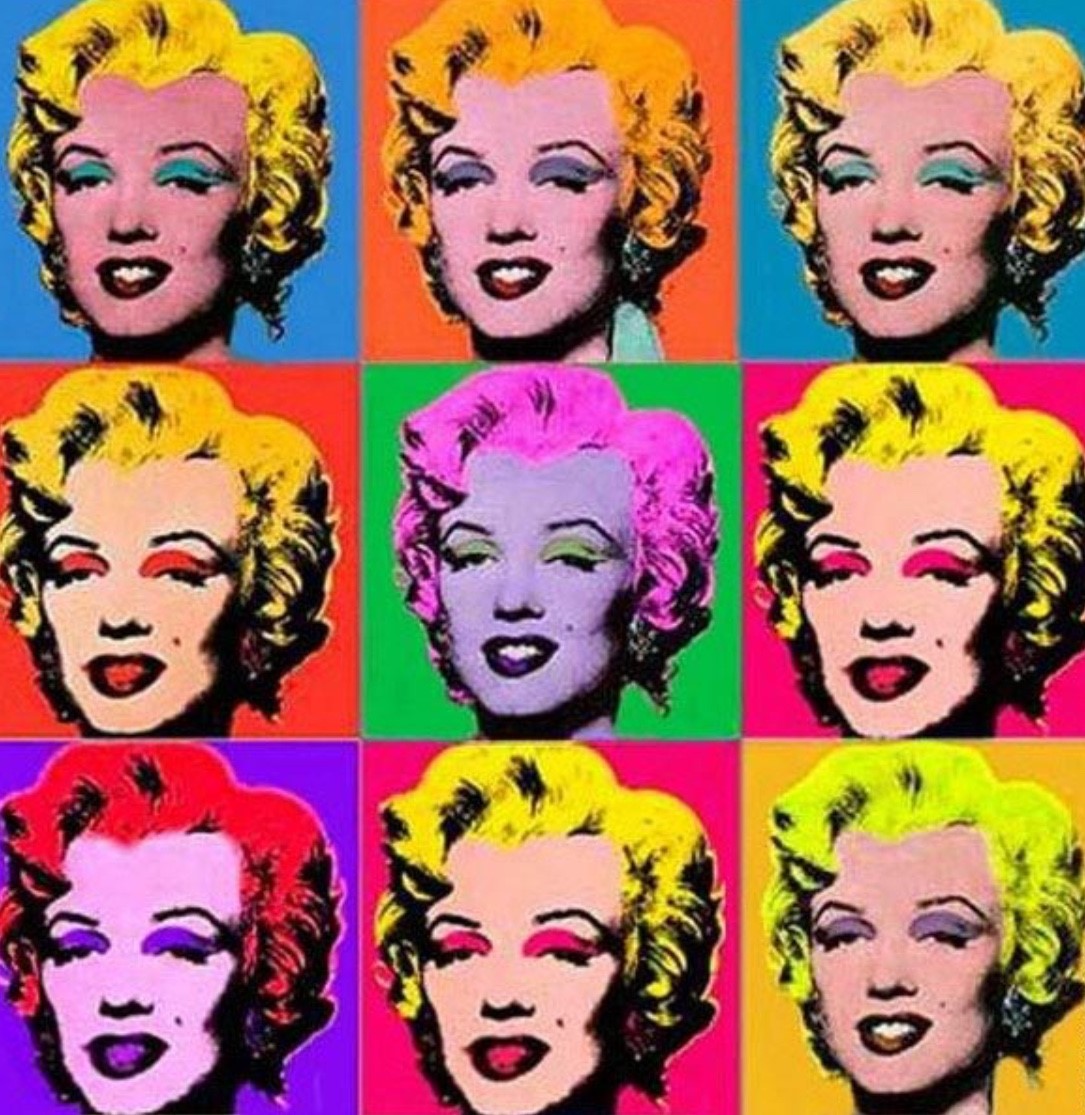
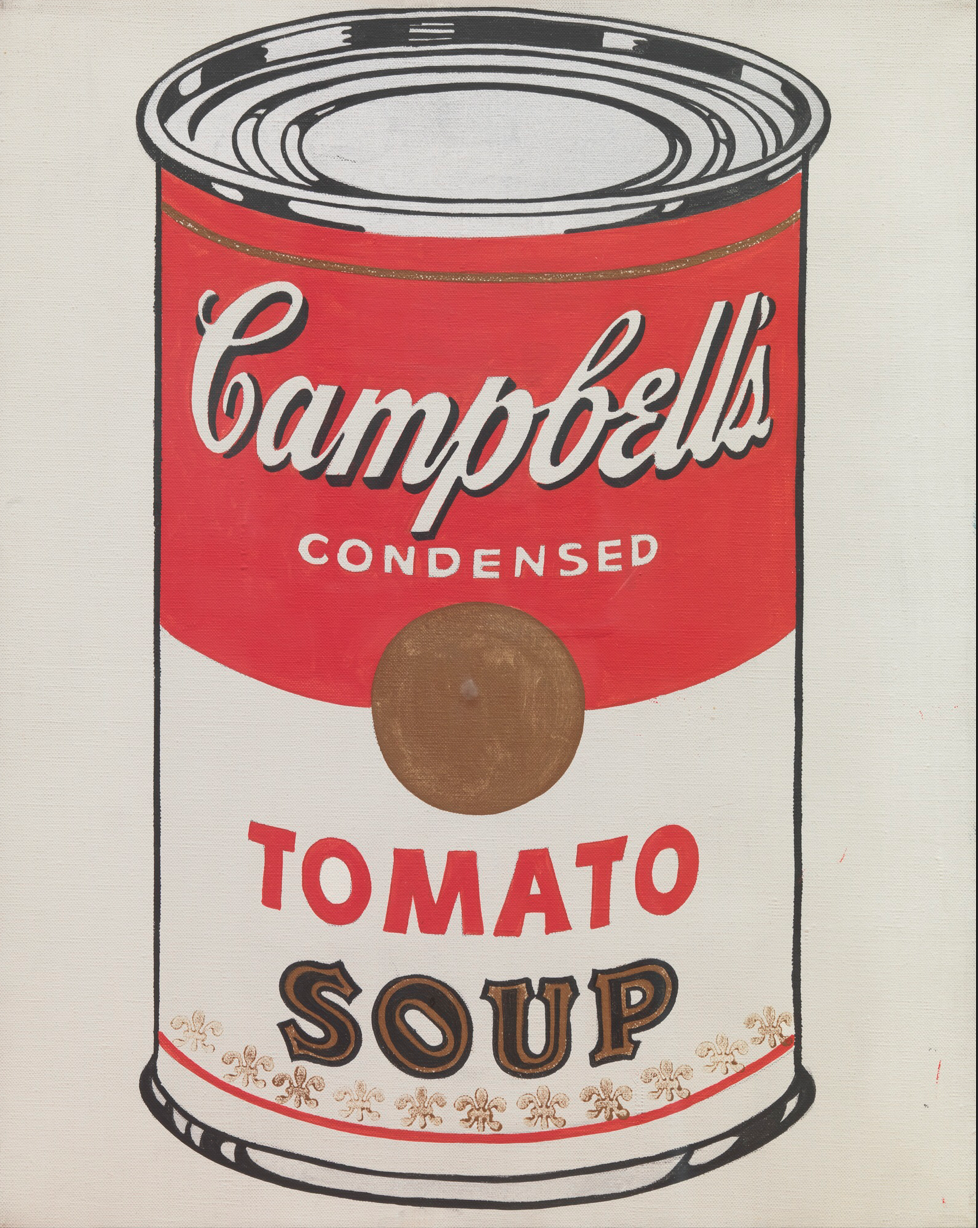
Having had a previous career in advertising, Warhol favored commercial techniques, and was keenly aware of the way imagery could be manipulated. His soup tin and head of Marilyn Monroe with which he has become inextricably linked are considered pop art icons. In Marilyn Monroe (1964), Andy Warhol painted twenty-five images of Marilyn Monroe emphasizing how easily the image can be mass produced. A closer look, however, reveals that each head varies slightly from the next, “here the eye shadow is darker, there the hair is lighter, in another place the lips are smudged.” (John Sandberg, Art Journal). In Campbell’s Soup Cans (1962), by removing soup tins from the supermarket aisle and placing them in a new setting, Warhol changed the way America looked at art.

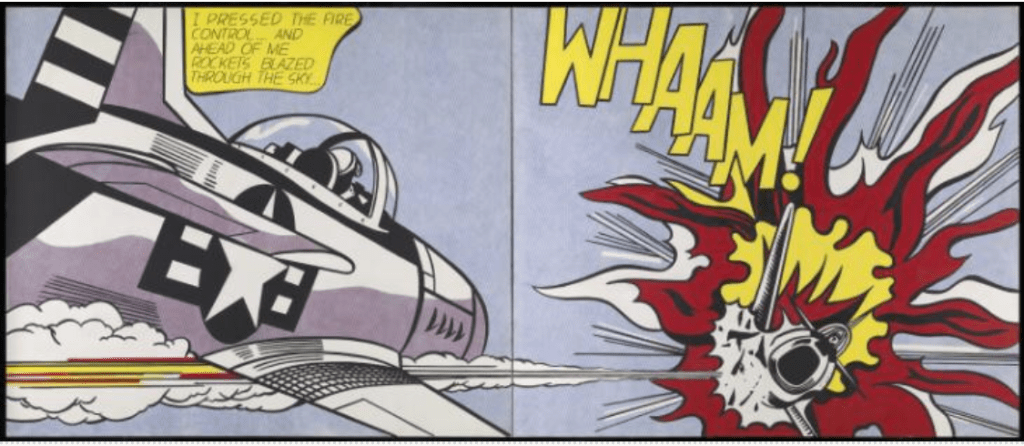
Roy Lichtenstein, Whaam! 1963
Roy Lichtenstein, Drowning Girl, 1963

Another groundbreaking pop artist, Roy Lichtenstein (1923-1997) looked to comic strips for inspiration right down to the Benday dots used in cheap comic strip printing.  With Whaam! (1963), Lichtenstein took a highly charged subject matter and shows it in a completely detached emotionless way.  According to Tate Modern, this was commercial art in a fine art context.  In the melodramatic Drowning Girl (1963), he copied a comic strip right down to the dots. 

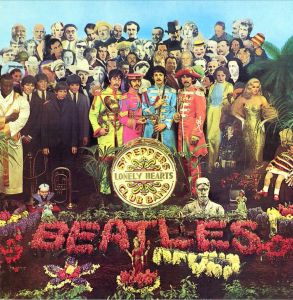
Peter Blake, Beatles Album Cover

British Pop Art, though inspired by America was less brash.  It seems softer and bordered on nostalgia. Peter Blake (b. 1932), a member of the avant-garde British pop artist Independent Group, whose original claim to fame was the co-creation of the Beatles’ Sgt. Pepper’s Lonely Hearts Club Band album cover, is a leading figure in British pop art. In one of his most well-known works Self-Portrait with Badges (1961), Blake pays homage to tradition with the badges, and to popular culture, particular American culture, with baseball shoes, denim fabric, and the magazine dedicated to Elvis Presley who had just become famous in Britain (Tate Modern).

Peter Blake, The FIrst Real target, 1961

In The First Real Target (1961), in true Pop Art fashion, an everyday item becomes an item of visual interest.  Moreover, by alluding to American pop artist Jasper Johns, who is known for painting targets, Blake acknowledges the appeal and influence of American pop art and popular culture. 

The Pop Art movement faded away by the end of the 1970s, but left its mark on the art world. It made ordinary, recognizable objects into visual art and paved the way for artists to explore the nature of art which in turn led to experimentation and art movements such as Postmodernism, Photorealism, and Neo-Expressionism.

Ia short span of less than two decades, Pop Art unchained the fine art, highbrow shackles that had chained art for centuries, and made it fun, vibrant, colorful, relatable, and democratic. The movement’s most enduring legacy, however, is that it has made the world a little less rigid, and a little more tolerant and open-minded.  It showed the world that there is more than one way of seeing things, and in so doing, forever changed the way the world looks at art.

Soup Tins & Comic Strips

The glorification and elevation of a soup tin to high art could only happen in a country that was the birthplace of democracy and considers the pursuit of happiness a national pastime.  The generation that grew up in war time was clearly going to be different from previous generations, and this was evident in almost every aspect of their lives. There was a sense of impermanence, and the desire to enjoy life for the moment. When the children of the people who fought in the war became adults, they lived life on their own terms; changed their hairstyles, shortened their dresses, removed hats and collars, listened to music that was definitely not their parents’ music, and freed art from the shackles of fine art and refinement.

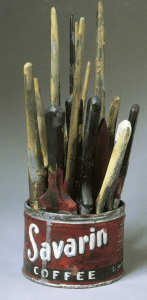
Jasper Johns, Painted Bronze 1960

In their adulthood, by the late 1950s, America was a place of affluence and material wealth. Families purchased new age gadgets like automobiles and televisions, moved to the suburbs, and lived a consumerist life. Capitalism in society also inspired the art movement known as Pop Art which started in the late 1950s and lasted until the 1970s. The movement was mainly limited to the United States and Britain, and its most defining feature was that it took art lightly and turned to mainstream media and culture for inspiration.

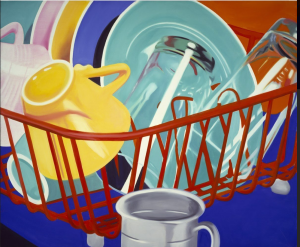
James Rosenquist, Dishes, 1964. Oil on Canvas

            The art world’s immediate reaction to World War II was to turn inward to an art movement that eventually came to be known as Abstract Expressionism. By 1960s, the artists who grew up with and learned their trade from the abstract expressionists were ready for a change. And since no conventional realism would do, the answer came in the form of Pop Art – this happy medium of abstract and realism, which is both and neither at the same time, was coined “Pop Art,” by British art critic Lawrence Alloway in 1951 referring to the pop culture of the era.

Roy Lichtenstein, In The Car, 1963, Oil and Magna on Canvas

            Pop Art was a product of its times. By the 1960s, the US was a consumer goods society with mass media extensively promoting material goods to a society looking to increase its material possessions. Pop Art looked towards the graphics and images from advertisements and other forms of mass media for inspiration. Mass media had already perfected images to sell products to the American public and Pop Art elevated these images further by putting by elevating them to an art form; what art critic described aptly as gilding an already gilded lily. In the UK too, a public tired of war rations and shortages wanted to reap the material benefits and affluence so seductively presented in American films and magazines.

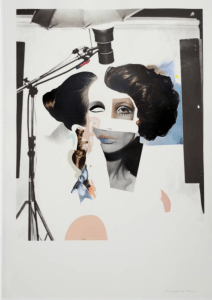
Richard Hamilton, Fashion-Plate, 1969 – 1970

            Among contemporary art movements, Pop Art, with its bold, bright colors, is one of the most instantly recognizable styles of art. Pop Art blurred the distinction between fine art and commercial art by turning to banal, everyday items for inspiration. This art movement captured everyday items such as ice cream cones, soup cans, billboards, and comic strips and recorded a moment in time of American life. Pop art presents realistic images of these items, but not in the conventional sense; the enormous sizes, though not unrecognizable, are sufficiently transformed by the artist to be no longer realistic.

James Rosenquist, The Facet 1978

The revolutionary group of artists who worked in Pop Art were not only rebelling against the status quo in the art world, they were also affirming the post-war capitalist boom in America.  Similar to previous generations of artists who recorded the ever changing contours of the great American outdoors, the avant-garde group of pop artists sought to capture the transient nature of the subject matter they painted. Among the most well-known were Andy Warhol, Roy Lichtenstein, James Rosenquist, Jasper Johns, and Robert Indiana. British pop artists, who were influenced by American culture from a distance, included Richard Hamilton, David Hockney, and Peter Blake.   

In my next blog I’ll write about three of these artists, their works, and some concluding remarks about this art movement.

Magritte, Kierkegaard, & de Saussure

If you name me, you negate me. By giving me a name, a label, you negate all the other things I could possibly be.” Danish Philosopher Soren Kierkegaard (1813 – 1855).

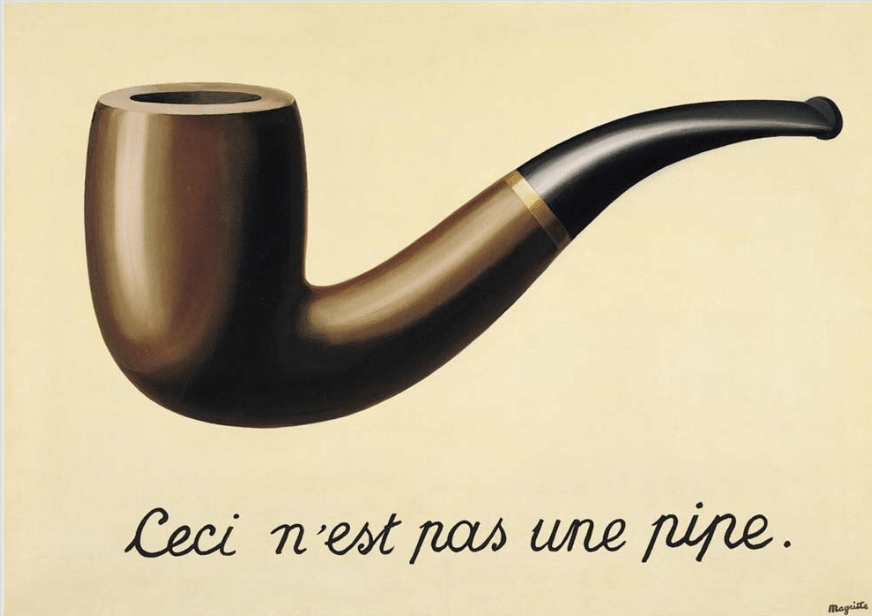
Rene Magritte (1898–1967) was a Belgian surrealist artist who is known for challenging the viewers’ preconditioned perceptions of reality.One could wax and wane endlessly about the philosophical underpinnings of his pipe painting, Treachery of Images (1929). Or the way I understand it – Magritte was saying two things here – this is not a pipe since you can’t really stuff some tobacco into it and smoke it as you would a pipe. The second is that it’s not a pipe because it’s an image of a pipe. And really the word pipe can be changed at any time to say for instance pig – in which case – this would still no longer be a pipe. So the word and the image are simply representations of the real thing, and not the real thing.

The Interpretation of Dreams 1935

Words and images are human representations of the real live tangible thing which we can touch and experience. They have names because we gave them these names – there is always a disconnect between the real thing and the way we see and name something – perhaps that’s why the images are also painted through a window.

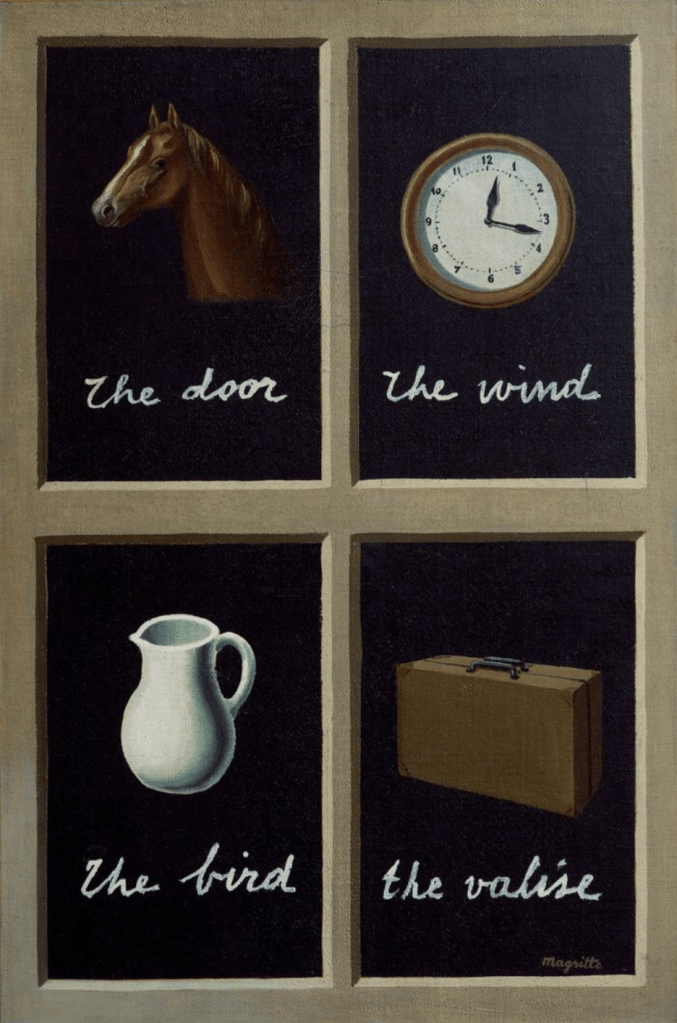
Key to Dreams 1927 …the sky, the bird, the table, the sponge

The paintings are depictions of the challenges put forth by the influential Swiss linguist Ferdinand de Saussure (1857-1913) who clearly saw that the relationship between a thing and its name are totally arbitrary. The word gets its meaning from existing within a context of the system of naming that exists and has existed for centuries. Magritte challenged this same arbitrary relation in these paintings.

The Key To Dreams, 1930 …. the acacia flower, the moon, the snow, the roof, the storm, the desert

So Magritte, Kierkegaard, & de Saussure come together to help us understand and challenege, and find new ways of looking at old things.

Ragged Old Flag

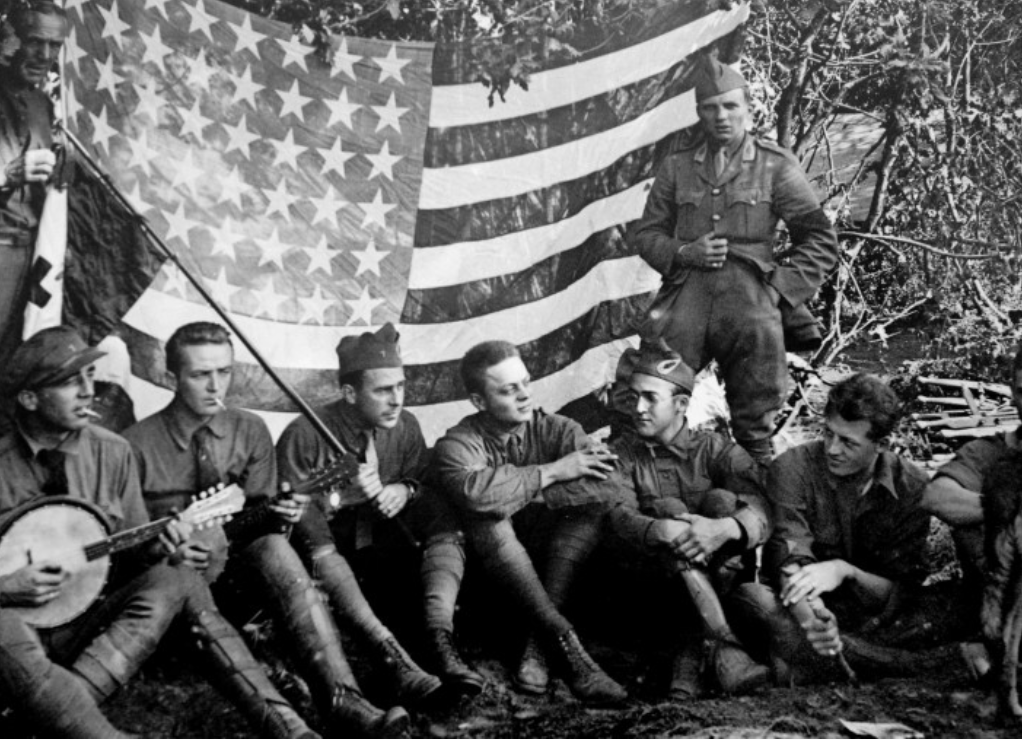
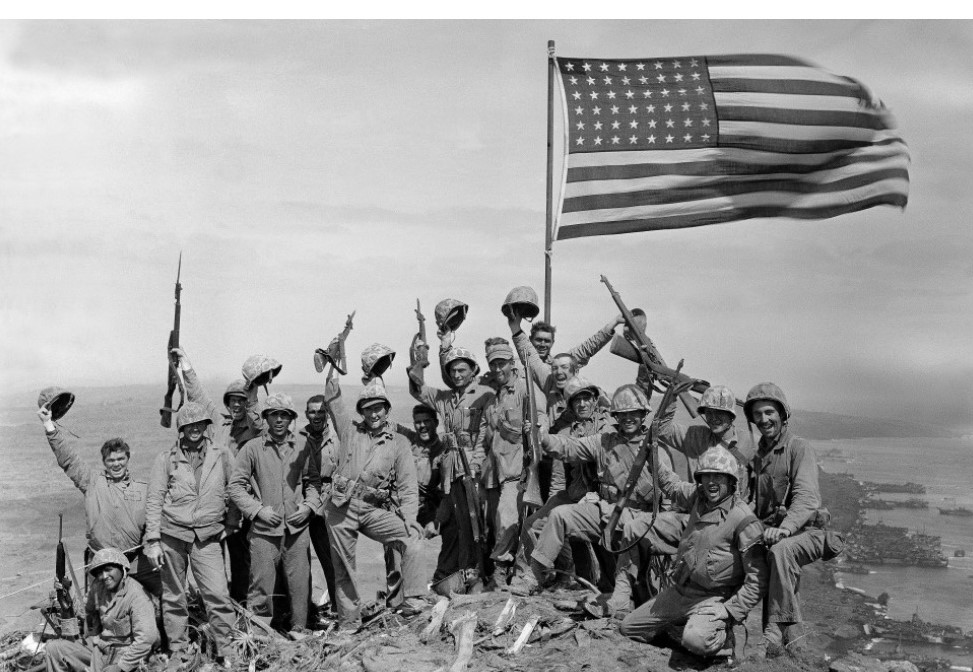
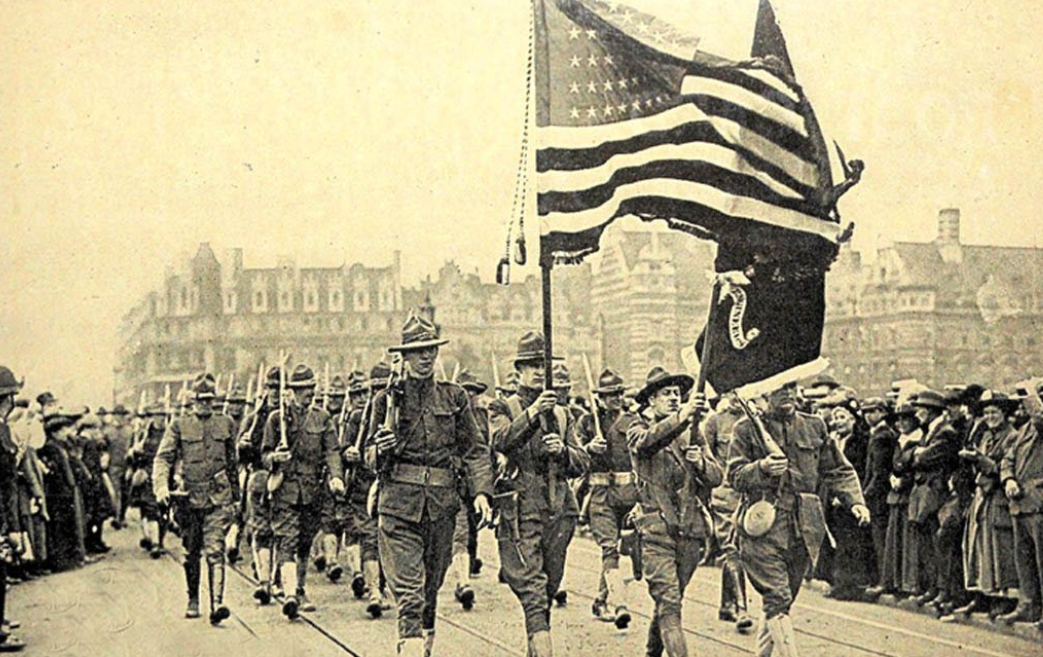
On this Flag Day, I wanted to honor the flag with this poem by Johnny Cash.

Ragged Old Flag

I walked through a county courthouse square
On a park bench an old man was sitting there
I said, your old courthouse is kinda run down
He said, naw, it'll do for our little town
I said, your old flagpole has leaned a little bit
And that's a ragged old flag you got hanging on it

He said, have a seat, and I sat down
Is this the first time you've been to our little town?
I said, I think it is
He said, I don't like to brag
But we're kinda proud of that ragged old flag

You see, we got a little hole in that flag there when 
Washington took it across the Delaware
And it got powder-burned the night Francis Scott Key
Sat watching it writing say can you see
And it got a bad rip in New Orleans
With Packingham and Jackson tuggin' at its seams

And it almost fell at the Alamo
Beside the texas flag, but she waved on though
She got cut with a sword at Chancellorsville
And she got cut again at Shiloh Hill
There was Robert E. Lee, Beauregard, and Bragg
And the south wind blew hard on that ragged old flag

On Flanders field in World War one
She got a big hole from a Bertha gun
She turned blood red in World War Two
She hung limp and low a time or two
She was in Korea and Vietnam
She went where she was sent by Uncle Sam

She waved from our ships upon the Briny foam
And now they've about quit waving her back here at home
In her own good land here she's been abused 
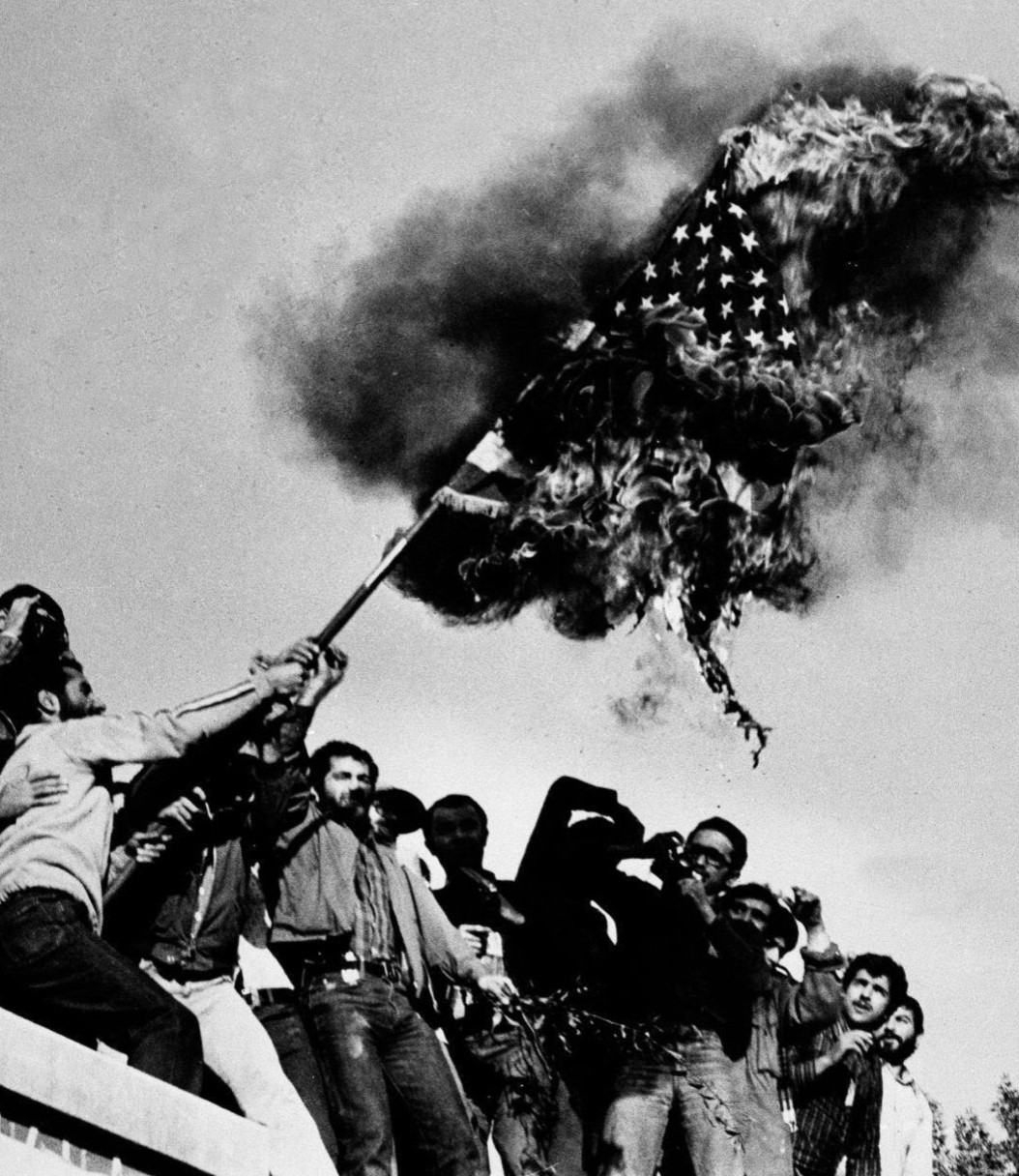
She's been burned, dishonored, denied, and refused

And the government for which she stands
Is scandalized throughout the land
And she's getting threadbare and wearing thin
But she's in good shape for the shape she's in
'Cause she's been through the fire before
And I believe she can take a whole lot more

So we raise her up every morning
We take her down every night
We don't let her touch the ground and we fold her up right
On second thought, I do like to brag
'Cause I'm mighty proud of that ragged old flag

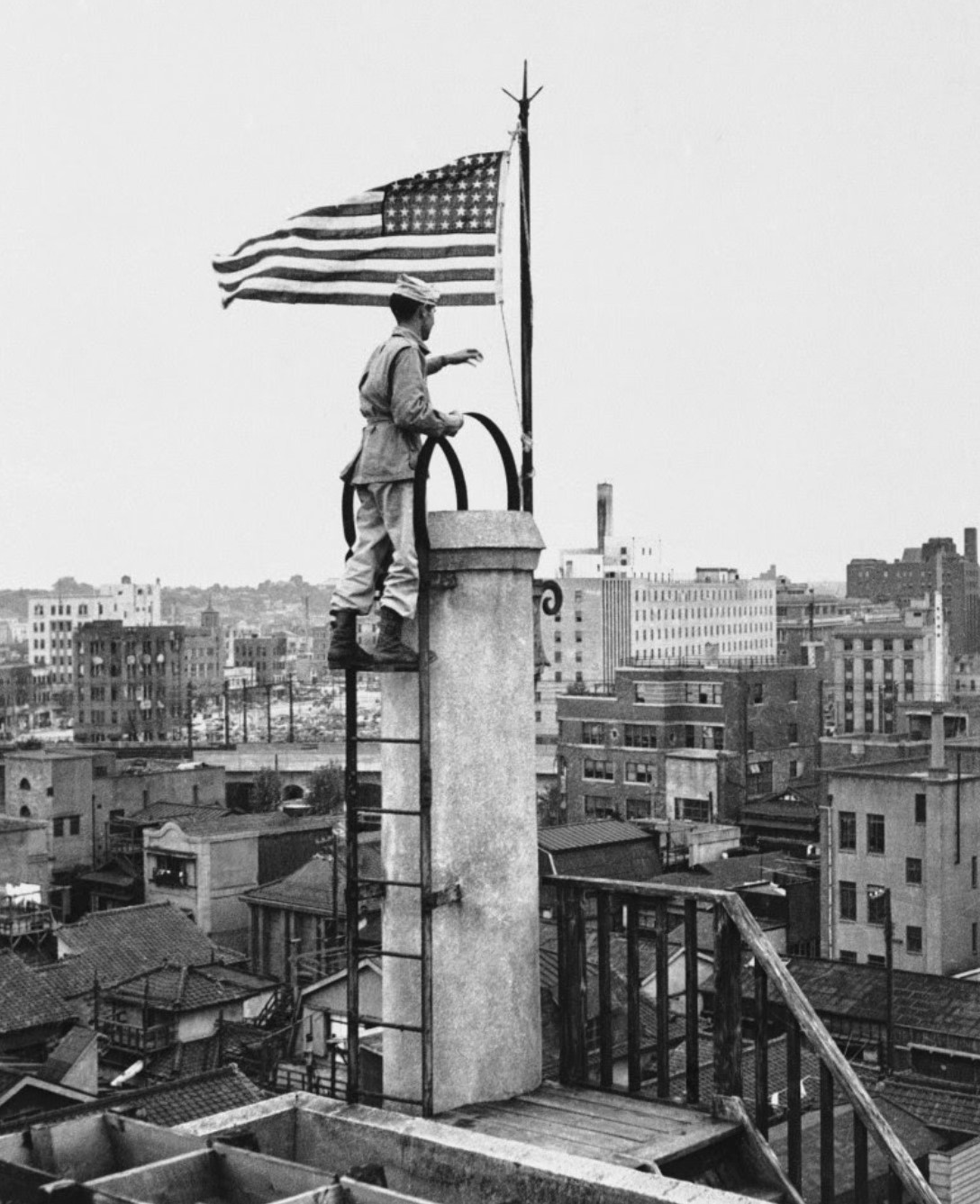
(Images Courtesy Smithsonian.com, US Govt and War Archives Websites)