Happy 190th to this Badass Indian Queen

Rani (Queen) Lakshmi Bai – this brave, young queen of the Kingdom of Jhansi stood up to the British after her husband died and refused to hand them her kingdom. Her brave words, “Main Jhansi nahi dungee,” – “I will not give you Jhansi,” to the British still reverberate with the people of India who revere her as a Goddess.

She was born on November 19, 1828 and married the ruler of Jhansi in 1842. After her husband’s death she became Queen Regent to an adopted son. At the same time the British East India company was expanding its territory in India, and annexing kingdoms without natural born heirs. Rani Lakshmi Bai was having none of that, and when her attempts at negotiations failed, she took up arms against the British and led the people of Jhansi in the Indian Rebellion of 1857 which was the first battle for independence – 90 years before the country finally gained independence in 1947.  She died fighting the British in June 1858 at the young age of 29.
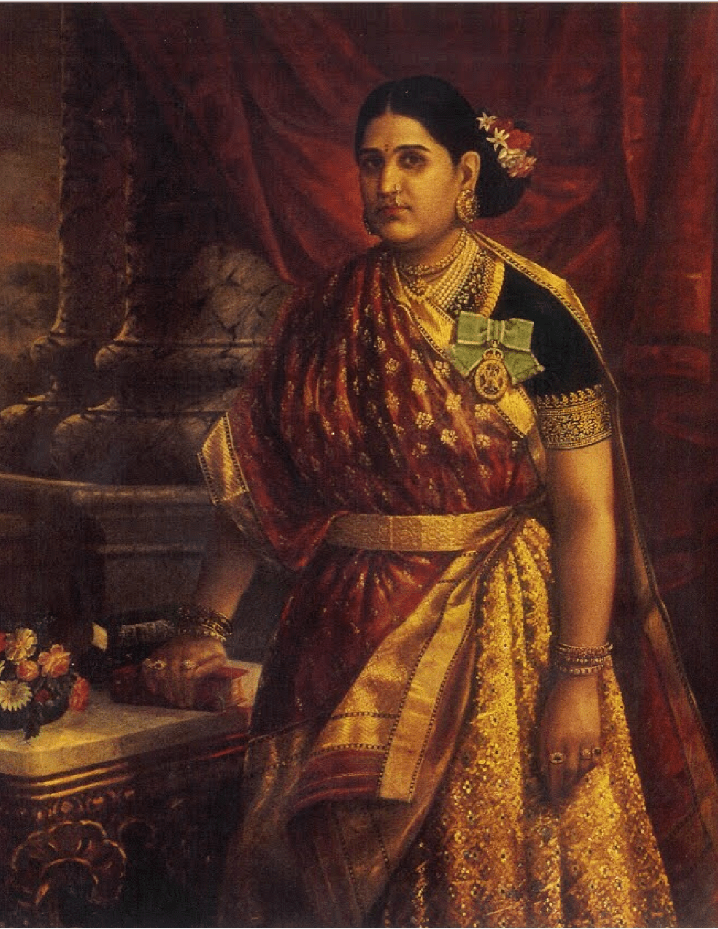
Her bravery has reached mythic proportions and Indian school children recite poems written about her bravery. John Latimer, a member of the British Central India Field Force, wrote a letter on 24 June 1858 to his Uncle in which he speaks of her courage and bravery:

Proud and impetuous, she required but little persuasion, she girded on her father’s sword raised the standard of her ancestors and entered the palace of Jhansi at the head of the troops. Her life has been a brief and eventful one and gives to the revolt – its only romantic tinge. Whatever opinion the world may entertain regarding her cruelty, her courage shines pre-eminent and can only be equaled, but not eclipsed by that of Joan of Arc. She played for a high game, and even when she found out she had losing cards did not despair, but looked defiant to the last.”

The Power Shift

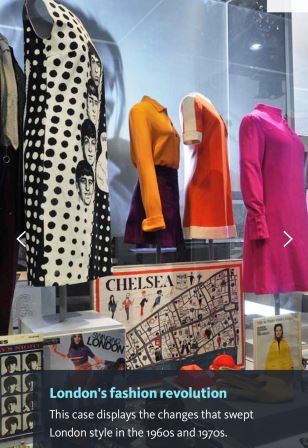
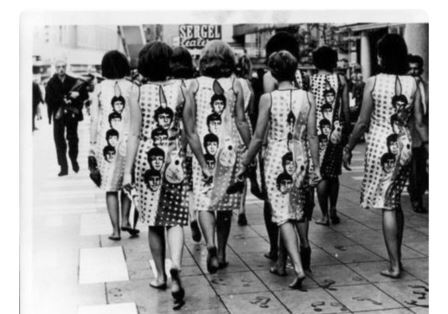
How do you roll up the Vietnam War, the civil rights marches, the youthful and modern presidency of John F. Kennedy, the voice of Martin Luther King, the Greensboro lunch counter sit-ins, the landing on the moon, Twiggy, the liberation of women, and above all the magic of the Beatles into one thing? For me the answer lies in the Museum of London in a simple short black and white polka-dotted mini dress with a diagonal line across it;  the faces of the Beatles on one side, and a guitar on the other. 

The power of this dress lies in its simplicity, its lack of fussiness, and its revolutionary length – all of which defined a generation.  The generation that was born at the end of World War II, came of age with the uselessness of the Vietnam War, spent their college years marching for equal rights for all, refused to dress like their parents, or listen to their parents music – this generation perhaps made the world a better place for future generations more than any generation before or since then.

It was a simple shift dress, the kind that is worn by a young girl – it defied the hold of Paris couture houses and rose from the streets where the young people marched and demanded a better life for the rest of us.  It was a dress that an unskilled young girl could have stitched together – but it made the most skilled designers in the world sit up and take notice.  The shift was shifting power – from the couture houses to the street tailors, from the upper classes to the middle classes, from the elite to the masses, from Harvard to Greensboro state college, from Oxford to Liverpool, and for the first time, in tiny amounts, from men to women.

A sense of gratitude washed over me as I stood in front of this dress, and the generation that wore it – they made it possible for me to be in control of the length of my hemline – and of my future. 

Beatles Dress.4

This is a guest post from Tara Sawhney who is studying in London for one semester.  This was a vignette she wrote after a visit to the Museum of London.

11:00am on 11/11 of 1918

John Singer Sargent (1856 – 1925) completed his monumental war painting Gassed which shows the devastation of war in March 1919. Lt. Wilfred Owen, MC worte the first draft of Dulce et Decorum Est at the Craiglockhart War Hosital in 1917. He succumbed to his war injuries and died one week before Armistice Day.

Dulce et Decorum Est

Bent double, like old beggars under sacks,
Knock-kneed, coughing like hags, we cursed through sludge,
Till on the haunting flares we turned our backs,
And towards our distant rest began to trudge.
Men marched asleep. Many had lost their boots,
But limped on, blood-shod. All went lame; all blind;
Drunk with fatigue; deaf even to the hoots
Of gas-shells dropping softly behind.

Gas! GAS! Quick, boys!—An ecstasy of fumbling
Fitting the clumsy helmets just in time,
But someone still was yelling out and stumbling
And flound’ring like a man in fire or lime.—
Dim through the misty panes and thick green light,
As under a green sea, I saw him drowning.

In all my dreams before my helpless sight,
He plunges at me, guttering, choking, drowning.

If in some smothering dreams, you too could pace
Behind the wagon that we flung him in,
And watch the white eyes writhing in his face,
His hanging face, like a devil’s sick of sin;
If you could hear, at every jolt, the blood
Come gargling from the froth-corrupted lungs,
Obscene as cancer, bitter as the cud
Of vile, incurable sores on innocent tongues,—
My friend, you would not tell with such high zest
To children ardent for some desperate glory,
The old Lie: Dulce et decorum est
Pro patria mori.

Scaramouch , should we fandango?

I fell in love with Queen when, strangely enough, I was working on my National History Day project in 8th Grade.  The topic that year was a person who had made a difference, and I picked Bob Geldof for his work in the 1980s to help the Ethiopian famine victims.  It was while working on this that I saw Queen’s Live Aid performance and fell in love with their music.  For the next few weeks I heard “Bohemian Rhapsody,” and “We are the Champions” endlessly – especially “Bohemian Rhapsody.”   The song just mesmerizes you – it’s a magical combination of opera, rock, with international melodies thrown in and the most unbelievable lyrics.  The song was written by Freddie Mercury himself – and it’s evident from the lyrics that there was a lot more substance to him than one would expect from a self-centered rock star.  Let’s look at some of the words that one never hears – Scaramouch – what exactly is a Scaramouch?

“I see a little silhouette of a man

Scaramouch, Scaramouch will you do the fandango”

According to the Webster dictionary a Scaramouch is a character in the Italian commedia dell’arte that burlesques the Spanish don and is characterized by boastfulness and cowardliness.

Ummm….. Ok? – well that clears that up.

And a fandango for those who care to know is “a lively Spanish dance for two people typically accompanies by castanets or tambourine.”

No one really seems to know what exactly the song means – and that perhaps adds to its enduring popularity.

Freddie Mercury T-Shirt
Freddie Mercury’s Image on T-Shirt

Freddie was born Freddie Bulsara to a Parsi family. Like so many colonial families, his family relocated from India to Zanzibar, and then to England.  All of these influences shaped his life and his music.

Freddie was not only a brilliant songwriter, singer and piano player – he was also a marketing genius. By the time of Live Aid, Queen’s popularity was on a decline.  Freddie knew this, and saw Live Aid as a chance to change all that. In a short performance, he sang all of Queen’s best hits and was in complete control of the crowd on both sides of the Atlantic.  He gave an flamboyant, charismatic performance – perhaps the best ever in a live concert.   With that he ensured his  music would live on forever.  And last week, more than 25 years after his death,  when I walked into a store, I realized he had managed to do just that.

Freddie Mercury.1

French Provincial in Orlando

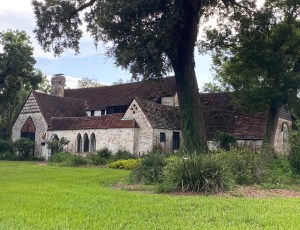
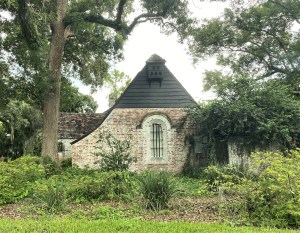
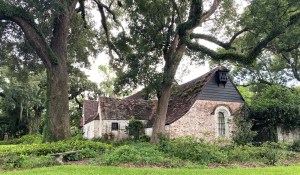
I have been seeing this house almost every day for years – it’s right by my school. And every time I drive past it, I am amazed at its beauty – with its aged look, an almost sagging roof, whitewashed brick, intricate woodwork, long gothic looking windows, and somewhat overgrown garden. It looks like it should be in a village in France – not in Orlando.

When I started to research the house, I learned it known as the Ingram House, and was designed by a celebrated American architect James Gamble Rogers II (1901-1990), who practiced mostly in Winter Park and is known for his work in the Spanish Revival, Mediterranean Revival, French Provincial, and Colonial Revival Styles.

Mills Library at Rollins College in Winter Park

Rogers II is responsible for giving Winter Park its look because of the many gorgeous buildings he designed in that city – among them Casa Feliz, Barbour Apartments, Greeneda Court, and numerous building at Rollins College. He also designed the Florida Supreme Court building in a Greek Revival Style.

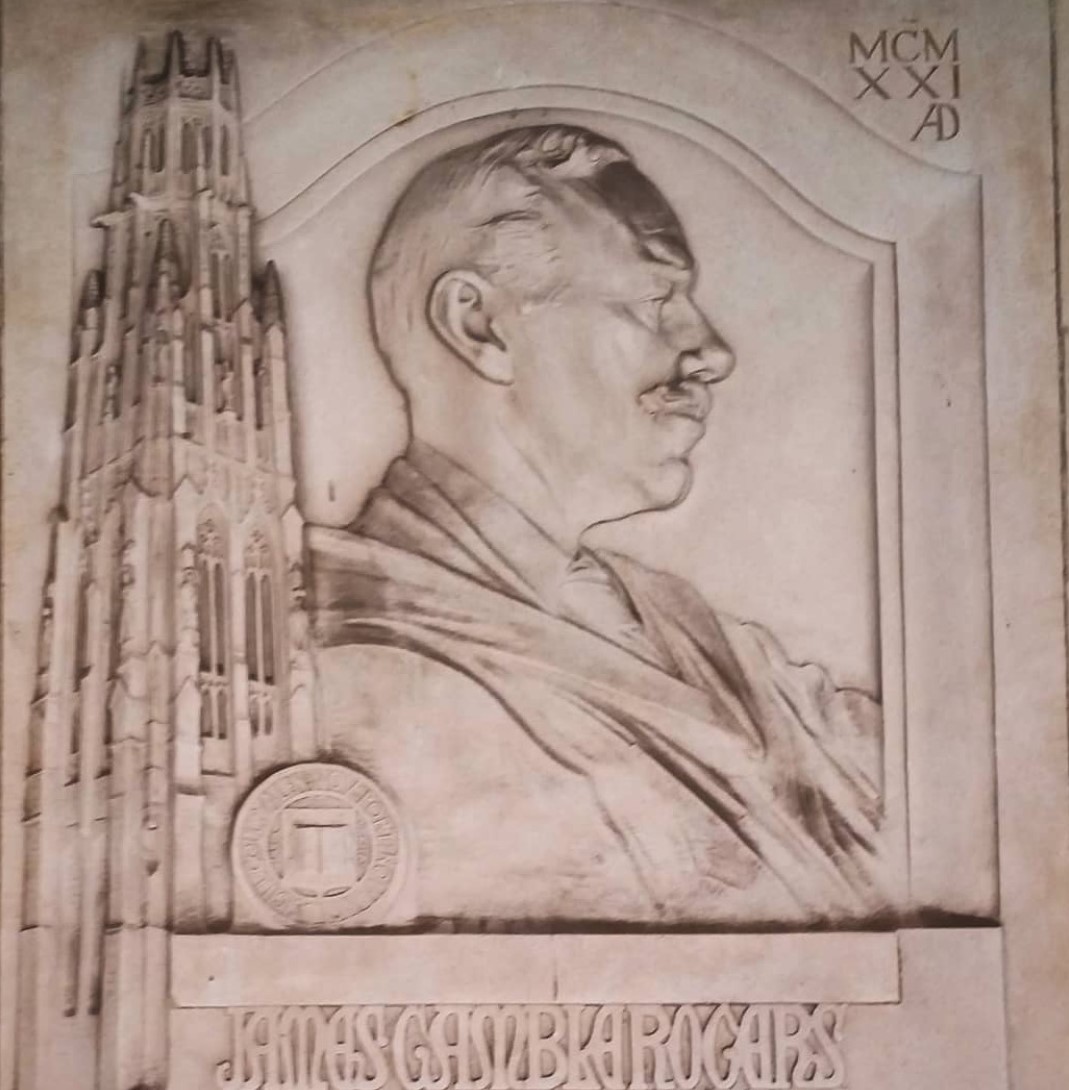
Another really interesting fact about Rogers II is that he is the nephew of renowned architect James Gamble Rogers (1867-1947) who designed many buildings at Yale, Northwestern, and Columbia Universities.

(Images courtesy Winter Park Library and University Websites).

Lychees in London

In the first week of August, my family and I went to London to drop my sister to college and squeeze in a family vacation in what really has to be considered the heartbeat of the world. Every nook and cranny of that city is bursting with life – and with diversity – a true microcosm.  One of the places I enjoyed the most in this trip was Borough’s Market.  A market has existed in the place since at least 1014 -so it’s over 1000 years old – which is a difficult concept for a girl from Orlando to put her head around – by comparison Disney has existed in Orlando since 1971 – not quite 50 years yet!! According to Conde Nast Traveler, “London’s oldest market is a warren of smoking street food, old-school fruit-and-veg shops and the finest pubs, bars and restaurants.”


There were sizzling stalls of North Indian, South Indian, Ethiopian, Chinese, Japanese, Lebanese, Thai cuisines; there were bakeries to salivate over for days; butchers, fishmongers – a seemingly endless parade of stalls.  One of my favorite stalls was an old fashioned fresh fruits and vegetables stall -something that had perhaps remained unchanged over hundreds of years. The place was simply bursting with color – and freshness.  It was such an absolute delight to see the store – and to meet its very happy and friendly owner Michael.  Of course I bought lychees from this very proper English greengrocer – and that pretty much is what London’s all about!!

A Labor Day Tribute

The Statue of Liberty Soliloquy 
BY Jim Johnson 

Give me your poor, your mouth breathing, your drooling
Give me your tired masses.
I have floors to clean, tables to set, guests to feed.
Give me preferably your Scandinavians.
I have shoes to shine. So hurry up now, give me your Blacks.
I have laundry. Give me a few Orientals.
I have flowers, lawns to trim, fruit trees. How about some Latinos.
I have boats to unload. Give me some Irish then.
I have minerals to mine. Give me any from the
slag heaps of Europe.
I have this thin soil to till. So send me some serfs.
I have trees to cut. Finns will do.
Just give me your workers, your farmers. Give me your all.
I exclude no one ? not even democrats. Socialists,
communists, intellectuals excepted.
I have so much work to do.

This tribute to both immigrants and labor was written by 2008 Duluth Poet Laureate Jim Johnson.

Georgetown University & Cupcakes

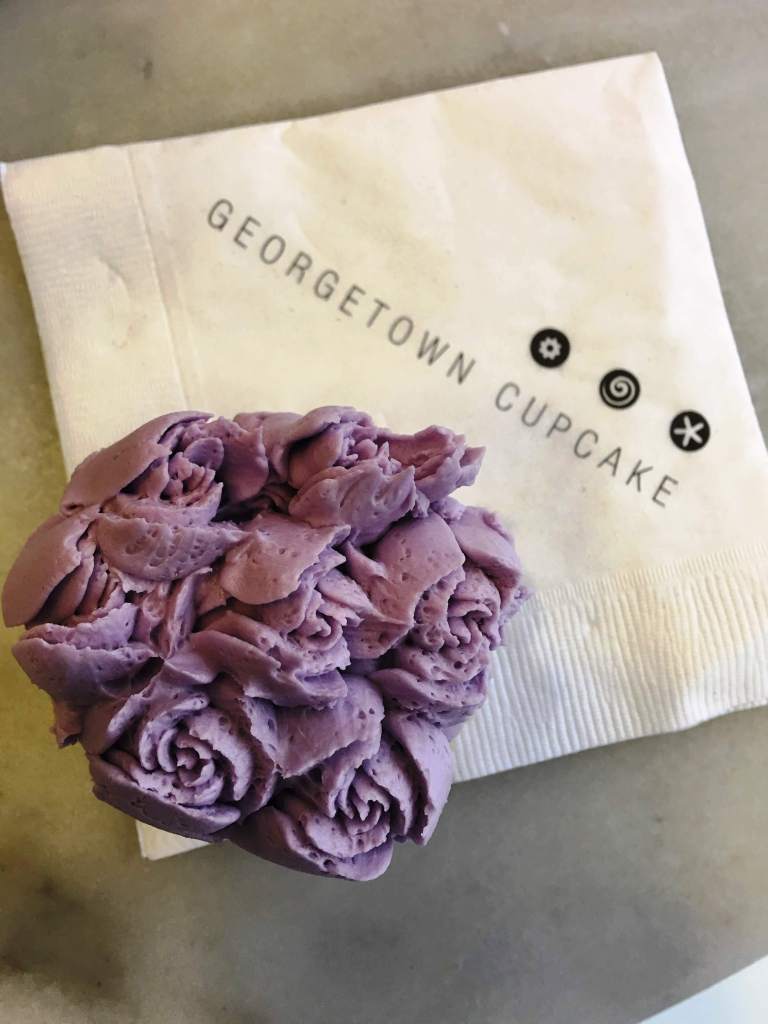
At the beginning of summer vacation, I went to Washington DC with my sister and mom. After a busy end of school year full of projects and finals, it was a perfect break.  I’ve been to DC a few times, and after seeing the museums and such, I love to head over to the M Street area to get right in line for Georgetown cupcakes.  It’s always such a treat – and I think standing in line in anticipation of the cupcakes makes them taste that much better.

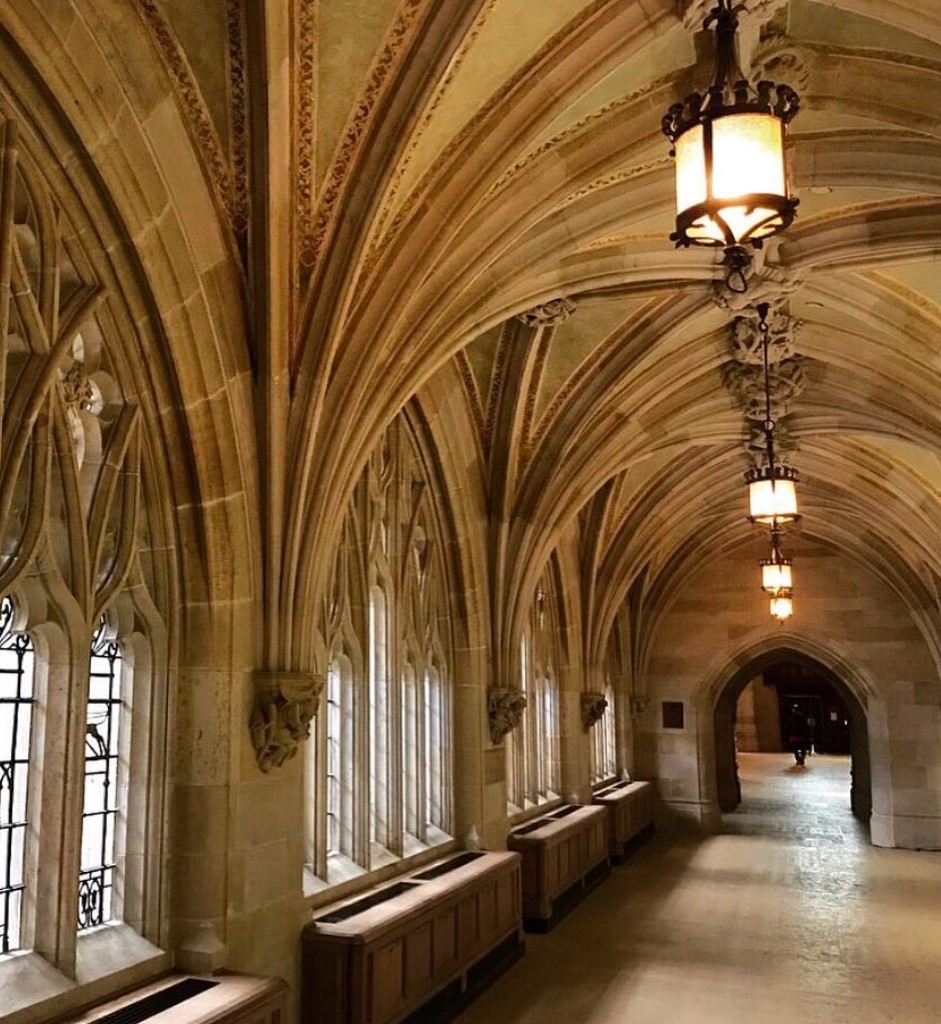
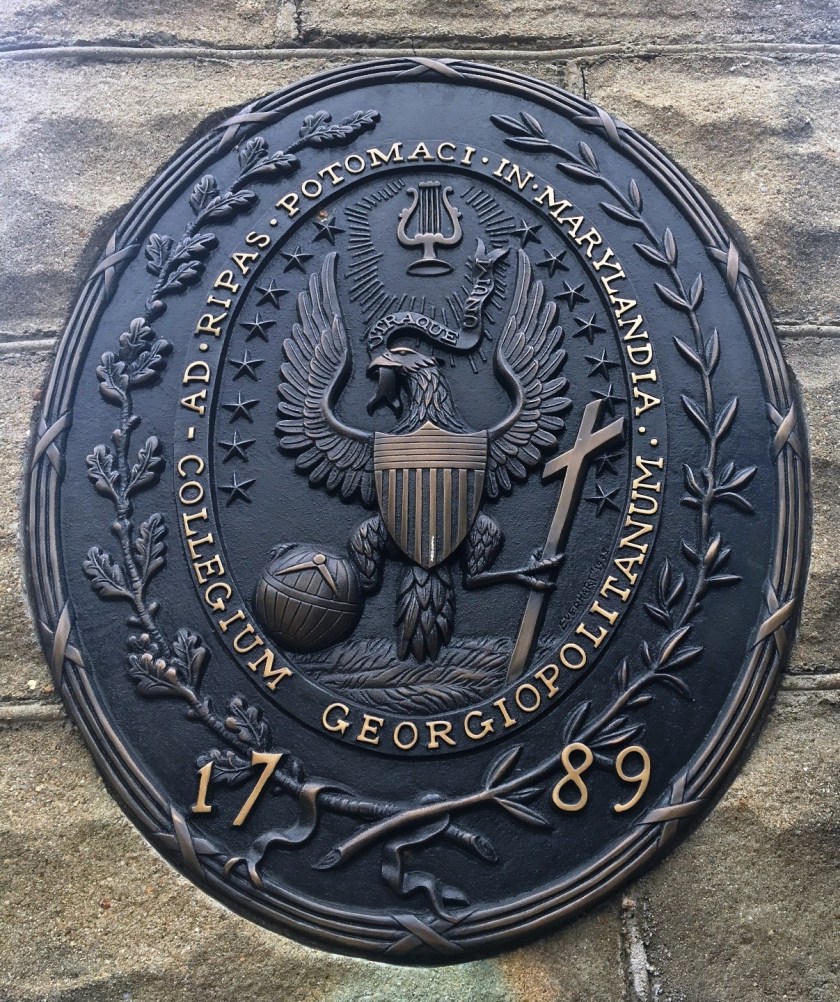
This time, we decided to explore Georgetown University’s campus before heading down to get the namesake cupcakes. The campus was almost empty except for a truck company picking up tents – perhaps rented for graduation ceremonies the week before. I don’t know what it is about old University campuses – but they just radiate history – it’s almost as if time has stood still there while the world around them has moved on.  The feeling of time standing still was made even stronger by an empty building with no students and iPhones to bring us to the present.  And almost like a prop, on one of the old wooden benches that line the hallways of Healy Hall, sat a formally dressed young student hand writing something in a beautiful leather bound journal. I couldn’t have made that up even if I tried – the scene was so surreal.  And suddenly, I could see myself there, studying where so many have studied before me, studying simply for the sake of knowledge – what a privilege to immerse oneself in a quest for knowledge in a place like this for four years!!

And this time the line was shorter, and the cupcakes tasted better than ever – a sign perhaps??

An Essay on America

I meant to do this post on July 4th – but I was in camp with very little time to compose any thoughts.  But there is never a bad time for a patriotic post so I figured I would do it now.  Would be nice if something could unite us all and drive us out by the millions to celebrate the way the World Cup sent the French to the Champs Elyse.  What absolute fun to forget your differences briefly and just celebrate a well- deserved victory.  I know it doesn’t seem like it, but we do have reasons to celebrate every day.  Towards that end, I want to share one on my sister’s college responses to a prompt about inclusion in America.  I think she answered it brilliantly.

“It was late – a lot later than we expected when the bus finally rolled out of the parking lot into a dark, and surprisingly cold, Florida night to start the trip back to Orlando. A proud group of LHP students sat in the bus that evening.  For two grueling days we had competed in a Speech and Debate tournament in Tampa and were taking home some hard-won trophies.

As most of my teammates drifted off to sleep, my mind started to mull over the question of acceptance and inclusion in a country that tries hard every single day to live up to its own promise to itself – and it occurred to me that this bus was the promise of America, the America that perhaps the founding fathers dreamed of. The driver – a man with a mission – led the way; behind him sat the coaches and chaperones, still chaperoning, navigating, and making sure we stayed on track. I could imagine the aged, ever-watchful gaze of the founding fathers upon them.

Behind them sat a vibrant, dynamic melting pot – a veritable “salad bowl” of students, a young team of various teenage years, of more ethnicities than any founding father dared to hope for, of individual dreams and common hopes. We were all recent immigrants or children, grandchildren, great-grandchildren, and great-great grandchildren of recent immigrants. As our passions for our competition and trophies flared, our ethnicities faded – our common goal melted away the differences in our skin colors, our religions, our aromas of homemade food, and the accents of our ancestors upon our tongues.

I was keenly aware that despite every criticism, this bus – a microcosm of the world – could not have been rolling down a highway in any other country in this world. Perhaps it is naïve of me to equate this bus to the promise of America – but weren’t the founding fathers just naïve young men when they rolled down a revolutionary highway with nothing but a dream?

For four years, since I made my first competition piece on immigrants, and started to explore my place in America, I have waited to attend a course like the —. I am excited to engage, to share, listen and learn from others in my class. I am ready, and my generation is ready, to continue fulfilling the promise of America.”

I think her response is brilliant. I loved the comparison and the feeling of pride and belonging.

A-7713

He carried these tattoed numbers on his arm for a lifetime, and on this day ltwo years ago, Elie Wiesel, an Auschwitz survivor, died at the age of 87. He took the holocaust out of history books, and with his powerful words, seared it into our conscience. I wrote this poem after reading his book Night, in which he talks about the last time he saw his mother.

Sparrow

In the cold winter months
with moonless skies,
She flew down from the clouds
to sit on my shoulder
and see me through the night.
 
I felt her gently
through the tattered fabric
that covered my shoulders and
Striped its way down to my knees;
a vain barrier between skin and snow.
 
The first time She came
was when I saw Mama last.
They dragged Mama away,
her feet making long tracks
in pure winter snow.
 
Mama’s body was theirs to kill,
Her soul was God’s alone.
She came from the blackness of the smoke
to light the fire in my soul
and soften the hunger in my belly.
 
 
My little sparrow held me up
when I was too weak to stand.
While they starved my body
She nourished my soul,
and stopped me from dying.
 
I had to live
for Mama, for papa, and Elsa too.
I was the fragment that remained
from the fabric of our lives.
The thread was mine to weave.
 
Night after night
She sat on my shoulder
to see me through till dawn,
and when I wanted to fly with her
She wanted me to stay.
 
When finally the gates of hell opened
And the air was ours to breathe
And the land was ours to roam  
It was then, and only then
that Mama stopped coming to me at night.


(Image courtesy of Baltimore Jewish life website).