The Fauvist and the Fish

Fauvist paintings were first exhibited in 1905 in the Salon D’Automne, in direct response to the official Salon that took place in Paris every spring. The major Fauve artists were Matisse, Vlaminck, Derain, and Rouault. The name Fauve – wild beast – was first used for their work by art critic Louis Vauxcelles, who said of a Roman sculpture in the Salon D’Automne, “Donatello among the wild beast.”

Henri Matisse (1869 – 1954) started his art career by painting in the traditional school, but by the early 1900s he had transitioned to near abstract painting style, loose brush strokes, and bold and intense colors that came to characterize Fauvism. The Fauves used vibrant bold colors to react against photography which was the new art form. Fauvists used colors and shapes to express emotion: achieving harmony by focusing on composition and colors that came together. Fauvism lasted as a unified art movement for a mere five years.
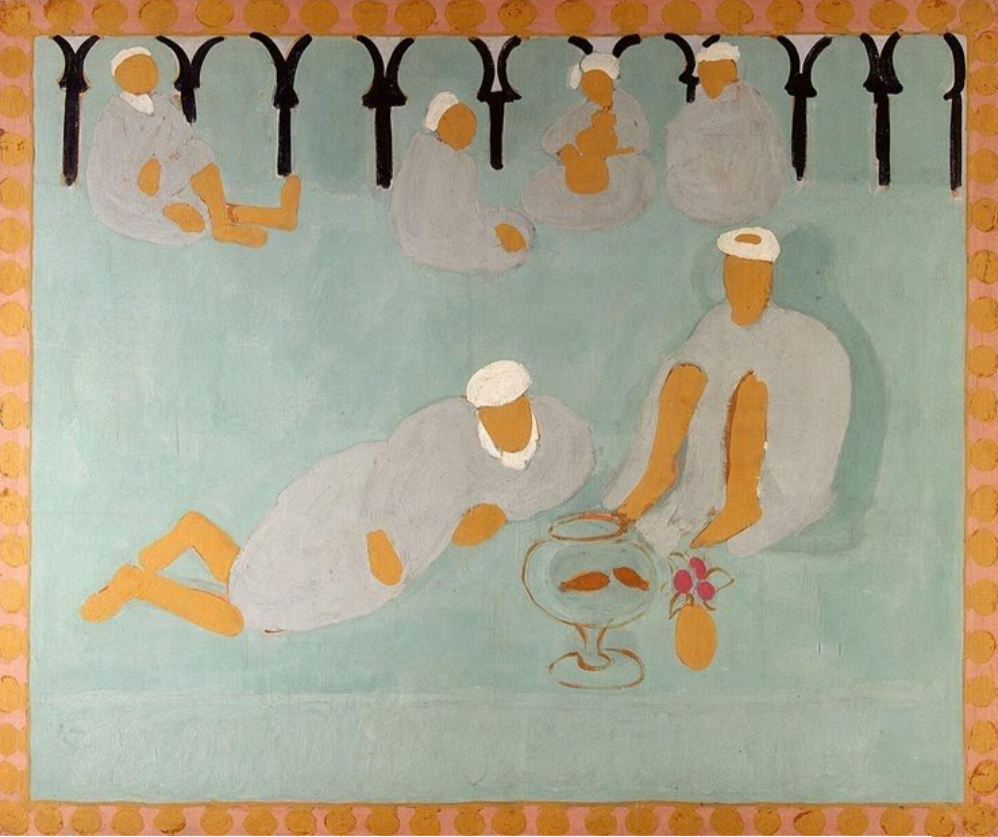
The Goldfish is a series of still-life paintings that Matisse painted of goldfish in a bowl. On a trip to Morocco, he had seen people staring at goldfish, and found the whole idea very relaxing. The function of the Goldfish painting was to evoke an emotional response, as well as to paint something that would provide contemplative relaxation to the viewer.

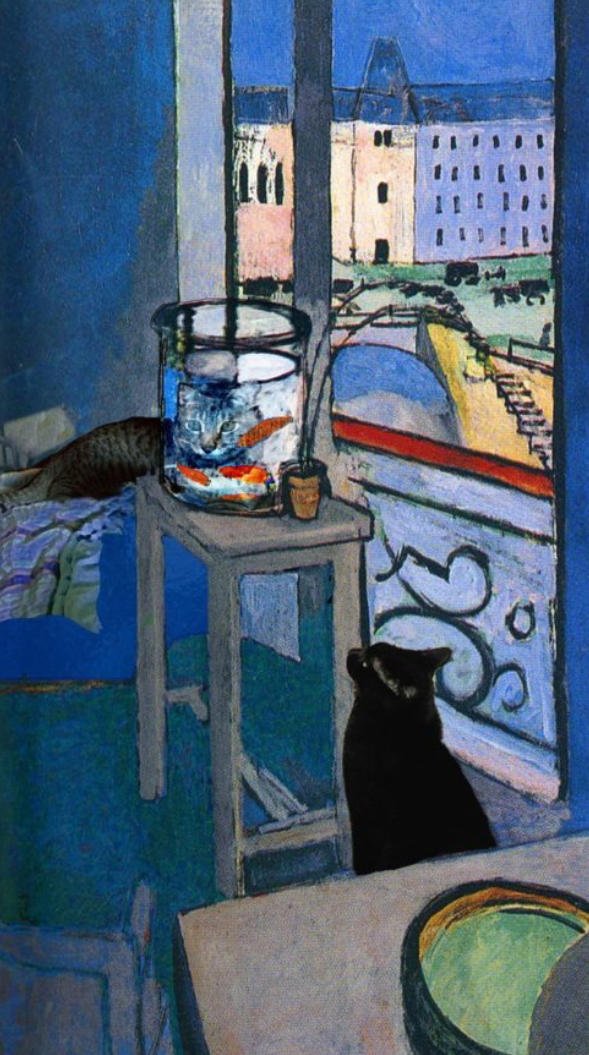
Matisse did not try to recreate reality, rather this is his pictorial reality – his version of a tranquil paradise with bright, bold colors, tilted tabletops, and multiple viewpoints.

6 September 1620

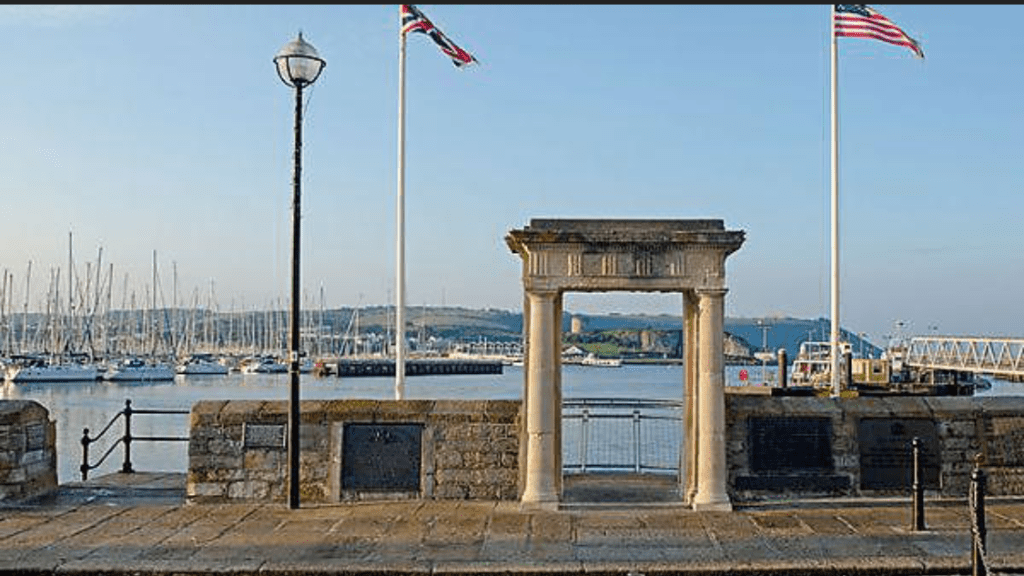
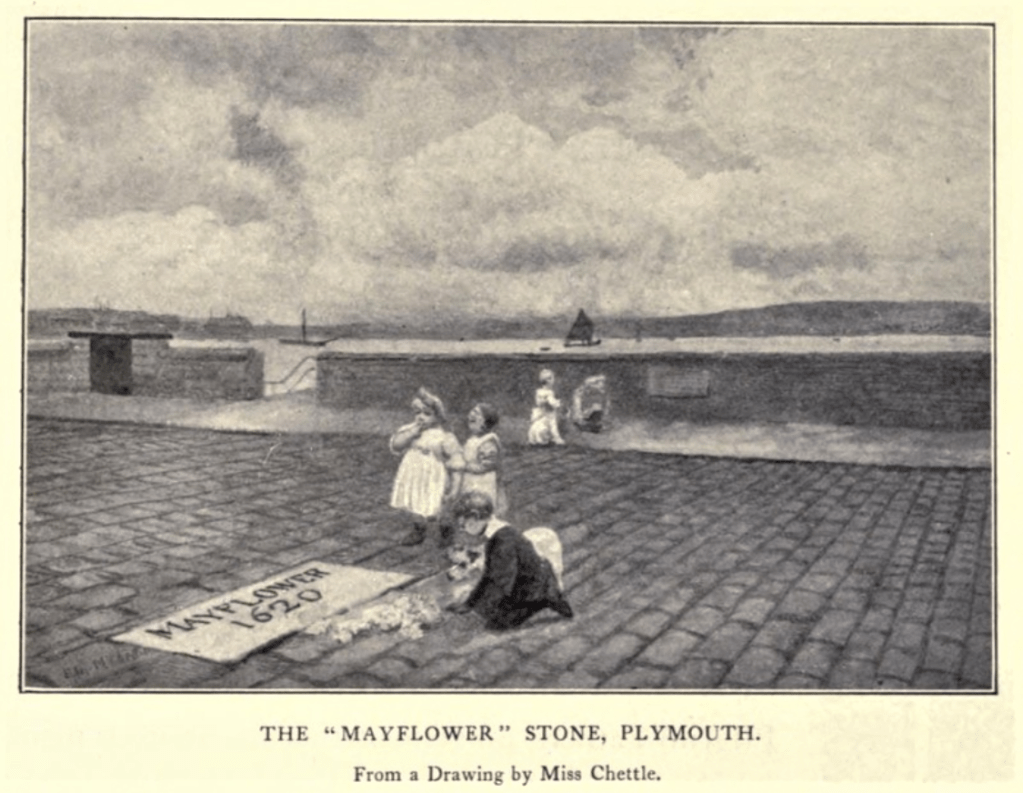
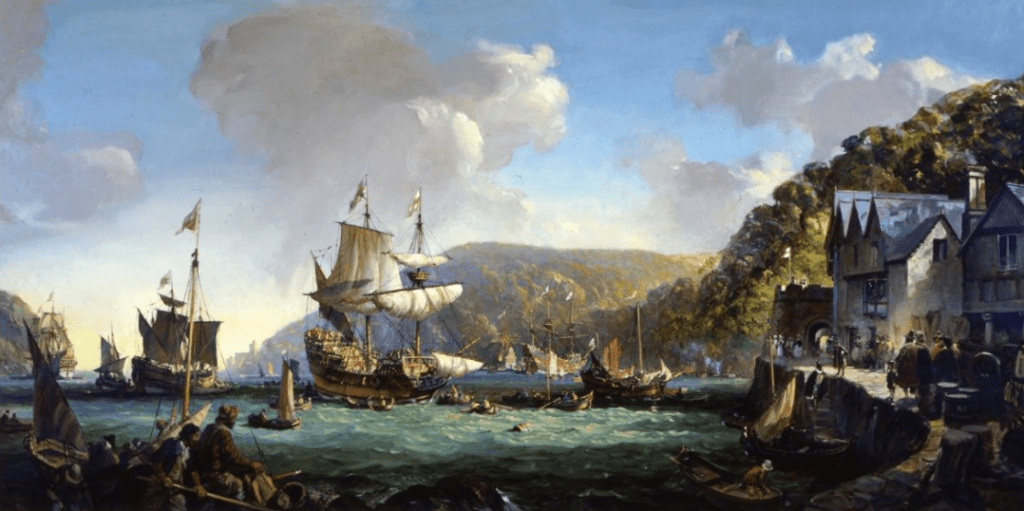
The Mayflower was destined to make the voyage across the Atlantic alone. After repairing Speedwell in Dartmouth, both ships had set sail on 2 September 1620. However, within a day of sailing Speedwell developed leaks again and both ships turned around and returned to England – this time to Plymouth Harbor where they anchored on 6 September 1620.

Plymouth Harbor where both Speedwell and Mayflower sailed to on 6 Sept 1620

Speedwell’s logs would have read as follows:

2 September      Weighed anchor, ‘as did also MAY-FLOWER, and set sail. Laid general course W. S. W. Wind fair.

3 September      Fair wind, but ship leaking.

4 September      Wind fair. Ship leaking dangerously. MAY-FLOWER in company.

5 September      About 100 leagues from land’s end. Ship leaking badly. Hove to. Signalled MAY-FLOWER, in company. Consultation between masters, carpenters, and principal passengers. Decided to put back into Plymouth and determine whether pinnace is seaworthy. Put about and laid course for Plymouth.
6 September      Wind on starboard quarter. Made Plymouth harbor and came to anchor. MAY-FLOWER in company.

It was in Plymouth that the ship which had caused so many delays was finally deemed finally to not be seaworthy. It was decided that the Mayflower would sail alone. Some of the passengers who had sailed from Leiden, Netherlands abandoned their plans of going to the New World, while other crammed into the Mayflower to continue their journey.

On 14 September 1620 after transferring its cargo to Mayflower, Speedwell “Weighed anchor and took departure for London, leaving Mayflower at anchor in roadstead.”

On 16 Septeber 1620 Mayflower continued on this journey alone and sailed into history books.

Postcards from Venice

The most amazing thing about these stunningly beautiful paintings is that they were purchased as souvenirs by the well-heeled travelers of the 18th century. And the second most amazing thing is that these scenes of Venetian canals were made by Canaletto – was there ever a more befitting name!!

Canaletto, Rialto Bridge 1942
Canaletto, Grand Canal in Venice 1738
Canaletto, The Entrance to the Grand Canal 1730

Canaletto (meaning little Canal of Canal Jr.) was the nickname of Giovanni Antonio Canal (1697 – 1768). He was a landscape artist of vedute or view paintings which were purchased by wealthy travelers who did the Grand Tour in the 18th Century. This was a cultural tour that young men from upper class aristocratic families would undertake – spending as much as three or four years in Europe, particularly Greece and Italy. Canaletto catered to the aristocrats and his paintings were some of the most prized souvenirs from these Tours.

Canaletto, The Grand canal from San Vio 1723-24
Canaletto, Grand Canal from Ca ‘ Balbi 1721 -23

Suddenly my two Venetian masks (which were probably made in China) that I bought as souvenirs from my 2-day trip to Venice don’t seem that great anymore!!

What’s on your walls?

When I was looking at Paul Gauguin’s Still Life with Peonies (1884), I noticed something interesting – there’s an Edgar Degas ballerina painting in the background. What is the other painting in the background? I think it’s a Cezanne painting, but I haven’t been able to find the exact painting yet. I noticed Gauguin does this a lot – in many of his still life paintings, there is another painting in the background – almost like an homage to an artist friend or an artist he admired.

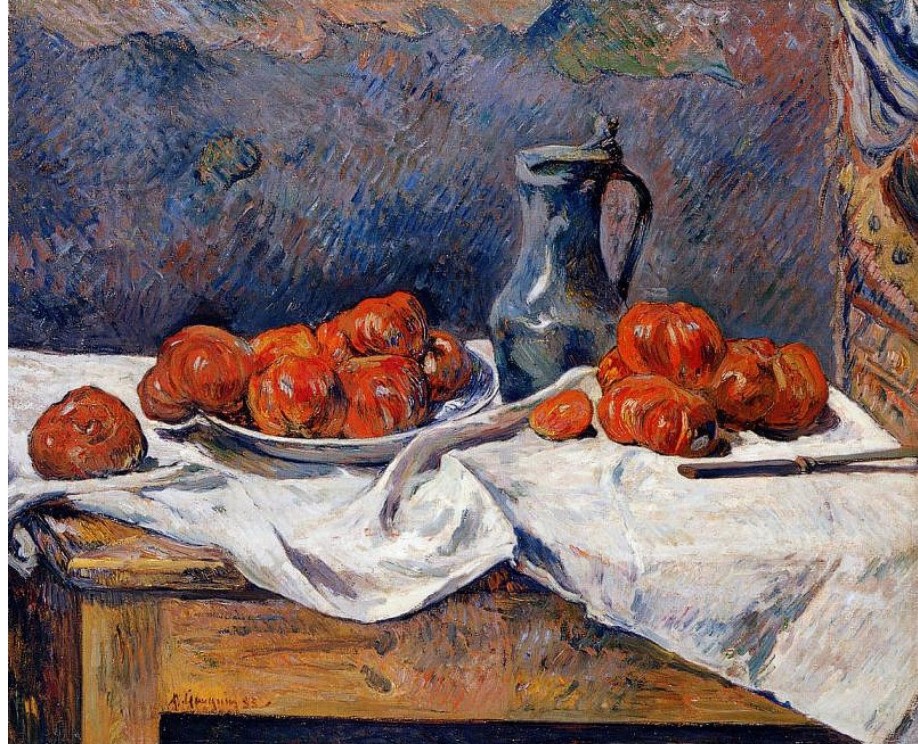
Nature Morte aux Tomatoes (1883) – with a Van Gogh in the background, the brushstrokes are characteristic of Van Gogh

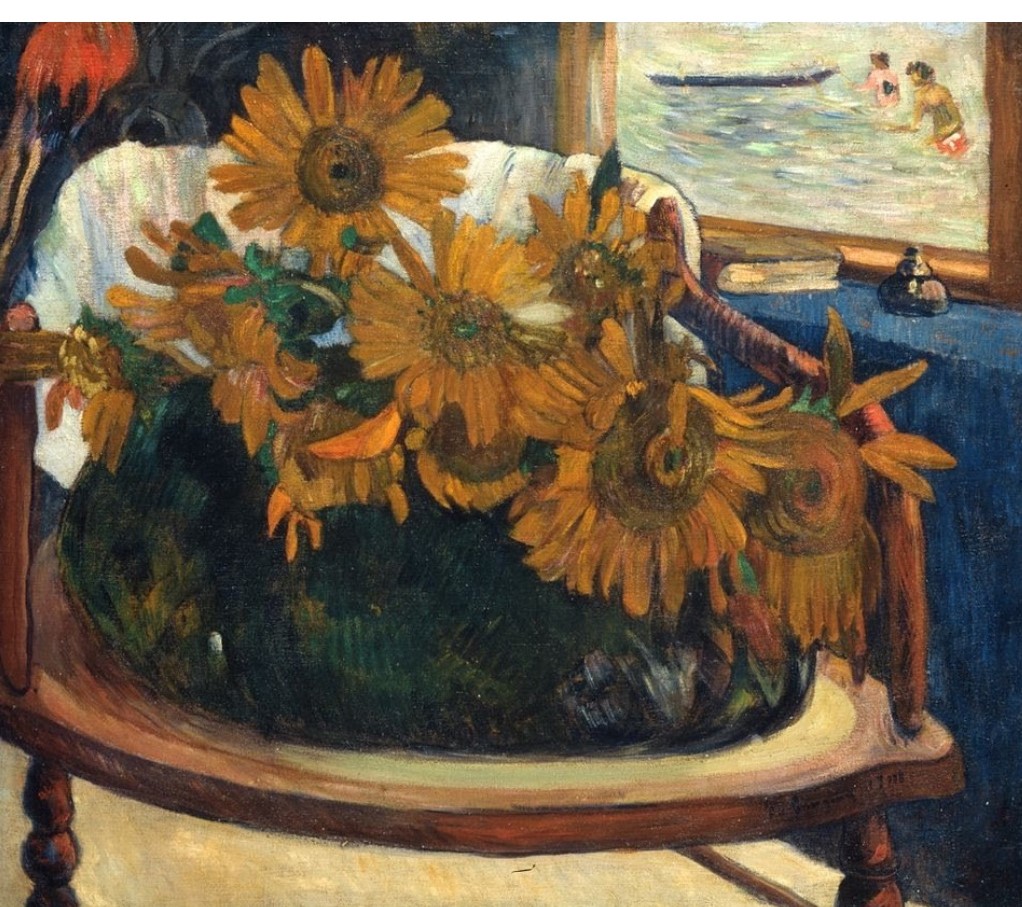
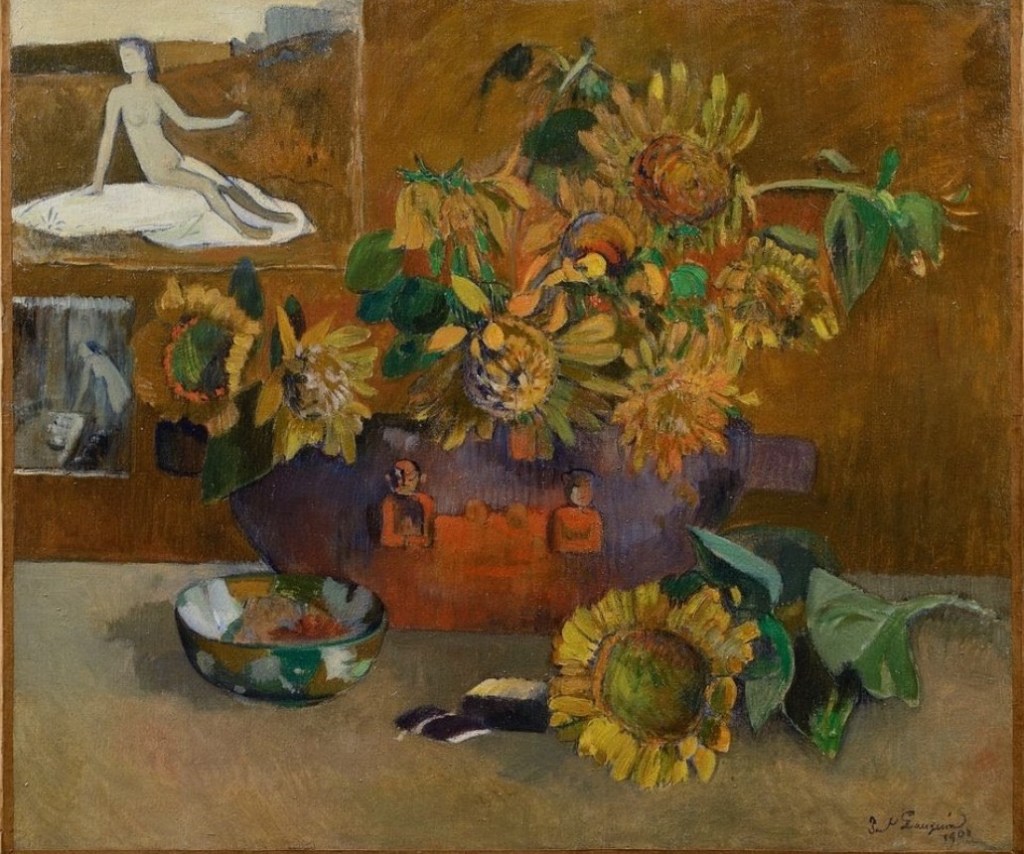
Paul Gauguin (1848 – 1903), the French Post-Impressionist artist is most well known for the paintings he made while living in Tahiti. Gauguin was a friend of Camille Pissaro, Paul Cezanne, Degas, and even Van Gogh – with Cezanne having the biggest influence on him. He collected artworks of both Degas and Cezanne, many of which appear in the background of his works.

Woman in Front of a Still Life by Cezanne (1890) – this one is titled with the background painting
This is Hope (1901) shows two paintings in the background. The top one is French artist Pierre Puvis de Chavannes’s (1824 – 1898) painting titled Hope. The bottom one is an etching by Edgar Degas.

Still Life with Japanese Print, and, Still Life with Head-Shaped Vase and Japanese Woodcut – both have a Japanese print in the background. Interestingly, the painting on the left in the background, at first glance looked like a Gustav Klimt painting to me!!

Maurice Denis, Homage to Cezanne (1900)

In an interesting turn of events, French artist Maurice Denis (1870 – 1943) pays homage to Cezanne and indirectly to Gauguin and Renior in this painting. The painting in the front easel is Cezanne’s Fruit Bowl, Glass, and Apples (1879) which was owned by Gauguin. Hanging on the back wall of the gallery are a Gauguin and a Renoir painting

(Images courtesy Google Arts & Culture &National Museum of Australia)

The Wind of Change

The Wind of Change is blowing through this continent, and whether we like it or not, this growth of national consciousness is a political fact.We must all accept is as fact and our national policies must take account of it.

Harold Macmillan, The Wind of Change , 1960, South Africa
No man is an Iland, intire of itselfe; every man
is a peece of the Continent, a part of the maine;
if a Clod bee washed away by the Sea, Europe
is the lesse, as well as if a Promontorie were, as
well as if a Manor of thy friends or of thine
owne were; any mans death diminishes me,
because I am involved in Mankinde;
And therefore never send to know for whom
the bell tolls; It tolls for thee.
MEDITATION XVII 
Devotions upon Emergent Occasions
John Donne

Roses are red, Violets are…blue?

I really enjoyed writing about the origins of flower names in a previous blog, “A Rose by any Other Name“, and since there are so many flowers with such pretty names I thought I would do one more.

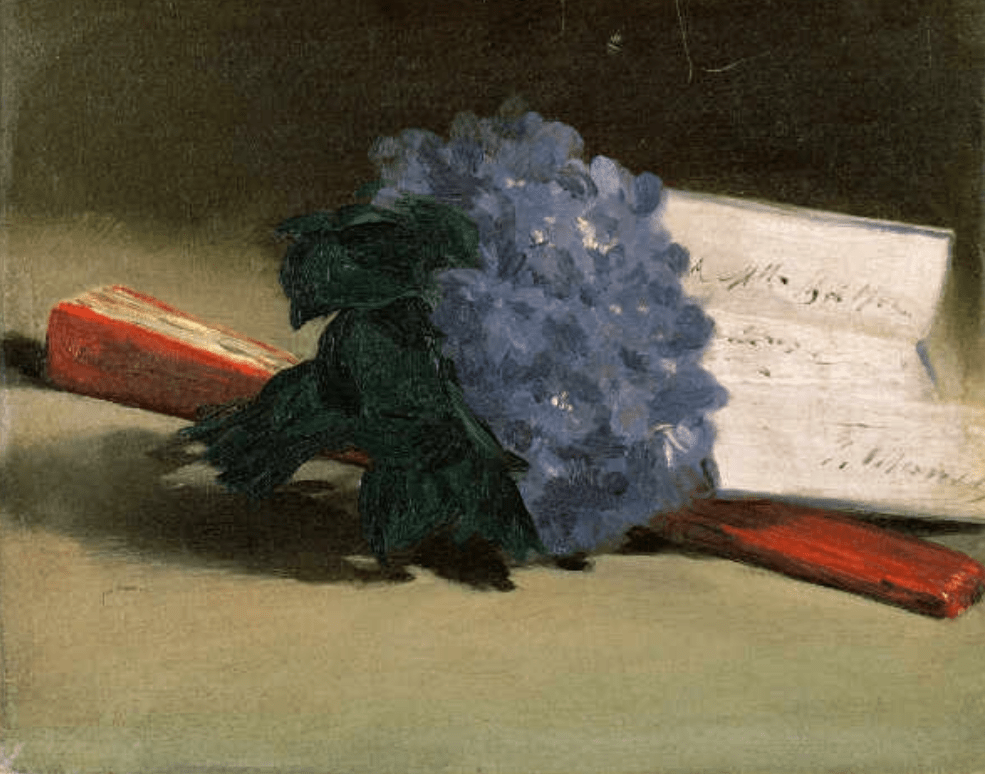
Violets – We’ve all heard the Valentine rhyme with roses and violets, but violets aren’t really blue – they are violet!! Interestingly, the color came after the flower in this case – the flower is named after the Latin viola or a little violin.  The valentine poem we are all so familiar was first found in Gammer Gurton’s Garland which was a 1784 collection of nursey rhymes:

The rose is red, the violet's blue
The honey's sweet, and so are you 
Ilya Mashkov, Still Life with Camellia (1913)

Camellia  – When Carl Linnaeus standardized plant names in 1753, he named these flowers after Father Georg Joseph Kamel (1161–1706), a Jesuit missionary and naturalist. Father Kamel was a missionary to the Philippines where he became a plant specialist of the Philippine islands. Camellias are native to Japan and China, where they are known to exist since 2737 BCE. The flower is called Tsubaki in Japanese and symbolizes the divine.

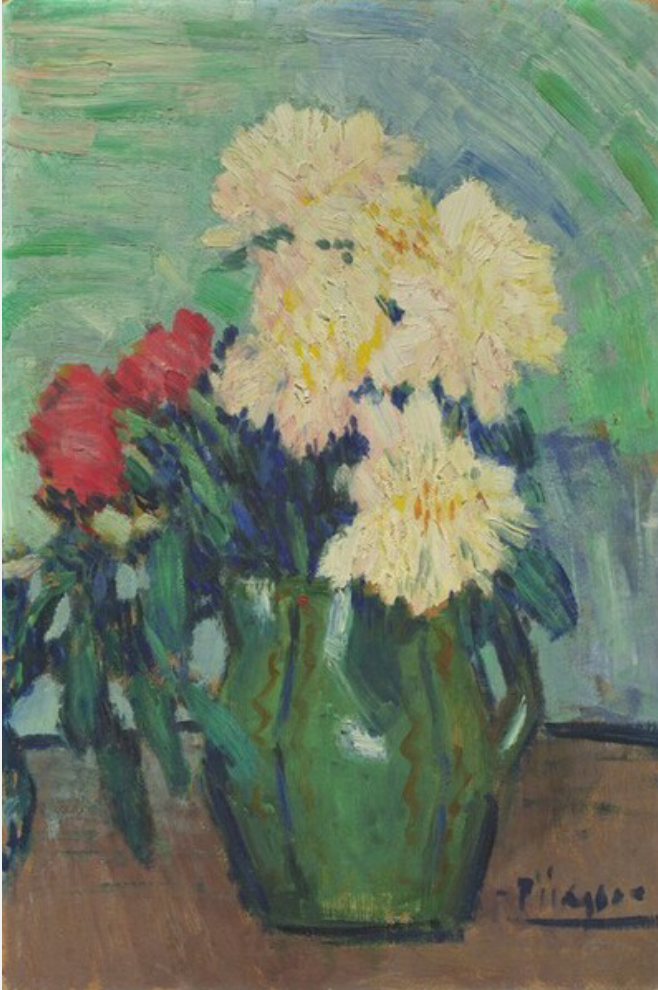
Peony – this beautiful flower symbolizing romance and prosperity is named after Paeon who in Greek mythology was the physician to the Greek Gods. Paeon was a student of Asclepius, the God of medicine and healing. Asclepius was jealous of Paeon and threatened to kill him. Zeus turned Paeon into a flower to save him from Asclepius – and that’s how this flower got its name. Peonies are the national flower of China and are known as the king of flowers in China.

Pete Mondrian, Red Amaryllis with Blue Background (1907)

Amaryllis  – this flowers is named after a shepherdess in Latin poet Virgil’s work called the Eclogues which are a collection of 10 unconnected pastoral poems that he composed between 42 and 37 BCE. Amaryllis was in love with Alteo, and to get his attention she pierced her heart daily with a golden arrow for a month. The blood that dropped from her heart was red like the flower which came to be known as Amaryllis. Perhaps also because of the red color, the Amaryllis plays a starring role at Christmas time.

At the threshold

Recently, I had done a series of blogs on the representation of African Americans in art. It seems incomplete without including the sensitive post-Civil War works of Winslow Homer in which he depicts African Americans standing at the threshold between slavery and freedom. Homer (1836-1910) is regarded as one of the greatest American artists of the 19th century.

Near Andersonville, 1875

Andersonville (Camp Sumter) was a brutal civil war camp where 10s of thousands of Union soldiers died. In this poetic painting a woman stands at the threshold  between slavery and freedom – darkness and light.

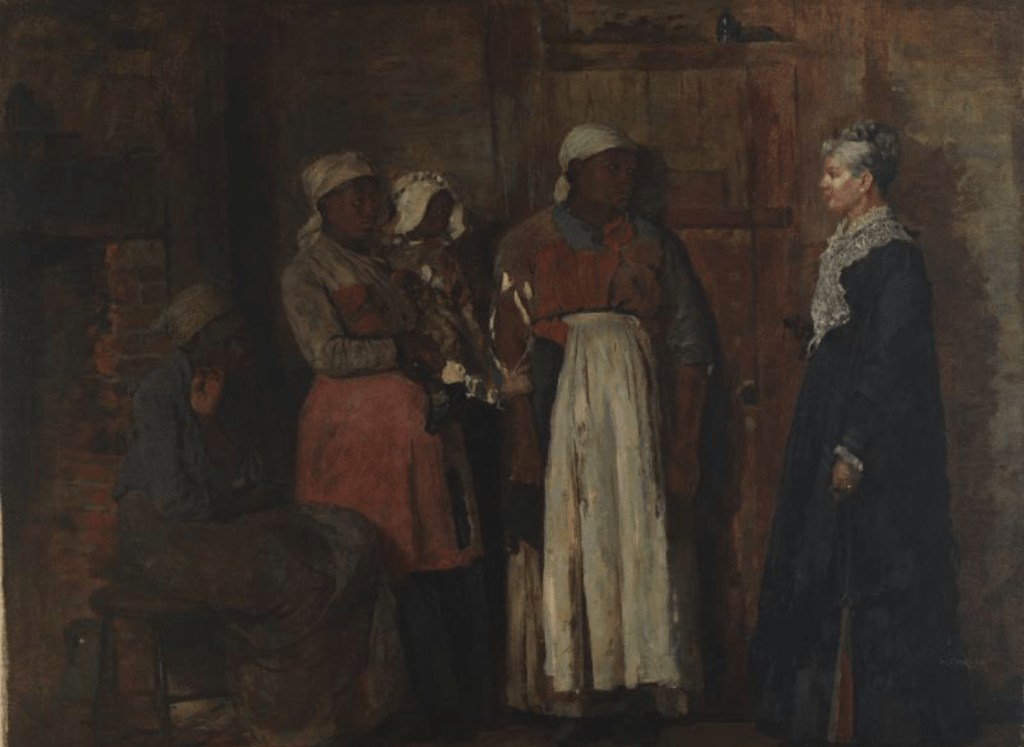
A Visit from the Mistress, 1876

In A Visit from the Mistress, 1876, the old mistress visits the Afrcan American women who are warmed by the glow of the fireplace, while the old mistress looks cold and angular. The body posture and the rather stiff visit all give a sense on underlying hostility, and a sense that despite the radical shift not much has changed in reality.

The Bright Side, 1865

This painting is the subject of considerable debate as to Homer’s meaning. Whatever the interpretation – the men here are taking a well-deserved break after hard work in the army and exude dignity and a sense of calm.

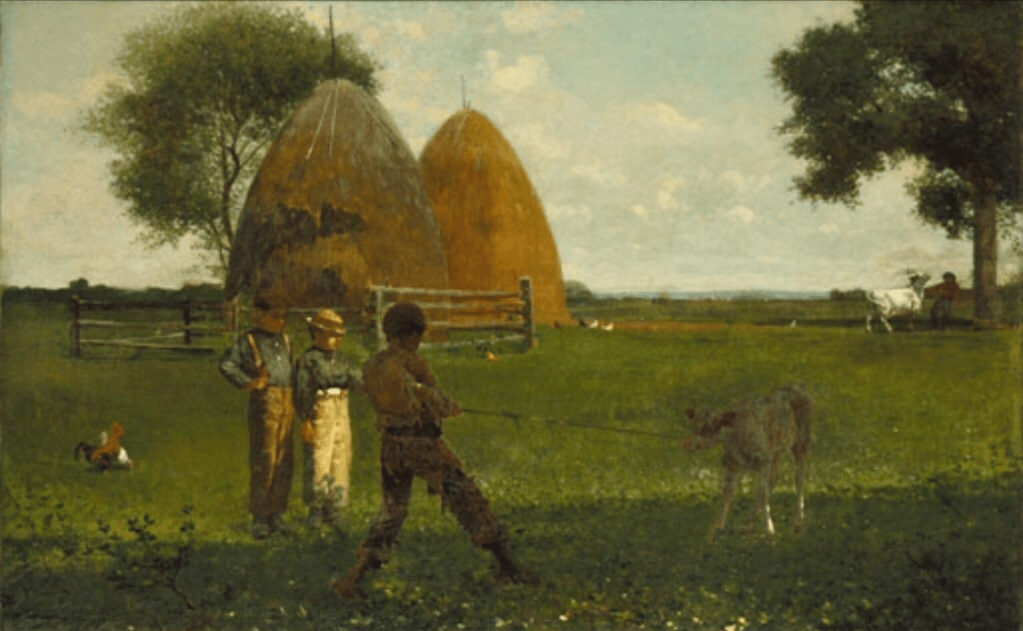
Weaning the Calf, 1875

What at first glance appears to be an idyllic childhood scene, is in reality a depiction of post-Civil war reality. The young boy in the front, and the one under the tree are doing all the work, while the other two boys look at the action and offer no assistance. Homer’s work here seems to be speaking volumes for the difficult future that lies ahead.

(Images courtesy MFA Boston, NC Museum, Google Arts & Culture).

Photo Day – Sunday Seven

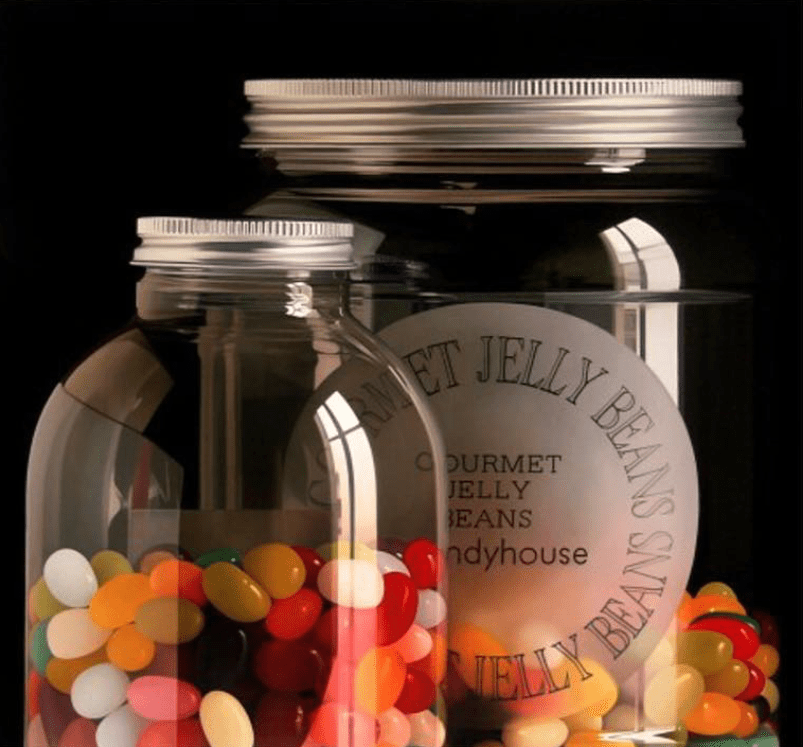
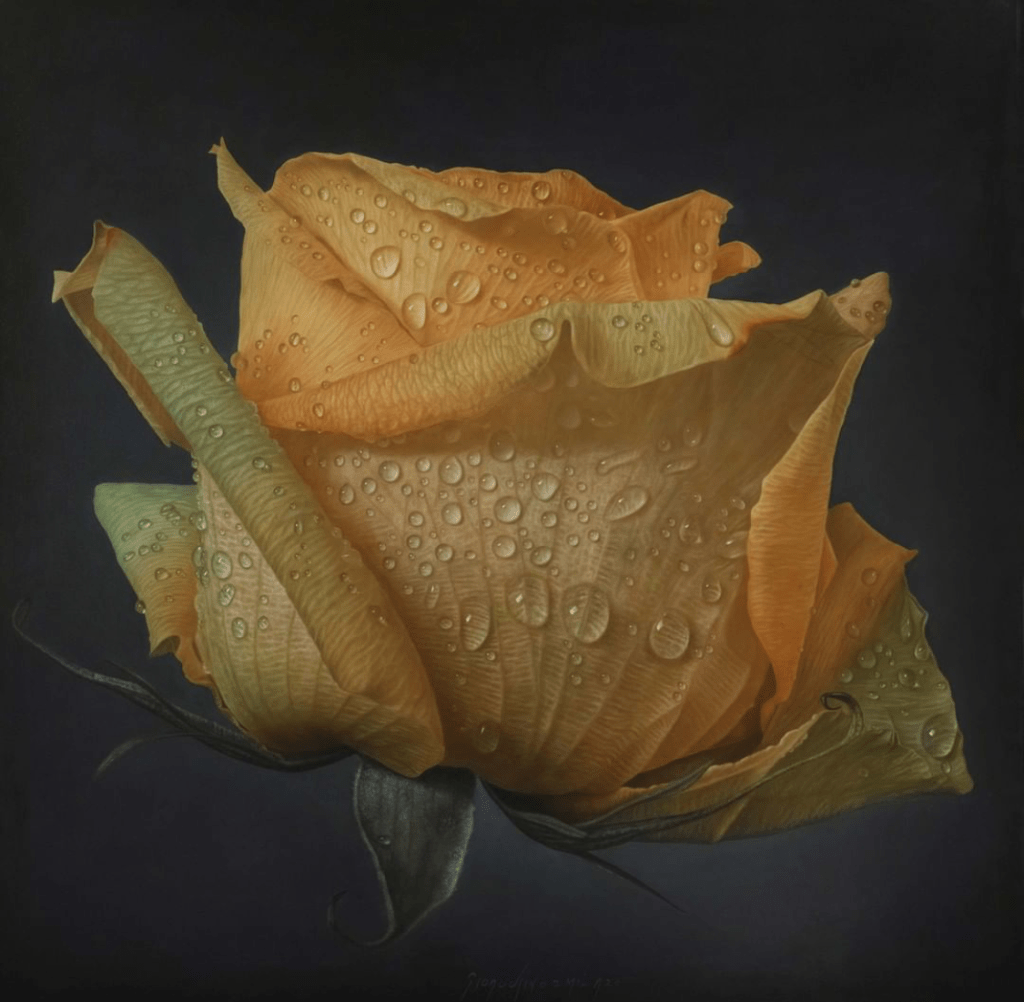
Earlier this week was World Photograpy Day – celebrated on this day in honor of the invention of the daguerreotype, a photography process invented by louis Daguerre on August 19, 1893. Instead of photography, I wanted to showcase hyperrealism art, which – for me – is a roundabout way of appreciating photography – anyway here are this week’s amazing Sunday Seven!!

Gioacchino Passini
Jason de Graaf
Omar Ortiz

(All images courtesy artist Instagram accounts).

22 August 1620

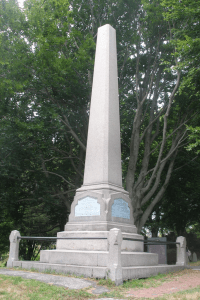
On August 22, 1620 two ships dropped anchor off Bayards Cove in Dartmouth, England. After facing delays in Southampton to make the necessary repairs to Speedwell, the two ships, The Mayflower and Speedwell, had embarked on their transatlantic voyage on August 15, 1620. They sailed for a few days when Speedwell began leaking again, and they retreated to Dartmouth. This coastal town was used to large merchant ships coming along its shores – however it is unlikely that the town had ever hosted ships that were on as meaningful a journey as the Separatists and Strangers that sailed in on Auguat 22, 1620.

Bayards Cove, Dartmouth

Robert Cushman was one of the Separatist leaders and organizers of the voyage who was making the journey on the Speedwell. It is from his letter dated August 17, 1620 (Julian Calendar which is about 10 days behind the current calendar) to his friend that we have accounts of the troubles Speedwell was facing:

Our pinnace will not cease leaking, else I think we had been half-way to Virginia. Our voyage hither hath been as full of crosses as ourselves have been of crookedness. We put in here to trim her; and I think, as others also, if we had stayed at sea but three or four hours more, she would have sunk right down. And though she was twice trimmed at Hampton, yet now she is as open and leaky as a sieve; and there was a board a man might have pulled off with his fingers, two foot long, where the water came in as at a mole hole. We lay at Hampton seven days in fair weather, waiting for her, and now we lie here waiting for her in as fair a wind as can blow, and so have done these four days, and are like to lie four more, and by that time the wind will happily turn as it did at Hampton. Our victuals will be half eaten up, I think, before we go from the coast of England, and if our voyage last long, we shall not have a month’s victuals when we come in the country.

In 1619, Robert Cushman also wrote a pamphlet/book The Cry of a Stone which provides details as to why the Lieden Separatist separated from the Church of England. The book was published in 1642 under the name Coachman, and it was not until the mid-20th Century that the book was identified to have been written by a Separatist. Robert Cushman was one of the people who did not continue with the journey at Plymouth in 1620, though he did go there in 1621 where his son Thomas Cushman became a prominent member of the Pilgrim community.

After Speedwell’s repairs were completed, the two ships set sail once more on September 2, 1620.