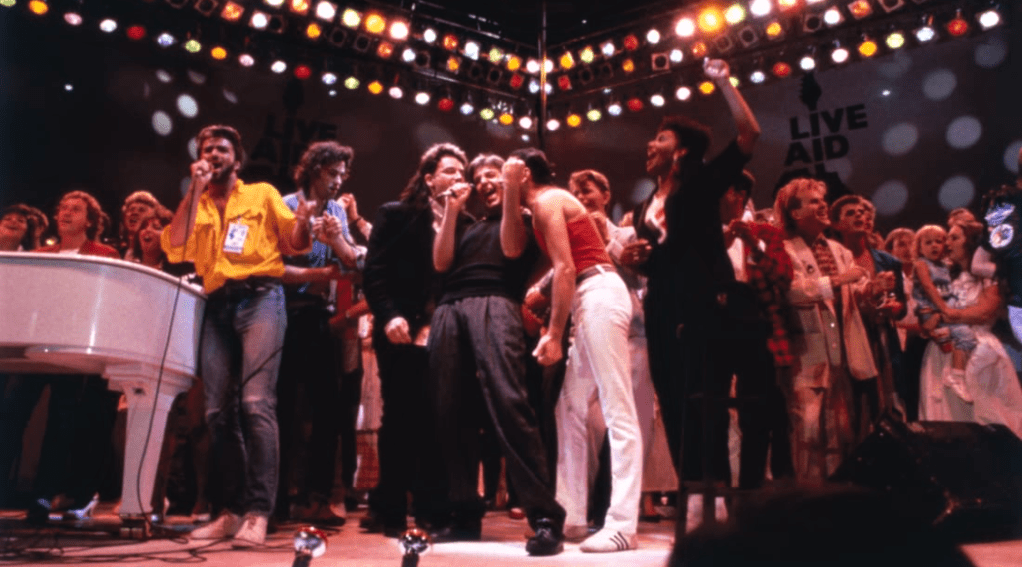
35 years ago today….

One of the college questions last year was about a day in history that you would like to be a part of – I’m sharing my cousin’s repsonse!! She would have liked to travel back to an event 35 years ago today. I think I would have liked to join her on this trip.

July 13, 1985, “the day music changed the world.”

An October 1984 BBC report on famine in Ethiopia changed the course of Irish singer Bob Geldof’s life, “he was stood against the wall,” and had to do something.

The result was the record-breaking fundraising Band Aid album, followed by Live Aid; a 12 hour simultaneous trans-Atlantic charity concert in Philadelphia and London, broadcast live to 110 countries that raised over $100 million in one day. Phil Collins flew the Concorde and performed at both locations, U2 skyrocketed to international fame, and Queen’s magical performance is still making spines tingle.

Live Aid’s legacy is immense – it forever connected celebrities with philanthropy, spurred millennial involvement in charity, and propelled telecommunications toward global connectivity.

There are so many historical events – but I would have really liked to be in Wembley Stadium, London on that summer’s day in 1985. 

Me too!!

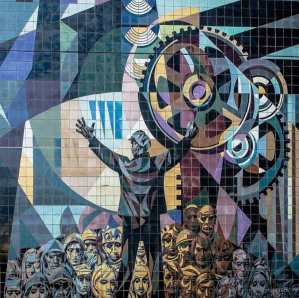
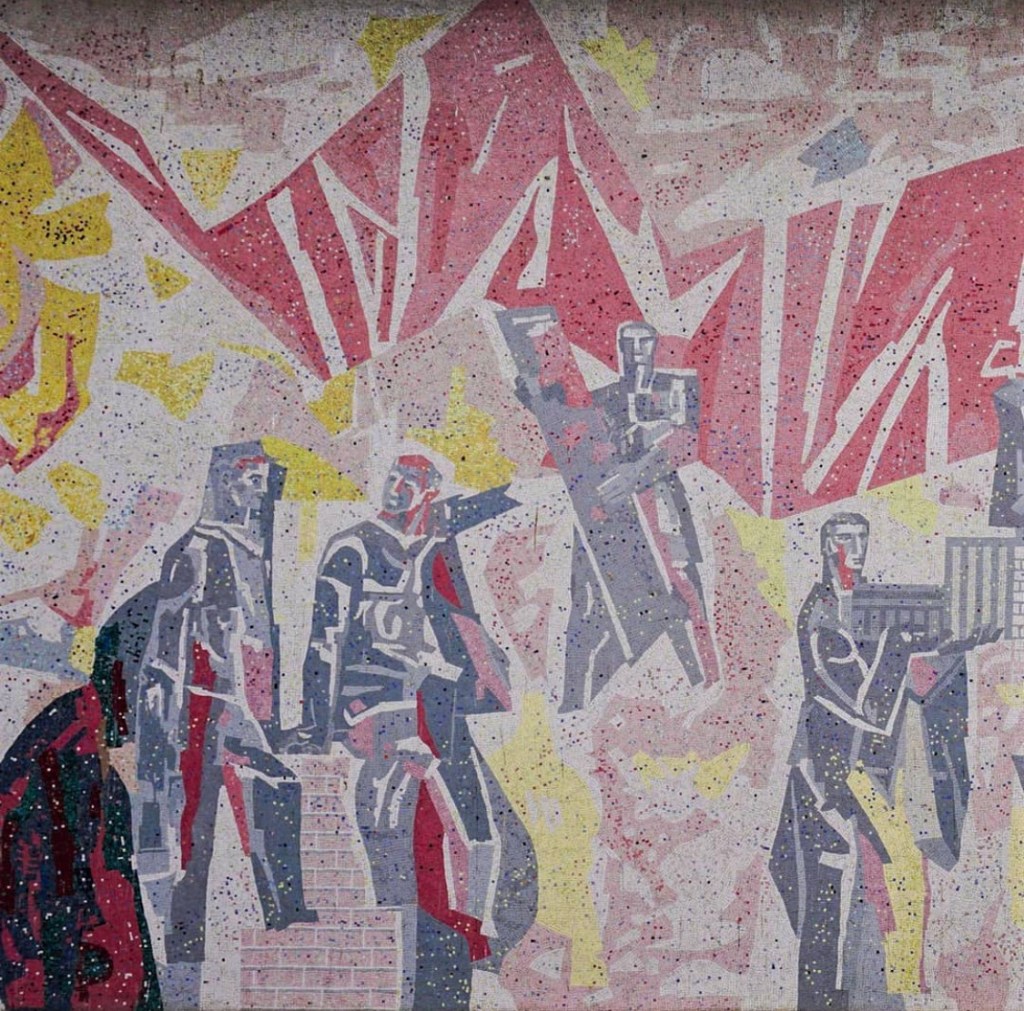
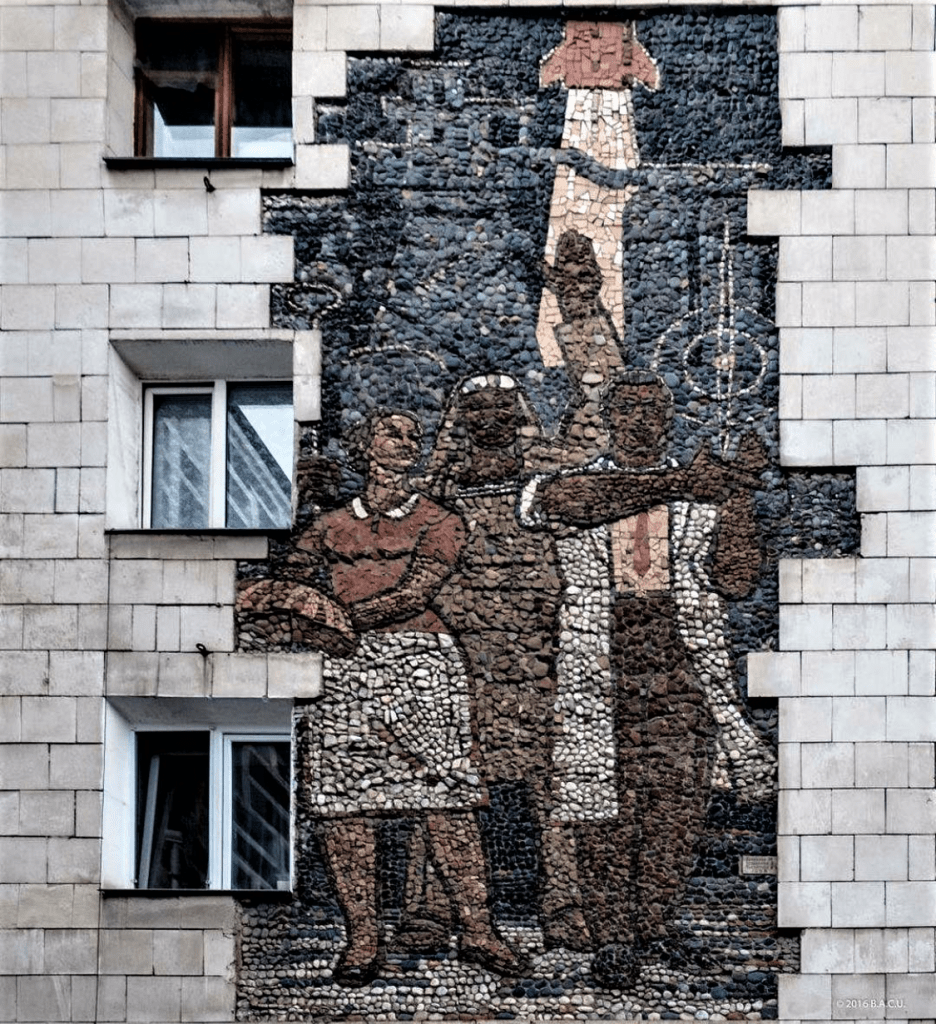
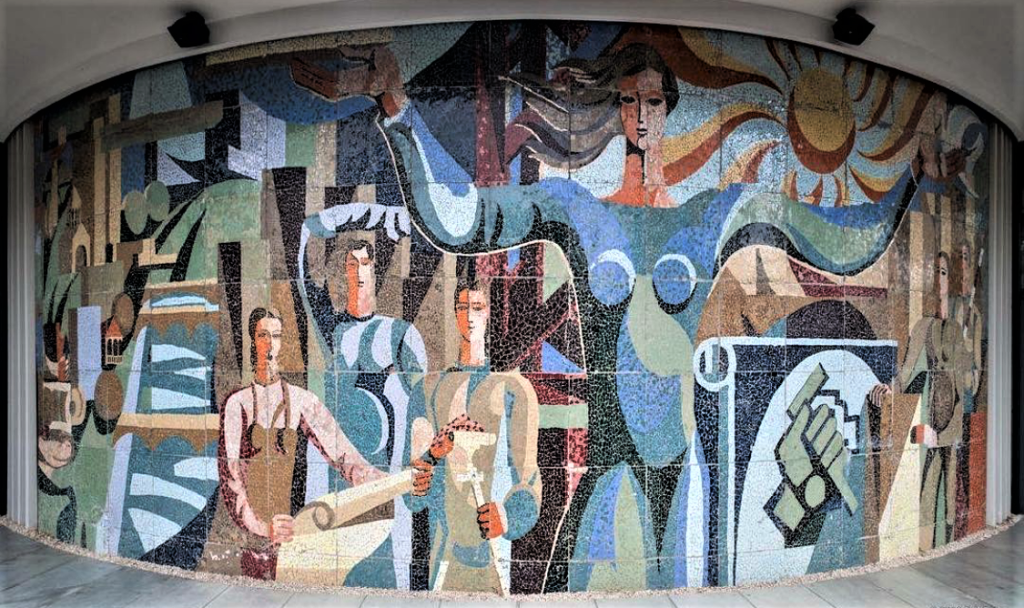
Mosaics of Labor

I find these monumental Soviet era mosaics very attractive and thought provoking – the bright colors, the immense detail in the work, and of course the stories they tell of an era that has ended. They are of course propaganda mosaics – but if we can set that aside for a minute and just appreciate the intricate work that has gone into making them – they really are quite remarkable. Ex-USSR countries like Georgia and Ukraine seem to be filled with these mosaics, though many are in a dilapidated state.

Most of these are celebrating labor since working class people were supposed to be the ruling class according to Karl Marx. These mosaics were public art and decorated the exterior walls of school, factories, government building, and residential blocks, and celebrated the everyday working-class heroes on a larger than life scale. Much of this public art and cultural heritage of an era has been destroyed after the end of communism – but the ones that remain serve as a testament to that era.

(Images courtesy Socialist Realism Art websites & Instagram)

Damocles, Gordium, & Sisyphus

Sometimes we hear or read a phrase that sounds like it has an interesting story behind it  – I started exploring a few such phrases that have their origins in Greek mythology.

Richard Westall, The Sword of Damocles 1812

The Sword of Damocles – this means that while a rich and powerful person enjoys all the benefits and riches that come with being in that position, they also have to deal with the threats that come along  with it and live in fear because of those threats. The term originates from a story by Cicero  – Dionysius was the tyrant of  Syracuse and had a courtier named Damocles whose job was to constantly flatter Dionysius. One day Damocles made a comment along the lines of how much he envied Dionysius his rich and powerful position. So Dionysius gave him his throne to experience the riches and the power, but at the same time suspended a sword with a horsehair over Damocles’ head. Damocles was unable to enjoy any of the luxuries because he was terrified of that sword over his head, and begged Dionysius to let him become a courtier again.

Giovanni Paolo Panini, Alexander Cutting the Gordian Knot 1718-19

Cutting the Gordian Knot – this means to solve a very complex or involved problem with a bold and swift action. The story behind it is that in 333 BCE Alexander the Great was marching through Anatolia and reached Gordium where he was shown an ancient chariot with a knot tied to its yoke. Anyone who could untie the knot would become ruler of Asia. Alexander – the great warrior – swiftly sliced through the knot with his sword – thereby giving rise to the phrase “cutting the Gordian Knot.”  

Titian, Sisyphus, 1548-49

Sisyphean Task – this is a pointless and unrewarding task that never ends. The origin is the Greek mythology of King Sisyphus of Ephyra who was always offending the Gods with his clever tricks and by cheating death with these tricks. He was punished by Pluto and sent to the underworld where he was forced to push a huge boulder up a hill. Not only was this a difficult task, it was also endless because as soon as the boulder reached the top of the hill it would roll off to the other side and Sisyphus would have to start the task all over again – and ever since then a pointless, endless task is known as a Sisyphean task.

African-American Art – A Pictorial Essay, (4)

I was wondering about the first known African-American artist and about the representation of Blacks in American art. I was wondering if the two might even be related – from whose point of view were we seeing Blacks in American art – and did the representation change once African-American artists started painting?

The Turning Point

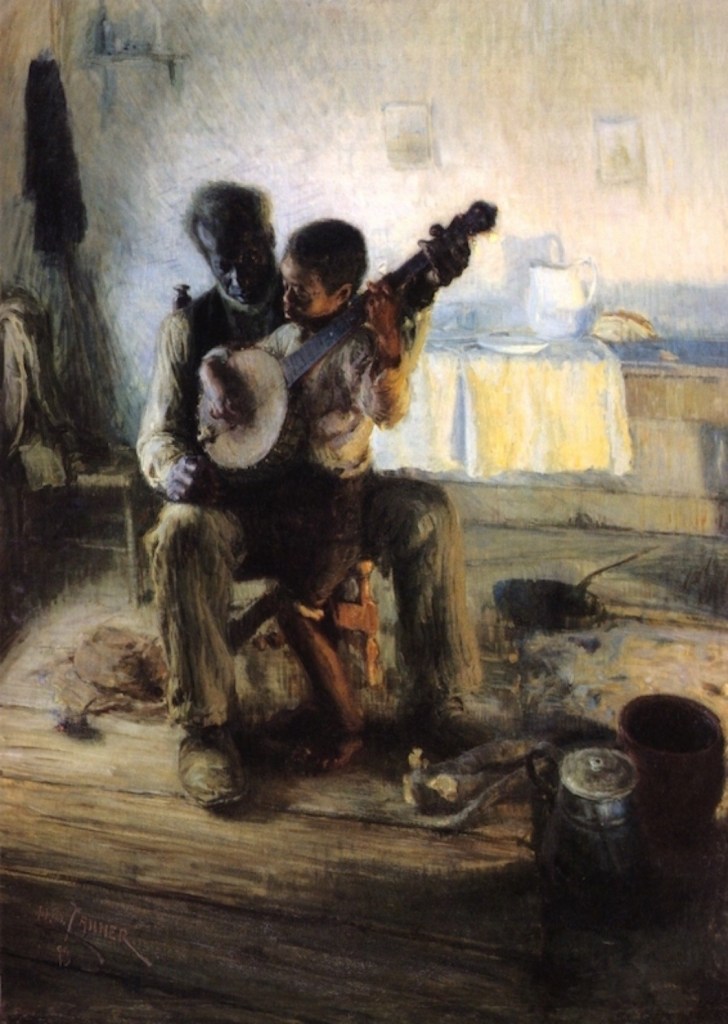
Trained in both Philadelphia and Paris, Henry O. Tanner’s (1859 – 1937) iconic The Banjo Lesson, 1839 became the breakthrough painting that unshackled African-American art and the representation of African-Americans in art from the ties of White America and its artists. This incredibly tender and soulful painting of a grandfather teaching his grandson to play the symbolic banjo became the “image of generational torch-passing,” (Farisa Khalid, smarthistory).

Here, finally we have agency – an African-American artist, painting something he could have seen reflected in a mirror.

Sitting in their humble abode, with the light finally focused on them, the “grandfather is the past, the old America of slavery and The Civil War, of oppression, racism, and poverty, while the boy, caught in the warm glow of the fire’s light, is the New America, of renewed opportunities, advancement, education, and new beginnings” (Farisa Khalid, smarthistory).

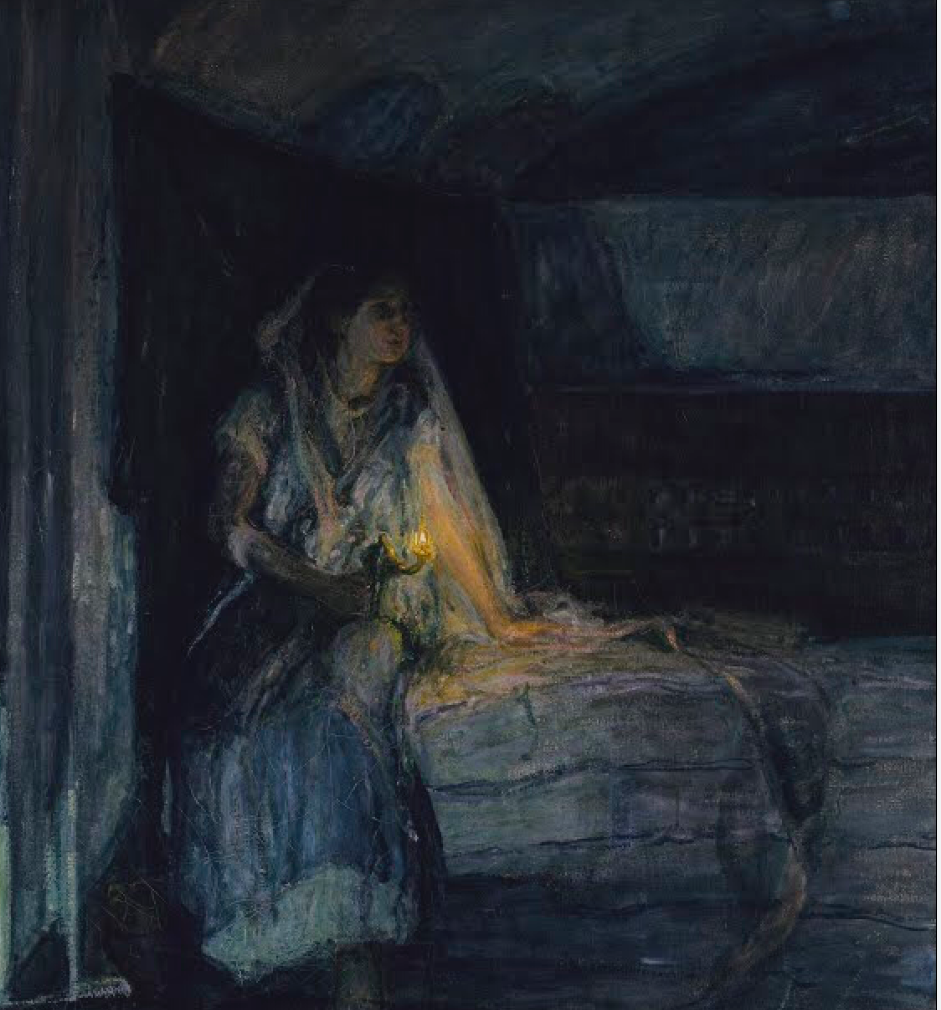
Other works of Henry O. Tanner.

African-American Art – A Pictorial Essay (3/4)

I was wondering about the first known African-American artist and about the representation of Blacks in American art. I was wondering if the two might even be related – from whose point of view were we seeing Blacks in American art – and did the representation change once African-American artists started painting?

Images of African-Americans in Antebellum Era Art

All through the 1800s, White artists depicted African-Americans as anonymous figures in the background, as unimportant figures in a larger group – never as the main focus of the painting. They were shown as waiters or as poor rural folk who are content with their lot in life. While Joshua Johnson showed sophisticated African-Americans in portraits, White artists showed them as poor marginalized figures.

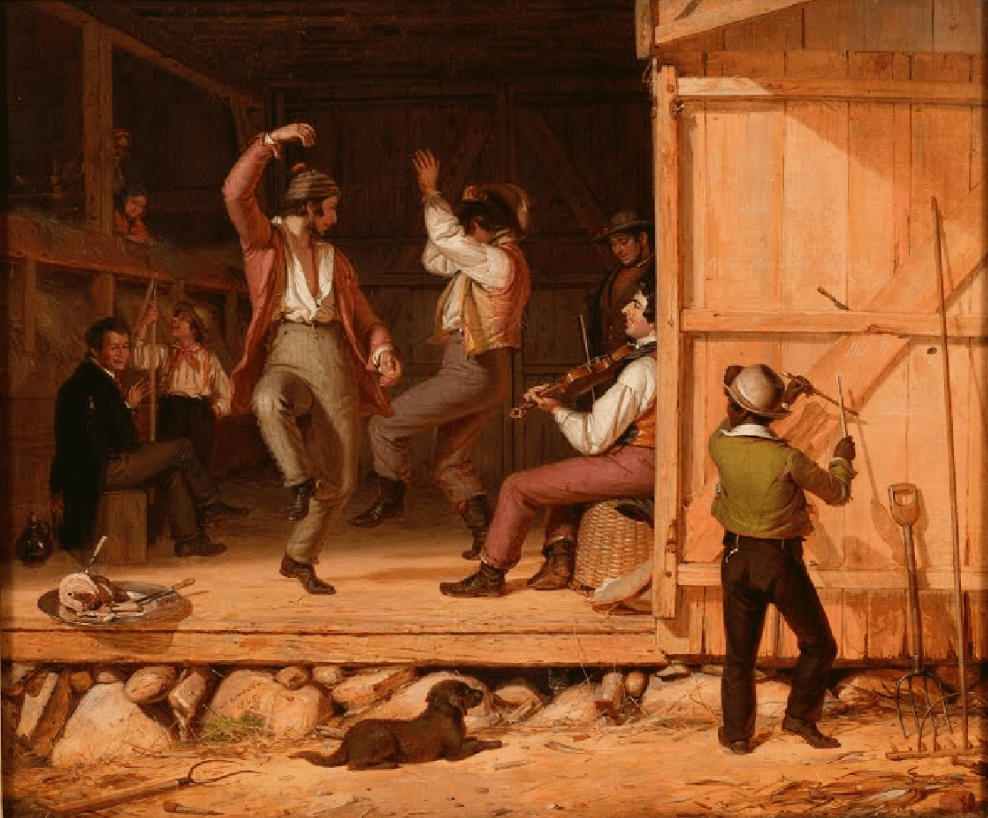
George Caleb Bingham, The County Election, 1852
Thomas Harrison Matteson, The Turkey Shoot, 1857
Eastman Johnson, Old Kentucky Home, 1859

All through the Antebellum Era, African-Americans were a side note in art – they were not given center stage until after the Civil War when pioneering artists like Henry Ossawa Tanner put them there.

African-American Art – A Pictorial Essay (2/4)

I was wondering about the first known African-American artist and about the representation of Blacks in American art. I was wondering if the two might even be related – from whose point of view were we seeing Blacks in American art – and did the representation change once African-American artists started painting?

Robert S. Duncanson (1822 – 1871)

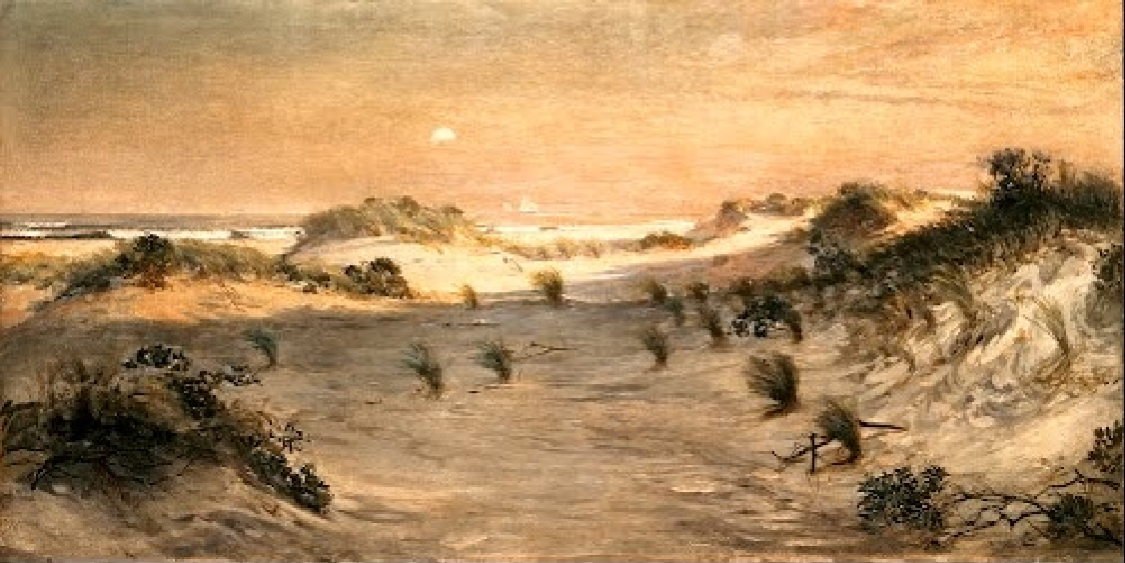
After Joshua Johnson, the next known Antebellum Era African-American artist is the exceptionally talented landscape artist Robert Seldon Duncanson (1822 – 1871). Born biracial and free in New York, Duncanson painted literary inspired landscapes in the Hudson River School style of American art.

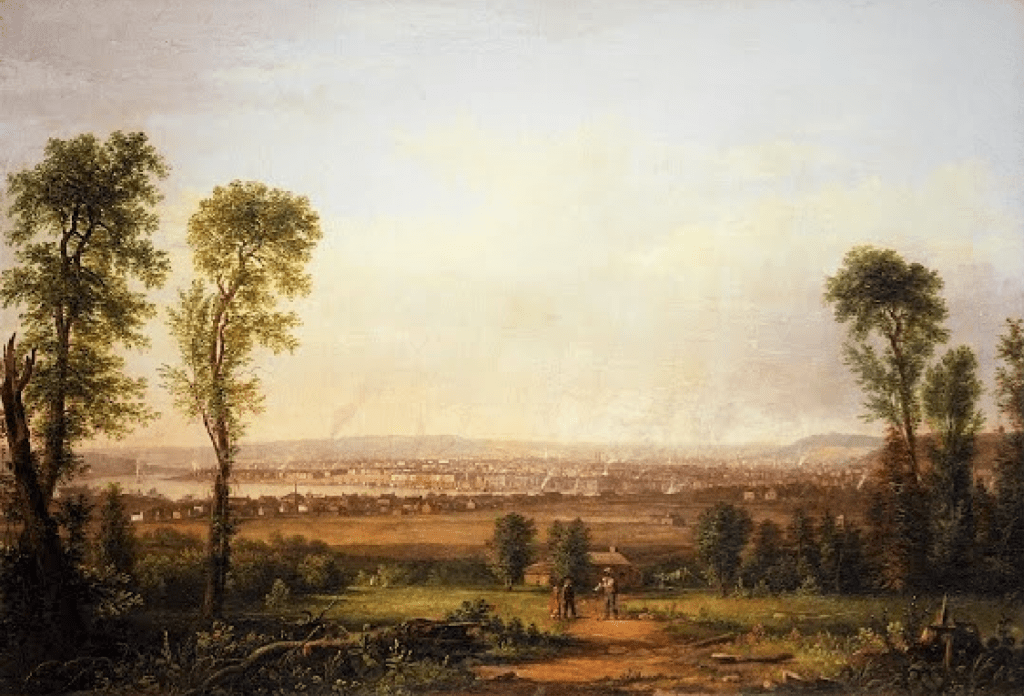
Racial overtones are found in two of his paintings: View of Cincinnati, Ohio from Covington, Kentucky and Uncle Tom and Little Eva, 1853 painted a year after the publication of Harriet Beecher Stowe’s Uncle Tom’s Cabin. In the View he depicted two white children standing next to a Black man with scythe and a Black woman in the background hanging clothes to dry. He also showed a white family out on a leisurely picnic while the two African-Americans worked.  Kentucky had still not abolished slavery, and rural Kentucky contrasts sharply with the bustling city across the river. Through this painting Duncanson gives a visual of his outlook on slavery and the dependence of the bustling city on slave laborers. Cincinnati was a hotbed of anti-slavery movement, and Duncanson not only participated in abolitionist activities, he also sold paintings and donated money to the cause.

Duncanson took inspiration from literary classics when he painted – he based his famous painting Land of the Lotus Eaters on Alfred Lord Tennyson’s poem and presented it to him when he went to study art in Europe.

Land of the Lotus Eaters, 1861
Ellen’s Isle, Loch Katrine 1871 -inspired by Sir Walter Scott’s poem “The Lady of the Lake.”

Duncanson was the first truly successful African-American artist, not only in the US but also in Europe.

African-American Art – A Pictorial Essay (1/4)

I was wondering about the first known African-American artist and about the representation of Blacks in American art. I was wondering if the two might even be related – from whose point of view were we seeing Blacks in American art – and did the representation change once African-American artists started painting?  

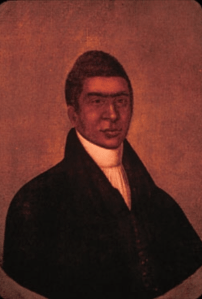
Joshusa Johnson (1763 – after 1826), Earliest Known African-American Artist.

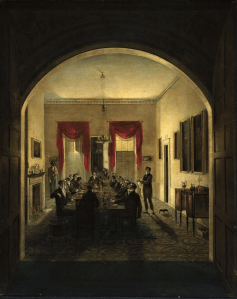
The earliest known African-American artist is antebellum era artist Joshua Johnson who painted in the early 1800s. He lived in Baltimore and advertised himself as a self-taught portrait artist. He may have been biracial and earned his freedom which allowed him to become a financially successful professional artist. He painted local resident – sea captains, merchants, shopkeepers and their families.

Of the about 80 paintings attributed to Johnson only one is signed, and only two are of African-Americans. His portraits are formal mostly with plain backgrounds, though some have tiled floors and windows with distant landscapes. If he included other objects, they were letter, books, gloves, parasols, riding crops dogs, flowers and fruit.

Very little is known about Joshua Johnson – interestingly his paintings are dated because of the ages of the known sitters not because of when he might have painted them. Only two of his paintings were of African-Americans – of Daniel Coker (1780 – 1846), a biracial African-American who gained his freedom and became a Methodist minister. Coker moved to Sierra Leone with his family and started the West Africa Methodist Church. The second was of an unknown cleric.

(Images courtesy NGA & Smithsonian).

Two Great Americans – and Four Great Freedoms

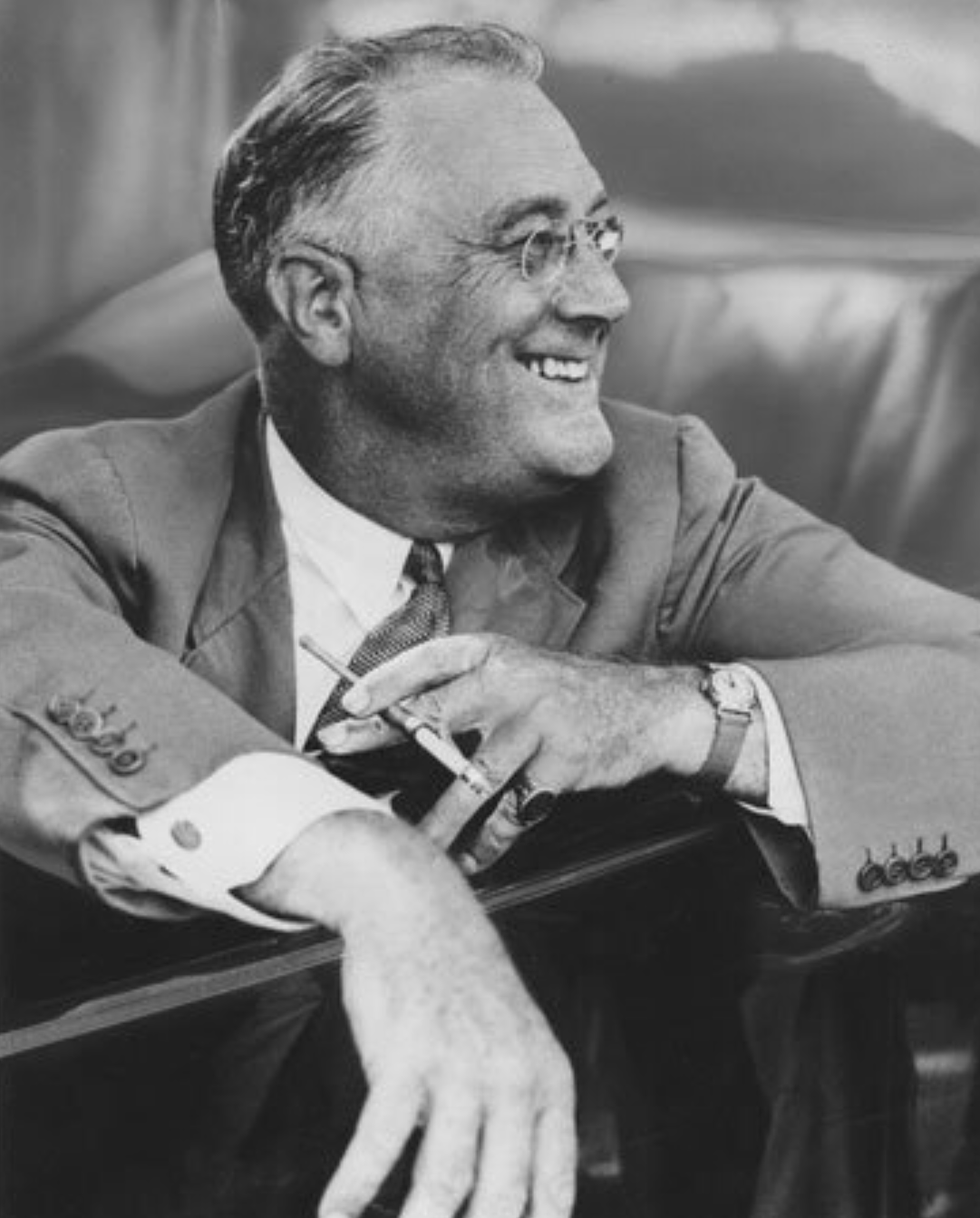
On January 6, 1941, with an eye towards the London blitz and German air raids, President Franklin Roosevelt gave a powerful speech in which he articulated his vision for a postwar world founded on four basic human freedoms. The speech was to encourage America to end its isolationism policy and join World War II. Norman Rockwell (1894-1978) was inspired by these words and visualized these freedoms in his own unique small-town neighborly way.

“In the future days, which we seek to make secure, we look forward to a world founded upon four essential human freedoms. “

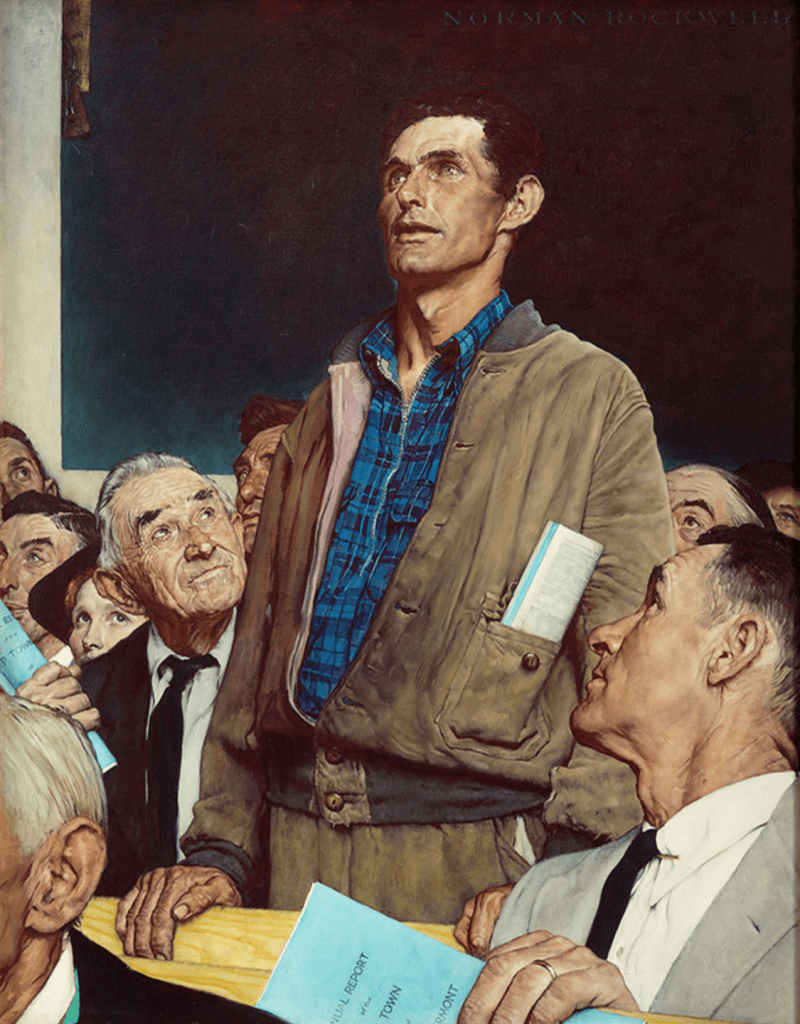
“The first is freedom of speech and expression–everywhere in the world.”

Norman Rockwell, Freedom of Speech, 1943.

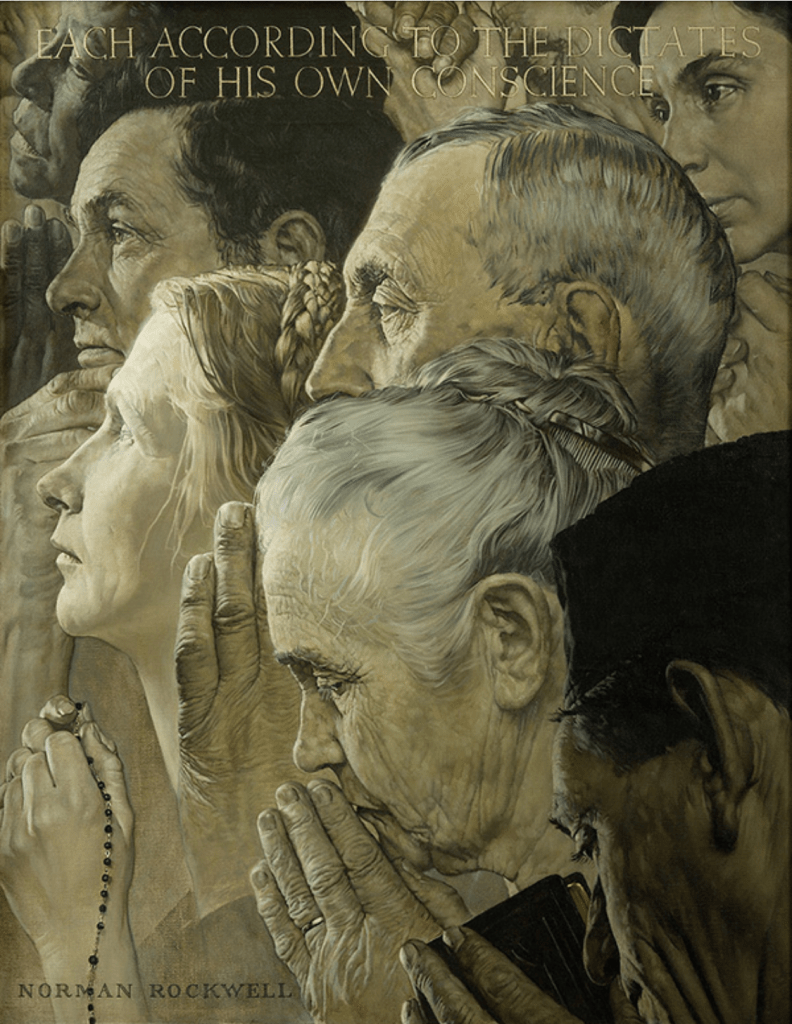
“The second is freedom of every person to worship God in his own way–everywhere in the world.”

Norman Rockwell, Freedom of Worship, 1943

“The third is freedom from want–which, translated into world terms, means economic understandings which will secure to every nation a healthy peacetime life for its inhabitants-everywhere in the world.”

Norman Rockwell, Freedom From Want, 1943

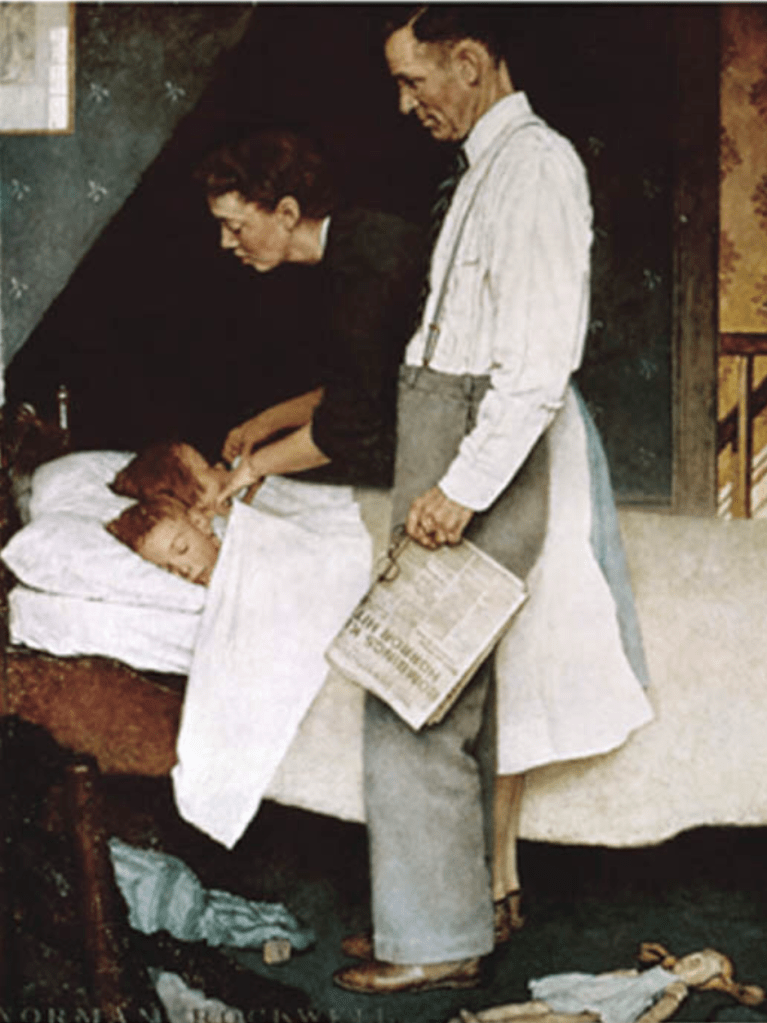
“The fourth is freedom from fear–which, translated into world terms, means a world-wide reduction of armaments to such a point and in such a thorough fashion that no nation will be in a position to commit an act of physical aggression against any neighbor–anywhere in the world.”

Norman Rockwell, Freedom from Want, 1943.

Two much loved, admired, and respected Americans – what an enduring legacy they have left for us to reflect upon.