African-American Art – A Pictorial Essay (3/4)

I was wondering about the first known African-American artist and about the representation of Blacks in American art. I was wondering if the two might even be related – from whose point of view were we seeing Blacks in American art – and did the representation change once African-American artists started painting?

Images of African-Americans in Antebellum Era Art
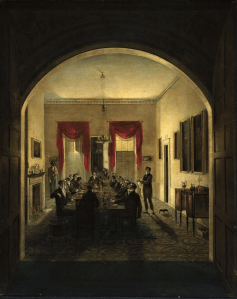
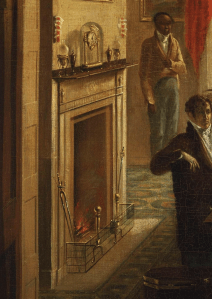
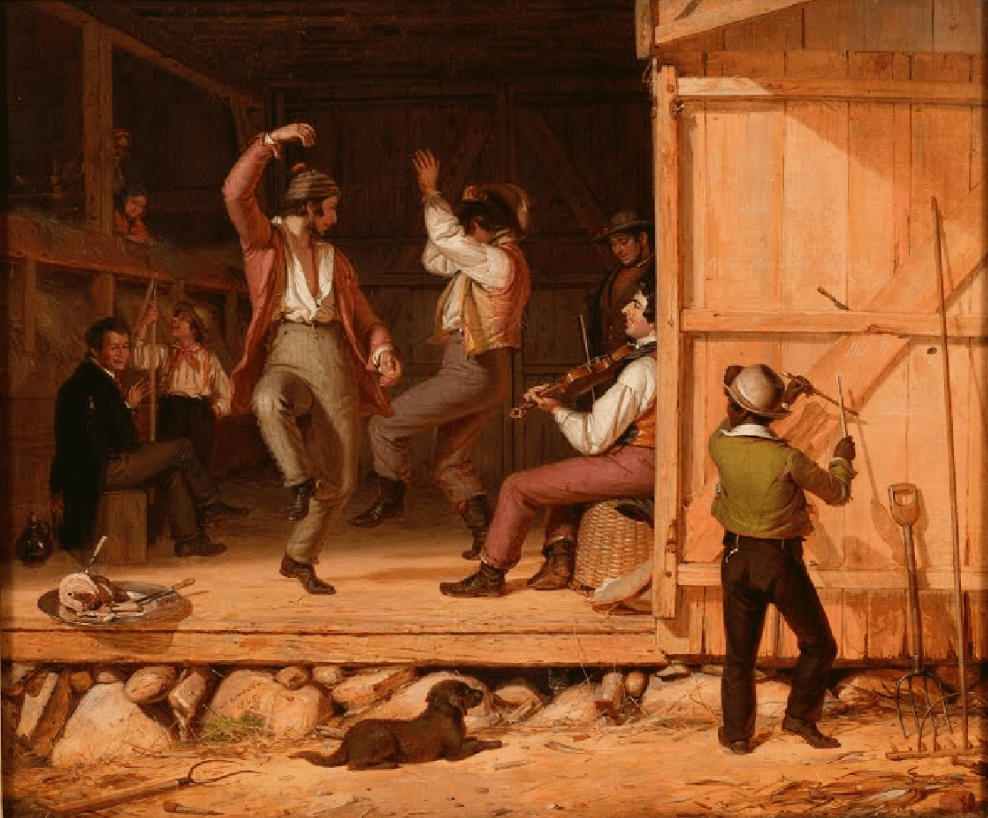
All through the 1800s, White artists depicted African-Americans as anonymous figures in the background, as unimportant figures in a larger group – never as the main focus of the painting. They were shown as waiters or as poor rural folk who are content with their lot in life. While Joshua Johnson showed sophisticated African-Americans in portraits, White artists showed them as poor marginalized figures.

George Caleb Bingham, The County Election, 1852
Thomas Harrison Matteson, The Turkey Shoot, 1857
Eastman Johnson, Old Kentucky Home, 1859

All through the Antebellum Era, African-Americans were a side note in art – they were not given center stage until after the Civil War when pioneering artists like Henry Ossawa Tanner put them there.

African-American Art – A Pictorial Essay (2/4)

I was wondering about the first known African-American artist and about the representation of Blacks in American art. I was wondering if the two might even be related – from whose point of view were we seeing Blacks in American art – and did the representation change once African-American artists started painting?

Robert S. Duncanson (1822 – 1871)

After Joshua Johnson, the next known Antebellum Era African-American artist is the exceptionally talented landscape artist Robert Seldon Duncanson (1822 – 1871). Born biracial and free in New York, Duncanson painted literary inspired landscapes in the Hudson River School style of American art.

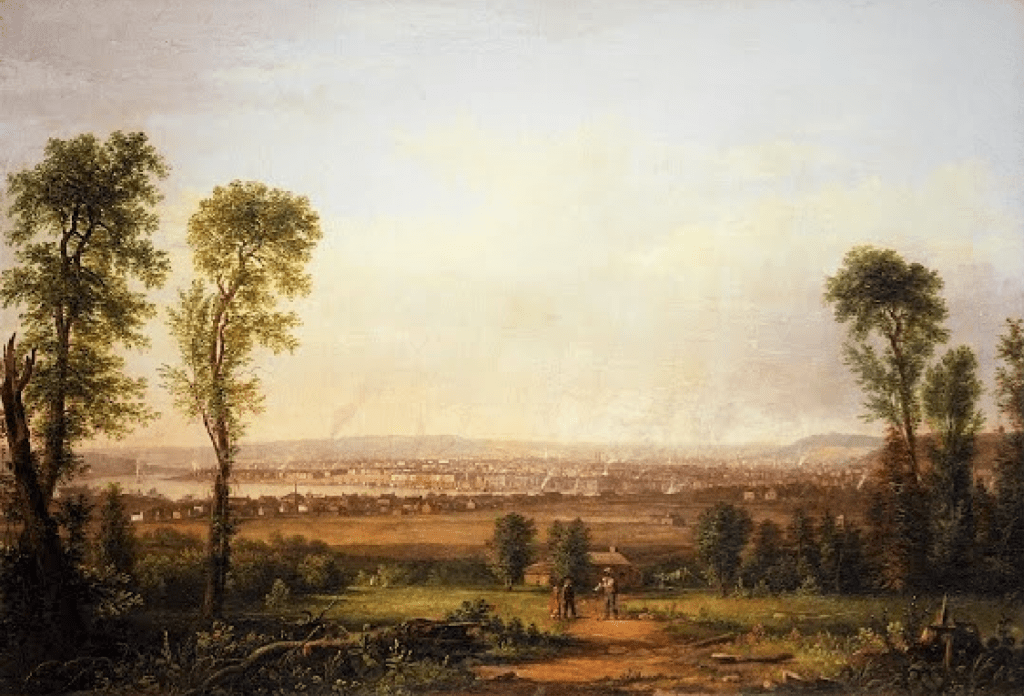
Racial overtones are found in two of his paintings: View of Cincinnati, Ohio from Covington, Kentucky and Uncle Tom and Little Eva, 1853 painted a year after the publication of Harriet Beecher Stowe’s Uncle Tom’s Cabin. In the View he depicted two white children standing next to a Black man with scythe and a Black woman in the background hanging clothes to dry. He also showed a white family out on a leisurely picnic while the two African-Americans worked.  Kentucky had still not abolished slavery, and rural Kentucky contrasts sharply with the bustling city across the river. Through this painting Duncanson gives a visual of his outlook on slavery and the dependence of the bustling city on slave laborers. Cincinnati was a hotbed of anti-slavery movement, and Duncanson not only participated in abolitionist activities, he also sold paintings and donated money to the cause.

Duncanson took inspiration from literary classics when he painted – he based his famous painting Land of the Lotus Eaters on Alfred Lord Tennyson’s poem and presented it to him when he went to study art in Europe.
Land of the Lotus Eaters, 1861
Ellen’s Isle, Loch Katrine 1871 -inspired by Sir Walter Scott’s poem “The Lady of the Lake.”

Duncanson was the first truly successful African-American artist, not only in the US but also in Europe.

African-American Art – A Pictorial Essay (1/4)

I was wondering about the first known African-American artist and about the representation of Blacks in American art. I was wondering if the two might even be related – from whose point of view were we seeing Blacks in American art – and did the representation change once African-American artists started painting?  

Joshusa Johnson (1763 – after 1826), Earliest Known African-American Artist.

The earliest known African-American artist is antebellum era artist Joshua Johnson who painted in the early 1800s. He lived in Baltimore and advertised himself as a self-taught portrait artist. He may have been biracial and earned his freedom which allowed him to become a financially successful professional artist. He painted local resident – sea captains, merchants, shopkeepers and their families.

Of the about 80 paintings attributed to Johnson only one is signed, and only two are of African-Americans. His portraits are formal mostly with plain backgrounds, though some have tiled floors and windows with distant landscapes. If he included other objects, they were letter, books, gloves, parasols, riding crops dogs, flowers and fruit.

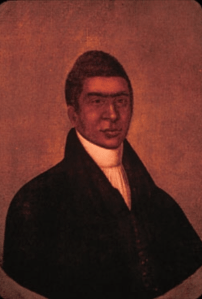
Very little is known about Joshua Johnson – interestingly his paintings are dated because of the ages of the known sitters not because of when he might have painted them. Only two of his paintings were of African-Americans – of Daniel Coker (1780 – 1846), a biracial African-American who gained his freedom and became a Methodist minister. Coker moved to Sierra Leone with his family and started the West Africa Methodist Church. The second was of an unknown cleric.

(Images courtesy NGA & Smithsonian).