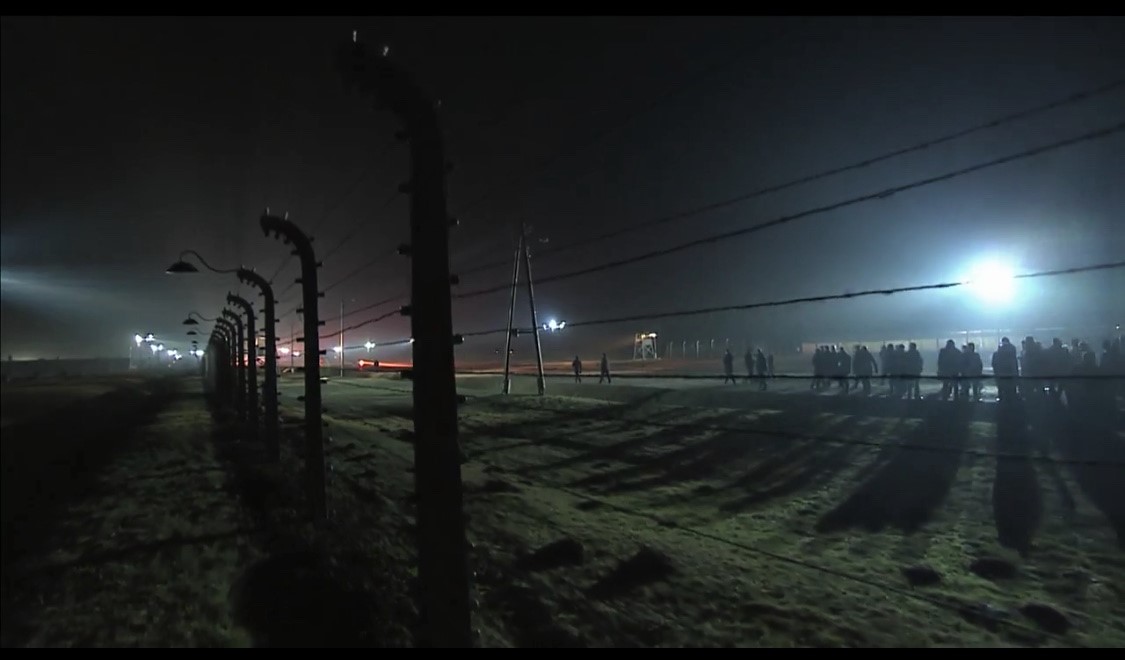
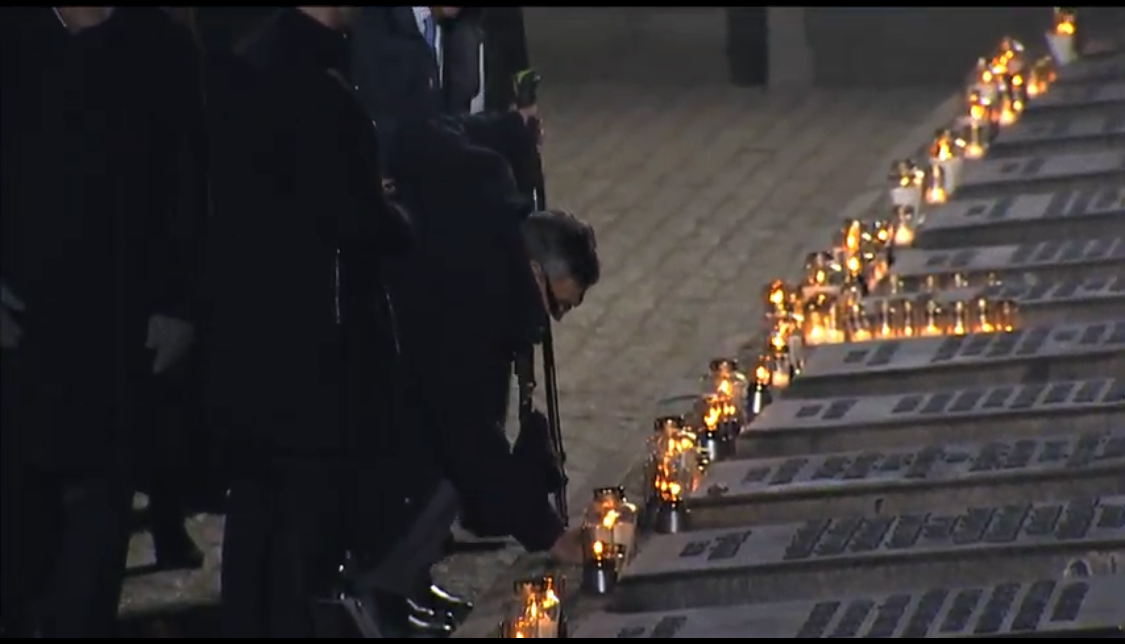
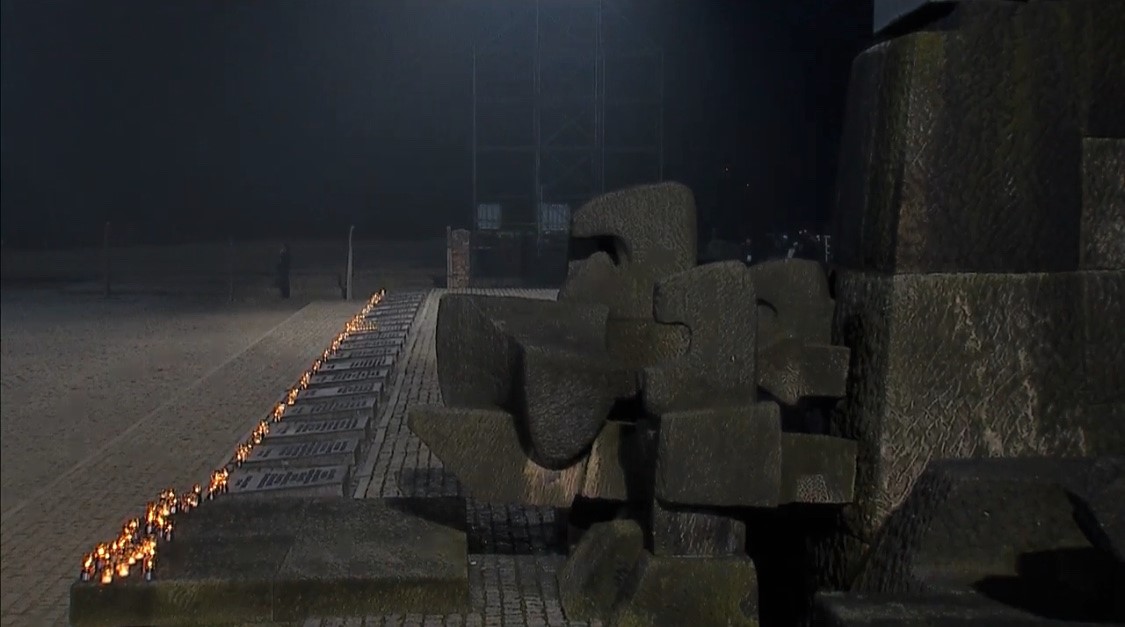
75 years ago today, on January 27, 1945, over 7000 prisoners of the German Nazi camp were liberated by the Soviet Army. It was day 1,689. Nazis had deported 1.1 million Jews, 150 thousand Poles, 23 thousand Roma, 15 thousand Prisoners of war and 25 thousand others to Auschwitz between 1940 and 1945. 1.1 million Jews were murdered. ( All images:@AuschwitzMuseum)
Arbeit Macht Frei – Work makes You Free. The sign was made by an inmate who put the upside down B as a gesture of defiance.
On Jan 27, 1945 – 75 years ago – the Soviet Army liberated over 7000 prisoners at Auschwitz. These quotes are from survivors of Auschwitz, with the exception of the first quote that is so powerful that I wanted to include it in this list.
Wenn es einen Gott gibt muse r mich um Verzeihung bitten. (If there is a God, He will have to beg my forgiveness). Unknown, Mauthausen Concentration Camp prison cell wall.
All of a sudden you are told to leave it all and walk out with a single suitcase. Irene Fogel Weiss, Survivor
I realize that loss of faith in people is more devastating than loss of faith in God. Irene Fogel Weiss, Survivor
I had survivor’s guilt. Edith Eger, Survivor.
So, let us be alert – – alert in a twofold sense. Since Auschwitz we know what man is capable of. And since Hiroshima we know what is at stake. Victor E Frankl, Man’s Search for Meaning.
No matter what I accomplish, it doesn’t seem like much compared to surviving Auschwitz. Art Spiegelman, Maus II: A Survivor’s Tale: And Here My Troubles Began.
To remain silent and indifferent is the greatest sin of all. Elie Wiesel.
Words can sometimes, in moments of grace, attain the quality of deeds. Elie Wiesel.
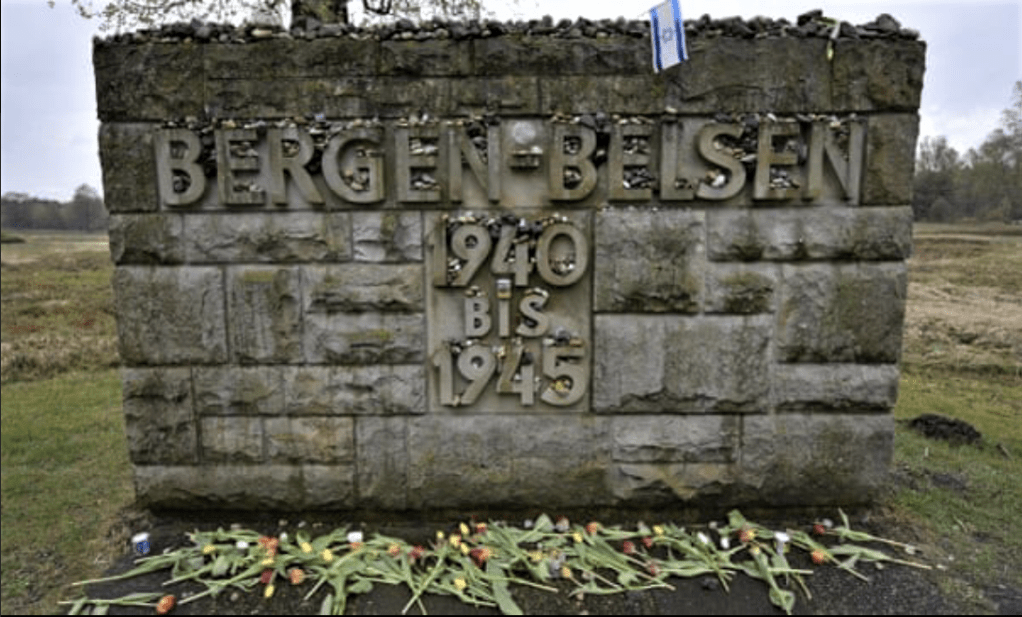
Today, I read a series of incredible tweets by Daniel Finkelstein (@dannythefink) about his mother’s release from Bergen-Belsen Camp 75 years ago. I am sharing them here exactly how he tweeted them.
“This week I will be tweeting about my mother’s release from Belsen, 75 years ago.
75 years ago today, my grandmother Margarethe Wiener appeared before German medical examiner at Bergen-Belsen to prove she was medically fit to be used in a prisoner exchange. She was almost too weak to stand but with freedom at stake for her girls she somehow managed to pass.
The Germans wished to avoid the allied countries seeing how ill and weak the Belsen prisoners were. 20 January 1945.
At 9 am on the 21st January 1945, my grandmother and her three girls, Ruth and Eva (my aunts) and Mirjam (my Mum then 11 years old) are taken from their barracks and placed in a quarantine area. Then they were taken for a shower. The stood waiting not knowing what would come out.
It was water. They are given a meal. It is soup as usual, but it had “actual bits of potato in it” my mother remembers. It’s a proper train not a cattle truck. Their false Paraguayan passports, even though they have expired seem to have done the trick.
The documents have made them eligible for exchange with Germans who wish to return from allied occupied countries. 50,000 people died in the supposed exchange camp of Belsen. But little more than 300 people are ever exchanged. This train carries some of these few.
But the story isn’t over yet.
January 22nd 1945. My Aunt Ruth had been keeping a diary. She’d won a pocket one in a magazine competition just before arrest. So she made little short entries, just a few words because the pencil was tiny and if it ran out she wouldn’t be able to get another one.
She had recorded camp events such as “special meal: peas soup” or somehow making a homemade belt for my mother’s 11th birthday. Days of sickness and many punishments are recalled. On 20 December 1944 through the barbed wire Ruth notices friends in the next door camp section.
She writes in her diary. “Margot and Anne Frank in the other camp”.
On this day, 22 January 1945 as the train heads to freedom, she writes only “train trip via Berlin”.
On 23rd January 1945 there is a calamity. The Germans decide they have too many people on the train. More than half will have to leave the train before freedom in Switzerland. My Aunt records them in her diary as being at Ravensbruck camp on this day.
My mum remembers it as bitter cold and that expulsion from the train surely meant death for them all. By this point my grandmother was desperately weak and ill. An SS Guard comes through their carriage and says to the “Off!”.
Ruth (the oldest sister) says they cannot get off. Their mother is too ill to move. They cannot move her. The guard pauses, shrugs, says “Stay then” and passes on to the next carriage. In this moment their lives are saved.
24 January 1945. There is one more day before the train reaches freedom. Today some more of the prisoners are moved to a civilian internment camp, where many survive the war, but some do not. The Wiener family continues to the border. Tomorrow will come the end of the story.
25 January 1945 the train crosses into Switzerland. Margarethe has sacrificed everything, given every scrap of food to her children, protected them against all but she has seen her girls to freedom.
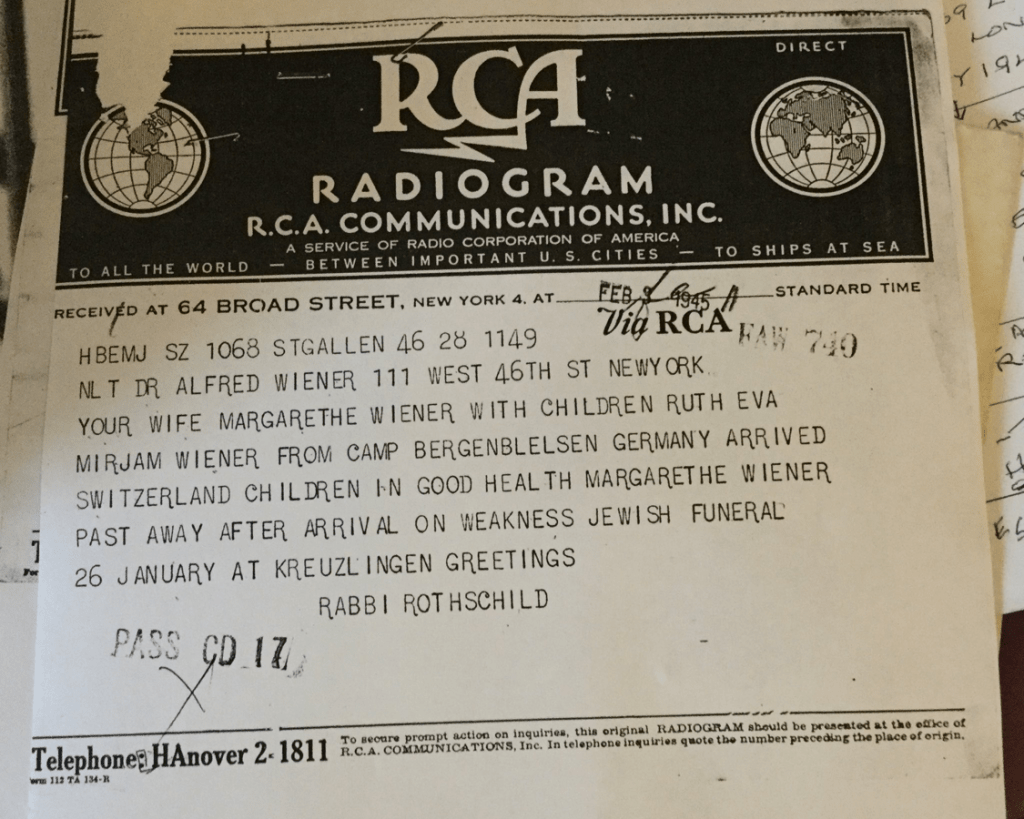
My grandfather is in New York securing the supply of his library on the Nazis, which is to provide one of the main sources of evidence at the Nuremberg trials. A telegram has been sent to him carrying the news.
Margarethe died at 1:15 am on 26th February (I think Daniel Finkelstein meant January here). Her daughters sail to America and all remember the moment they see the Statue of Liberty. Mirjam meets my father, a survivor himself of deportation to Serbia. She becomes a maths teacher and together they have a happy and long life.
She was never bitter and neither was he. They loved life and freedom and this country. So it’s traditional to finish a thread with the word ends/. But at this moment of freedom I finish the thread with begins/.”
(NOTE: Daniel Finkelstein’s grandfather is Dr. Alfred Wiener, founder of the Wiener Library (London and Tel Aviv)).
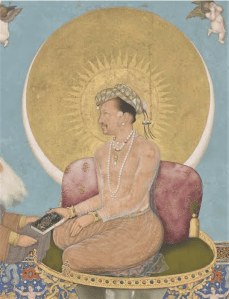
Bichitr, Jahangir Preferring a Sufi Shaikh to Kings from the St. Petersburg Album, 1615-1618.
Last week, I came across a miniature painting, Jahangir Preferring a Sufi Shaikh to Kings, from 17th century Mughal India which perfectly portrays the meeting of East and West and the beginning of the blending of cultures and influences which eventually led to the world becoming a smaller place. The miniature was painted in the Mughal court, from where it went to Persia after the invasion by Nadir Shah in 1739 where the back floral motif was added to the painting. After this, the painting reached St. Petersburg in Russia (I am not sure how this happened – I will need to research this further). It is now at the Freer Gallery in the Smithsonian Museum of Asian Art.
Bichitr (b 1585), a Hindu court artist lived and worked in the court of Jahangir where he painted the Mughal emperor and the happenings in his court. Between 1615 and 1618, he painted this watercolor, gold leaf, and ink miniature masterpiece which shows Jahangir granting audience to four men who are lined up in the order of importance Jahangir is showing them.
Jahangir seated on an hourglass throne
Jahangir – the second Mughal emperor of India was the son of the Great Akbar is seen seated on an hourglass throne. Jahangir liked to be glorified in paintings, and was responsible for the flourishing of Italian Renaissance style painting in his court. Jahangir has a halo of both the sun and moon behind his head, which symbolizes his exalted status.
The hourglass was most likely brought to court in 1584 by an English goldsmith
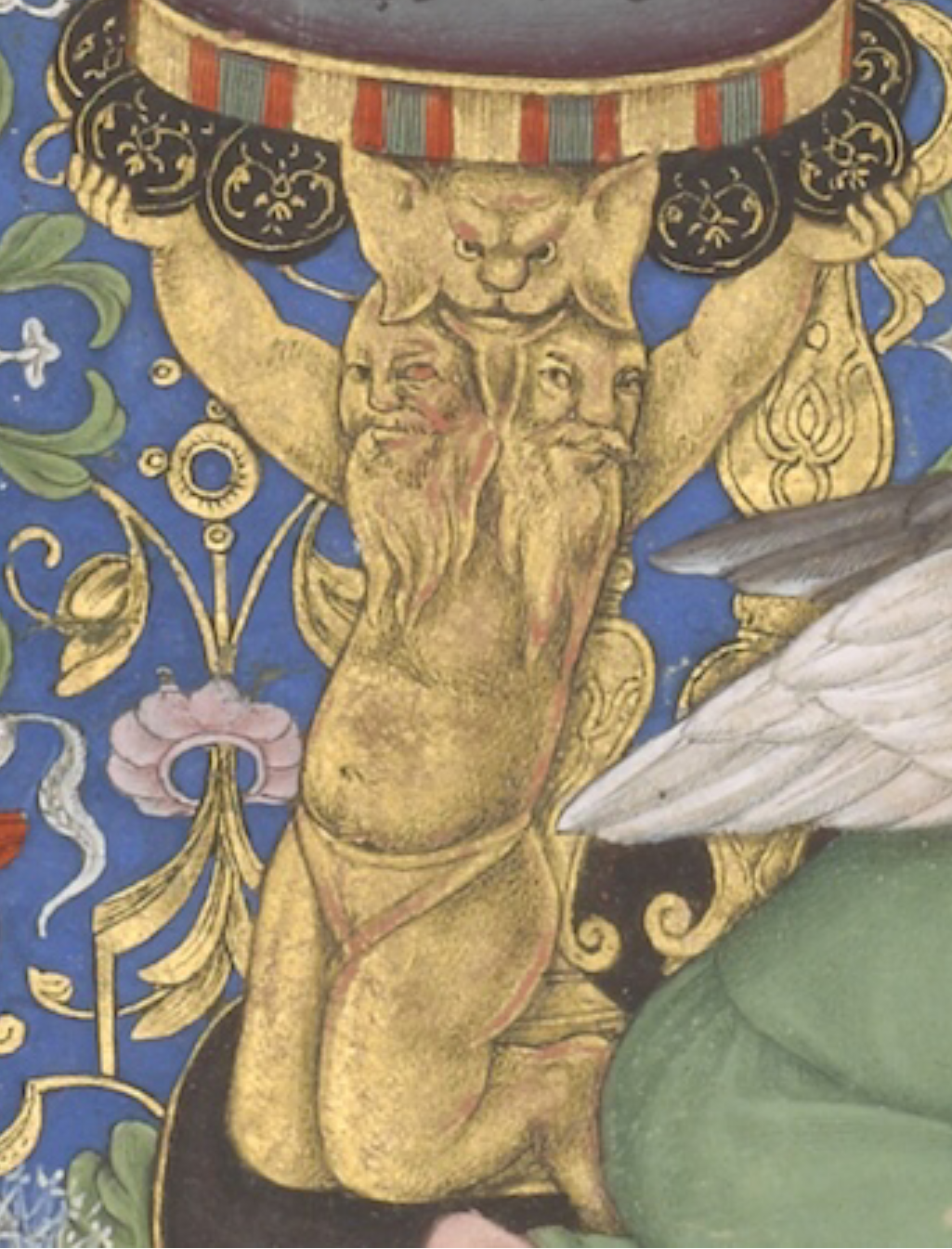
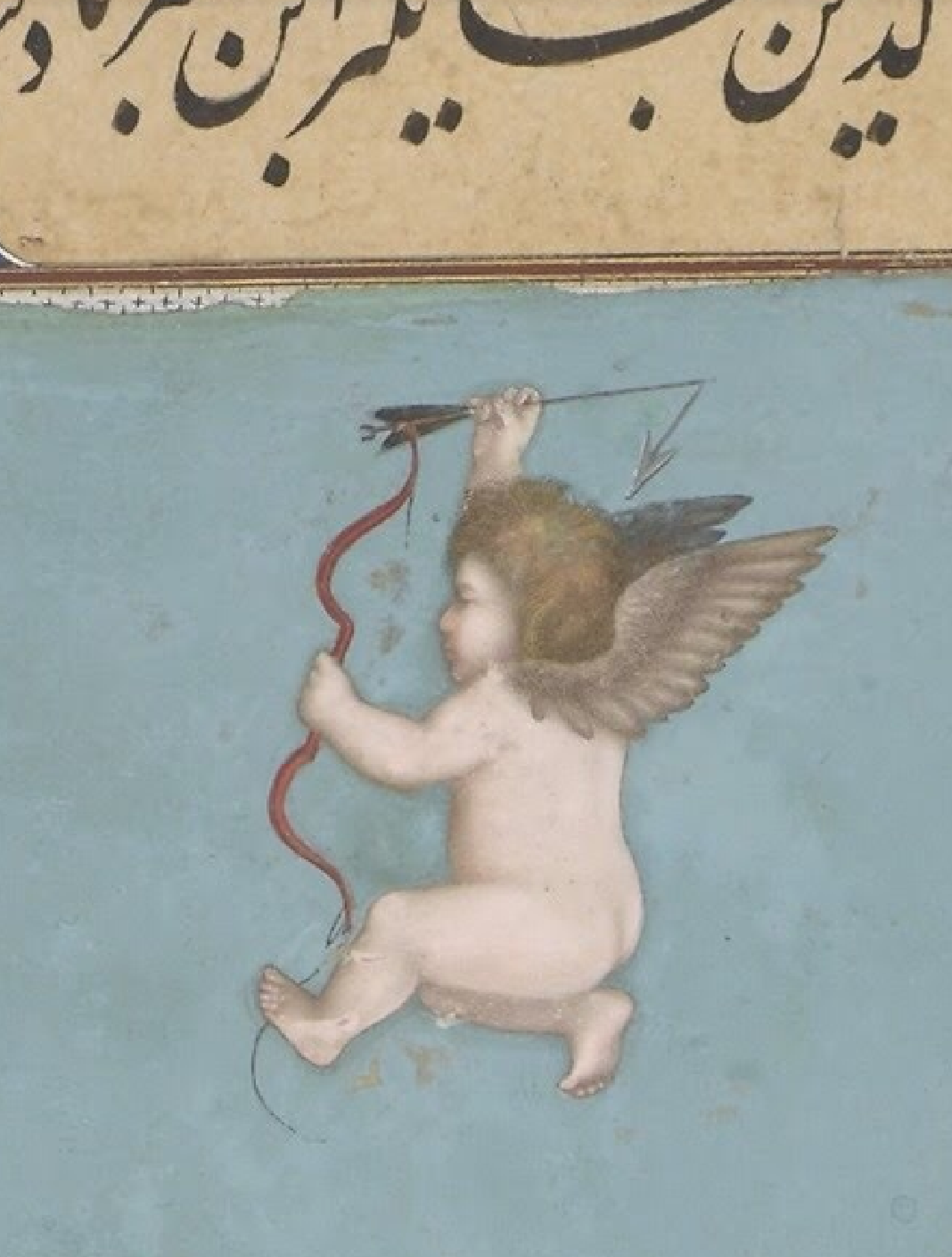
A connection with Europe is seen in the hourglass which was a European invention. It has been painted from a gold hourglass that was most likely brought to the court in 1584 by an English goldsmith William Leedes. Similar European hourglasses from this period are found in museums across Europe. Two cupids (puttos) at the base of the hourglass are a direct influence of Christian iconographic devices in European art. Another European influence is the grotesque looking three headed figure at the base of the footstool that is eerily reminiscent of gargoyles.
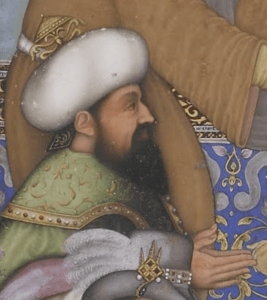
The Ottoman King – The second person in line is an Ottoman King (though exactly who is unknown) from present day Turkey who stands patiently waiting his turn with his hands folded in deference.
King James – Bichitr painted King James I (1566-1625) of England from a portrait by John De Crtiz (left) which was given to Jahangir by Thomas Roe, the first English ambassador to the Mughal court. Thomas Roe traveled to Ajmer in 1615 in order to secure trading concessions for the East India Company. John De Critz (1551–1642) was a Flemish painter who came to England from the Netherlands and was appointed Serjeant-painter to James I in 1605. While the King customarily rests his hand on his sword in de Critz’s painting, it is hovering in a conspicuously non-threatening manner above the sword in Bichitr’s painting. Both kings who wait in line to be seen by Jahangir are from far flung empires showing us that the world has always been interconnected.
Bichitr: Portrait within a portrait
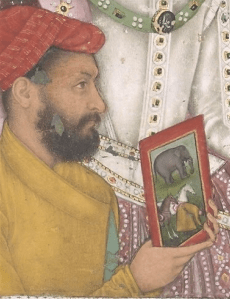
Self-portrait – The person closest to us (who ironically is the smallest) is the artist himself who has forgone perspective for the sake of aggrandizing his patron Jahangir. That Bichitr had been influenced by Italian Renaissance perspective is evident from the small portrait within the portrait in which he has painted himself with two horses and an elephant (all gifts to him from Jahangir). He shows his utmost gratitude to Jahangir by bowing deeply before his king. The portrait within the portrait is made with depth perspective and shows the artist’s skill and the influence of Italian techniques in his work.
This brilliant miniature from the early 1600s shows us how interconnected and small the world was even then. It is a perfect blending of Persian and Hindu cultures, of European and Turkish influences, and of religious iconography and symbolism – showing us that the world and its peoples have always traveled the globe seeking new people and places.
Lightning makes no sound until it strikes (Martin Luther King, Jr).
We may have all come on different ships, but we’re in the same boat now (Martin Luther King, Jr).
Only in the darkness can you see the stars (Martin Luther King, Jr).
No person has the right to rain on your dreams (Martin Luther King, Jr).
Change does not roll in on the wheels on inevitability, but comes through continuous struggle ((Martin Luther King, Jr).
We cannot walk alone (Martin Luther King, Jr).
We will remember not the words of our enemies, but the silence of our friends (Martin Luther King, Jr).
The Western arrogance of feeling that it has everything to teach others and nothing to learn from them is not just (Martin Luther King, Jr: Why I am opposed to the War in Vietnam).
Strength does not come from physical capacity. It comes from an indomitable will (Mahatma Gandhi).
Live as if you were to die tomorrow. Learn as if you were to live forever (Mahatma Gandhi).
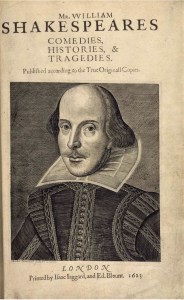
This is something my sister wrote after visiting the British Library in London during her first semester abroad. I feel at some level we can all relate to what she felt when she saw Shakespeare’s First Folio.
Sometimes in life, you come across things that simply take your breath away. While exploring the British Library earlier this week, I came across the Shakespeare folio, and the magnitude of what I was standing in front of was simply breathtaking. There are only a handful of things that are recognized by people throughout the world, such as Coca Cola, Apple, and Shakespeare.
Every student of Literature, whether it is in English or not, studies Shakespeare at some point in their academic lives. Quite possibly there is a Shakespeare production every single day somewhere in this world. On a daily basis we use phrases such as, “neither here nor there,” “break the ice,” and “refuse to budge an inch,” that are attributed to Shakespeare.
And here, in a case in front of me, was lying Shakespeare’s First Folio – the first edition of the complete works of Shakespeare. As I stood there and stared at the First Folio, my life as a distracted, rushed, grudging high school student of Shakespeare flashed in front of me – along with various versions of Cliff Notes, Spark Notes, and Shakespeare Made Easy.
Looking at this 500 year old folio containing the most important works of literature in the world, I wished I had made more of an effort to read what he wrote, analyzed and understood his quotes, related to his characters, laughed more at Puck’s mischief, cried more at the tragedy of Romeo and Juliet, and hero worshiped Julius Caesar some more.
Shakespeare and so many generations after him have gone – and yet these books with his words, stories, and characters have survived – and our lives have been enriched because of them. Standing in front of the First Folio – what can be considered the pinnacle of man’s creativity – was truly a humbling experience, one I will always remember and cherish.
During Christmas break, I visited Amsterdam, and the Anne Frank House. So much has been written about Anne Frank, that I wouldn’t know what to add. In one of the display cases, there were Anne’s journals, and a note saying that Anne’s father had told her to write down the beautiful, meaningful sentences or quotes she came across while reading. That registered with me – I too come across beautiful sentences and quotes, and I think every Sunday I will list a minimum of seven that I have come across during the week.
So here is my first list of seven.
Discontent is a good thing: discontented people can modify and improve their worlds, leave them better. Leave them different (Neil Gaiman: Why our future depends on libraries, reading, and daydreaming).
There are tales that are older than most countries, tales that have long outlasted the cultures and the buildings in which they were first told(Neil Gaiman: Why our future depends on libraries, reading, and daydreaming).
I took half a packet of smokes to Geel Piet, who thought all his Christmases had come at once (Bryce Courtenay: The Power of One).
Mankind at its most desperate is often at its best (Bob Geldof).
How wonderful it is that nobody need wait a single moment before starting to improve the world (Anne Frank).
Wie boter op zijn hoofd heft, moet uit de zon blijven (He who has butter on his head should stay out of the sun) (Dutch proverb).
I didn’t always have things, but I had people – I always had people (Ta-Nehisi Coates, Between the World and Me).
No one is useless in this world, who lightens the burdens of another (Charles Dickens).
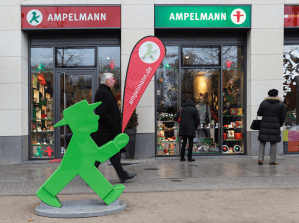
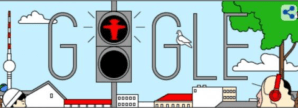
Sometimes you notice little things in cities that are unique to the city, and you remember them fondly if they brought a smile to your face. The Ampelmannchen or Little Traffic Light men on the streets lights in Berlin and Dresden made me smile. These are the really charming and happy red and green men that are cut out into pedestrian crossing lights.
The Ampelmann was designed in 1961 by East German traffic psychologist Karl Peglau. This cute traffic light symbol appealed to everyone the GDR – especially children and older people. The point was to reduce traffic accidents by having a light that people liked and almost respected, and would tend to obey more than regular lights. The Ampelmann was chubby so more light would come through. The almost straw like summer hat adds to the overall charm of the Ampelmann.
You can take the beloved icon home
After the fall of the Berlin Wall, the two cities united, and West German started to slowly remove all signs and remnants of the East. But there were protests to save the beloved icon, and today almost 64% of lights in Berlin have the Ampelmann on them. A souvenir industry has started around the beloved icon.
Karl Peglau explained the popularity of the Ampelmann, “It is presumably their special, almost indescribable aura of human snugness and warmth, when humans are comfortably touched by this traffic symbol figure and find a piece of honest historical identification, giving the Ampelmannchen the right to represent a positive aspect of a failed social order.”
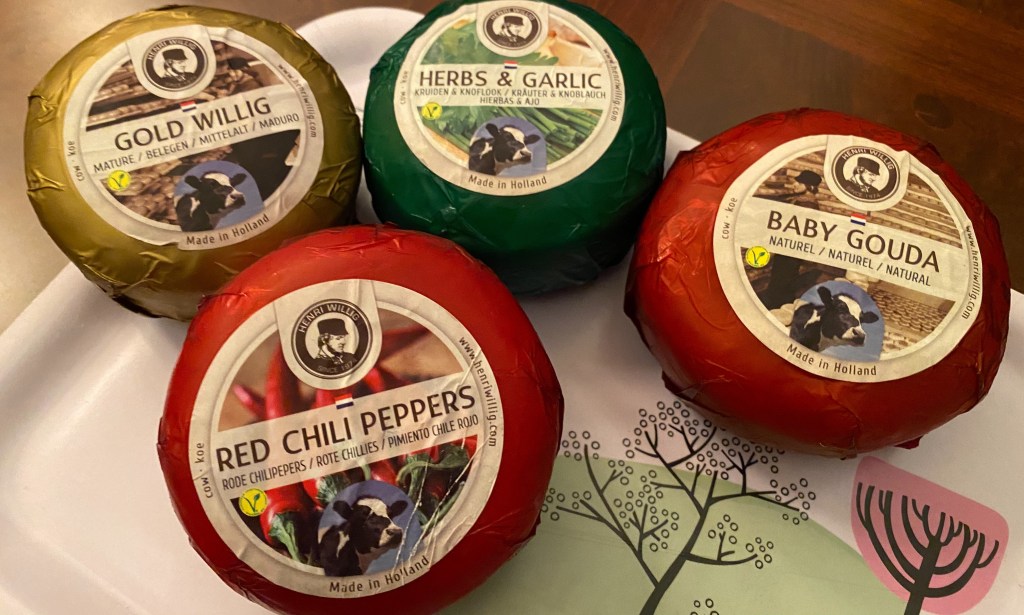
I’ve been eating a lot of the Gouda cheese we bought from our trip to Amsterdam over Christmas, and I have to admit it is fast becoming one of my favorite cheeses. Gouda is made from cow’s milk and is instantly recognizable because of its shape, which it gets from the mold in which the cheese is set.
Gouda gets its name from the town of Gouda in Amsterdam. The name, unlike some other cheese names, is not patented, so we can get a Wisconsin Gouda. To get the authentic Dutch Gouda, look for the name Noord-Hollandse Gouda.
One interesting thing to note is that one assumes that if it is named after the town of Gouda, it must be made there. In reality, it is called Gouda not because it is made there, rather because since 1540, Gouda had the sole market rights or a monopoly to sell this cheese in their market square.
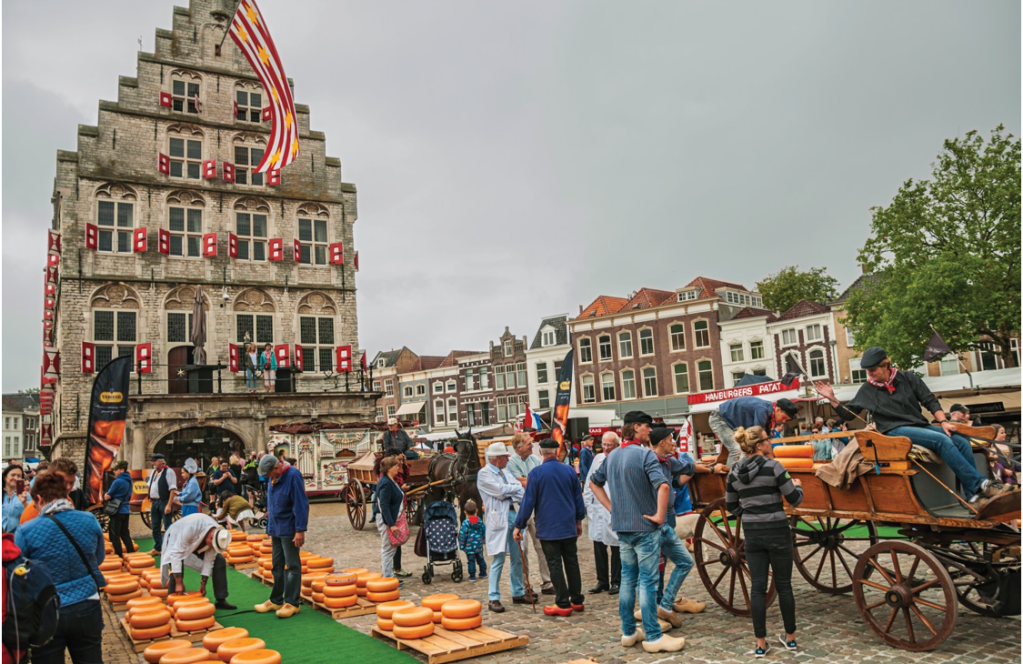
Even now, every spring and summer, the cheese market is in full swing every Thursday, where the cheese is weighed and traded in exactly the same way today as it has been for hundreds of years. The cheese wheels are delivered on house cart by farmers to the trading market in front of the town hall. The farmers and traders settle on a price by the clapping of hands known as handjeklap – smacking each other’s hands as they negotiate the price.
Trading market at Gouda (image courtesy: visitholland.com)
Hope you enjoyed this little background on the world’s most popular cheese and where it gets its name.
Earlier this week I learned about another wonderful punctuation mark that seems to have fallen out of use – or I should say never really caught on – Percontation point or the Rhetorical Question mark. It might be used most appropriately in – are you crazy – where clearly the speaker is not expecting a response.
The backward question mark.
In the late 16th century, English printer Henry Denham was concerned that the unsavvy readers of English may not catch on to the fact that the question did not require a response and proposed the use of a backward question mark to indicate a rhetorical question. It didn’t really catch on and it fell out of use completely by the 17th century.
I can see it being quite useful on Twitter where one often doesn’t know whether a response is required or not. It also has found use in art work and tshirts.























 mimisawhney.com