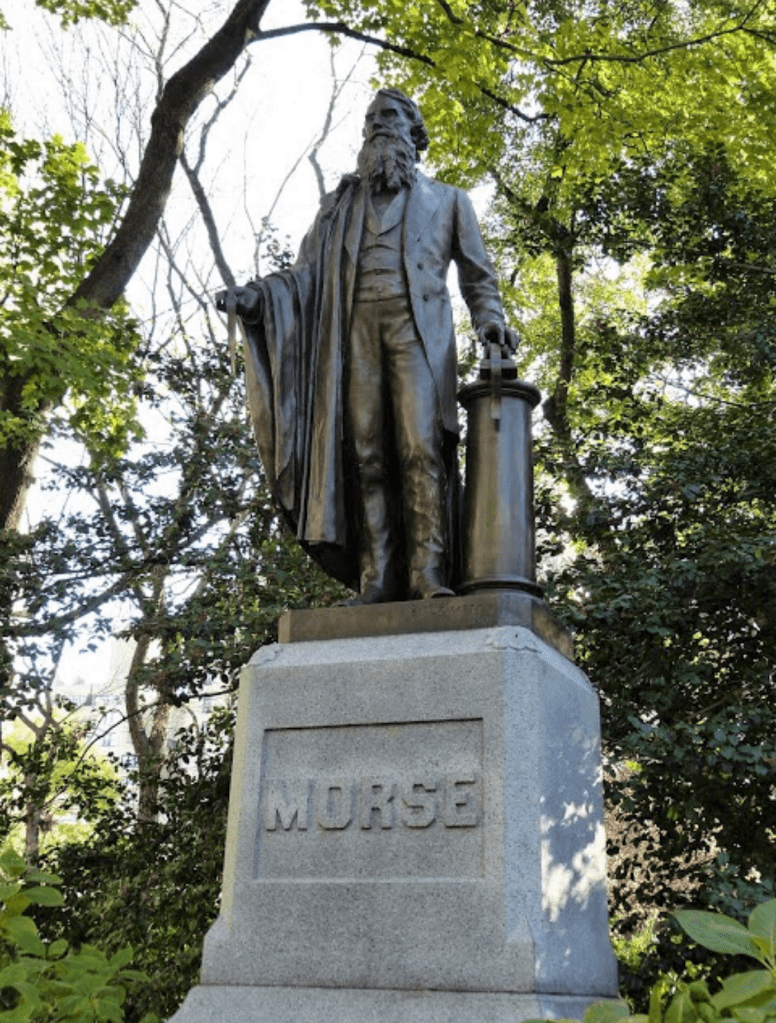
Morse's Kunstkammer

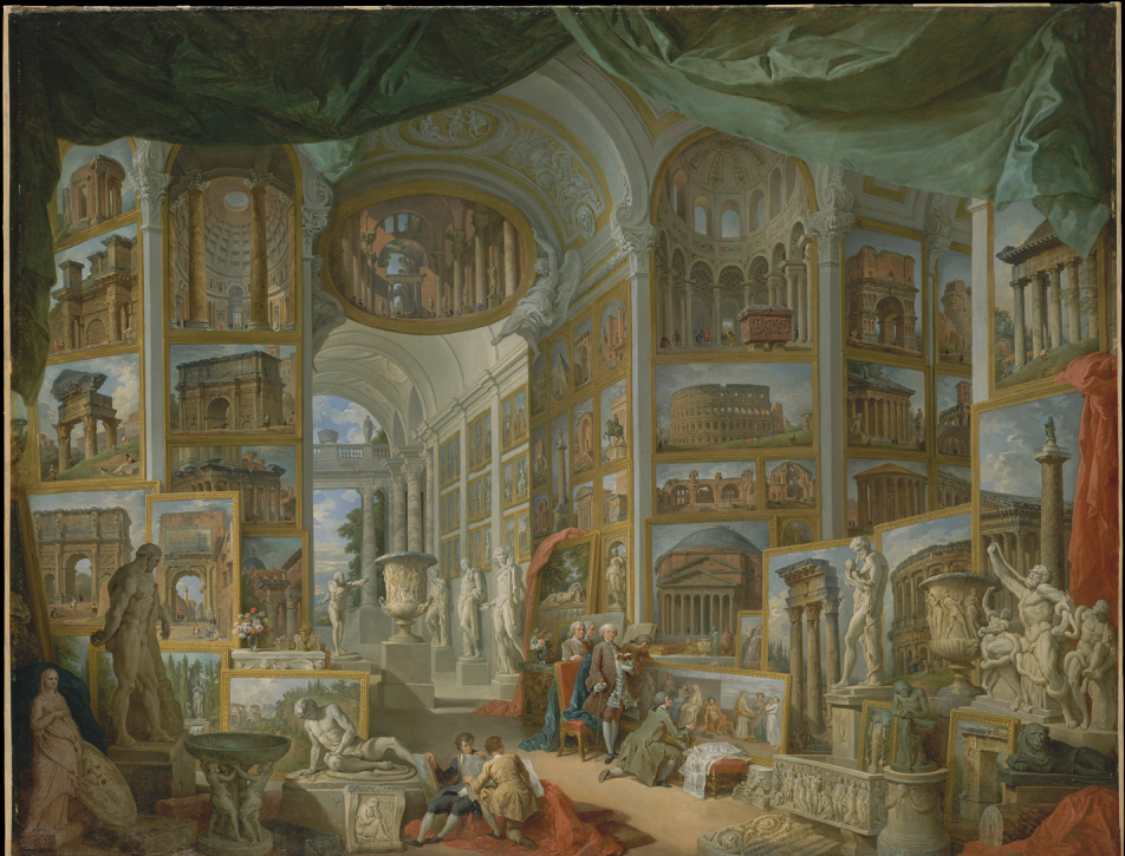
I am always fascinated by paintings that are paintings of a gallery or a viewing room – they are basically a painting of multiple paintings (similar to Rockwell’s Picasso vs. Sargent). Two of the best examples of this genre, called kunstkammer (German for “cabinet of curiosities”) are Modern Rome and Ancient Rome by Giovanni Paolo Panini (1691 – 1765)

For me the most fascinating kunstkammer painting is Samuel Morse’s (of the telegraph and Morse code fame), Gallery of the Louvre which he painted from 1831 to 1833. Before he connected the two sides of the Atlantic with a telegraphic message, Morse tried to do so with this monumental painting. Morse started his career as a painter and was a well-known portrait artist when he painted this work, primarily for the cultural and artistic education of the American public. Morse and his great friend and author James Fenimore Cooper came up with the idea of this painting to firstly, record the world’s greatest art, and secondly, to introduce young Americans to refined European art.
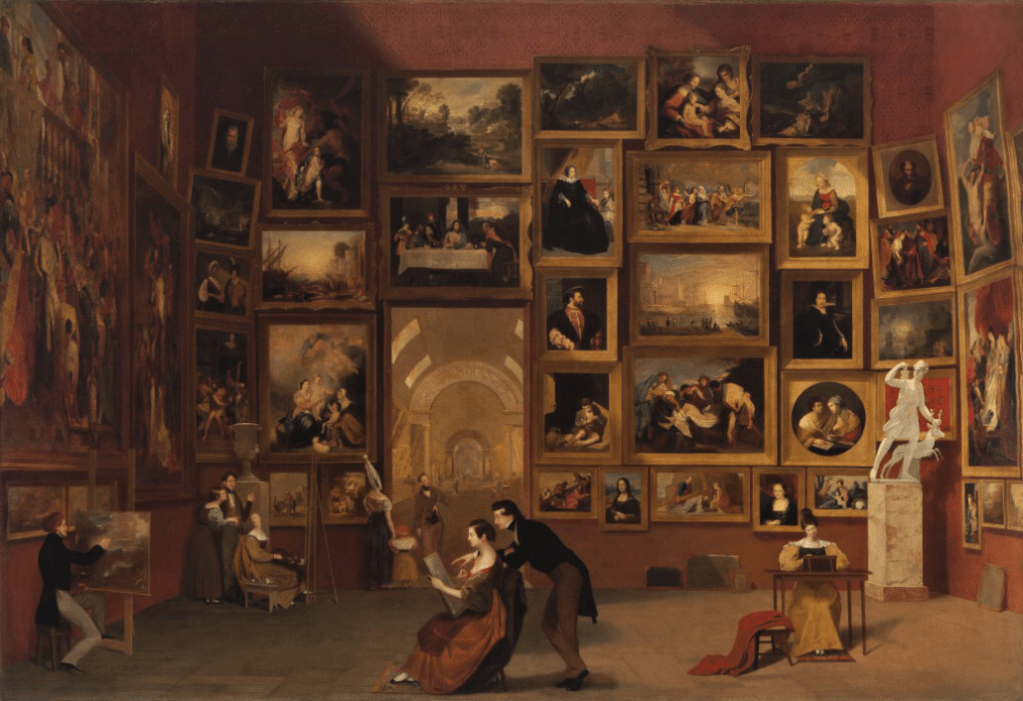
Samuel Morse’s Gallery in the Louvre 1831-33

The massive 6 by 9 feet painting is of the Salon Caree in the Louvre; its walls Morse lined with some of the world’s most famous art.  In the foreground is Morse himself as he looks at a painting his daughter is working on, and to the back left is Cooper with his wife and daughter.  They are surrounded by brilliant small scale replicas of the works of Leonardo, Titian, Veronese, Tintoretto, Poussin, Claude, Rubens, Rembrandt, and Carvaggio among others. 

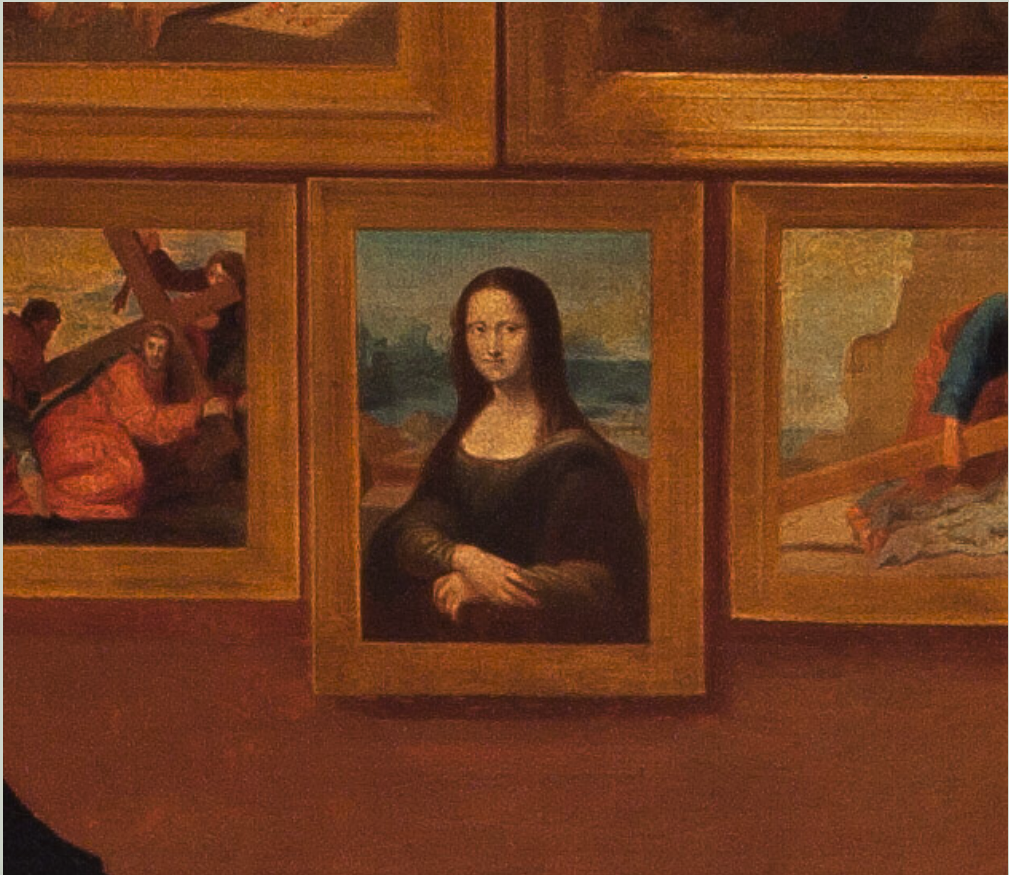
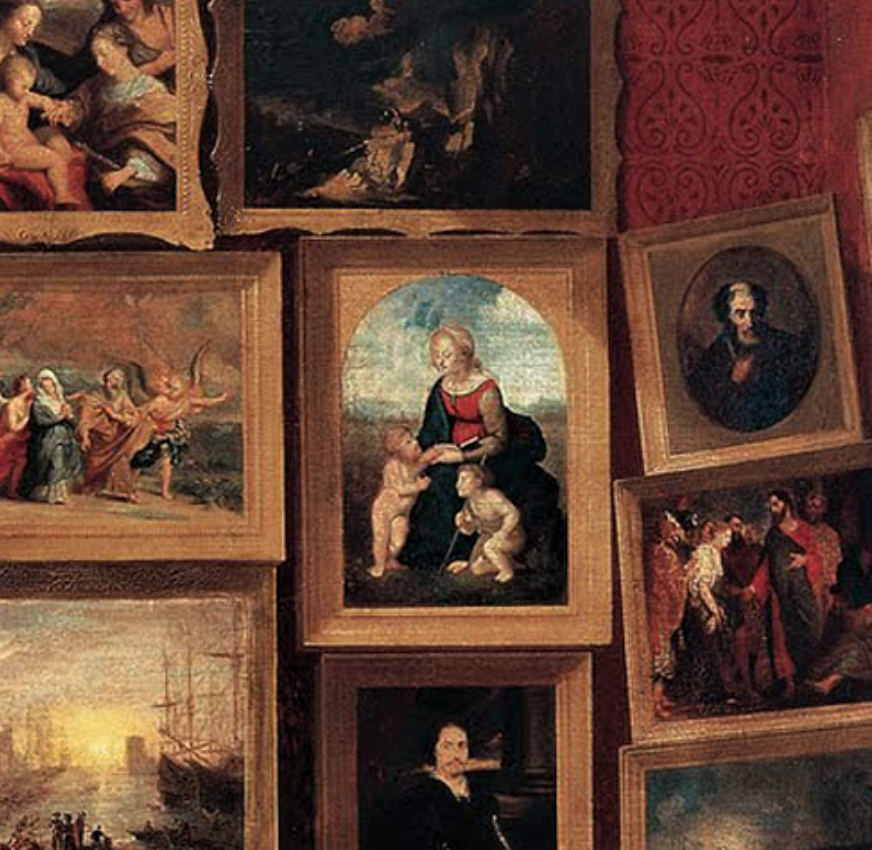
Morse arranged the paintings as he wished and probably in some order that he liked them, and altered relative sizes to fit his canvas.  We can see Leonardo’s Mona Lisa and Raphael’s La Belle Jardiniere. At the bottom row of paintings – on either side of Mona Lisa- we see two versions of Christ Carrying the Cross – perhaps Morse wanted to highlight the different ways artists handled the same subject matter.  

What a powerhouse of talent Morse must have been – it’s remarkable, almost incredulous, that his talented artist then went on to invent the single wire telegraph and the Morse Code.

Some literary humor for an otherwise dull day

This letter is a parody written by Nick Farriella in the style of Fitzgerald – something he might have written as he quarantined in the South of France during the Spanish flu of 1918. We recently read The Great Gatsby and I’m amazed at how wonderfully Mr. Farriella has captured Fitzgerald’s spirit in this piece of writing.

Dearest Rosemary,

It was a limpid dreary day, hung as in a basket from a single dull star. I thank you for your letter.

Outside I perceive what may be a collection of fallen leaves tussling against a trash can. It rings like jazz to my ears. The streets are that empty. It seems as though the bulk of the city has retreated to their quarters, rightfully so. At this time, it seems very poignant to avoid all public spaces. Even the bars, as I told Hemingway, but to that he punched me in the stomach, to which I asked if he had washed his hands. He hadn’t. He is much the denier, that one. Why, he considers the virus to be just influenza. I’m curious of his sources.

The officials have alerted us to ensure we have a month’s worth of necessities. Zelda and I are stocked up on red wine, whiskey, rum, vermouth, absinthe, white wine, sherry gin, and lord, if we need it, brandy. Please pray for us.

You should see the square, oh it is terrible. I weep for the damned eventualities the future brings. The long afternoons rolling forward on the ever-slick bottomless highball. Z says it’s no excuse to drink, but I just can’t seem to steady my hand. In the distance, from my brooding perch, the shoreline is cloaked in a dull haze where I can discern an unremitting penance that has been heading this way for a long, long while. And yet, amongst the cracked cloudline of an evening’s cast, I focus on a single strain of light, calling me forth to believe in a better morrow.

Faithfully yours,

F. Scott Fitzgerald

How absolutely brilliant!! I hope you enjoyed reading it as much as I did.

Sunday Seven – the Surreal Spring of 2020

In these uncertain times when people all over the world are suffering immeasurably, the only thing that is giving me hope and joy is nature.  The skies look clearer, the birds are chirping – telling us to hang in there – and flowers are blooming everywhere. For this week’s Sunday Seven I want to write about the beauty and hope that comes with the arrival of spring, so we all remember that even the toughest and darkest of times are followed by spring.

  • The deep roots never doubt spring will come. Marty Rubin.
  • If Winter comes, can Spring be far behind? Percy Bysshe Shelley
  • We sat in silence, letting the green in the air heal what it could. Erica Bauermeister.
  • Despite the heart numbing frost, my soul is blooming like spring. Debashish Mridha.
  • You can cut all the flowers but you cannot keep spring from coming. Pablo Neruda.
  • Even the hardest of winters fears the spring. Lithuanian proverb.
  • April…hath put a spirit of youth in everything. Shakespeare.
  • Is the spring coming? he said. what is it like?…It is the sun shining on the rain and the rain falling on the sunshine… Frances Hodgson Burnett.

Blue & Yellow Beauties

I first noticed the beauty of blue and yellow paintings in Dutch artist Willian van Aelst’s Still Life with Flowers (1664) with striking yellow lemons against the intense and deep blues of the tablecloth. I was so intrigued by the gorgeousness of these two colors together that I thought I would find some more – and as it turns out there are many striking blue and yellow paintings.

Willem Van Aelst (1627-1683), Still Life with Flower 1664

Apparently other people too like the blue and yellow combination – the untitled blue and yellow modern art by Mark Rothko sold for $46.5 million in 2015 (left). Mark Rothko is one of the most prominent American artists of the 20th Century who created “a new and impssioned form of abstract painting” (nga.gov). Two other 20th century artists with blue and yellow paintings are Dutch artist Piet Mondrian (center) and Russian artist and pioneer of abstract art Wassily Kandinski.

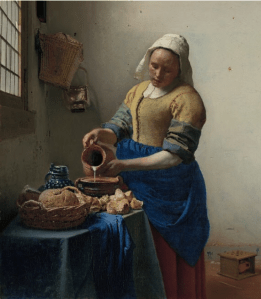
And coincindentally here are a blue and yellow cow and milkmaid by Warhol and Vermeer!!

Another stunning blue and yellow work is this painting by Henri Matisse.

Henri Matisse, Girl in Blue and Yellow with Guitar (1939).

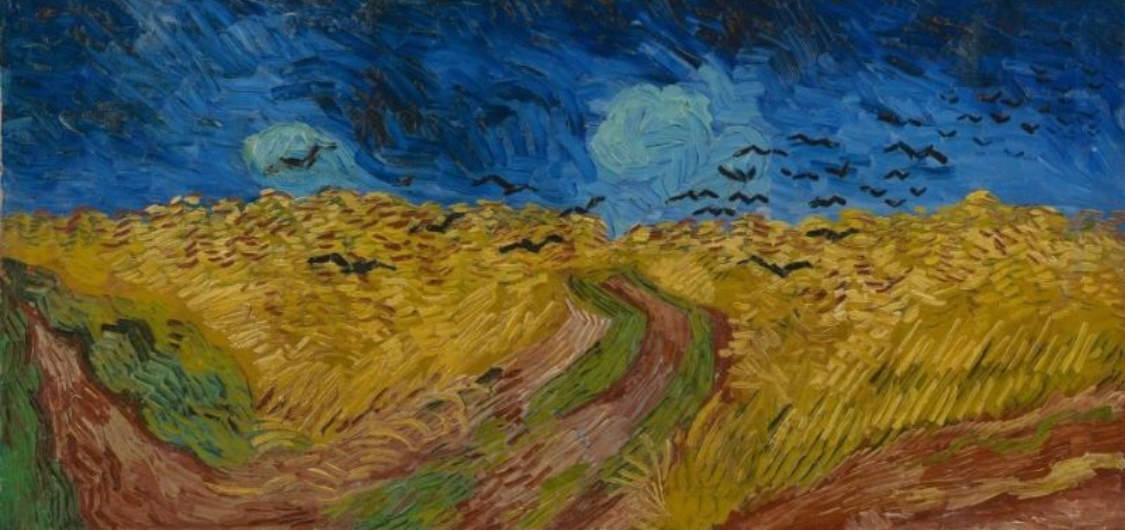
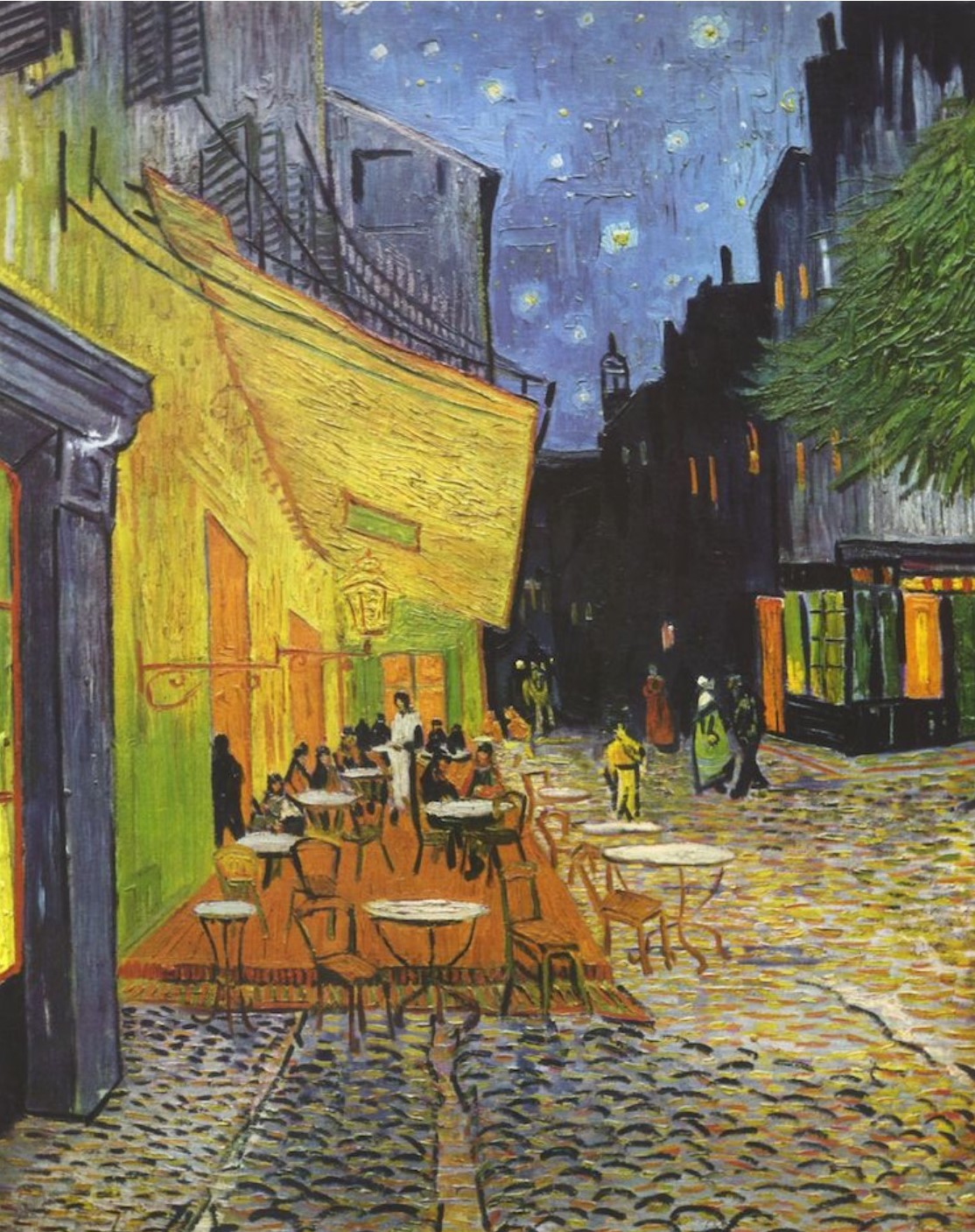
And of course, no discussion on blue and yellow can be complete without Vincent Van Gogh – Wheatfield with Crows (1890), Irises in a Vase (1890), and Cafe Terrace at Night (1888).

(Images courtesy Van Gogh Museuem, Met, MOMA, NGA, Toledo Museum, and Google Arts and Culture).

Sunday Seven – for Women

On International Women’s day – some of my favorite quotes about how strong women really are.

  • Our backs tell stories no books have the spine to carry. Rupi Kaur.
  • Though she be but little she is fierce. William Shakespeare.
  • We are the granddaughters of the witches you weren’t able to burn. Unknown
  • She wasn’t looking for a knight. She was looking for a sword. Atticus
  • You had the power all along my dear. Glinda the Good Witch, Wizard of Oz by L. Frank Baum.
  • I am both war and woman and you cannot stop me. Nikita Gill.
  • They whispered to her, “You cannot withstand the storm,” she whispered back, “I am the storm.”
  • A people is not defeated until the hearts of its women are on the ground. Cheyenne saying.

Picasso vs. Sargent

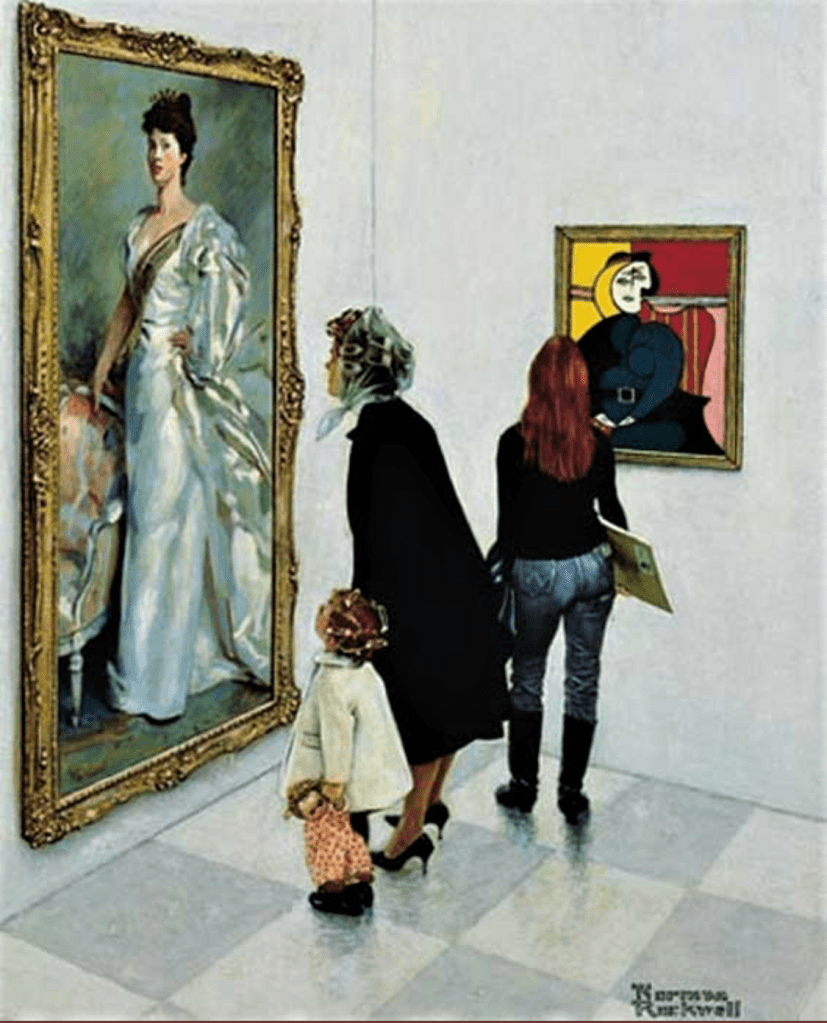
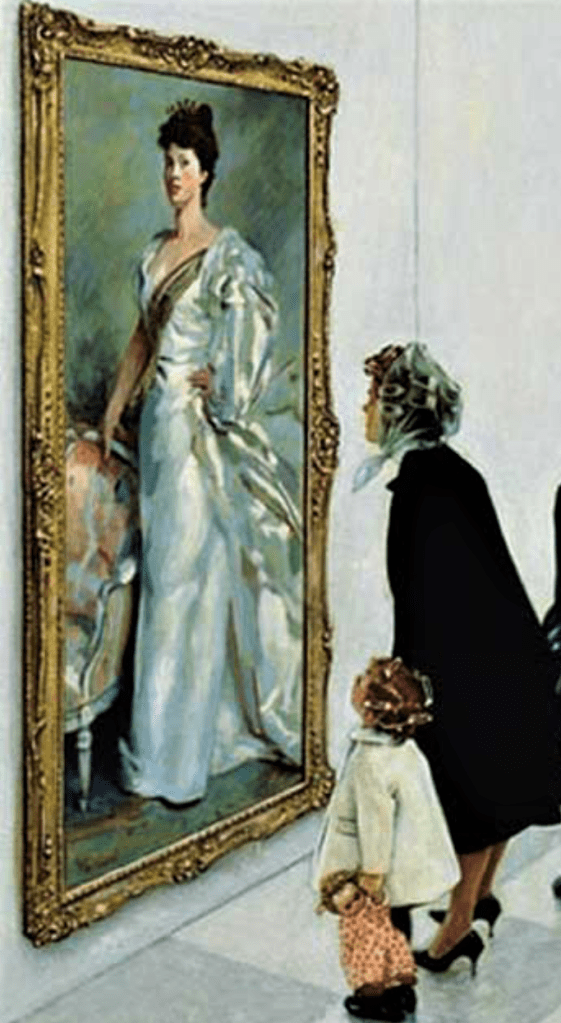
I came across this fascinating work by Norman Rockwell last week, and was intrigued by overall subject matter, and the paintings in the painting – shown in this work. Rockwell did this work titled, “Picasso vs. Sargent,” for the January 11, 1966 edition of the LOOK magazine. 

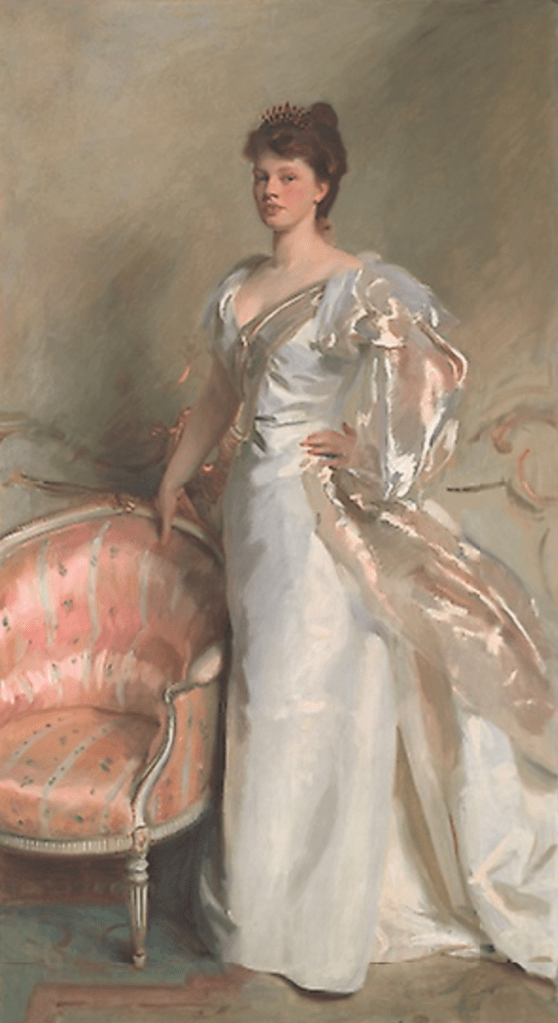
The painting by Rockwell shows two paintings in the same room of a museum. The first painting, on the left wall is an 1897 portrait of Mrs. George Swinton by John Singer Sargent, whereas the second painting is Picasso’s 1931 painting, “The Red Armchair.” Two very differently dressed women – representing different versions of femininity and women’s liberation – are looking at the two very different paintings, and we are not surprised by which lady is looking at which painting.

The era seems to be the threshold of time in between the 1950s and 1960s, when women moved out of the kitchen and into the workforce. They changed the way they dressed – feminine dresses and overcoats gave way to jeans and leather jackets, heels were discarded in favor of leather boots, and curlers were tossed in favor of natural relaxed hairstyles, Perhaps, children too are being traded for portfolios – as more and more women enter the workforce, they delay having children.

The portrait of Mrs. George Swinton can be found in the Art Institute of Chicago’s American Art Gallery. The painting, with its extravagant color and brushwork, epitomizes why Sargent as the leading portraitists of his time. According to the Art Institute, “he accentuated her regal bearing and feminine dress. Sargent harmonized the realism of her face and body with bursts of impressionistic brushstrokes describing the shimmering, translucent fabric descending from her shoulder.”

A woman and her daughter look at Sargent’s painting

In Rockwell’s painting, a woman and her little daughter are looking at the beautifully framed Sargent painting. The woman, daughter, and the doll – all three – strangely, have curlers in their hair. Apart from this anomaly, the mother is exquisitely and formally dressed in an overcoat, and heels, while the daughter is also wearing a young child’s dressy overcoat. 

Picasso’s, “The Red Armchair,” is a portrait of Maris Therese-Walter – by whom a much older and married Picasso was smitten. According to the Art Institute of Chicago, which also owns this painting (in its Modern Art Gallery), “the smitten artist began to furtively reference her blond hair, broad features, and voluptuous body in his work. Perhaps acknowledging the double life they were leading, he devised a new motif; a face that encompasses both frontal and profile views.” 

A young woman, in jeans, a leather jacket, and boots, with a portfolio in her hands studies the Picasso.

Of note here is also how well Rockwell has copied the very different works of Sargent and Picasso.

On the surface, this is such a fun painting of a visit to a museum.  But a detailed look reveals a painting full of subtle messages, and this beautiful, almost poignant, painting captures a moment in American history and records it for posterity. 

Breaking down a Billion

As the world gets more and more billionaires, and the income disparity gets wider with each passing day, I thought it made sense to comprehend how much a billion actually is. I found these on Twitter, UC Berkeley site, and various other places on the internet. Each one attempts to explain a billion in a relatable way, and blows your mind in the process.

  • If you were born in 1492 and made $5,000 every, single day from then until today you would still not have a billion dollars.
  • A billion seconds is 32 years.
  • If you make $100,000 a year, you would need to work for 10,000 years to earn a billion dollars.
  • If you save $100 per day it would take you 27,398 years to save a billion.
  • If you start saying the numbers that make up a billion at an average rate of one number every 3 second (which in reality is probably a lot faster than you can say the bigger numbers), it will still take you over 95 years to say all the numbers.
  • Asterisks on paper – if you fill up one piece of paper with 4000 asterisks – you will need 250,000 pieces of paper to show 1 billion asterisks.
  • A billion step hike – you could circumnavigate the equator 15 times with 1 billion steps.

Hope that helps make sense of the staggering wealth of the word’s richest, and the wide impassable chasm that seems to exist in income equality.

(Images courtesy Humphrey Yang’s Tiktok)

Sunday Seven – Walt Disney

Last week at a debate tournament, the impromptu speaking event was based on Walt Disney’s quotes – which seemed too perfect to not use them for this week’s Sunday Seven. These quotes make you realize what a happy and positive person Walt Disney really was.

  • I only hope that we will never lose sight of one thing – that it was started by a mouse.
  • All our dreams can come true, if we have courage to pursue them.
  • When you wish upon a star, makes no difference who you are.
  • It’s kind of fun to do the impossible.
  • There is more treasure in books than in all the pirate’s loot on Treasure Island.
  • The way to get started is to quit talking and begin doing.
  • We keep moving forward, opening new doors, and doing new things, because we’re curious and curiosity keeps leading us down new paths.
  • When you’re curious, you find lots of interesting things to do.
  • When you believe in a thing, believe in it all the way, implicitly and unquestionably. The more you like yourself, the less you are like anyone else, which makes you unique.

Horace to Horace: Serendipity.

Letter published by Yale University Press.

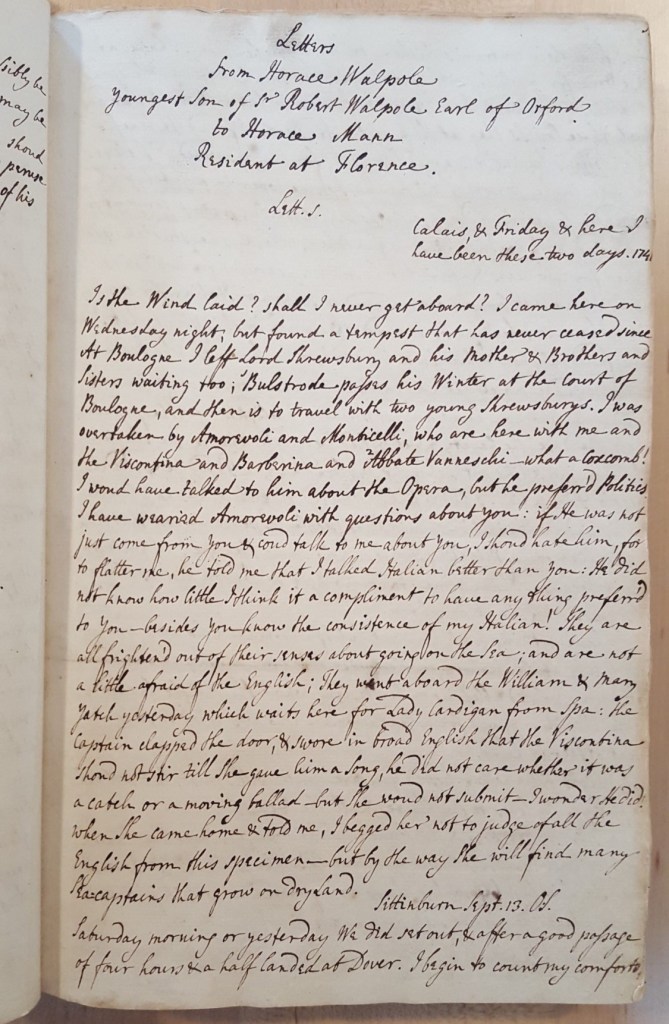
On January 28, 1754, Horace Walpole, the 4th Earl of Orford and a voracious letter writer, wrote a letter to Horace Mann, in which he coined the word serendipity. Horace Mann (1706 – 1786) was a British diplomat who lived in Florence and kept an open house for the English gentry that traveled to Florence. Walpole met Mann in 1739 during one on his trips to Florence, and the two started a correspondence which lasted over 40 years. It was in one of these letters that Walpole coined the word.

The letter itself not only explains why he used the word, but why he thought it was a most appropriate word to be used. Walpole had made a discovery of a connection between two old European families by finding a link between their coats of arms. Walpole continues in his letter:

“This discovery I made by a talisman, which Mr. Chute calls the Sortes Walpoliance, by which I find everything I want, a pointe nommee, whenever I dip for it. This discovery, indeed, is almost of that kind which I call Serendipity, a very expressive word, which, as I have nothing better to tell you, I shall endeavor to explain to you: you will understand it better by the derivation than the definition. I once read a silly fairy tale, called “The Three Princes of Serendip” ;  as their Highnesses travelled, they were always making discoveries, by accidents and sagacity, of things which they were not in quest of: for instance, one of them discovered the a mule blind of the right eye had travelled the same road lately, because the grass was eaten only on the left side, where it was worse than on the right – now do you understand Serendipity? One of the most remarkable instances of this accidental sagacity, (for you must observe than no discovery of a thing you are looking for comes under this description,) was of my Lord Shaftsbury, who, happening to dine at Lord Chancellor Clarendon’s, found out the marriage of the Duke of York and Mrs. Hyde by the respect with which her mother treater her at table…”

Horace Walple letter to Horace Mann, January 28, 1754
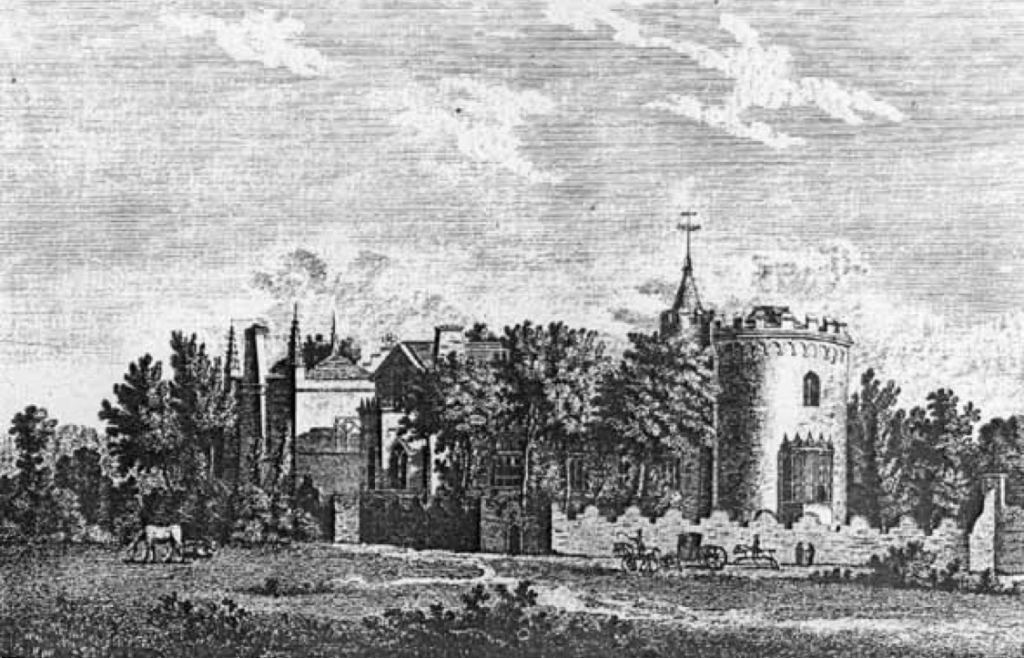
Horace Walpole’s Gothic Style Strawberry Hill House

Along with coining serendipity, Horace Walpole was an author, a politician, and is known for reviving the Gothic style of both writing (The Castle of Otranto, 1764) and architecture (in his home Strawberry Hill near London). Yale University Press published all his letters in 48 volumes.