Ragged Old Flag

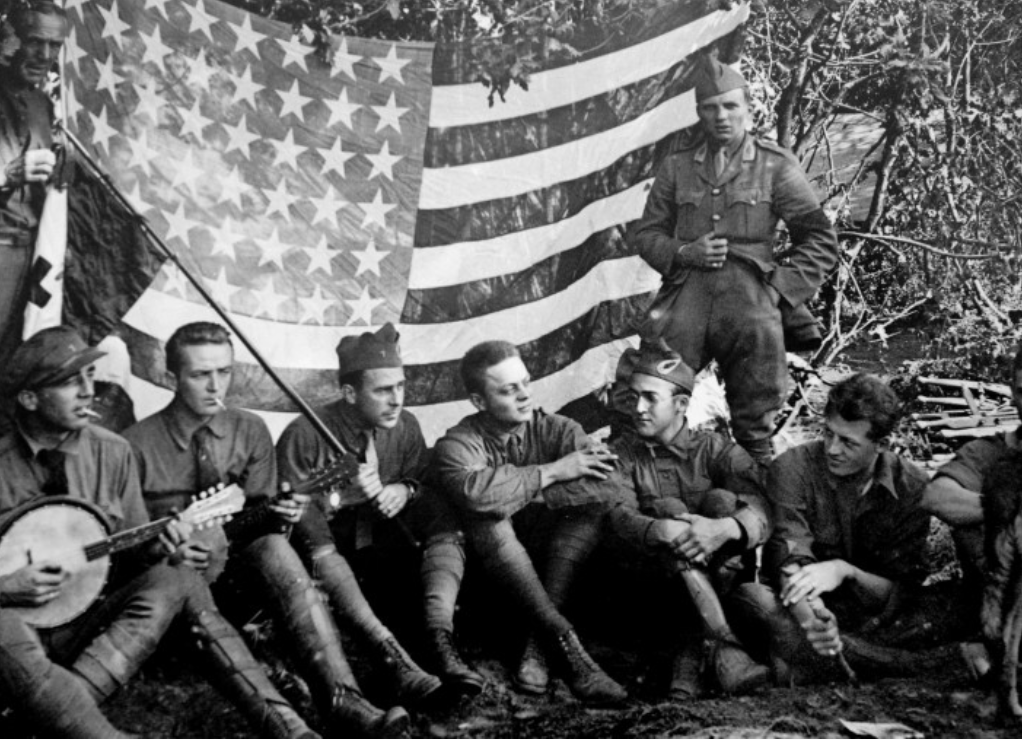
On this Flag Day, I wanted to honor the flag with this poem by Johnny Cash.

Ragged Old Flag

I walked through a county courthouse square
On a park bench an old man was sitting there
I said, your old courthouse is kinda run down
He said, naw, it'll do for our little town
I said, your old flagpole has leaned a little bit
And that's a ragged old flag you got hanging on it

He said, have a seat, and I sat down
Is this the first time you've been to our little town?
I said, I think it is
He said, I don't like to brag
But we're kinda proud of that ragged old flag

You see, we got a little hole in that flag there when 
Washington took it across the Delaware
And it got powder-burned the night Francis Scott Key
Sat watching it writing say can you see
And it got a bad rip in New Orleans
With Packingham and Jackson tuggin' at its seams

And it almost fell at the Alamo
Beside the texas flag, but she waved on though
She got cut with a sword at Chancellorsville
And she got cut again at Shiloh Hill
There was Robert E. Lee, Beauregard, and Bragg
And the south wind blew hard on that ragged old flag

On Flanders field in World War one
She got a big hole from a Bertha gun
She turned blood red in World War Two
She hung limp and low a time or two
She was in Korea and Vietnam
She went where she was sent by Uncle Sam

She waved from our ships upon the Briny foam
And now they've about quit waving her back here at home
In her own good land here she's been abused 
She's been burned, dishonored, denied, and refused

And the government for which she stands
Is scandalized throughout the land
And she's getting threadbare and wearing thin
But she's in good shape for the shape she's in
'Cause she's been through the fire before
And I believe she can take a whole lot more

So we raise her up every morning
We take her down every night
We don't let her touch the ground and we fold her up right
On second thought, I do like to brag
'Cause I'm mighty proud of that ragged old flag
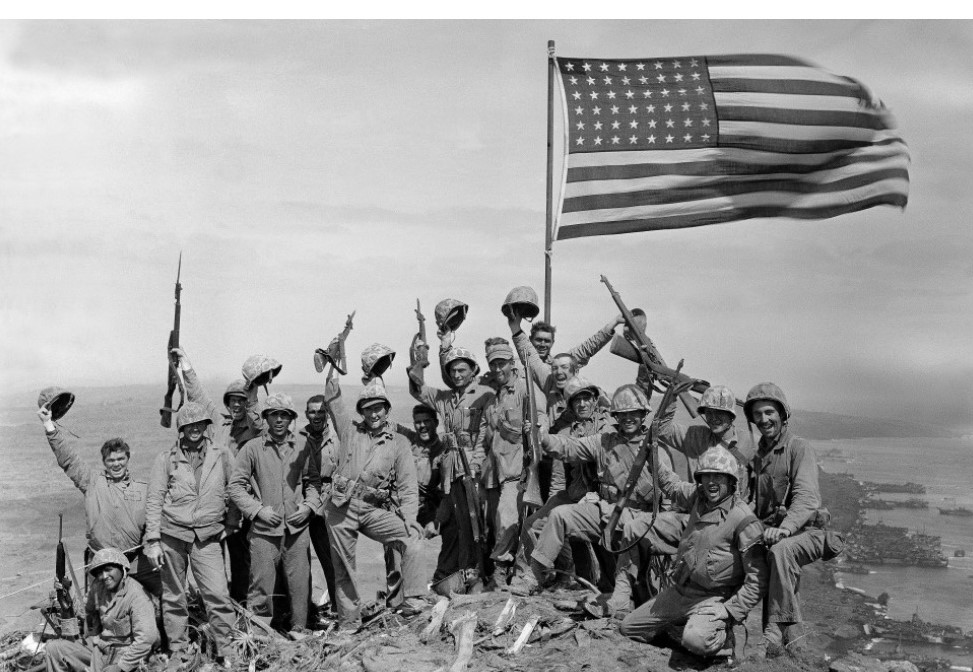
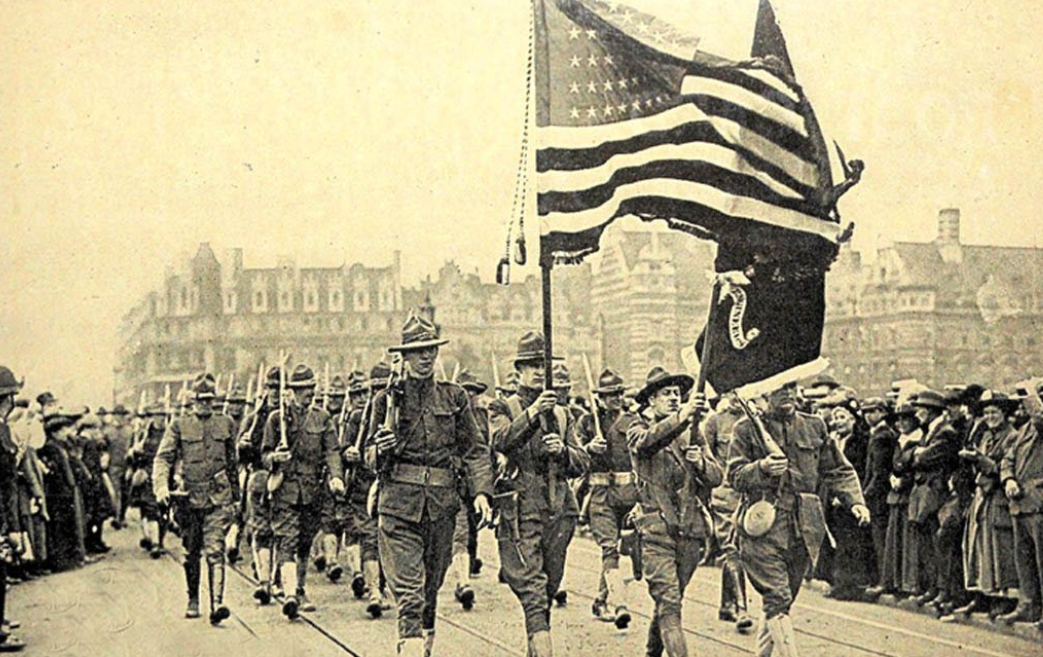
(Images Courtesy Smithsonian.com, US Govt and War Archives Websites)

German English

Earlier this week I heard the word Schadenfreude and it really intrigued me – that this very non-English sounding word was being used in English. It is a German word that means to take pleasure in someone else’s pain – for which we have no exact one-word translation in English.  That got me thinking of other German words that we use regularly that were obviously ideally suited to describe something better than English could and so were adopted into the English language.

For the love of driving.

Fahrvergnugen – the love of simply driving – this is another German word that has no exact English translation. This word was used in German car ads and so became quite well known.

Wanderlust – intense desire to travel – this German word is so commonly used in English that I didn’t realize it was not an English word.

Doppelganger – a double who looks exactly like another person – this is another which is used regularly because there is no one word to capture its meaning in English. I’ve noticed the usage of this word seems to have gone up a lot and I see it quite a lot in Instagram – maybe people find their doppelgangers a lot more because of social media.

President Obama and his doppelganger

Zeitgeist – the spirit of the times – another German word that describes the spirit of the times better than any English word could.

Kindergarten – children’s garden – interestingly another German word.

Kitschy – something that’s tacky – this is another German / Yiddish word that describes something tacky particularly with reference to art or decorations.

Hinterland – backwoods – another lovely German word that does the job better than English could.

Huck Finn – a Bildungsroman

Bildungsroman – a literary term most high schoolers who have read “Adventures of Huckleberry Finn” know only too well – and now we know the word is German.

A delicious deli

Deli short for Delikatessen – another common work which comes from Germany.

Interesting how English adopts words and adapts itself – maybe that’s why it’s the most widely spoken language in the world!!

Town & Gown

I attended graduation in my school today – and this got me wondering about the tradition of the cap and gown – where did this almost worldwide custom originate from? 

The custom of caps and gowns is as old as universities – and dates back to the 12th century. At that time gowns and hoods were worn in university on a daily basis by the clergy who were the teachers and the aspiring clergy who were the students – they were the only ones who attended these church owned universities. Wearing these gowns visually separated the scholars from the lay people in the town  – hence the term town and gown. Also wearing the same apparel gave a sense of unity to the college students and professors.

Quad at Oxford university

The gown and the hood kept the clergy with the shaved heads warm in the unheated university buildings. Later the hood was replaced by the skull cap we see today.The square shape of the skull cap is said to trace its origins to the quad at Oxford – but this is only one of many theories.

At universities like Cambridge and Oxford, gowns were to be worn according to the strict specifications of the university – and professors in these institutions wear a gown and cap on a daily basis even now. Students wear the full academic regalia for special occasions.

Harvard, Princeton, and Brown that started during colonial times in the US followed the customs prevalent in European universities and required the wearing of gowns on a daily basis. It was not until after the civil war when there was dislike for everything English that gowns and caps as college uniforms dropped out of fashion in the US. Their use continued only for graduation ceremonies, which also made the cap and gown signify achievement.

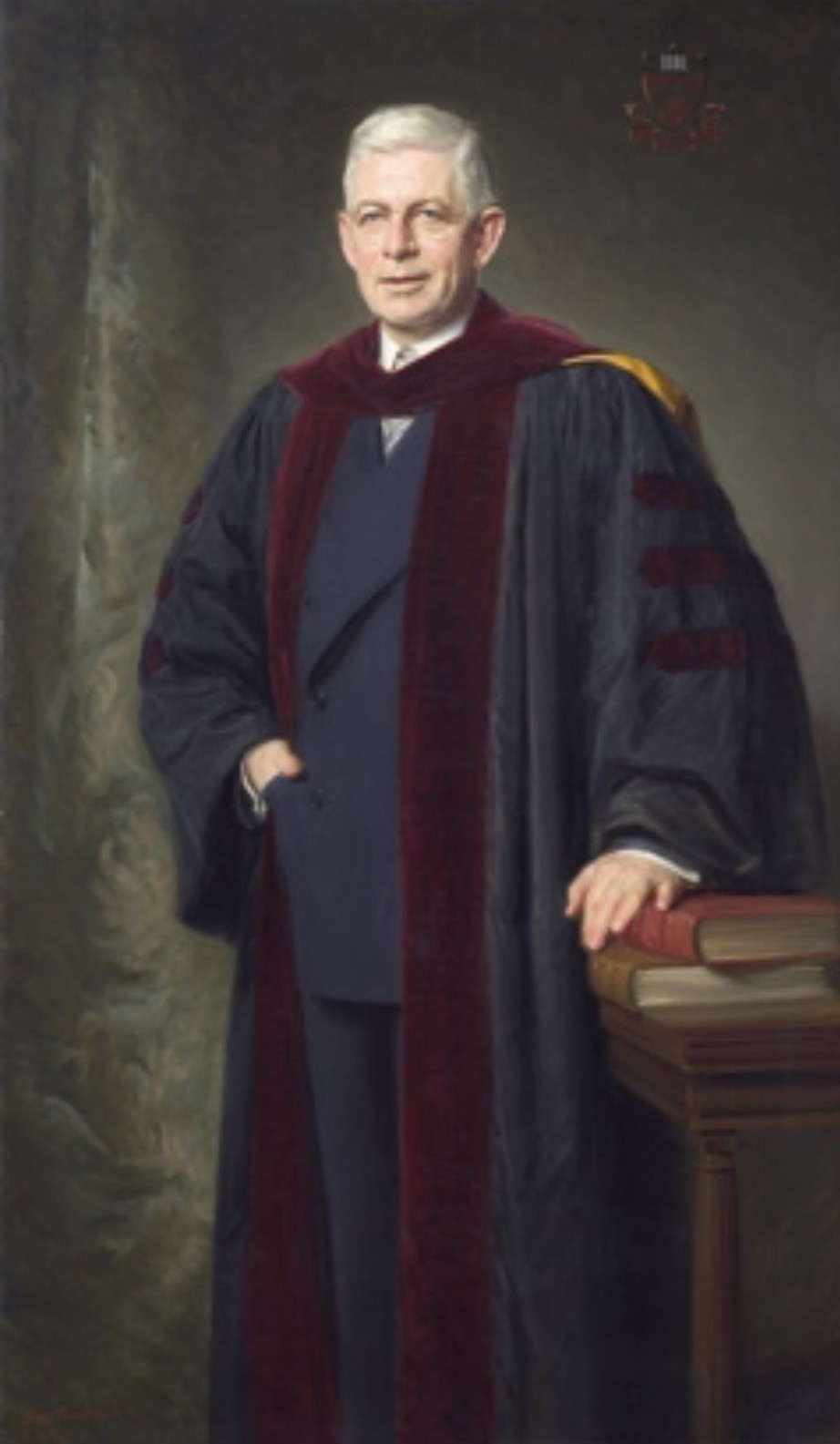
Howard Willis Dodds (1889-1980),President,Princeton University in academic regalia (pr.princeton.edu)

The long history associated with the caps and gowns makes them even more meaningful and special.

Bildungsroman

Now this is an interesting word.  I was wondering about its origin because it clearly does not sound like an English word. Like many other untranslatable words this one is also German – bildung literally means education and learning, and roman means a novel – and the word has come to mean a novel that focuses on the growth of the protagonist or simply a coming-of-age book.

The word was coined by German philologist Johann Karl Simon Morgenstern (1770 – 1852) in the 1820s during the period of German Enlightenment. He first used the word when he was lecturing students at the University of Dorpat on the self-actualization that individuals realize as they navigate the journey from childhood to young adulthood. The book he may have been lecturing on was Johann Volfgang von Goethe’s novel Wilhelm Meister’s Apprenticeship (1795), which now is considered the first novel of theis genre.

The first Bildungsroman: Goethe’s 1795 Novel

During the period of Enlightenment, the centuries old feudal system ended, and there was a burgeoning middle-class.  Artists and authors moved away from religious and aristocratic patronage and gravitated towards this middle class. This was a different, revolutionary era – individuals looked to themselves for their salvation, and personal journeys became of great importance. As a result, authors started writing narratives about personal, mainly spiritual, growth which eventually we now know as Bildungsroman.

When most of us think of American Bildungsroman literature, Mark Twain’s Huck Finn and Adventures of Tom Sawyer immediately come to mind. Another example is J. D. Salinger’s The Catcher in the Rye.

Within the genre, there are subgenres –Erziehungsroman is the academic growth of the protagonist, Kunstlerroman is the realization of an artist’s potential, and Zeitroman is one in which the both the era and the protagonist develop together.  So there we have it – an in-depth look at a literary term we have all used when writing papers on Huck Finn!!

Names with meaning

Nike’s logo mimics the namesake winged goddess of victory

I realized last week how many corporate names have interesting origins – either in literature or in ancient Greek or Roman mythology.

Oracle – a US tech firm based in Redwood Shores, California chose the name Oracle for itself (from 1977 to 1983 it was called Relational Software, Inc.).  An oracle is a priest or a priestess acting as a medium through whom advice or prophecy was sought from the gods in classical antiquity. It has also come to mean a person or thing regarded as an infallible authority or guide.

The Delphi Oracle

Gilead Sciences – is the name of a pharmaceutical company located in Foster City, California. In biblical times, Gilead was a mountainous region of ancient Palestine, east of the Jordan River. It is also the name of a Jewish tribe in the Genesis.

The largest online retailer..The largest river

Amazon – The largest online retailer is named after the mythological (Greek) race of female warriors as well as the largest river in the world. With all that backing no wonder it’s the largest online retailer in the world.

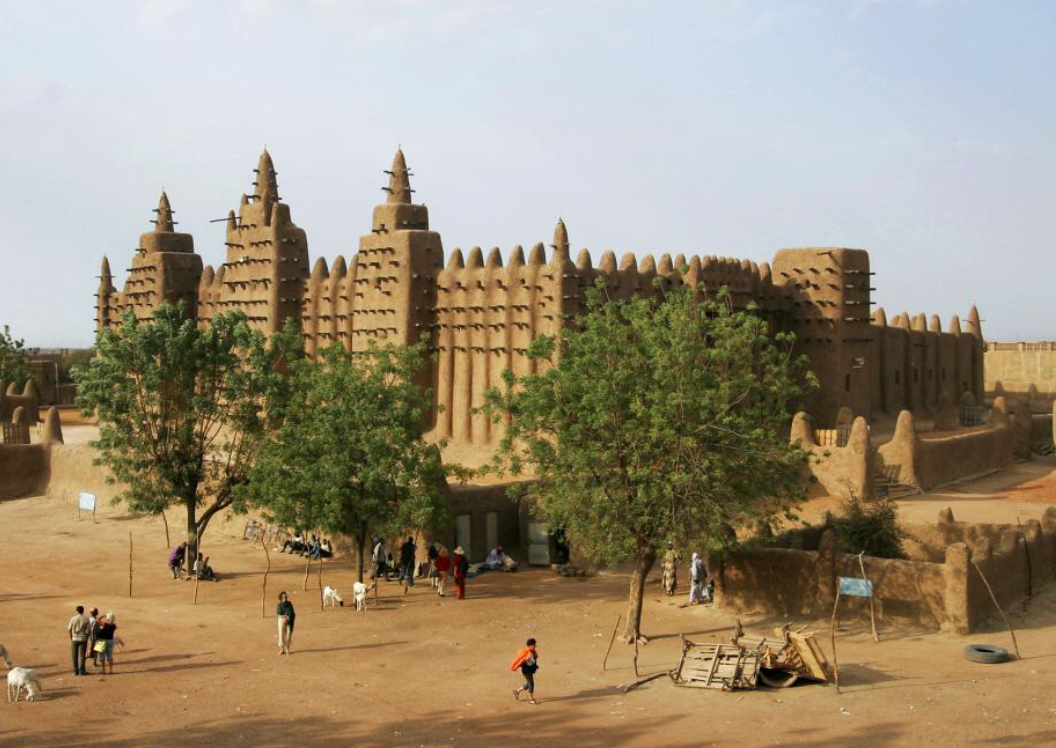
Adobe – the pdf company is from San Jose, California. The word adobe is one that I came across in Art History recently (which triggered this blog!!) when we were studying the Great Mosque in Djenne, Mali. The mosque was made of a material called adobe which is a combination of clay and straw which is mixed together and then dried in the sun. The company however was named after a creek that ran close to the founder’s house.

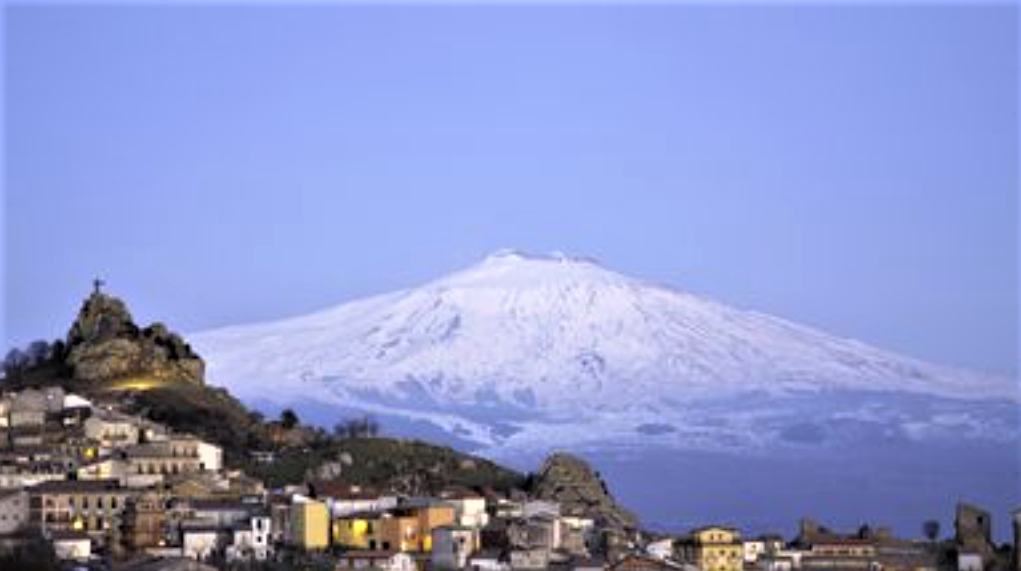
Aetna – This is an insurance company that was founded in 1850. The company was named after an active volcanic Mount Etna in Sicily. In Greek and Romany mythology Aetna was the Sicilian nymph, and the mountain in Sicily was named after her.

Hermes – founded in 1837, Hermes is a leading French luxury goods retailer. In Greek mythology, Hermes was a God associated with speed and good luck. He served as a messenger for Zeus and the other gods, He is also a patron of travelers, writers, athletes, merchants, thieves, and orators. In Roman mythology Hermes was known as Mercury.

Nike – Founded in 1964 in Beaverton, Oregon, Nike is most famous for its shoes, but also sells athletic apparel and equipment. The company has a very well-known symbol “the swoosh.” Nike takes its name from Nike, the Greek winged goddess of victory.

Starbucks – this coffee company that we all know and love was founded in Seattle in 1971. The name Starbucks is inspired by the character in Herman Melville’s Moby Dick. Starbuck is the first mate of the ship Pequod and is the voice of reason on the ship. According to Starbucks, the name evokes the romance of the high seas and the seafaring tradition of the early coffee traders.

Moby Dick & Starbucks

Panopticism

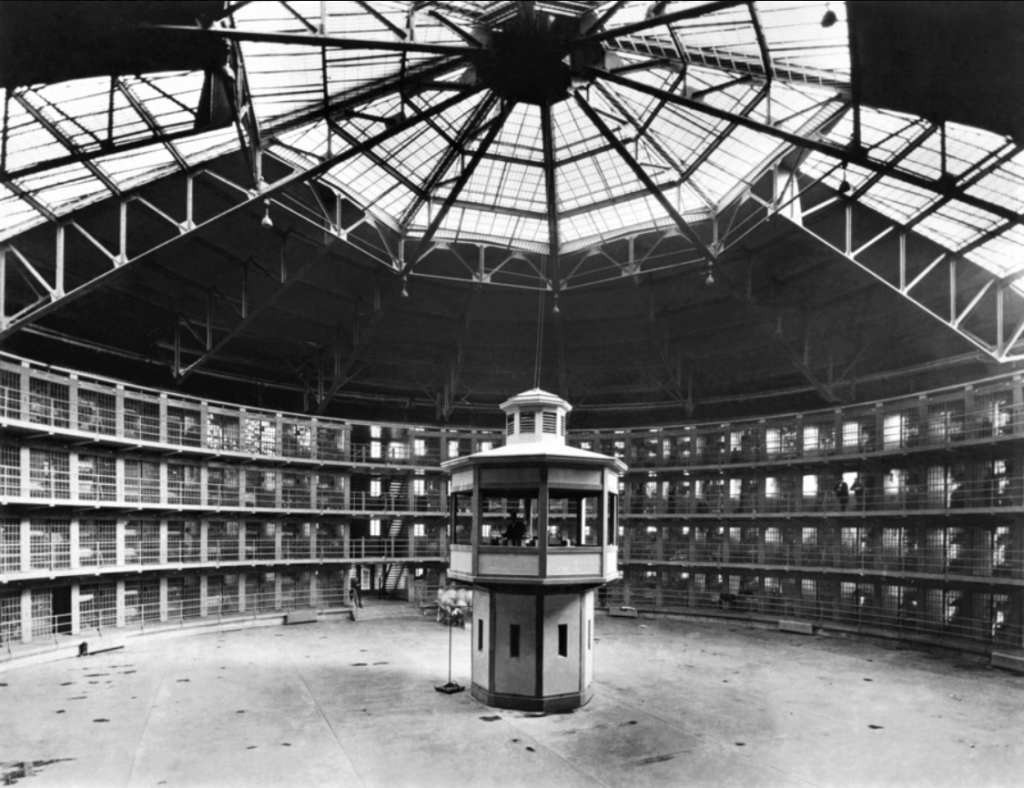
The Panopticon is a machine for dissociating the see/being seen dyad: in the peripheric ring, one is totally seen, without ever seeing; in the central tower, one sees everything without ever being seen (Foucault).

Last week, I read the essay Panopticism by French philosopher Michel Foucault, in which he talks about surveillance as a form of control which is done through the Panoptic machine. He included this essay in his 1975 book Discipline and Punish. Unlike the middle ages when punishment was violent and intended to cause severe bodily harm, Foucault’s modern theory of punishment was discipline through surveillance – make the disciplinary power invisible, and make the object of the power visible.  

Foucault considers 18th Century English philosopher Jeremy Bentham’s design of the maximum surveillance prison, the Panopticon, to be the model of this disciplinary technology.  Bentham’s fictional Panopticon had a simple but clever design; a circle of jail cells radiating outward from a central guard tower.  Each cell faced the guard tower, and walls separated the cells from each other. 

The design facilitates constant surveillance since the supervisor can see all the prisoners all of the time from the central tower, but the prisoners cannot see the supervisor or the other prisoners.  Since the prisoners cannot see the guard they don’t know when they are actually being observed, but knowing that they can be observed at any time, made them discipline themselves and regulate their own behavior.

The Panopticon surveillance was especially effective because the possibility of constant observation was enough to regulate behavior – actual surveillance was not really ever needed. Foucault says – surveillance was permanent in its effects even if it is discontinuous in its actions. The Panopticon is a machine for dissociating the see/being seen dyad: in the peripheric ring, one is totally seen, without ever seeing; in the central tower, one sees everything without ever being seen (Foucault).

Are we living in a panopticon?

Foucault suggested that this surveillance model was not just restricted to prisons – it could be could be applied to hospitals, workshops, schools – in fact society as a whole – it is a tool to create obedient citizens who could be programmed to self-discipline.   Which leads me to thinking – in the current digital age, are we living in a virtual Panopticon? With CCTVs, social media, and big data, the move towards constant surveillance is happening far more quickly and efficiently than Foucault could have imagined.

Le Corbusier… in India

After the partition of Pakistan and India in 1947, the capital of Punjab went to Pakistan, leaving India’s state of Punjab without a capital city. Prime Minister Nehru wanted a city that that looked to the future and showed a modern and progressive India. He selected le Corbusier to design Chandigarh.

Corbusier’s buildings in the tropical climate of Chandigarh show his pact with nature. He has used the brise soleil technique to keep buildings cooler in the harsh sun by adding shade creating areas in the façade of the building while using concrete construction throughout. His signature elements of beton brut construction and brise soliel techniques are evident in the buildings he designed for the capitol complex.

The stark grey concrete simplicity and the organized calm of Chandigarh stands in complete contrast to the chaotic and colorful mess that is India – these 15,000 acres stand as a testament to Nehru and Corbusier’s vision for a modern India.

Frank LLoyd Wright in Florida

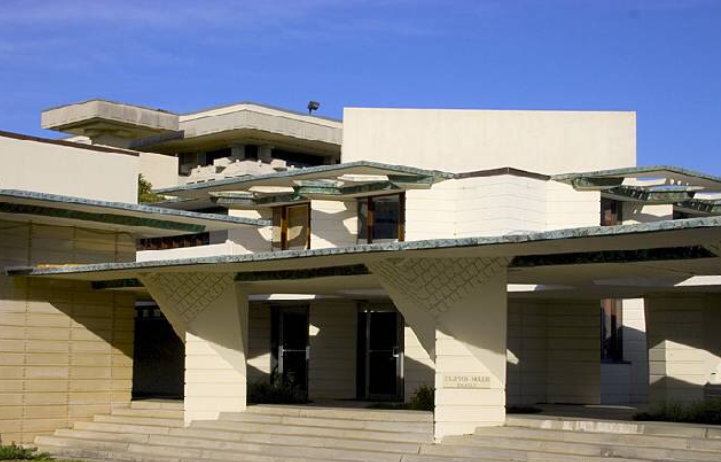
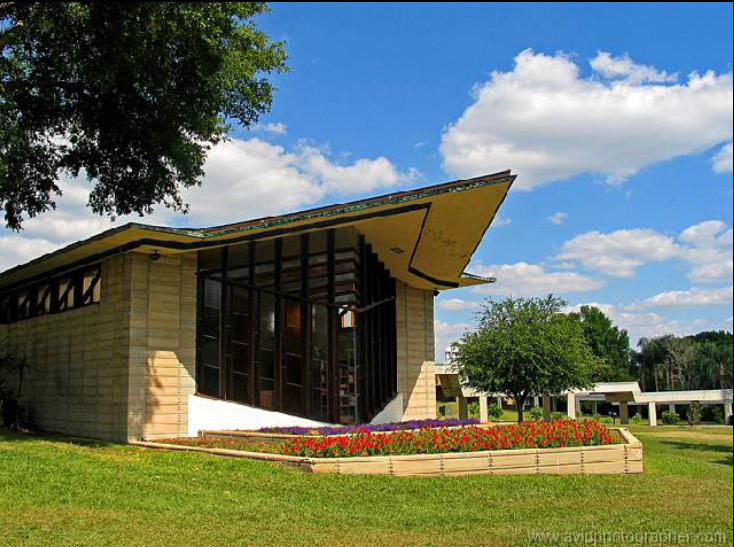
Usonian House at Florida Southern College

Frank Lloyd Wright (1867 – 1959) is a uniquely American artist who created America’s distinct architectural style based on its vast open lands and prairies. The combination of a Midwestern upbringing, the launch of his architectural career in Chicago, and the building boom in Chicago after the Great Chicago Fire of 1871 all propelled him towards architectural greatness – something his mother had predicted for him when she decorated his nursey with engravings of English cathedrals.

Fallingwater

Wright’s genius in blending nature and architecture is most fully realized in Fallingwater in Fayette County, Pennsylvania. This incredible home was set directly on the water fall that the owners wanted to enjoy. On a larger scale he built the Guggenheim museum in the shape of a spiraling nautical shell. Those of us living in Central Florida, do not have to venture far to see the works of Frank Lloyd Wright – the largest  collection of his buildings on one site is right here in Florida Southern College.

In 1938, Ludd Spivey, president of the College reached out to Wright to help with the expansion of the college. Wright who had been wanting to build an entire community jumped at the chance. He designed 12 structures for this campus including a chapel, a water dome, and miles of covered walkways, collectively called “Child of the Sun”.

The Great Depression would have halted the construction of these buildings but for the ingenious solution that the college arrived at – students were used for construction labor in exchange for free tuition – a win-win situation during the country’s great economic crisis. When WWII started and male students left – the female students took over the task of construction.

Female Students carried on the task of construction on campus when the male students left for WWII

In 1975, this stunning campus with its concentration of Wright architecture was listed in the National Register of Historic Places. (Images courtesy of FSC site and fallingwater.org).

Carnation, Lily, Lily Rose

Ye Shepherds tell me
Tell me have you seen,
Have you seen My Flora pass this way?
In shape and feature's beauty queen,
In pastoral, in pastoral array

A wreath around her head
Around her head she wore
Carnation, lily, lily, rose
And in her hand a crook she bore
And sweets her breath compose.

The Wreath, Joseph Mazzinghi (1765 - 1844)

Expatriate American artist, John Singer Sargent, was invited to stay and recuperate from a head injury in the Cotswold village of Broadway by his friend and fellow American expat artist Edwin Austin Abbey.  Here a group of artists would gather around a piano and sing the popular song, and spend glorious evenings together either playing tennis or going on boating expeditions on the Thames.  It was during one such boating expedition, when the natural light of the day was fading, that Sargent saw some Chinese lanterns hanging amidst trees and lilies in a garden. This vision of that exact purple twilight moment in the day when natural light gets replaced by artificial light captured Sargent’s fantasy, and he spent the next few months trying to capture that light, the result of which was the absolutely spellbinding painting which he titled Carnation, Lily, Lily Rose.

He chose two sisters, daughters of a fellow artist for the painting because they had hair of the exact color he was looking for.  Every evening, Sargent would stop his tennis game, and wait in the spot with his models for the light to be exactly like he wanted and paint for a few moments.  He repeated this every evening from September to November 1885, when the light changed completely with the changing season.  He then resumed in the summer of 1886 and completed the painting in October 1886.

Lantern with illuminated ridges. Courtesy Tate Britain.

The painting is simply mesmerizing. In it Sargent has captured the twilight moment when natural light is replaced by artificial light, the innocence of childhood with the intense childlike concentration at the task of lighting the lanterns, the beauty of the late summer foliage in the darkness of the leaves and the maturity of the flowers, and the glow in the white cotton-linen dresses of the girls.  The young girls themselves are surrounded by a garden that forms a protective cocoon around them, the eye goes upward with the growing size of the flowers, and the age old Japanese technique of the increasing size of the flowers as the eye moves upward has the effect of bringing the background forward. At the same time the eye moves along the curve of the lantern string, stopping with the two central figures, where balance is achieved with the two girls facing each other.  The glow of the lanterns, some brighter than others, illuminate their faces and dresses, and the ridges of the lanterns. The painting draws you in – into the world of the fleeting light of dusk, and of fleeting childhood summers.

Full Moon Names

Last week I heard the full moon referred to as the Beaver moon.  In the past, I have heard the term Strawberry Moon, and I started to wonder at the origin and meaning of these names. The moon, its beauty, its soothing, eternal presence in the dark night sky, has fascinated almost every culture from time immemorial. But it has also served a purpose as the timekeeper of the world. Before there was a Gregorian or a Julian calendar, the moon with its recurring 28 day cycle helped people keep track of time.  While different cultures have given different names to the moon, many of the full moon names we hear nowadays have come from Native Americans who kept track of the time using the phases of the moon. The tribes named the full moons to coincide with the activity or events that occurred at that time in North America, and these names were later adopted by Colonial Americans.

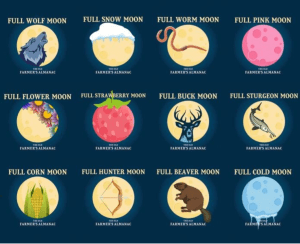
Wolf Moon (image courtesy Old Farmer’s Almanac)

The January full moon is called the Wolf Moon for the wolf that howled from hunger because of the shortage of food during this midwinter month.  The full moon of the cold snowy month of February was called Snow Moon.  As the winter subsided in March, and the tribes saw trails of worms on the newly thawed earth, they called the full moon at this time the Worm Moon. As the harsh winter ended, a pink wildflower bloomed n the prairies and meadows across the continent giving the April full moon its name, the Pink Moon. May brought warmth and flowers in abundance and its full moon was called the Flower Moon. The strawberry harvest season gave the June full moon its beautiful name – Strawberry Moon. 

Buck Moon (image Old Farmer’s Almanac)

In July the male deer starts to regrow his antlers, and this gave the July full moon its name, the Buck Moon.  By August, the lakes were full of sturgeons and gave the full moon their name, Sturgeon Moon. September was harvest time and corn was the most abundant crop harvested, hence the name Corn Moon.  In October, the tribes prepared for winter and hunted deer and fox by the light of the bright and low October moon which they called the Hunter’s Moon.  In November, the intrepid beavers built dams on the rivers to get ready for winter, and the Native Americans who saw this annual activity called the full moon the Beaver Moon. Another explanation for this name is that it was the last few days for the tribes to trap beavers for their fur that would tide them through the upcoming winter.    And finally the December full moon is called the Cold Moon in response to the cold weather that gripped the region in December.

Full Moon Names (image Old Farmer’s Almanac)

How absolutely amazing is this? And what an incredible connection between nature and man. It speaks of the strong connection that Native Americans had with their land, with the animals they shared this land with, and with all of the nature that surrounded them. When we say the names of the moon – they are simply names because we don’t need them to mark the passage of time.  But for Native Americans in years past, the Worm Moon must have brought so much excitement – the cold winter was ending, the earth was warming up, soon there would be long sunny days, the meadows would be full of wildflowers, and trees would finally start to bear fruit.  The Hunter’s Moon would have given them time to prepare and hunt for the cold months ahead.  It seems incredible to be so in tune and in touch with nature.  With progress and change we lose things, and this has to be one the saddest things to lose – that oneness with nature, that awareness of the earth, its animals, and its bounty.