




I am dedicating today’s Sunday Seven – with some teacher quotes I found on Instagram – to all my teachers. We have gone from classrooms to online learning without skipping a beat – and I can just imagine the herculean effort this has required on all your parts. Hats off to all of you – you are amazing!!

My classes are online so like all students I’m home all day and listen to tidbits of what’s being said on TV. Last week I heard the word “Dutch Auction” on CNBC, and I was intrigued by the inclusion of the word Dutch – and researching this took me down quite an interesting path of discovery. Consider the number of additional words that have the “Dutch” qualification: Dutch treat, Double Dutch, to go Dutch, Flying Dutchman are some of the more common ones.
A Dutch Auction, unlike a regular auction, is one in which the auctioneer starts the auction at a high price, and the prices come down instead of going. This was the kind of auction first used in the tulip markets in the Netherlands – hence Dutch Auction

In a disorganized, fresh flower market, where time was of the essence, the auctioneers wanted the trading to be quick. They would start the auction at an artificially high price, which they would bring down in increments until they got their first bid – at which time the auction would end – and the flowers would be sold at that bid price. This form of auction is more beneficial to sellers (than buyers) because they could get higher prices than in a regular auction.
Dutch Auctions are most often used nowadays by the US Government when selling Treasury Bills and Notes – that’s probably what they were discussing on CNBC when I heard the term !!

What about the other words? Many of these have an equally interesting origin. In the 17th and 18th centuries, the Dutch and the English were the two great seafaring empires -competing with each other for control over maritime routes and colonies – waging as many as three wars over 20 years. One can imagine that the English sailors would have found numerous ways to insult their Dutch counterparts by qualifying all cowardly, low class actions as Dutch. And this was exactly how a number of these words entered the English dictionary.
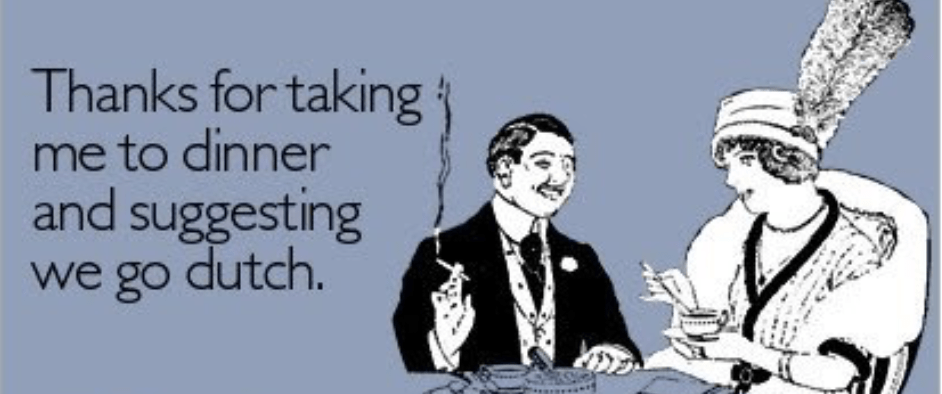
Going Dutch, which now means to split a bill at a restaurant, would have started as a reference to Dutch frugality or stinginess. Similarly, Dutch Party is when everyone brings a dish to the host’s house, and a Dutch treat is even worse – when you get invited out to a restaurant for a treat and a bill is sprung upon you at the last minute.

Double Dutch is another interesting term for a jump rope game which has origins in New York which had a lot of Dutch immigrants. It also means nonsense or something that makes no sense to the listener, as in “it’s all double Dutch to me” – because the English generally found the Dutch language incomprehensible.

Sometimes Dutch and Deutsch are confused – which is why Pennsylvania Dutch are called that instead of Pennsylvania Deutsch.
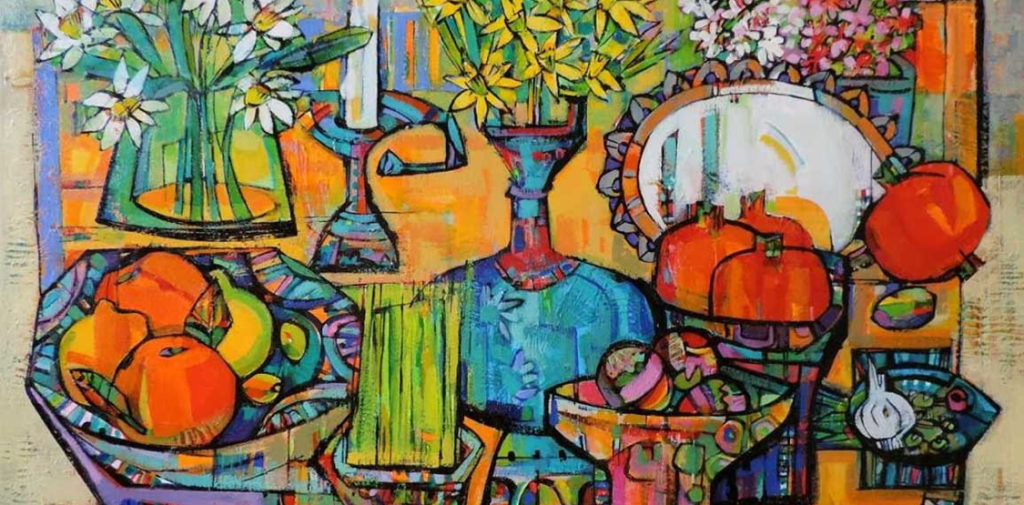
I was supposed to go to a Persian friend’s New Year part but that was cancelled. The Persian New Year or Nowruz is on March 20th. Every year Nowruz coincides with the arrival of spring – it is a celebration of the links between humans and nature. In honor of the Persian New Year I decided to do quotes by Persian poets for this week’s Sunday Seven.
Whatever is produced in haste, goes hastily to waste. Saadi Shirazi (1210 – 1291).
Have patience, all things are difficult before they become easy. Saadi Shirazi.
Be melting snow. Wash yourself of yourself. Rumi (1207 – 1273).
Stop acting so small. You are the universe in ecstatic motion. Rumi.
Raise you words, not voice. It is rain that grows flowers, not thunder. Rumi.
Live life as if everything is rigged in your favor. Rumi.
I died a lot to love a little with you. Yaghma Golrrouee
Your heart and my heart are very, very old friends. Hafiz (1315 -1390)
Ever since happiness heard your name, it has been running through the streets trying to find you. Hafiz.
It does not matter where I am. The sky is always mine. Sohrab Sepehri (1928 – 1980).
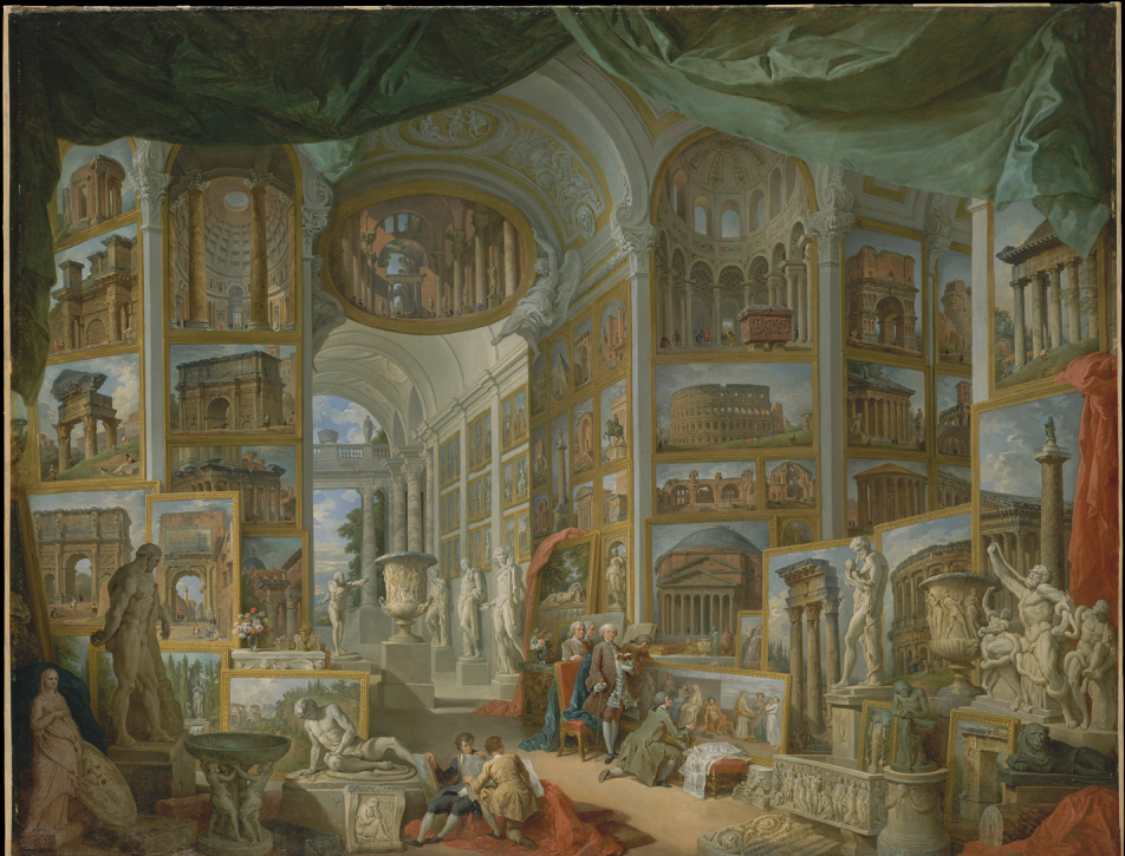
I am always fascinated by paintings that are paintings of a gallery or a viewing room – they are basically a painting of multiple paintings (similar to Rockwell’s Picasso vs. Sargent). Two of the best examples of this genre, called kunstkammer (German for “cabinet of curiosities”) are Modern Rome and Ancient Rome by Giovanni Paolo Panini (1691 – 1765)

For me the most fascinating kunstkammer painting is Samuel Morse’s (of the telegraph and Morse code fame), Gallery of the Louvre which he painted from 1831 to 1833. Before he connected the two sides of the Atlantic with a telegraphic message, Morse tried to do so with this monumental painting. Morse started his career as a painter and was a well-known portrait artist when he painted this work, primarily for the cultural and artistic education of the American public. Morse and his great friend and author James Fenimore Cooper came up with the idea of this painting to firstly, record the world’s greatest art, and secondly, to introduce young Americans to refined European art.
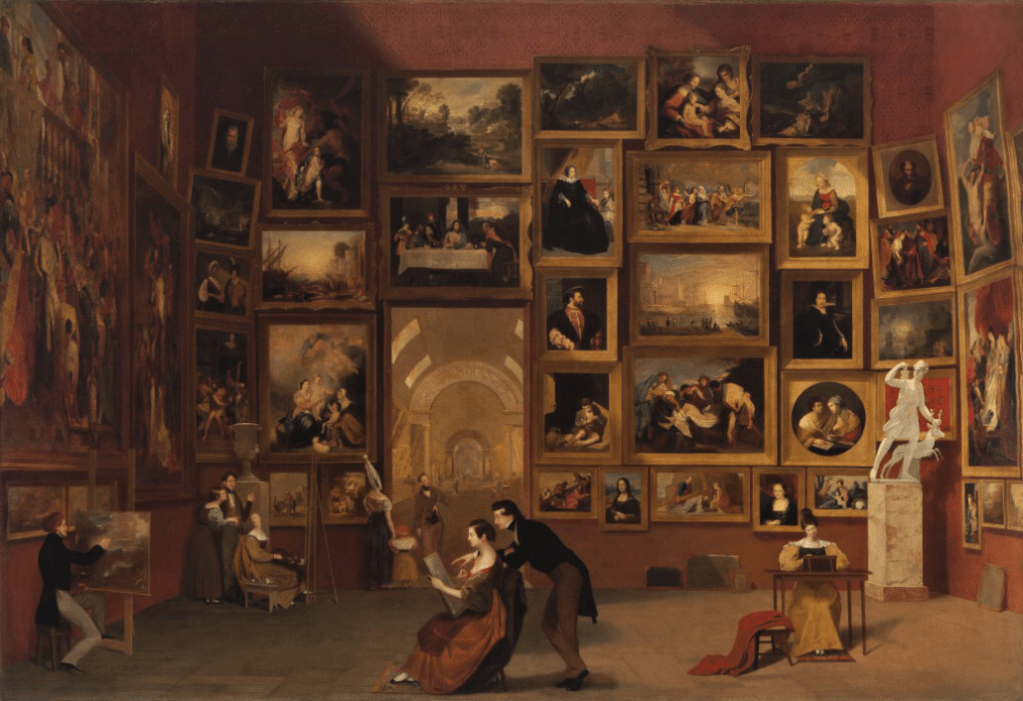
The massive 6 by 9 feet painting is of the Salon Caree in the Louvre; its walls Morse lined with some of the world’s most famous art. In the foreground is Morse himself as he looks at a painting his daughter is working on, and to the back left is Cooper with his wife and daughter. They are surrounded by brilliant small scale replicas of the works of Leonardo, Titian, Veronese, Tintoretto, Poussin, Claude, Rubens, Rembrandt, and Carvaggio among others.


Morse arranged the paintings as he wished and probably in some order that he liked them, and altered relative sizes to fit his canvas. We can see Leonardo’s Mona Lisa and Raphael’s La Belle Jardiniere. At the bottom row of paintings – on either side of Mona Lisa- we see two versions of Christ Carrying the Cross – perhaps Morse wanted to highlight the different ways artists handled the same subject matter.

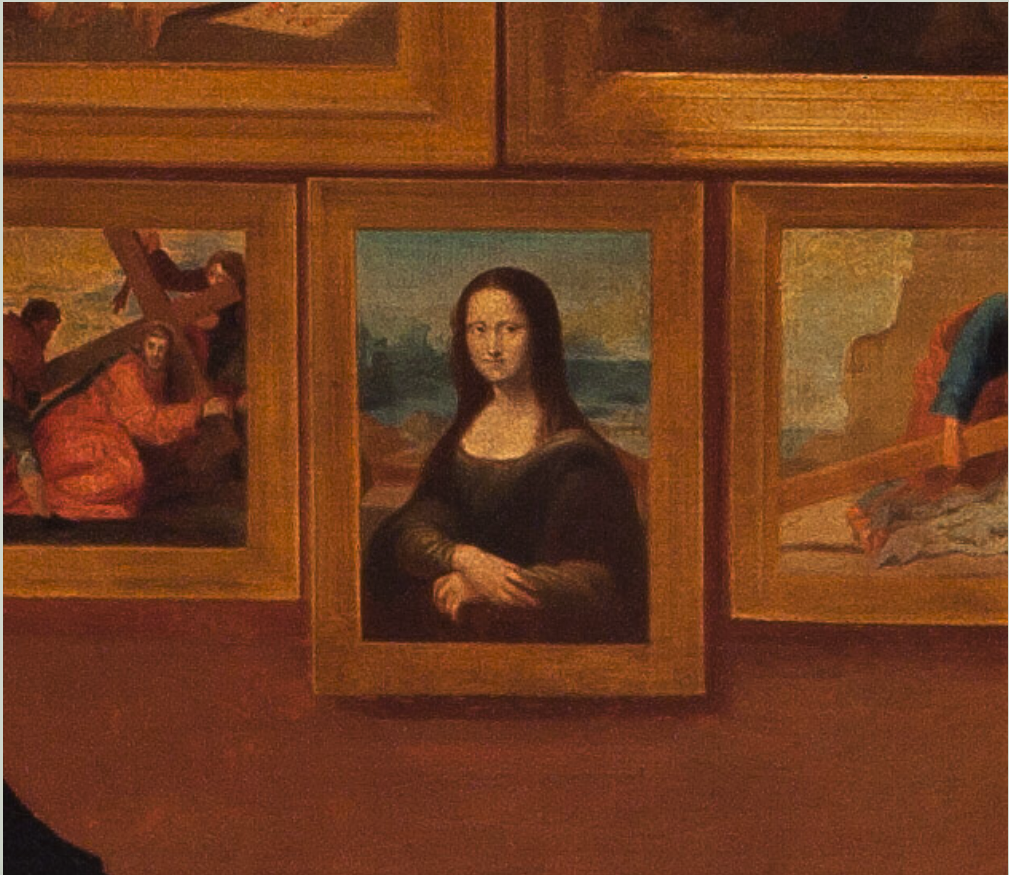
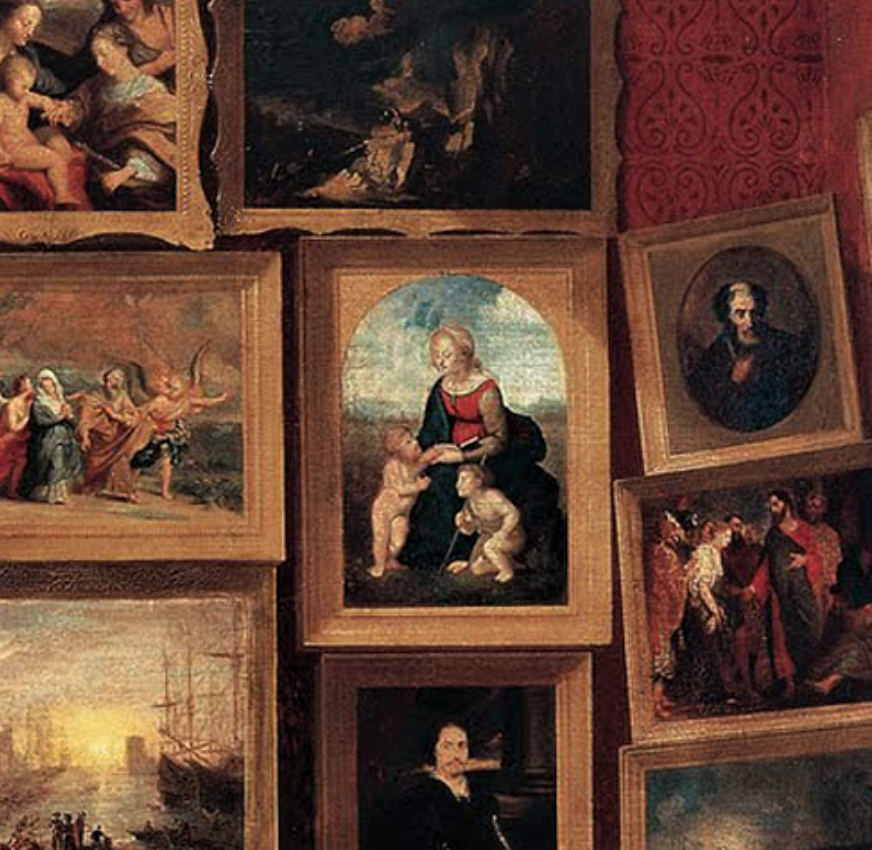
What a powerhouse of talent Morse must have been – it’s remarkable, almost incredulous, that his talented artist then went on to invent the single wire telegraph and the Morse Code.

This letter is a parody written by Nick Farriella in the style of Fitzgerald – something he might have written as he quarantined in the South of France during the Spanish flu of 1918. We recently read The Great Gatsby and I’m amazed at how wonderfully Mr. Farriella has captured Fitzgerald’s spirit in this piece of writing.
Dearest Rosemary,
It was a limpid dreary day, hung as in a basket from a single dull star. I thank you for your letter.
Outside I perceive what may be a collection of fallen leaves tussling against a trash can. It rings like jazz to my ears. The streets are that empty. It seems as though the bulk of the city has retreated to their quarters, rightfully so. At this time, it seems very poignant to avoid all public spaces. Even the bars, as I told Hemingway, but to that he punched me in the stomach, to which I asked if he had washed his hands. He hadn’t. He is much the denier, that one. Why, he considers the virus to be just influenza. I’m curious of his sources.
The officials have alerted us to ensure we have a month’s worth of necessities. Zelda and I are stocked up on red wine, whiskey, rum, vermouth, absinthe, white wine, sherry gin, and lord, if we need it, brandy. Please pray for us.
You should see the square, oh it is terrible. I weep for the damned eventualities the future brings. The long afternoons rolling forward on the ever-slick bottomless highball. Z says it’s no excuse to drink, but I just can’t seem to steady my hand. In the distance, from my brooding perch, the shoreline is cloaked in a dull haze where I can discern an unremitting penance that has been heading this way for a long, long while. And yet, amongst the cracked cloudline of an evening’s cast, I focus on a single strain of light, calling me forth to believe in a better morrow.
Faithfully yours,
F. Scott Fitzgerald
How absolutely brilliant!! I hope you enjoyed reading it as much as I did.

Are we living an Edward Hopper painting ? Hopper’s works of loneliness and isolation take on a greater significance during the pandemic.
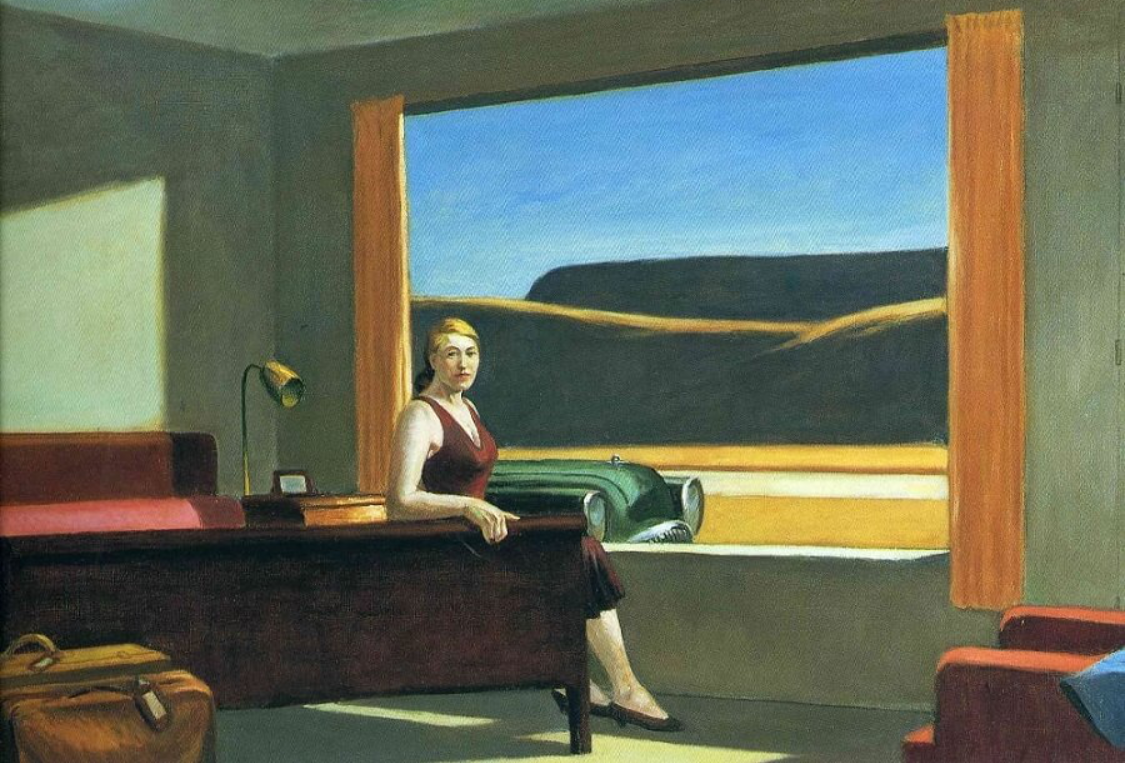
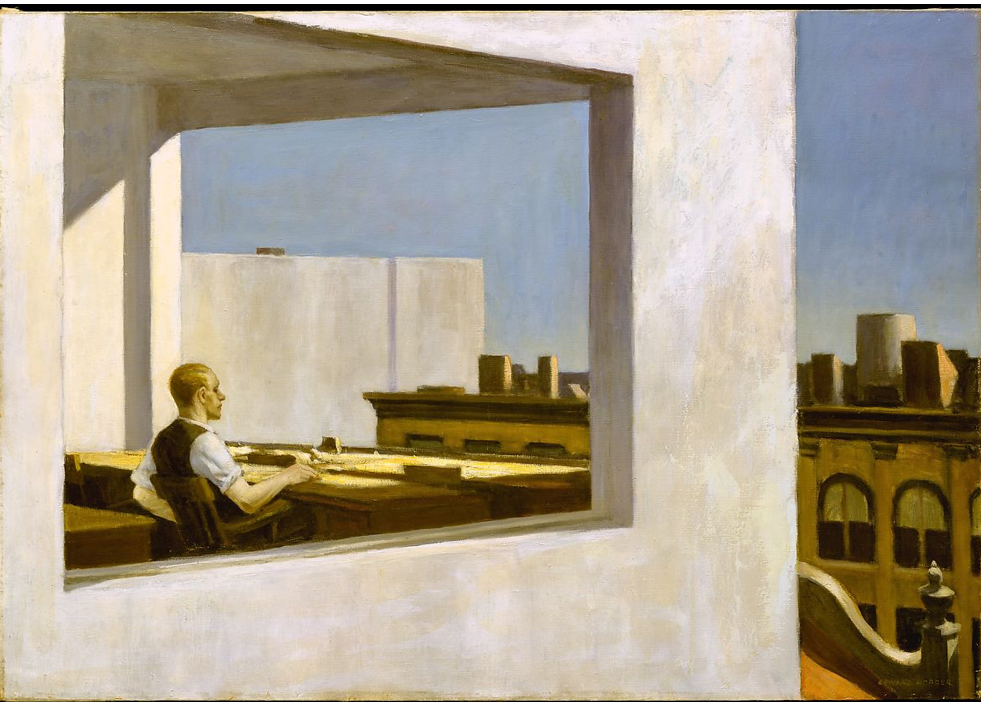


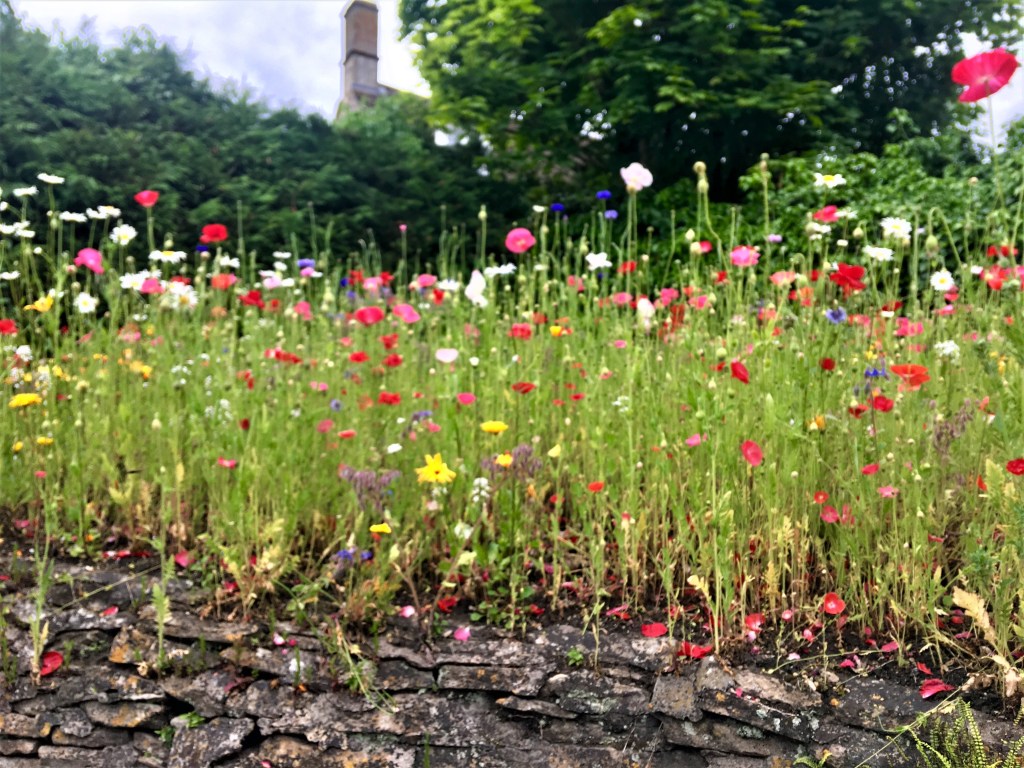
In these uncertain times when people all over the world are suffering immeasurably, the only thing that is giving me hope and joy is nature. The skies look clearer, the birds are chirping – telling us to hang in there – and flowers are blooming everywhere. For this week’s Sunday Seven I want to write about the beauty and hope that comes with the arrival of spring, so we all remember that even the toughest and darkest of times are followed by spring.
I first noticed the beauty of blue and yellow paintings in Dutch artist Willian van Aelst’s Still Life with Flowers (1664) with striking yellow lemons against the intense and deep blues of the tablecloth. I was so intrigued by the gorgeousness of these two colors together that I thought I would find some more – and as it turns out there are many striking blue and yellow paintings.

Apparently other people too like the blue and yellow combination – the untitled blue and yellow modern art by Mark Rothko sold for $46.5 million in 2015 (left). Mark Rothko is one of the most prominent American artists of the 20th Century who created “a new and impssioned form of abstract painting” (nga.gov). Two other 20th century artists with blue and yellow paintings are Dutch artist Piet Mondrian (center) and Russian artist and pioneer of abstract art Wassily Kandinski.



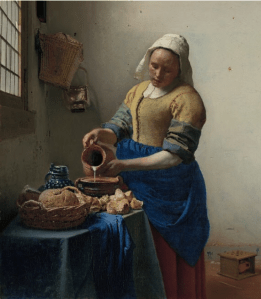
And coincindentally here are a blue and yellow cow and milkmaid by Warhol and Vermeer!!

Another stunning blue and yellow work is this painting by Henri Matisse.

And of course, no discussion on blue and yellow can be complete without Vincent Van Gogh – Wheatfield with Crows (1890), Irises in a Vase (1890), and Cafe Terrace at Night (1888).
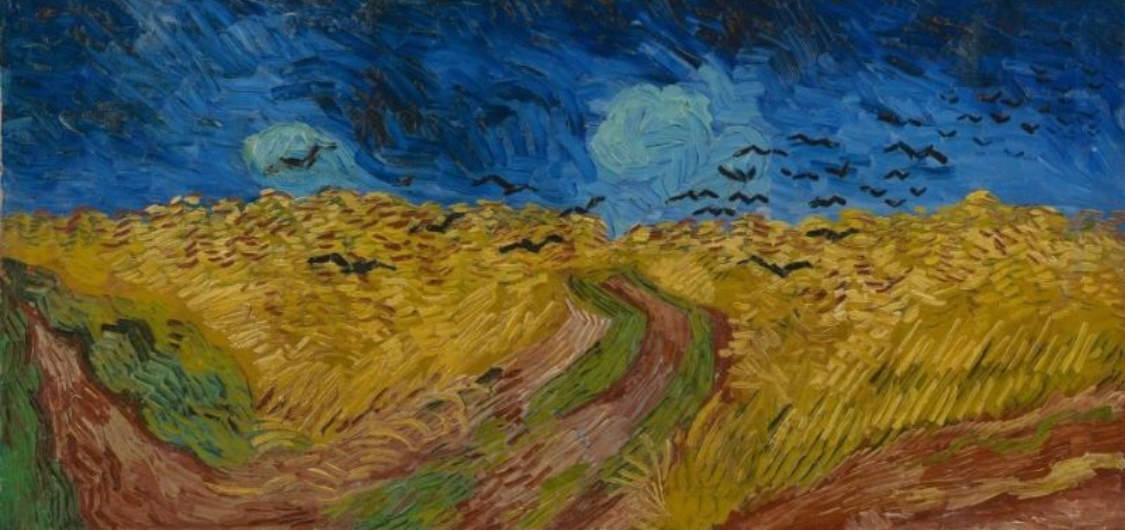

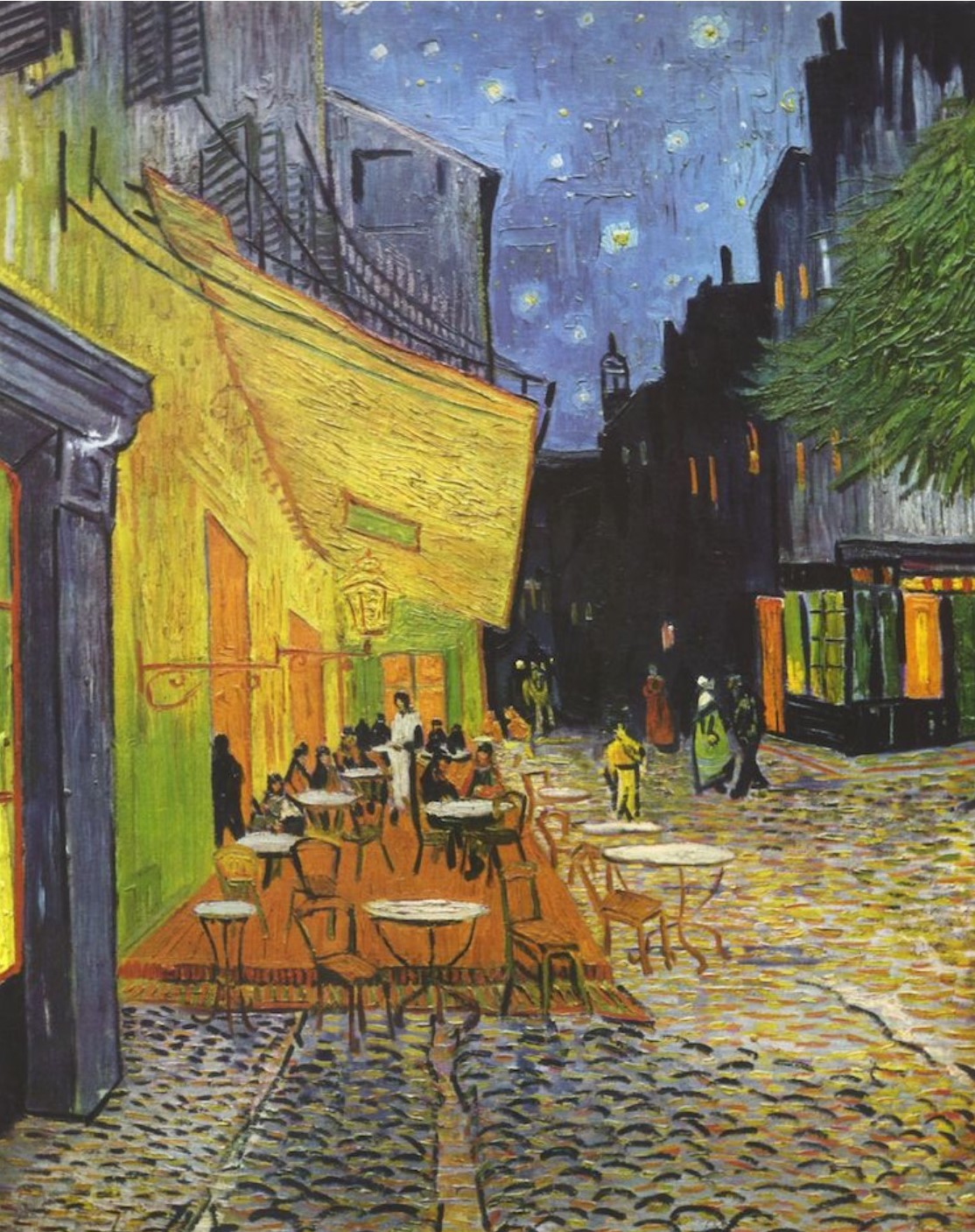
(Images courtesy Van Gogh Museuem, Met, MOMA, NGA, Toledo Museum, and Google Arts and Culture).

On International Women’s day – some of my favorite quotes about how strong women really are.
 mimisawhney.com